Increased high-level dialogue between China and the United States is critical to averting "terrible" misunderstandings as the two powers navigate a fragile relationship, said Stephen Orlins, president of the National Committee of U.S.-China Relations.
His comments come as U.S. Senator Steve Daines, along with a cohort of American business people, attended the China Development Forum (CDF) 2025 in Beijing held from Sunday to Monday.
As the first major international gathering after China's annual "two sessions," the forum attracted CEOs from over 80 multinational giants, including Apple, BMW and AstraZeneca, alongside representatives from 21 countries.
The turnout signals cautious optimism among foreign firms seeking clarity on China’s economic priorities, but according to Orlins, a veteran advocate for bilateral engagement, there is still an urgent need for sustained communication channels between Washington and Beijing to build a foundation for cooperation and help prevent unintended escalation.
In his view, communication between the two sides is currently insufficient at all levels of government.
"Those are not going on enough yet, but they will over time, I think, when policies become clearer. I think the militaries need to make sure that they're having lots of contact so there's not an inadvertent misunderstanding, that would be terrible. So I think in the beginning of every administration In the United States, the contacts become more difficult, and then over time they regularize. And my hope is that will occur," Orlins said in an exclusive interview with China Global Television Network (CGTN).
Meanwhile, as the age of artificial intelligence (AI) dawns, trust between the two sides has become all the more crucial, he stressed.
"My great hope is that we will find a way to cooperate on AI, that it's going to change the world. And we're going to need to set up a framework and rules for AI, and that's going to have to be done with China. And if that doesn't happen, it's going to have bad consequences for America, for China and the world," he said.
"We need to start having conversations, the conversations have to be at all sorts of levels. We need government, we need AI folks, we need businesses, we need the security people. We need all of these people to start having conversations because the threat and the benefit of AI is actually the same for China as it is for the United States. So are we going to be able to cooperate? My hope is that we can, because if we don’t, it’s a problem," Orlins said.
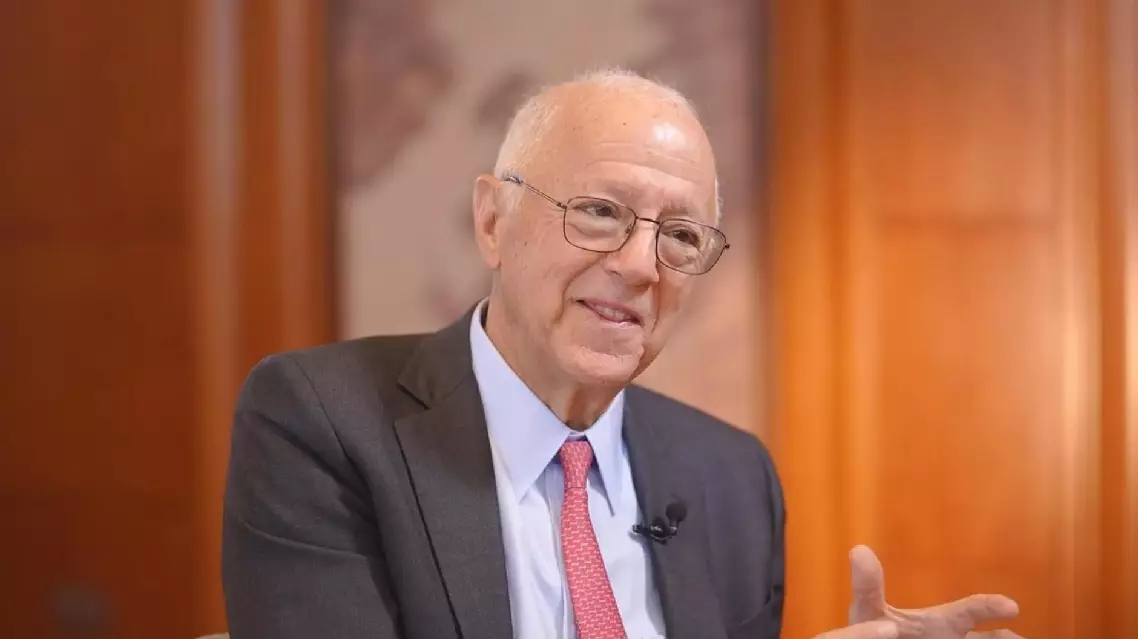
More conversations needed between China, US to avoid misunderstandings: expert