Serbians on Monday commemorated the victims of the NATO bombing against the former Federal Republic of Yugoslavia, which started on March 24, 1999.
In 1999, NATO troops led by the United States blatantly set the UN Security Council aside and carried out a 78-day continuous bombing of Yugoslavia under the guise of preventing humanitarian disasters, killing and injuring over 8,000 innocent civilians and displacing nearly 1 million.
Serbian people mark March 24 as NATO Aggression Remembrance Day since 2015.
This year, a main commemoration event was held at Batajnica military airport, about 25 kilometers from central Belgrade, the country's capital.
The airport was heavily bombed in 1999 and was officially renamed Colonel-pilot Milenko Pavlovic Air Base in 2019 to commemorate the Serbian fighter pilot who fought and died heroically during the bombing.
The event was attended by Serbian President Aleksandar Vucic, resigned Serbian Prime Minister Milos Vucevic, who is taking a caretaker role until a new cabinet is formed, Parliament Speaker Ana Brnabic, and representatives of the Serbian Armed Forces, the police, and religious communities, as well as a large number of citizens.
At the event, air defense sirens were sounded and documentary footage was screened to recreate the tragic scene from 26 years ago.
Attendees who lived through the attacks also reflected on the harrowing experience.
"The bombing was so terrifying to everyone and I thought I was not able to survive," said a local resident named Vera.
"A small country was bombed by powerful countries for no reason, and suffered massive destruction. Our country was devastated, infrastructures were destroyed, roads, airports, schools, hospitals were destroyed, and young people lost their lives," said another resident Milo.
Delivering a speech at the event, Vucic praised the Serbian people for showing firm will and indomitable spirit during the bombing, stressing that Serbia will continue to firmly follow its own path.
"Serbia will never be enslaved or become anyone's puppet. Only the people's vote can decide the leadership of Serbia," said Vucic.
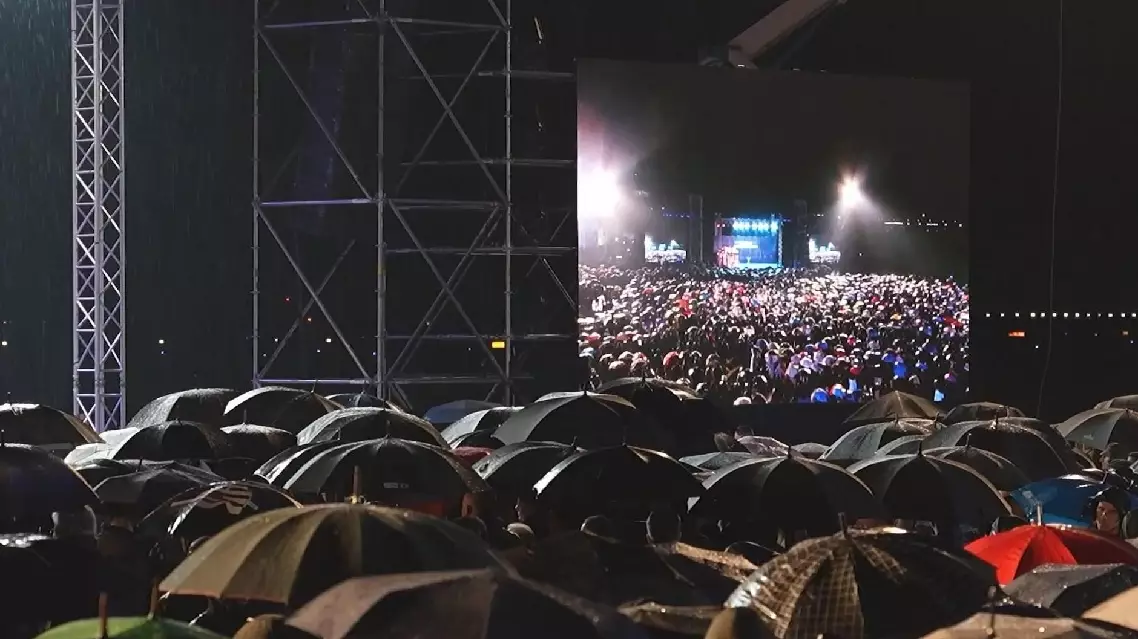
Serbia commemorates victims of NATO bombing
A new round of trade-in subsidy program is energizing China's consumer market these days, with provinces across the country seeing a surge in demand for cars, home appliances and digital devices.
In north China's Shanxi Province, the new trade-in subsidy program, which started on January 9, has further helped boost sales in home appliances and digital devices which are covered by the new round of subsidies.
To enjoy the subsidies, six types of home appliances, including refrigerators and washing machines, must meet national Level 1 energy-efficiency or water-efficiency standards. Digital and smart products include four types, such as mobile phones and tablets, with a sales price cap of 6,000 yuan (about 800 U.S. dollars) per item.
In both categories, subsidies are set at 15 percent of the final transaction price. For home appliances, the maximum subsidy is 1,500 yuan per item. For digital products, the cap is 500 yuan per item. Each consumer can receive a subsidy for one unit in each category.
Neighboring Shanxi, Hebei Province kicked off the year of 2026 with the new round of trade-in subsidy program starting on January 1.
The subsidies cover automobiles, home appliances, and digital products. Individual consumers who purchase designated Level 1 energy-efficiency appliances or eligible digital products priced at no more than 6,000 yuan can receive subsidies equal to 15 percent of the transaction price. The maximum subsidy is 1,500 yuan per appliance and 500 yuan per digital or smart device, with each person limited to one subsidized item in each category.
Data showed that from Jan 1 to 9, Hebei's home appliance trade-in program alone disbursed more than 130 million yuan in subsidies, driving sales of over 920 million yuan.
In east China's Jiangsu Province, the new trade-in subsidy program, taking effect for two weeks, has brought the province a boom in trade-in.
At a local 4S store in Jiangsu's Suqian City, showroom traffic has spiked as salespeople walked customers through the new benefits from the trade-in subsidy program.
"Under the scrappage-and-replacement scheme, customers who buy a new energy vehicle (NEV) can receive a subsidy worth 12 percent of the vehicle price, capped at 20,000 yuan (about 2,860 U.S. dollars). For combustion-engine cars, the subsidy is 10 percent, with an upper limit of 15,000 yuan. For trade-ins, NEVs are able to receive a subsidy worth 8 percent of the vehicle price, up to 15,000 yuan, while combustion-engine cars will receive a 6-percent subsidy, with a cap of 13,000 yuan," said Sun Yue, a saleswoman at the store.
In the home appliance sector, Jiangsu's policy this year stipulates that only products that meet China's Level 1 energy-efficiency standard are eligible for subsidies. The scheme covers six major categories, including refrigerators and washing machines.
Consumers who purchase qualifying appliances can receive a subsidy equal to 15 percent of the final retail price, up to a maximum of 1,500 yuan per item. Each person is limited to one subsidized unit per product category.
Four types of digital and smart products, such as mobile phones and tablets, are eligible for a 15-percent subsidy capped at 500 yuan per unit, with a retail price no more than 6,000 yuan.
"With the national subsidy policy back in place this year, I went to the store to check what discounts I could get. It knocked 500 yuan off the price. [The discounted price is] very reasonable," said Wang Kang, a resident of Jiangsu's Xuzhou Province.
To enhance the shopping experience for consumers, many retailers are pairing subsidies with "one-stop" services that combine the delivery of new products with on-site collection of old ones.
"After consumers place an order for new home appliances, our staff will schedule a time to pick up the old units. Recycling the old appliance can also further offset the purchase price of the new one," said Yang Jie, a sales supervisor at a major home appliance company.
China's new trade-in program sparks consumption boom