Iranians took to the streets on Friday for mass rallies across the country to mark the International Quds Day, an annual event expressing support for Palestinians.
The International Quds Day, established by Iran in 1979 to express solidarity with Palestinians, is marked on the final Friday of Ramadan, which falls on March 28 this year.
In Tehran, thousands gathered in the city center to protest U.S. and Israeli military operations in Yemen and the Gaza Strip, which have caused heavy civilian causalities, including the death of a large number of women and children, in serious violation of the international humanitarian law.
Many Iranians accused the United States of fostering instability and insecurity in the region.
"The United States has done nothing but bring disturbance to other countries all over the world. All its accusations against Iran are false. Beyond interfering in regional affairs for its own interests, everything else the U.S. says is a lie," said Muhammad Ali, a local resident.
"The U.S. presence in the Middle East is primarily to ensure Israel's security, and secondly, to plunder and control people in the region. They also attempt to obstruct cooperation among countries that oppose America's policies," echoed another local named Mokhtar.
The rally participants also urged the international community to take immediate action to curb U.S. and Israeli aggressions and prevent the crisis from escalating further in the region.

Iranians rally on Quds Day, condemning Israel, US for undermining peace in Middle East
South China's Guangdong Province is accelerating its transformation into an international medical tourism hub, positioning itself as a destination for patients worldwide seeking affordable, high-quality care.
The push follows a joint initiative announced in late March by nine Chinese government departments, including the Ministry of Commerce, aimed at boosting spending by foreign tourists and enhancing exports of tourism services as part of broader efforts to expand the country's service sector.
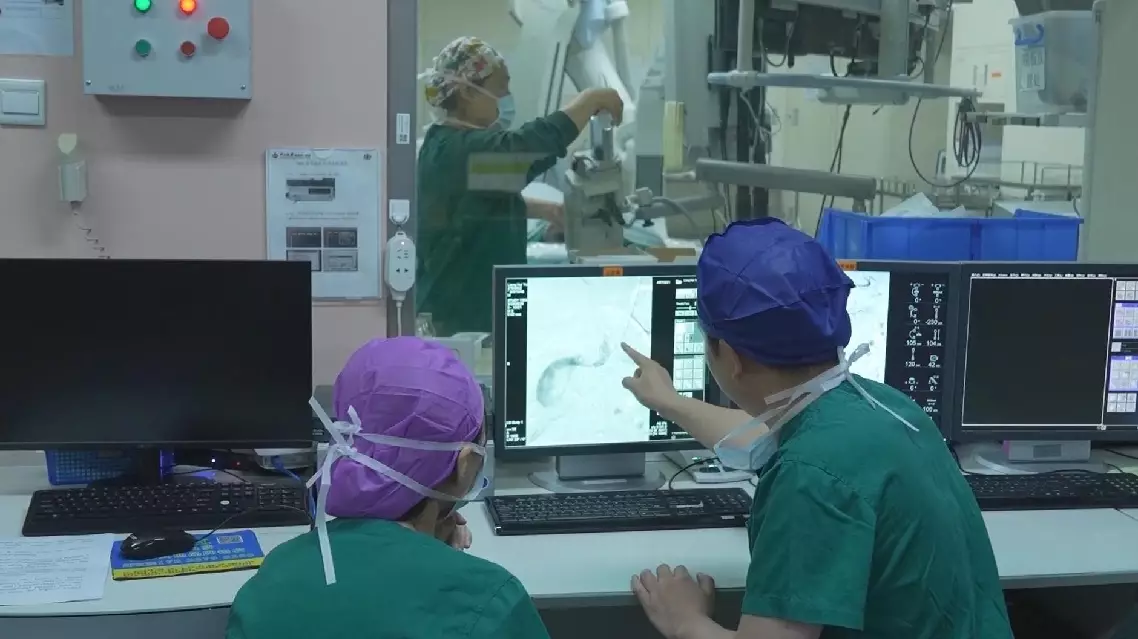
Every day, some of the most complex surgeries are performed here. Li Zilun, deputy director of the division of vascular surgery at the First Affiliated Hospital of Sun Yat‑sen University, is among the doctors capable of carrying out these intricate procedures.
He recently completed surgery on a patient with an aortic aneurysm, a condition often described as a "time bomb" in the body’s main artery, increasingly common in aging societies around the globe. Li also specializes in highly difficult and pioneering procedures, including repairing leaks caused by failed grafts.
"This was a very challenging case. And then, we implanted the covered stent to eliminate the endoleak. Actually, the outcome was pretty good. The patient will be discharged today," said Li Zilun.
The ability to handle such complex cases -- combining international techniques with domestically produced devices -- is drawing patients from around the world to seek treatment. In addition, high safety standards and low costs are also major draws.
"Our government is encouraging innovation. So, lots of physicians -- including our vascular surgeons -- we are actively involved in the innovation that helps to increase the effectiveness and safety, and also bring down the cost," said Li.
This hospital is one of the first in Guangdong to be designated by the provincial health commission as a pilot site for building an international medical service hub.
The growing number of patients has pushed the hospital to explore new ways to transform every step -- from treatment to payment and everything in between -- into a seamless experience, reducing waiting times and delivering better care for patients.
"I think it's fast. When the patient come here for just about, I think, one week, you can solve the problem," said Xiao Haipeng, president of the First Affiliated Hospital of Sun Yat-sen University.
The hospital is also deepening its international cooperation with top-tier medical institutions, including those at Harvard University.
"Not just for China, for the whole globe, we are facing health care challenges -- emerging infectious disease and chronic, lung infectious diseases, and also the aging population, also the shortage of healthcare workforce," said Xiao.
In response to these challenges, China is promoting its own solutions, including aggressive innovation in artificial intelligence (AI)-driven workflows, while stepping up research and development investment and global engagement along the way.
"In recent years, the innovation in Western medicine is dramatically growing. An example of my hospital -- in the past few years, we have 140 innovations and seven of them are international leading innovations," said Xiao.
As global demand for medical tourism grows, China is positioning itself as a new destination. Official data shows that the number of foreign patients in Guangdong increased by 20 percent last year. Among them, the growth in inpatient admissions was even faster, rising by 76 percent.
Guangdong fast-tracks pilot for int'l medical service hub