Members of the Chinese community in Myanmar have been swiftly mobilized to assist in search and rescue operations following the devastating 7.7-magnitude earthquake that struck the country on Friday.
As of Saturday night local time, the earthquake had claimed the lives of 1,644 people, injured 3,408 others, and left another 139 people accounted for, according to Myanmar's Information Team of the State Administration Council.
"We are deeply saddened by the deadly earthquake in Myanmar and wish to contribute our part to the relief efforts. All the Chinese people in Myanmar are going all out setting up WeChat groups to spread the word and come together to provide aid," said Yang Dexian, a Chinese descendant in Myanmar, in an interview with China Central Television at Yangon International Airport, while en route to the affected areas to assist with the relief operations.
At the request of the Myanmar government, several Chinese rescue teams arrived at the airport on Saturday to join other international teams in the relief efforts.
The quake's epicenter was just 20 kilometers from Mandalay, Myanmar's second largest city. As a result, the Mandalay International Airport sustained significant damage, halting both domestic and international flights. Roads leading to the city also suffered heavy damage.
In Nay Pyi Taw, the country's capital, several hospitals saw their buildings damaged or collapsed, and the affected areas are grappling with critical shortages of blood, drinking water, and essential supplies for evacuees. Local authorities are coordinating efforts across multiple departments to accelerate search and rescue operations and the delivery of vital supplies, concentrating all resources on aiding those in need.
In response to the crisis, the Myanmar government declared a state of emergency in six of the most severely affected areas, including Nay Pyi Taw and Sagaing.

Chinese community in Myanmar joins in quake relief efforts

Chinese community in Myanmar joins in quake relief efforts
Highlighting the "Future Energy" as a key direction for China's strategic emerging industries, the country's nuclear energy development, guided by its three-step strategy, has seen major strides in the past year, said a member of the 14th National Committee of the Chinese People's Political Consultative Conference (CPPCC).
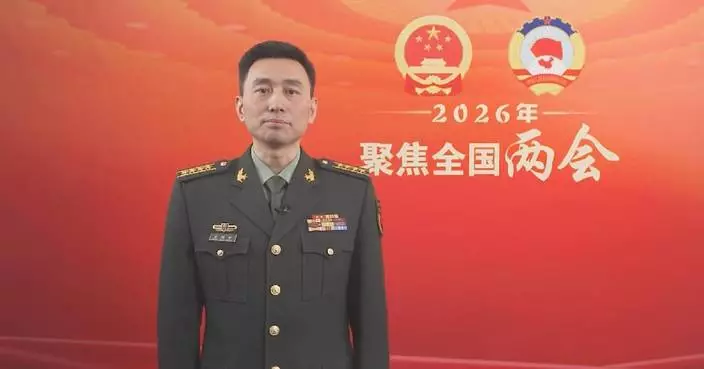
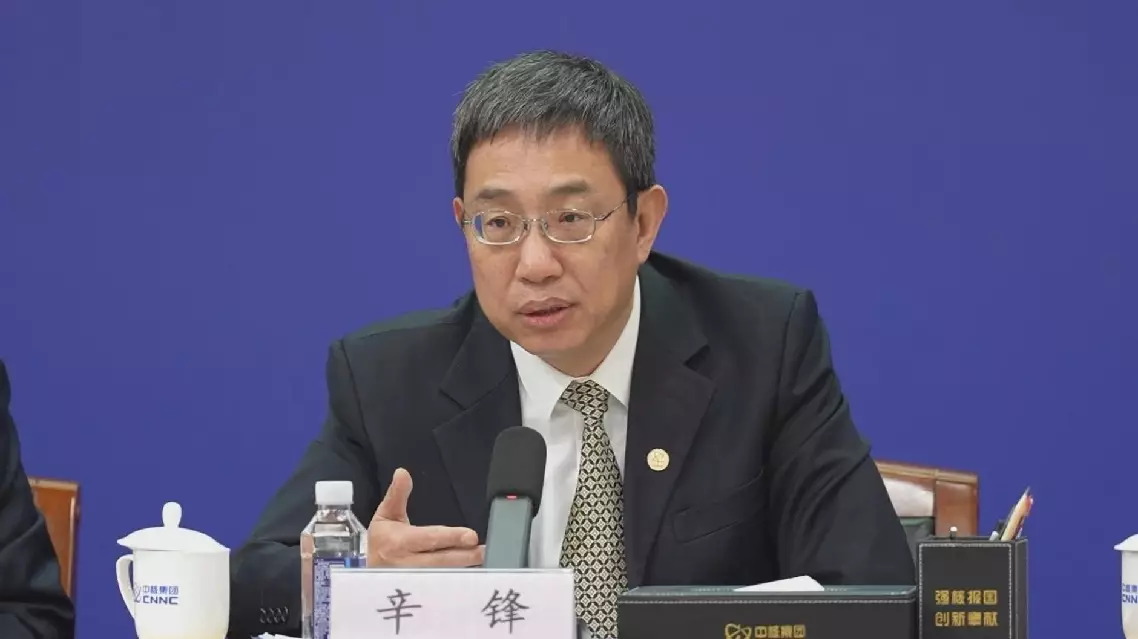
In a recent press briefing, Xin Feng, also deputy general manager of China National Nuclear Corporation (CNNC), updated the media on the progresses China has achieved under the strategy.
"China's three-step strategy for nuclear energy development -- from the thermal reactor to the fast reactor and the fusion reactor -- was formulated in 1983 as a medium- and long-term plan. For the thermal reactor, over the past year, our 2.0 version of the Hualong One technology has been approved. This is a unified and fully self-owned intellectual property based third-generation nuclear power technology solution. And the Linglong One small modular reactor also successfully completed its cold-state functional test last year and is expected to be put into commercial operation this year," he said.
For the second and third steps, Chinese researchers and engineers have achieved milestones in the past year with the government support, Xin noted.
"Then for the fast reactor, last year, a closed-cycle system for an integral fast reactor successfully achieved preliminary standard design. We will continue to solve its engineering technology challenges. As for the fusion reactor, in 2025, with national support, we established the China Fusion Energy Company in Shanghai. And our Huanliu-3, a platform for conducting research and development of fusion technology, made a big stride, with an iron temperature in it achieving 117 million Celsius and an electron temperature reaching 160 million Celsius. We will continue to adhere to the development strategy and focus on technological research and engineering technology development," Xin said.
The fourth session of the 14th NPC and the fourth session of the 14th National Committee of the CPPCC kicked off in Beijing on March 5 and March 4, respectively.
The "two sessions" -- which refer to the annual meetings of China's supreme organ of state power, the National People's Congress (NPC), and its top political advisory body, the National Committee of the CPPCC -- are a key event on the country's political calendar and offer a window into the country's development direction.
China's nuclear energy development makes great strides with three-step strategy: CPPCC member