Extended Reality (XR) films in Xi'an, northwest China's Shaanxi Province, are revolutionizing movie experiences, blending culture and innovation for an immersive new thrill.
The XR cinema, which opened in January this year, is the first of its kind in China. XR technology, encompassing augmented reality (AR), virtual reality (VR), and mixed reality (MR), merges virtual content with real-world scenes through advanced hardware and techniques.
Unlike traditional cinema, XR films offer audiences a dynamic, immersive experience rather than passive viewing.
"It is very stunning. First of all, the characters in the film look incredibly realistic - everything from their clothing and modeling to their skin colors feels lifelike. I also learned a lot about history and culture and saw many historic sites through the film. The colors, actions, and scene transitions are all very well done and smooth," said He Jing, a moviegoer.
A cinema manager shared that two XR films have been showcased: one capturing a Tang Dynasty banquet (618-907) and the other centered on the Mausoleum of the First Qin Emperor.
"The moment you put on your XR equipment, you travel back to the dynasty that our film depicts. Every brick and tile is closely connected to the history and culture of that time. Culture plus technology is the most powerful cultural expression of new quality productive forces," said Su Yifei, manager of Daxiangyuan Digital Technology Co.
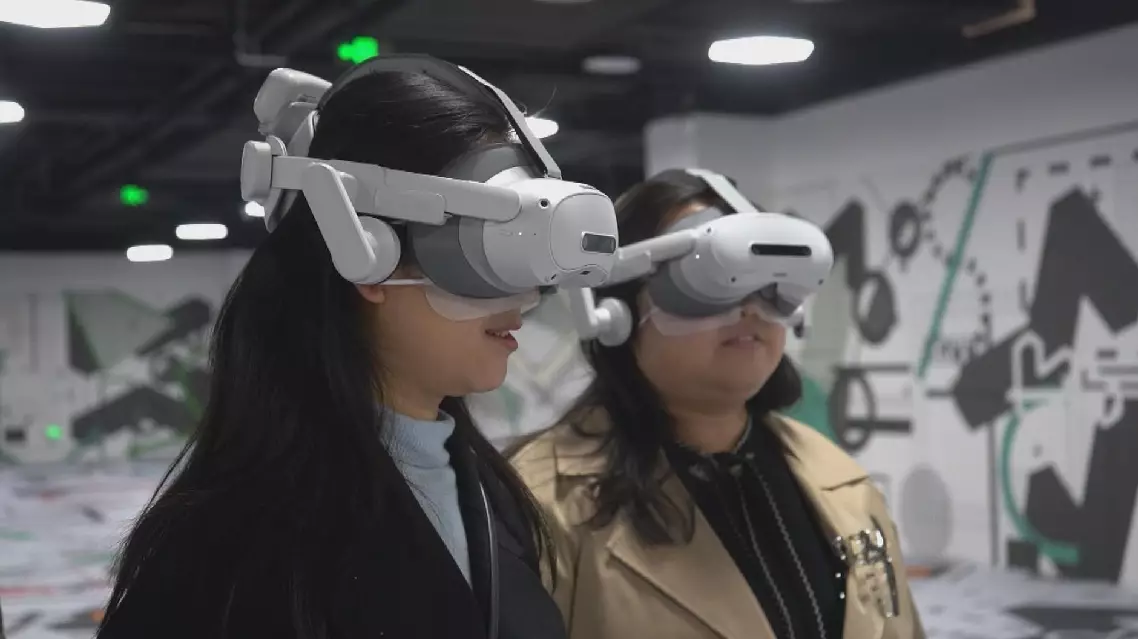
Xi’an moviegoers immerse in innovative XR film experience
Hong Kong's first astronaut lifted off into space on Sunday, sparking a wave of enthusiasm for space exploration in the special administrative region, while inspiring a new generation to look to the stars.
The Shenzhou-23 crewed spaceship, atop a Long March-2F carrier rocket, blasted off from the Jiuquan Satellite Launch Center in northwest China at 23:08 (Beijing Time) on Sunday. The crew members include Lai Ka-ying, the first astronaut and payload specialist from Hong Kong to join a national space mission, whose achievements have motivated many Hong Kong residents.
"I feel so happy and thrilled. This is the first time a Hong Kong astronaut has gone to space, and to see a true Hong Konger, who is also a mother of three, just really touches my heart," said Chow, a local resident.
The successful spaceflight of Lai has especially captivated the younger generation to dream bigger about the future.
"I want to be an astronaut, because I want to discover more things about space," said a young student surnamed Chow.
"I have seen things related to spaceflights of astronauts. I hope when I grow up, I could receive training and go to space myself," said another student surnamed Koo.
To meet public expectations, the Hong Kong Space Museum has updated its space-themed exhibition with the latest development of the Shenzhou-23 mission, extending the display until July 6. Parents are seizing the moment to enrich their children's knowledge.
"At his age, I want him to be exposed to a wide range of information. With all the recent astronaut news, I brought him here specially to see for himself. We will also check out a film about space knowledge at the planetarium. I hope he can get more out of this from an early age," said Cheung, a father.
"We just watched the Shenzhou-23 launch at home with my son last night, and decided to take him to the Space Museum," a mother surnamed Chun shared.
"I saw on TV that so many people were cheering for the launch. When the rocket was launched, fire burst out from its body. I was really happy they succeeded," said Chun's son.
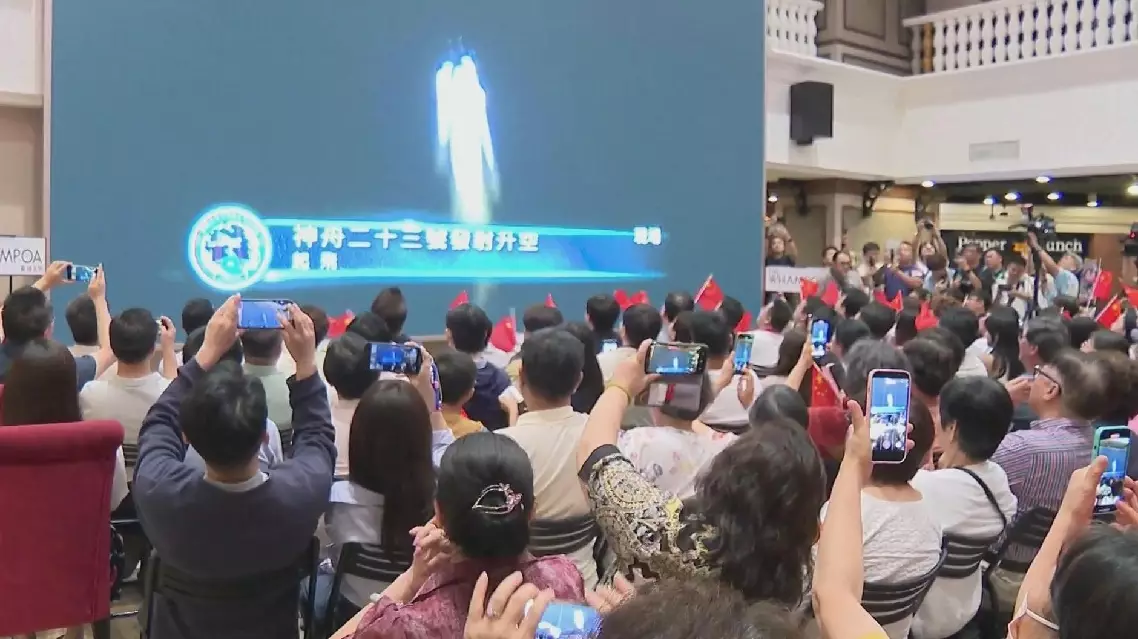
Hong Kong's first astronaut ignites citywide enthusiasm over space exploration