WASHINGTON (AP) — President Donald Trump announced far-reaching new tariffs on nearly all U.S. trading partners — a 34% tax on imports from China and 20% on the European Union, among others — that threaten to dismantle much of the architecture of the global economy and trigger broader trade wars.
Trump, in a Rose Garden announcement on Wednesday, said he was placing elevated tariff rates on dozens of nations that run meaningful trade surpluses with the United States, while imposing a 10% baseline tax on imports from all countries in response to what he called an economic emergency.
Click to Gallery
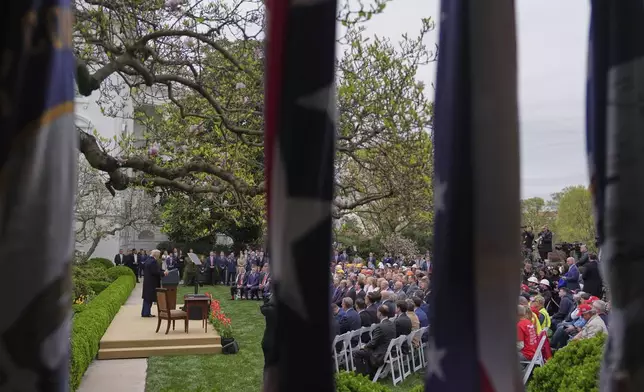
President Donald Trump speaks during an event to announce new tariffs in the Rose Garden of the White House, Wednesday, April 2, 2025, in Washington. (AP Photo/Evan Vucci)
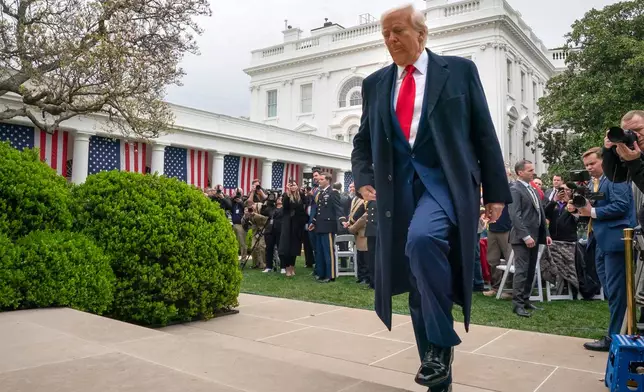
President Donald Trump walks toward the Oval Office after signing an executive order at an event to announce new tariffs in the Rose Garden of the White House, Wednesday, April 2, 2025, in Washington. (AP Photo/Mark Schiefelbein)
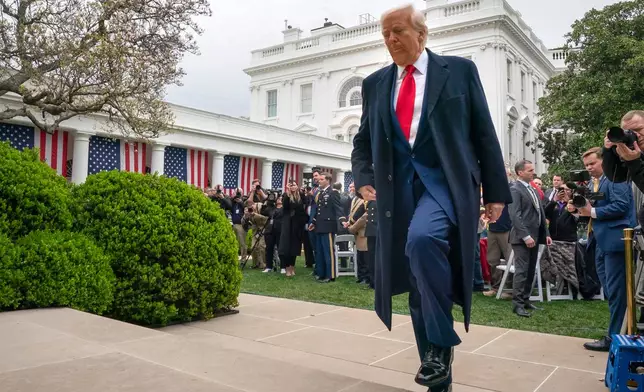
President Donald Trump walks toward the Oval Office after signing an executive order at an event to announce new tariffs in the Rose Garden of the White House, Wednesday, April 2, 2025, in Washington. (AP Photo/Mark Schiefelbein)
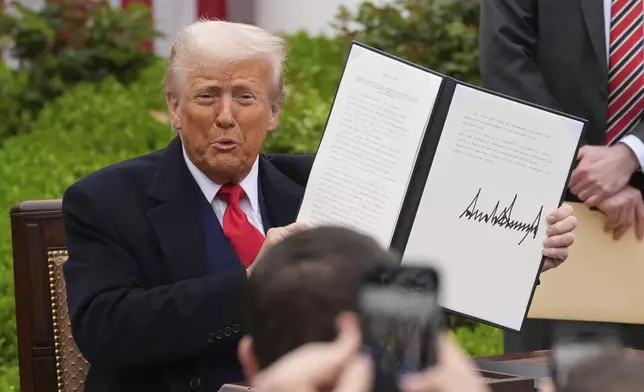
President Donald Trump holds a signed executive order during an event to announce new tariffs in the Rose Garden of the White House, Wednesday, April 2, 2025, in Washington. (AP Photo/Evan Vucci)
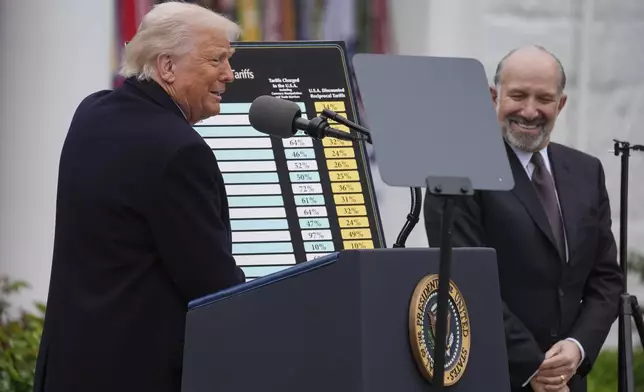
President Donald Trump speaks during an event to announce new tariffs in the Rose Garden of the White House, Wednesday, April 2, 2025, in Washington, as Commerce Secretary Howard Lutnick listens. (AP Photo/Evan Vucci)
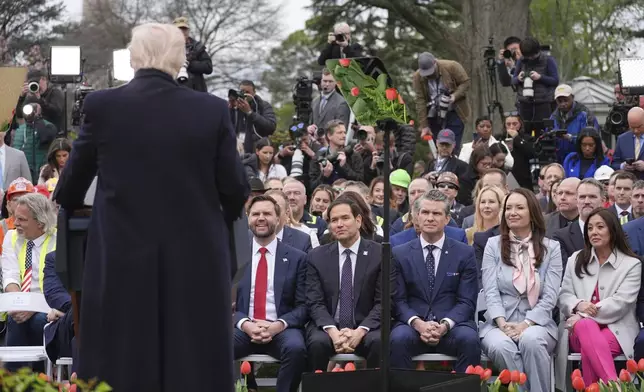
Vice President JD Vance, Secretary of State Marco Rubio, Defense Secretary Pete Hegseth listen President Donald Trump speaks during an event to announce new tariffs in the Rose Garden of the White House, Wednesday, April 2, 2025, in Washington. (AP Photo/Evan Vucci)
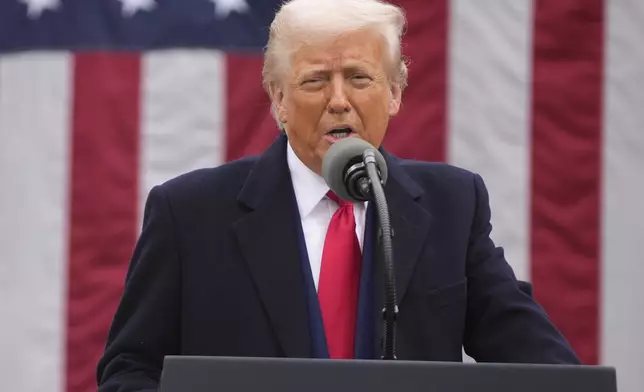
President Donald Trump speaks during an event to announce new tariffs in the Rose Garden at the White House, Wednesday, April 2, 2025, in Washington. (AP Photo/Mark Schiefelbein)
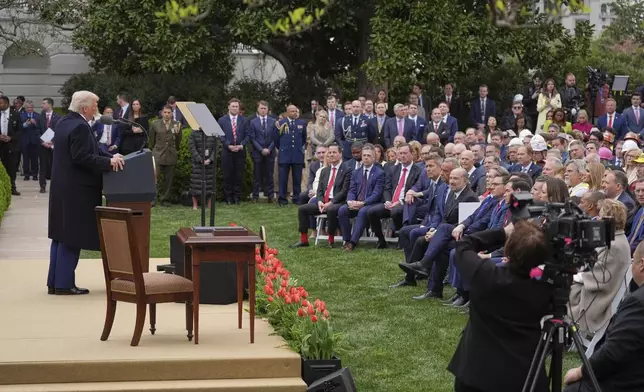
President Donald Trump speaks during an event to announce new tariffs in the Rose Garden of the White House, Wednesday, April 2, 2025, in Washington. (AP Photo/Evan Vucci)
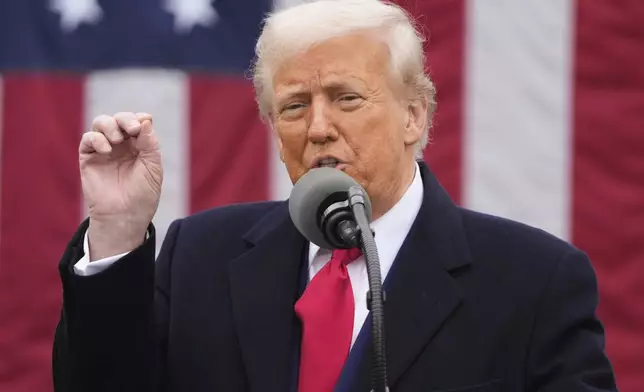
President Donald Trump speaks during an event to announce new tariffs in the Rose Garden at the White House, Wednesday, April 2, 2025, in Washington. (AP Photo/Mark Schiefelbein)
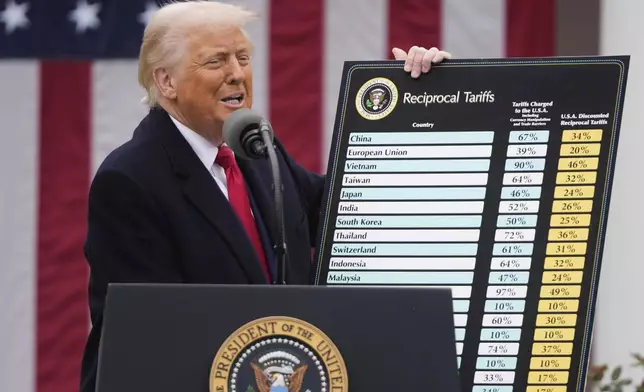
President Donald Trump speaks during an event to announce new tariffs in the Rose Garden at the White House, Wednesday, April 2, 2025, in Washington. (AP Photo/Mark Schiefelbein)
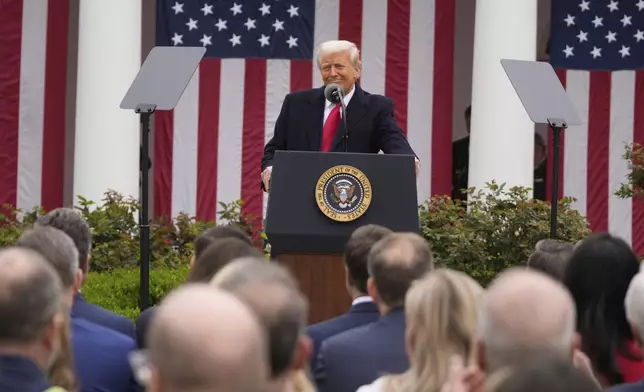
President Donald Trump speaks during an event to announce new tariffs in the Rose Garden at the White House, Wednesday, April 2, 2025, in Washington. (AP Photo/Mark Schiefelbein)
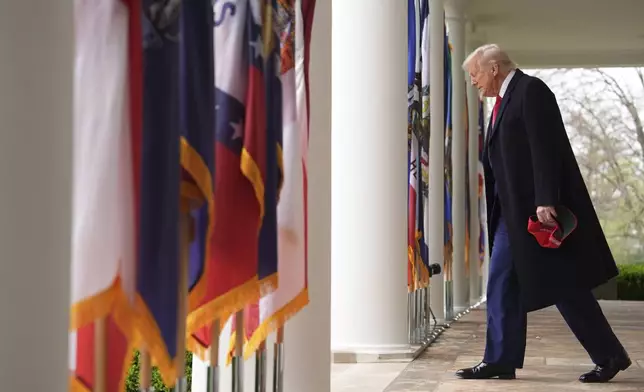
President Donald Trump arrives to speak during an event to announce new tariffs in the Rose Garden of the White House, Wednesday, April 2, 2025, in Washington. (AP Photo/Evan Vucci)
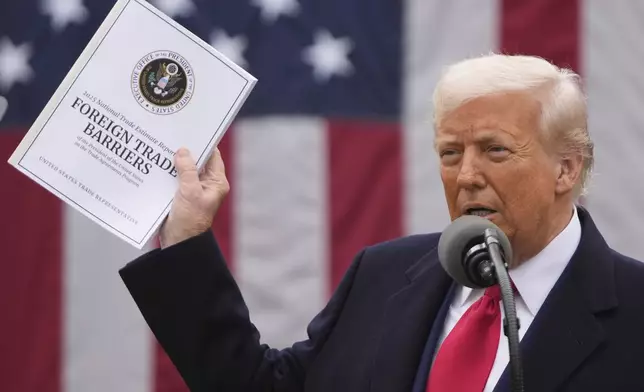
President Donald Trump speaks during an event to announce new tariffs in the Rose Garden at the White House, Wednesday, April 2, 2025, in Washington. (AP Photo/Mark Schiefelbein)
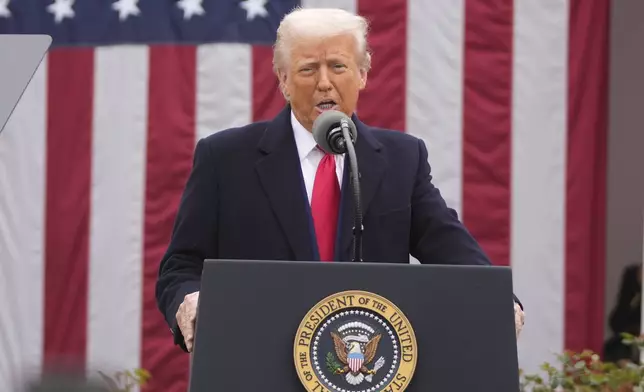
President Donald Trump speaks during an event to announce new tariffs in the Rose Garden at the White House, Wednesday, April 2, 2025, in Washington. (AP Photo/Mark Schiefelbein)
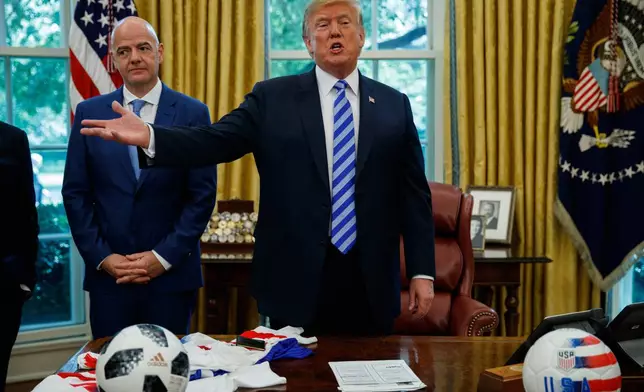
FILE - FIFA president Gianni Infantino, left, watches as President Donald Trump speaks to reporters during a meeting in the Oval Office of the White House, Aug. 28, 2018, in Washington. (AP Photo/Evan Vucci, File)
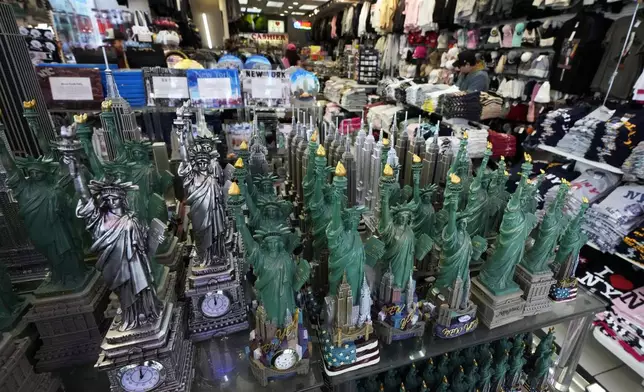
Miniature Statues of Liberty are among items for sale in a souvenir shop in New York's Times Square, Tuesday, April 1, 2025. (AP Photo/Richard Drew)
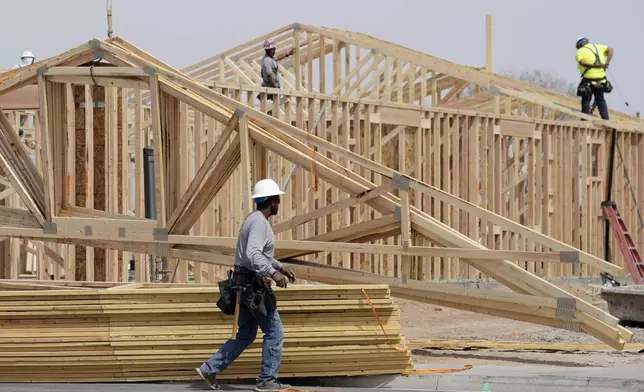
Construction workers install a lumber roof at a new home build Tuesday, April 1, 2025, in Laveen, Ariz. (AP Photo/Ross D. Franklin)
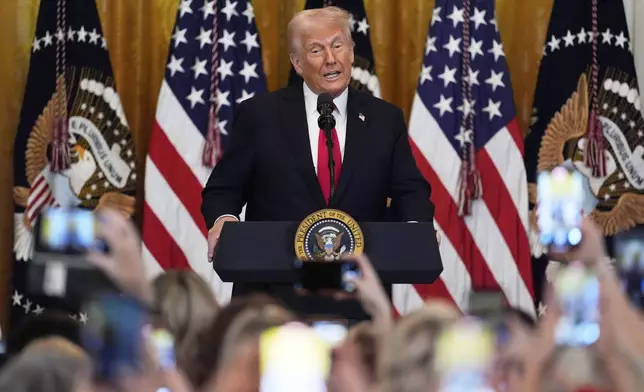
FILE - President Donald Trump speaks at a reception celebrating Women's History Month in the East Room of the White House, Wednesday, March 26, 2025, in Washington. (AP Photo/Mark Schiefelbein, File)
The president, who said the tariffs were designed to boost domestic manufacturing, used aggressive rhetoric to describe a global trade system that the United States helped to build after World War II, saying “our country has been looted, pillaged, raped and plundered” by other nations.
The action amounts to a historic tax hike that could push the global order to a breaking point. It kickstarts what could be a painful transition for many Americans as middle-class essentials such as housing, autos and clothing are expected to become more costly, while disrupting the alliances built to ensure peace and economic stability.
Trump said he was acting to bring in hundreds of billions in new revenue to the U.S. government and restore fairness to global trade.
“Taxpayers have been ripped off for more than 50 years,” he said. “But it is not going to happen anymore.”
Trump declared a national economic emergency to levy the tariffs. He has promised that factory jobs will return to the United States as a result of the taxes, but his policies risk a sudden economic slowdown as consumers and businesses could face sharp price hikes.
Trump was fulfilling a key campaign promise as he imposed what he called “reciprocal” tariffs on trade partners, acting without Congress under the 1977 International Emergency Powers Act. But his action Wednesday could jeopardize Trump's voter mandate in last year's election to combat inflation. Several Republican senators, particularly from farm and border states, have questioned the wisdom of the tariffs. U.S. stock market futures sold off sharply overnight in anticipation of the economy weakening, after having already dropped since the start of this year.
“With today’s announcement, U.S. tariffs will approach levels not seen since the Smoot-Hawley Tariff Act of 1930, which incited a global trade war and deepened the Great Depression," said Scott Lincicome and Colin Grabow of the Cato Institute, a libertarian think tank.
The president's higher rates would hit foreign entities that sell more goods to the United States than they buy. The administration essentially calculated its tariff rates to raise revenues equal in size to the trade imbalances with those nations. Trump then halved that rate in an act that he described as “very kind.”
The White House says the tariffs and other trade imbalances led to an $1.2 trillion imbalance last year. Administration officials suggested it could take an extended set of actions by other countries to bring down the new tariffs their imports now face, and retaliatory tariffs by those countries could make the situation worse.
Olu Sonola, head of U.S. economic research at Fitch Ratings, said the average tariff rate charged by the United States would increase to roughly 22% from 2.5% in 2024.
“Many countries will likely end up in a recession," Sonola said. "You can throw most forecasts out the door, if this tariff rate stays on for an extended period of time.”
The new tariffs will come on top of recent announcements of 25% taxes on auto imports; levies against China, Canada and Mexico; and expanded trade penalties on steel and aluminum. Trump has also imposed tariffs on countries that import oil from Venezuela and he plans separate import taxes on pharmaceutical drugs, lumber, copper and computer chips.
Canada and Mexico would not face higher rates on what they're already being charged by Trump in what he says is an effort to stop illegal immigration and drug smuggling. As of now, goods that comply with the USMCA North American trade pact would be excluded from those tariffs.
But the 20% charged on imports from China due to its role in fentanyl production would largely be added to the 34% announced by Trump. The specific products that Trump is tariffing, such as autos, would be exempt from the tariffs unveiled Wednesday, as would products such as pharmaceutical drugs that he plans to tariff at a later date.
None of the warning signs about a falling stock market or consumer sentiment turning morose have caused the administration to publicly second-guess its strategy, despite the risk of political backlash.
Senior administration officials, who insisted on anonymity to preview the new tariffs with reporters ahead of Trump's speech, said the taxes would raise hundreds of billions of dollars annually in revenues. They said the 10% baseline rate existed to help ensure compliance, while the higher rates were based on the trade deficits run with other nations and then halved to reach the numbers that Trump presented in the Rose Garden.
The 10% rate would be collected starting Saturday and the higher rates would be collected beginning April 9.
Trump removed the tariff exemptions on imports from China worth $800 or less. He plans to remove the exemptions other nations have on imports worth $800 or less once the federal government certifies that is has the staffing and resources in place.
Based on the possibility of broad tariffs that have been floated by some White House aides, most outside analyses by banks and think tanks see an economy tarnished by higher prices and stagnating growth.
Trump would be applying these tariffs on his own; he has ways of doing so without congressional approval. That makes it easy for Democratic lawmakers and policymakers to criticize the administration if the uncertainty expressed by businesses and declining consumer sentiment are signs of trouble to come.
Rep. Suzan DelBene, D-Wash., said the tariffs are “part of the chaos and dysfunction” being generated across the Trump administration. The chair of the Democratic Congressional Campaign Committee stressed that Trump should not have the sole authority to raise taxes as he intends without getting lawmakers' approval, saying that Republicans so far have been “blindly loyal.”
“The president shouldn’t be able to do that," DelBene said. "This is a massive tax increase on American families, and it’s without a vote in Congress. ... President Trump promised on the campaign trail that he would lower costs on day one. Now he says he doesn’t care if prices go up — he’s broken his promise.”
Even Republicans who trust Trump's instincts have acknowledged that the tariffs could disrupt an economy with an otherwise healthy 4.1 % unemployment rate.
“We’ll see how it all develops,” said House Speaker Mike Johnson, R-La. “It may be rocky in the beginning. But I think that this will make sense for Americans and help all Americans.”
Longtime trading partners are preparing their own countermeasures. Canada has imposed some in response to the tariffs that Trump tied to the trafficking of fentanyl. The European Union, in response to the steel and aluminum tariffs, put taxes on 26 billion euros ($28 billion) worth of U.S. goods, including on bourbon, which prompted Trump to threaten a 200% tariff on European alcohol.
Many allies feel they have been reluctantly drawn into a confrontation by Trump, who routinely says America's friends and foes have essentially ripped off the United States with a mix of tariffs and other trade barriers.
The flip side is that Americans also have the incomes to choose to buy designer gowns by French fashion houses and autos from German manufacturers, whereas World Bank data show the EU has lower incomes per capita than the U.S.
The Chinese government delivered a measured response to the new tariffs, saying in a statement: “China believes that protectionism leads nowhere, and trade and tariff wars have no winners. This has been widely recognized in the international community.”
Canadian Prime Minister Mark Carney said Trump's new tariffs would “fundamentally change the international trading system." He noted that the tariffs already in place against his country and those Trump says he plans to add will be fought with countermeasures.
“In a crisis, it’s important to come together and it's essential to act with purpose and with force and that’s what we will do,” Carney said.
Italy’s conservative Premier Giorgia Meloni said Trump's new tariffs against the EU were “wrong” and Italy would work toward an agreement with the United States to avoid a trade war that would weaken all involved.
Basic Fun CEO Jay Foreman, whose company is behind such classic toys as Tonka trucks, Lincoln Logs and Care Bears, has been working hard to come up with new ways to cut tariff-related costs like reduce packaging and eliminate batteries with the products.
But Trump’s announcement that he plans a 34% increase in tariffs on Chinese imports has solidified his decision to hike prices. Most of the company’s toys are made in China. He said the Tonka Mighty Dump Truck will go from $29.99 to $39.99 this holiday season, possibly even $45.
“There is no other way,” he said.
Associated Press writers Anne D'Innocenzio in New York, Rob Gillies in Toronto and Didi Tang, Paul Wiseman and Lisa Mascaro in Washington contributed to this report.
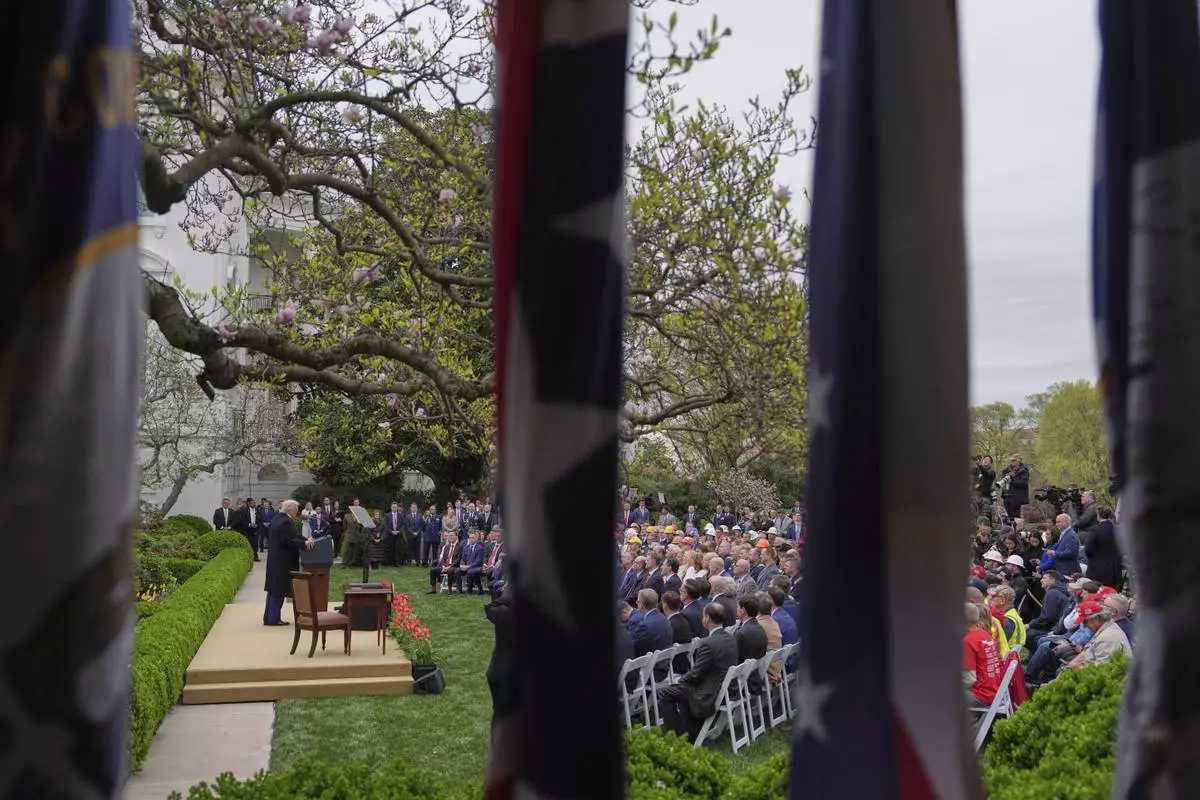
President Donald Trump speaks during an event to announce new tariffs in the Rose Garden of the White House, Wednesday, April 2, 2025, in Washington. (AP Photo/Evan Vucci)
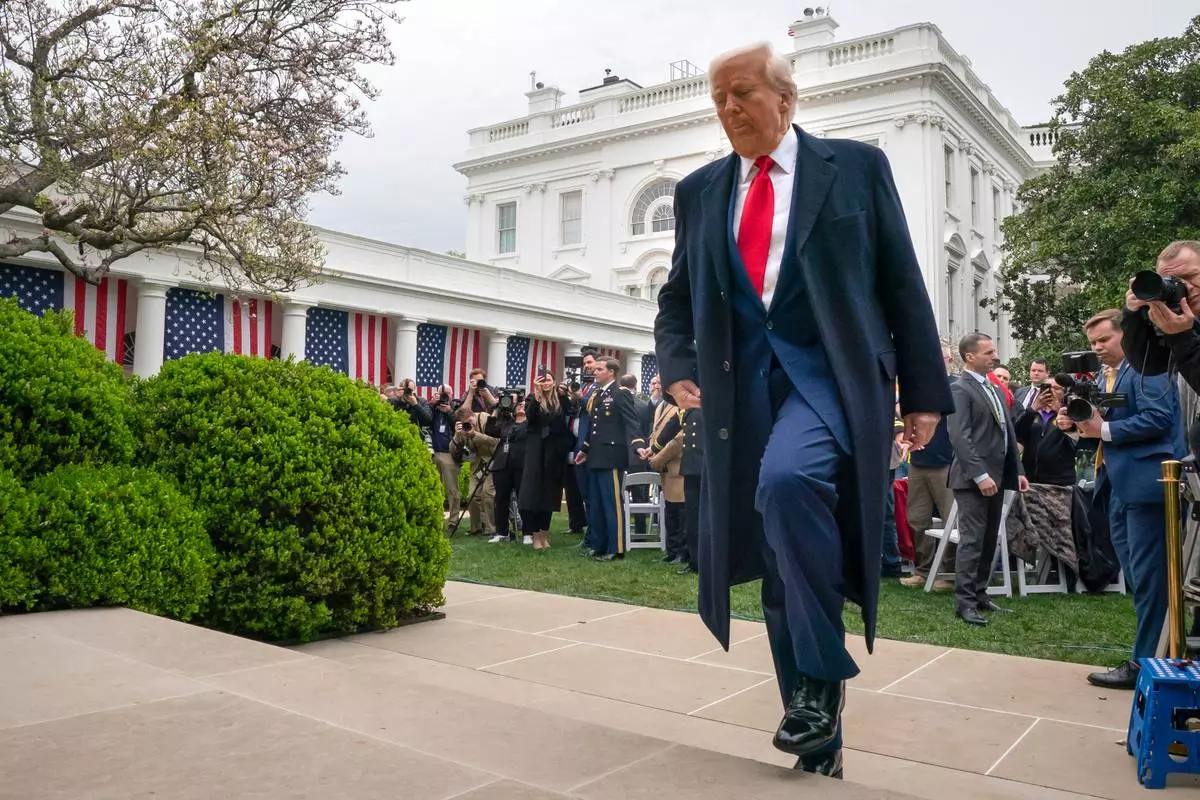
President Donald Trump walks toward the Oval Office after signing an executive order at an event to announce new tariffs in the Rose Garden of the White House, Wednesday, April 2, 2025, in Washington. (AP Photo/Mark Schiefelbein)
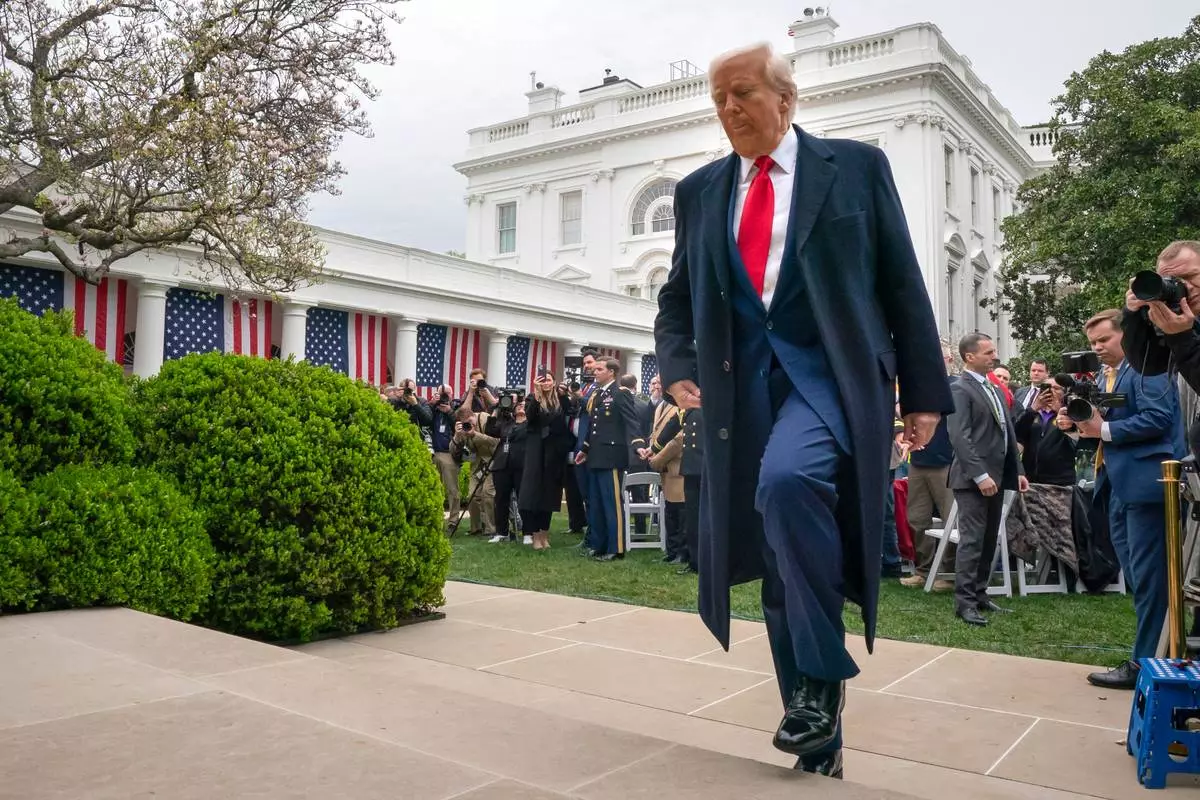
President Donald Trump walks toward the Oval Office after signing an executive order at an event to announce new tariffs in the Rose Garden of the White House, Wednesday, April 2, 2025, in Washington. (AP Photo/Mark Schiefelbein)
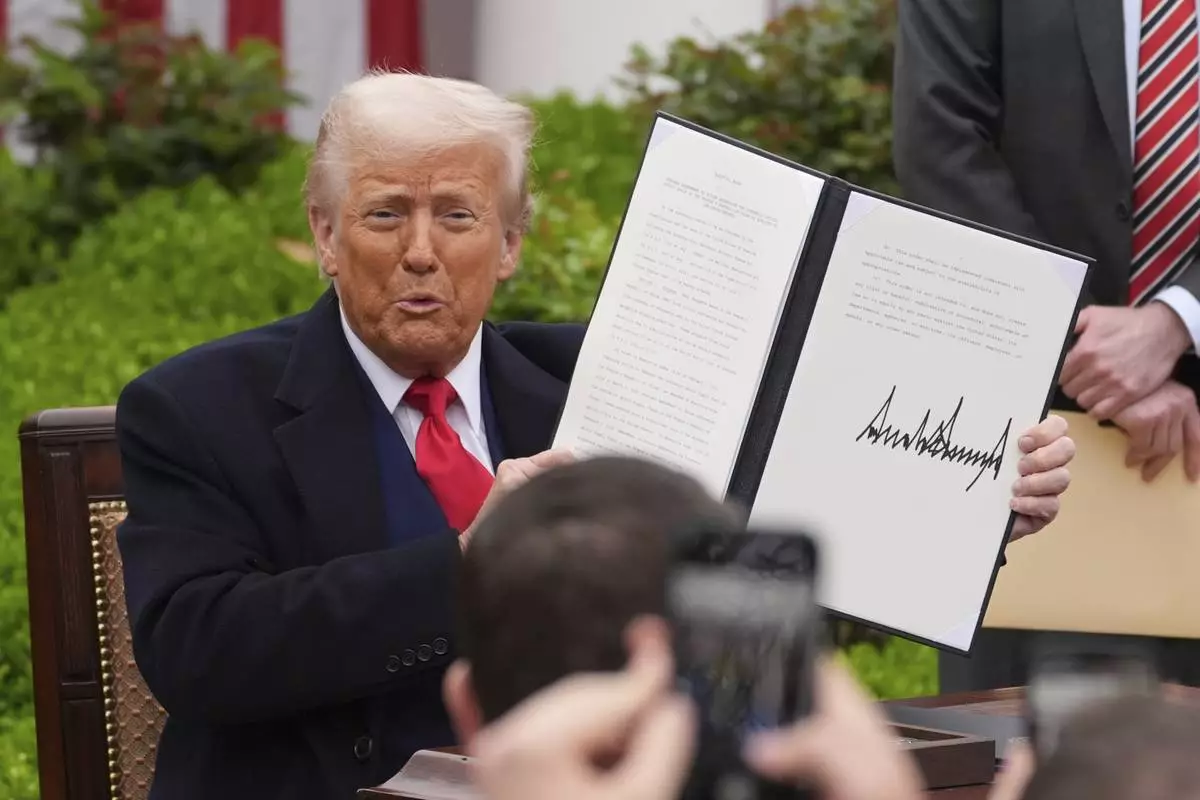
President Donald Trump holds a signed executive order during an event to announce new tariffs in the Rose Garden of the White House, Wednesday, April 2, 2025, in Washington. (AP Photo/Evan Vucci)
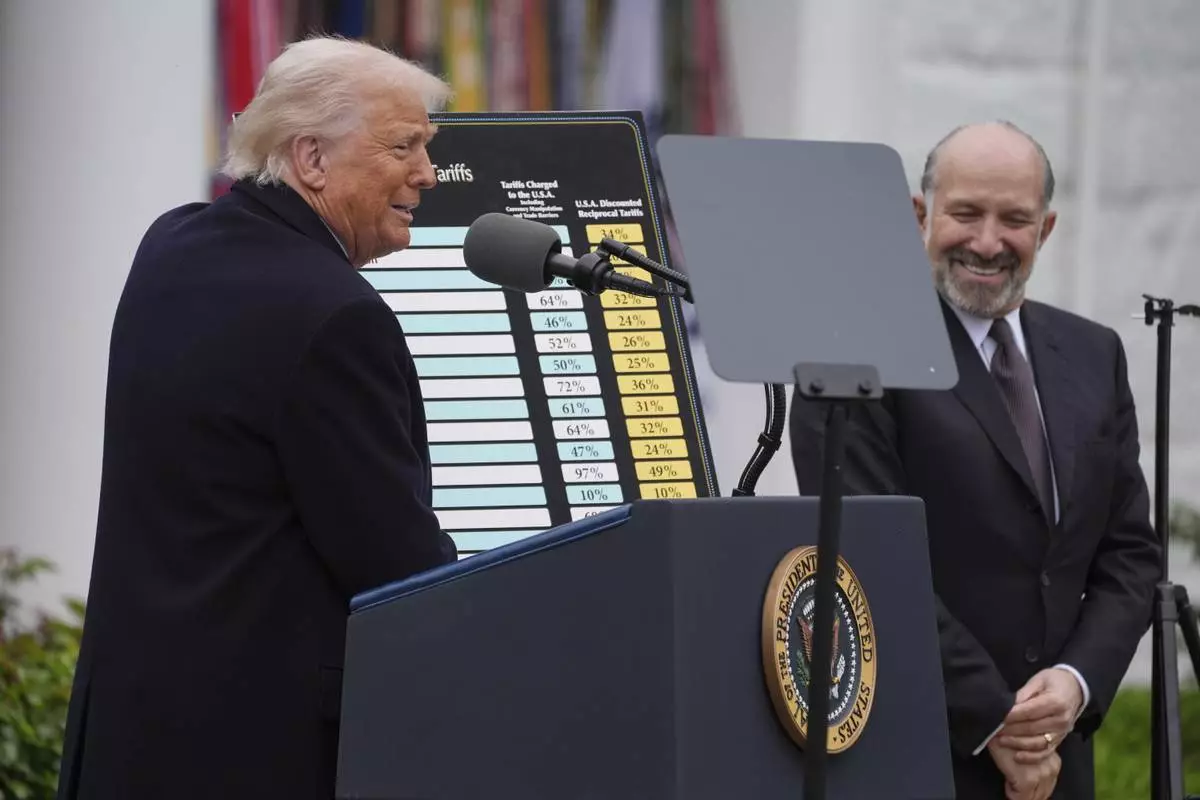
President Donald Trump speaks during an event to announce new tariffs in the Rose Garden of the White House, Wednesday, April 2, 2025, in Washington, as Commerce Secretary Howard Lutnick listens. (AP Photo/Evan Vucci)
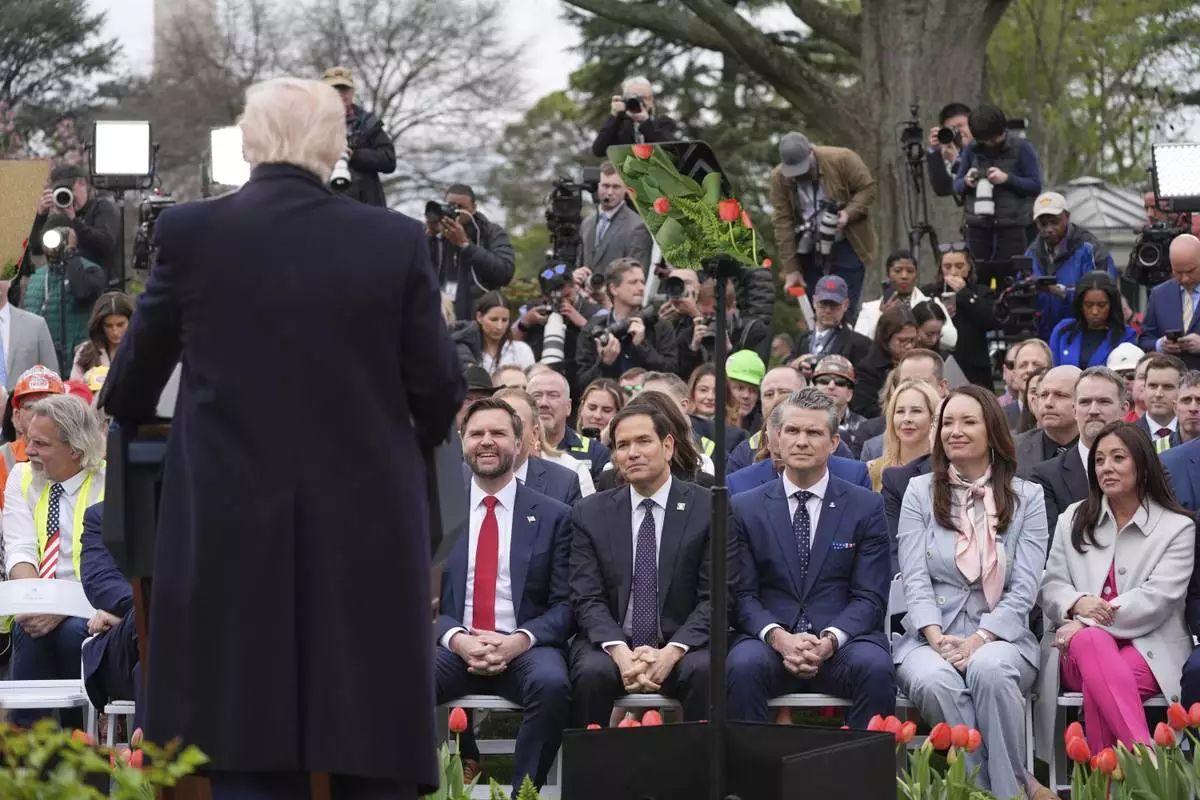
Vice President JD Vance, Secretary of State Marco Rubio, Defense Secretary Pete Hegseth listen President Donald Trump speaks during an event to announce new tariffs in the Rose Garden of the White House, Wednesday, April 2, 2025, in Washington. (AP Photo/Evan Vucci)
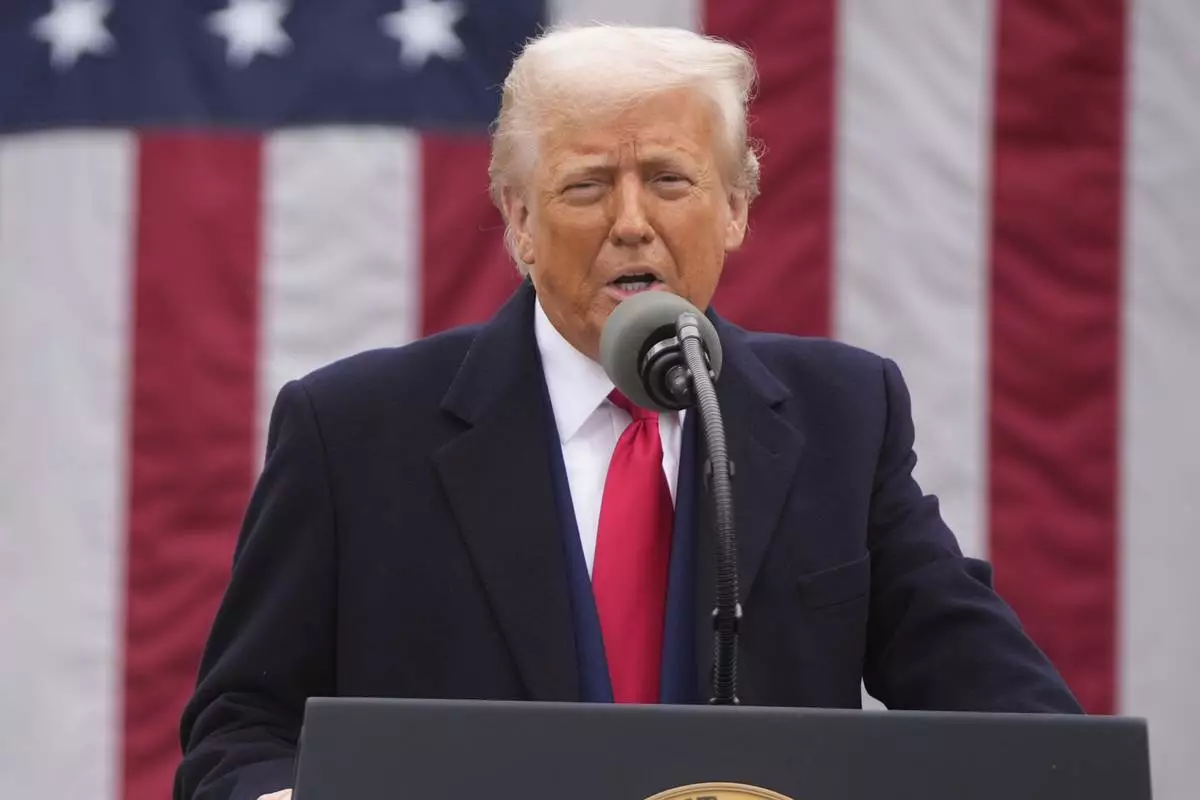
President Donald Trump speaks during an event to announce new tariffs in the Rose Garden at the White House, Wednesday, April 2, 2025, in Washington. (AP Photo/Mark Schiefelbein)
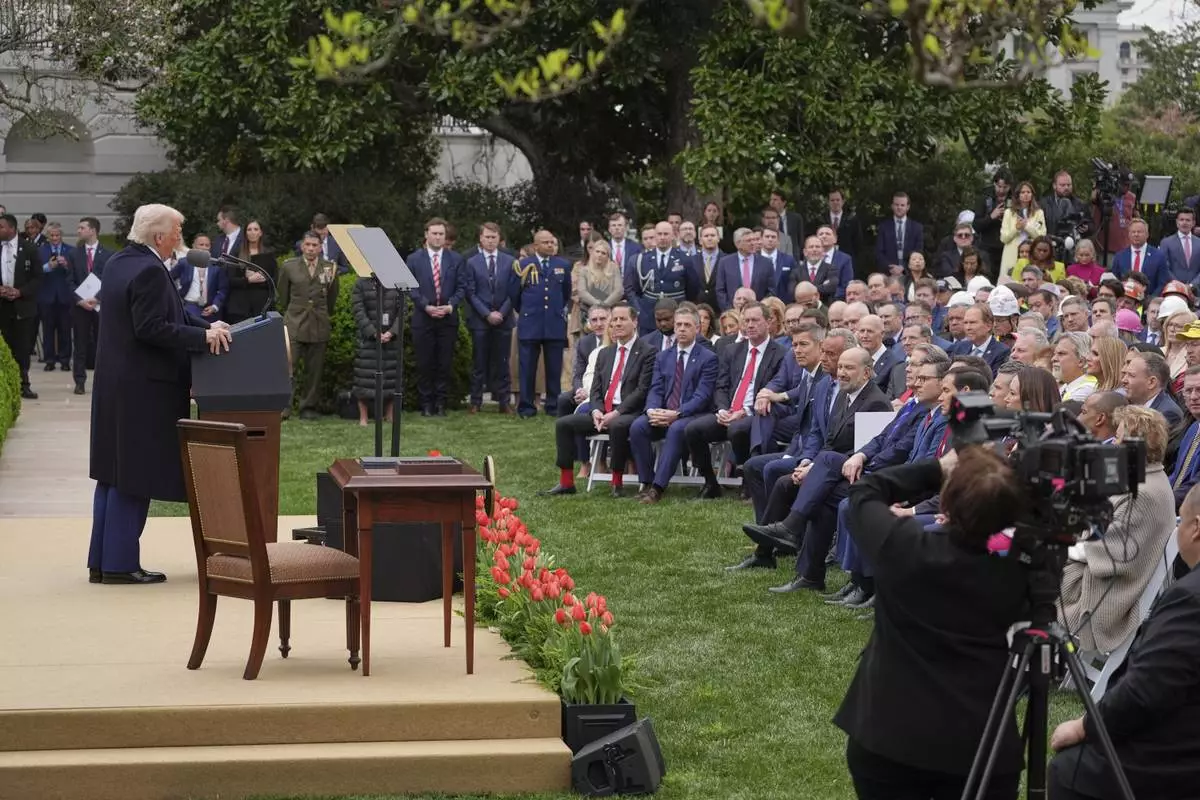
President Donald Trump speaks during an event to announce new tariffs in the Rose Garden of the White House, Wednesday, April 2, 2025, in Washington. (AP Photo/Evan Vucci)
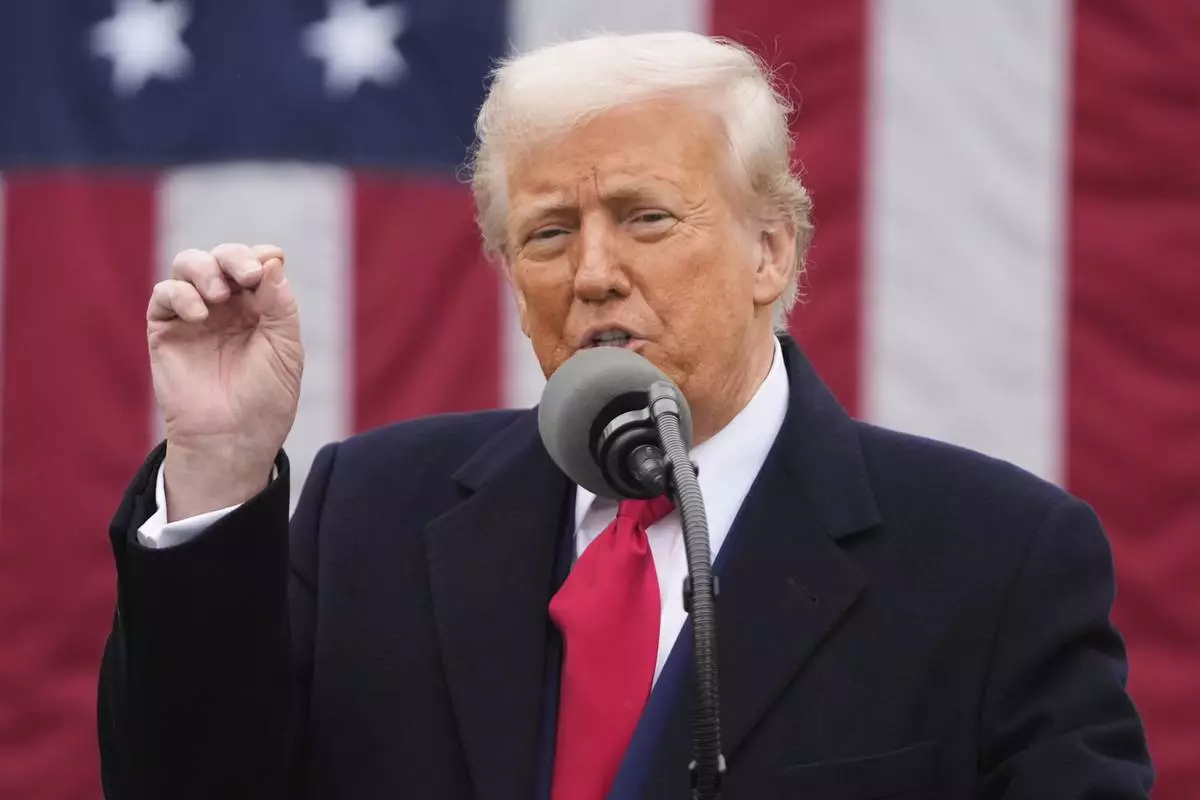
President Donald Trump speaks during an event to announce new tariffs in the Rose Garden at the White House, Wednesday, April 2, 2025, in Washington. (AP Photo/Mark Schiefelbein)
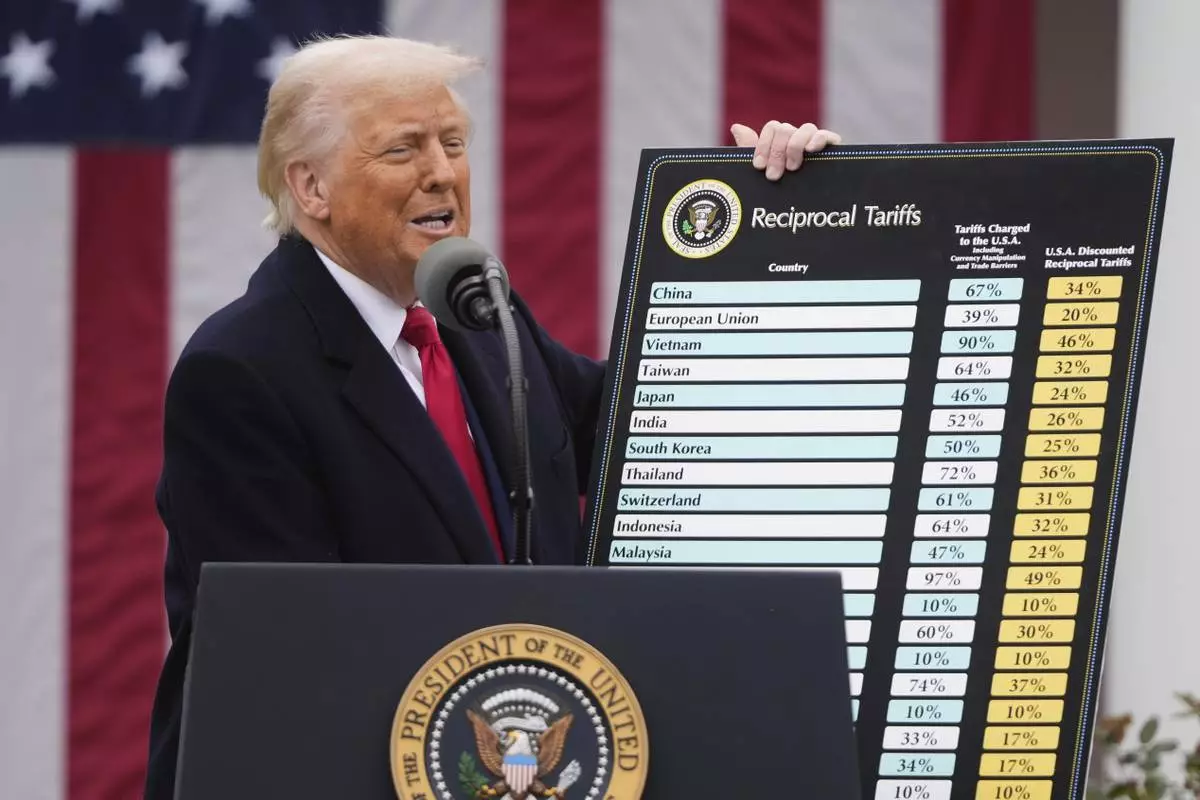
President Donald Trump speaks during an event to announce new tariffs in the Rose Garden at the White House, Wednesday, April 2, 2025, in Washington. (AP Photo/Mark Schiefelbein)
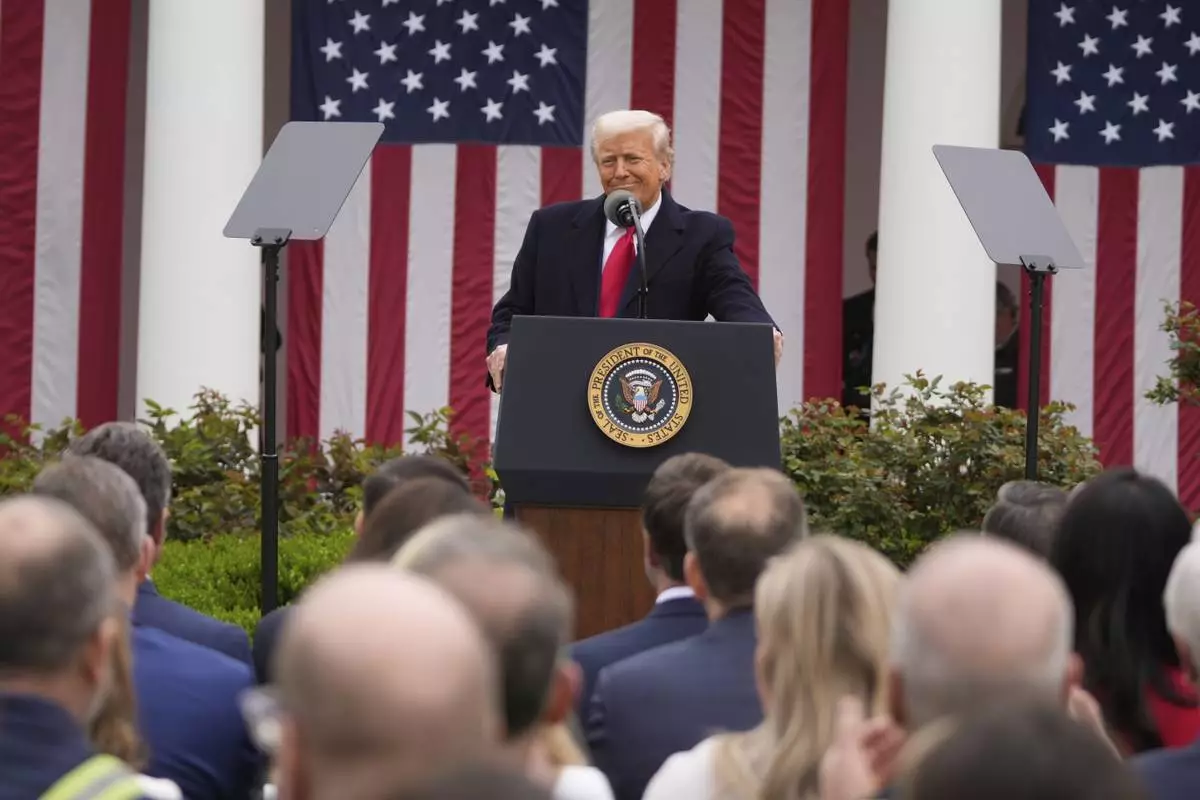
President Donald Trump speaks during an event to announce new tariffs in the Rose Garden at the White House, Wednesday, April 2, 2025, in Washington. (AP Photo/Mark Schiefelbein)
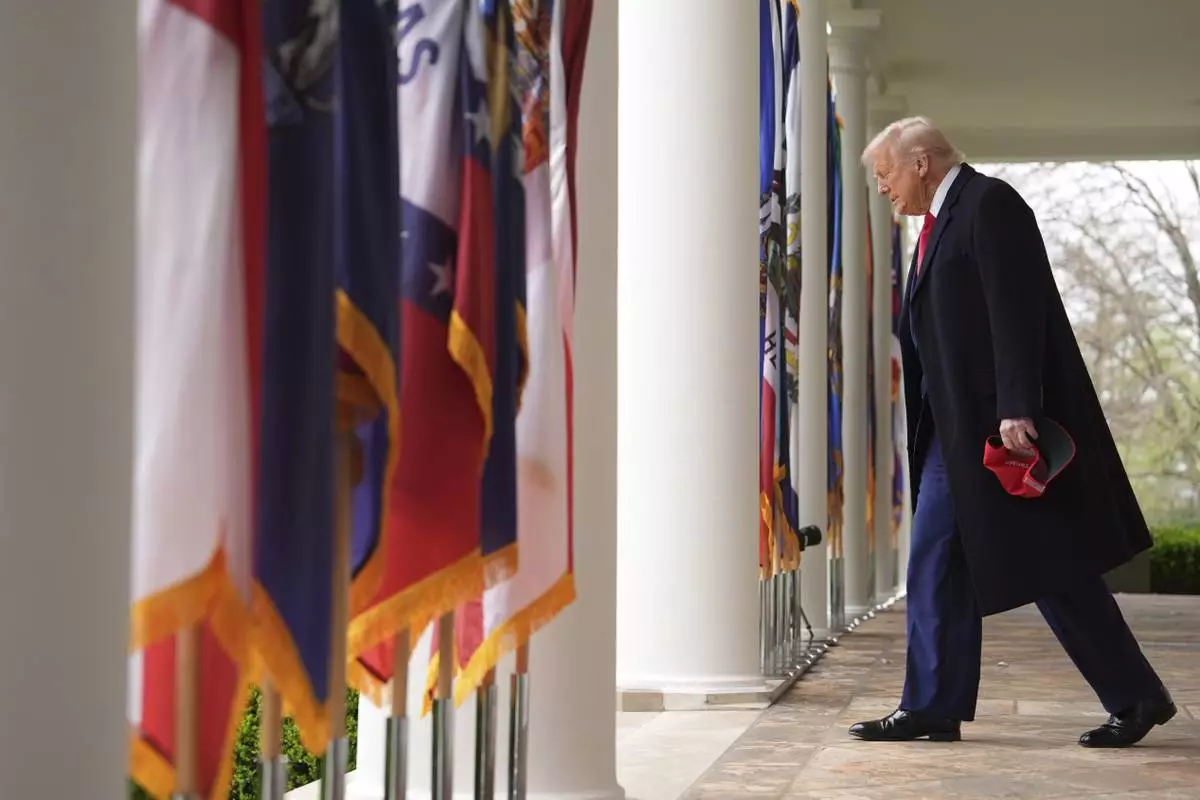
President Donald Trump arrives to speak during an event to announce new tariffs in the Rose Garden of the White House, Wednesday, April 2, 2025, in Washington. (AP Photo/Evan Vucci)
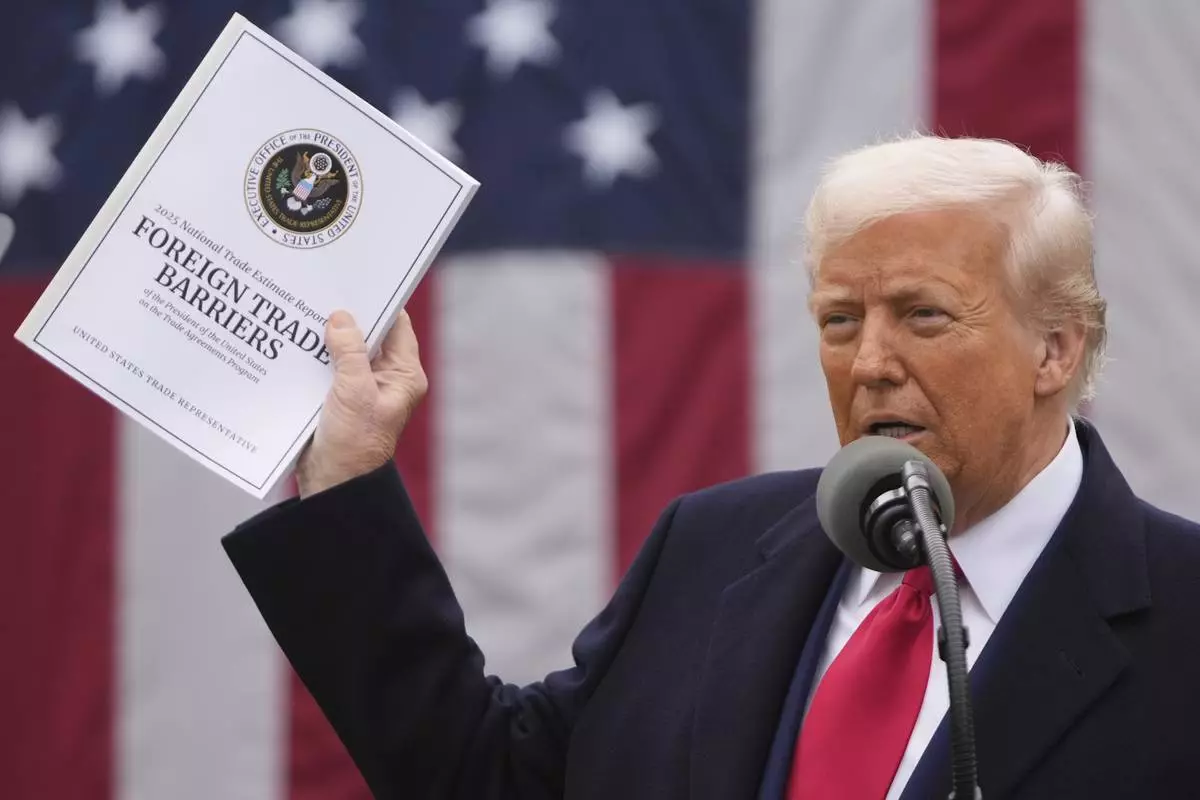
President Donald Trump speaks during an event to announce new tariffs in the Rose Garden at the White House, Wednesday, April 2, 2025, in Washington. (AP Photo/Mark Schiefelbein)
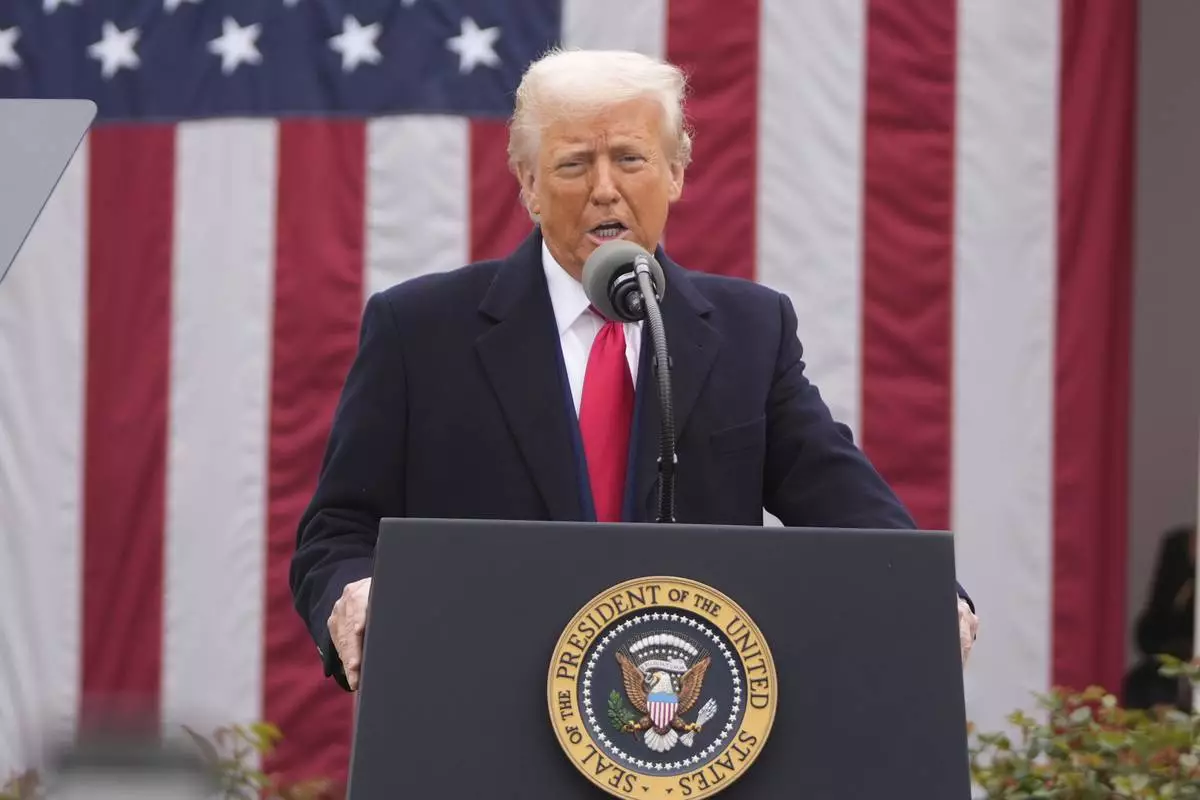
President Donald Trump speaks during an event to announce new tariffs in the Rose Garden at the White House, Wednesday, April 2, 2025, in Washington. (AP Photo/Mark Schiefelbein)
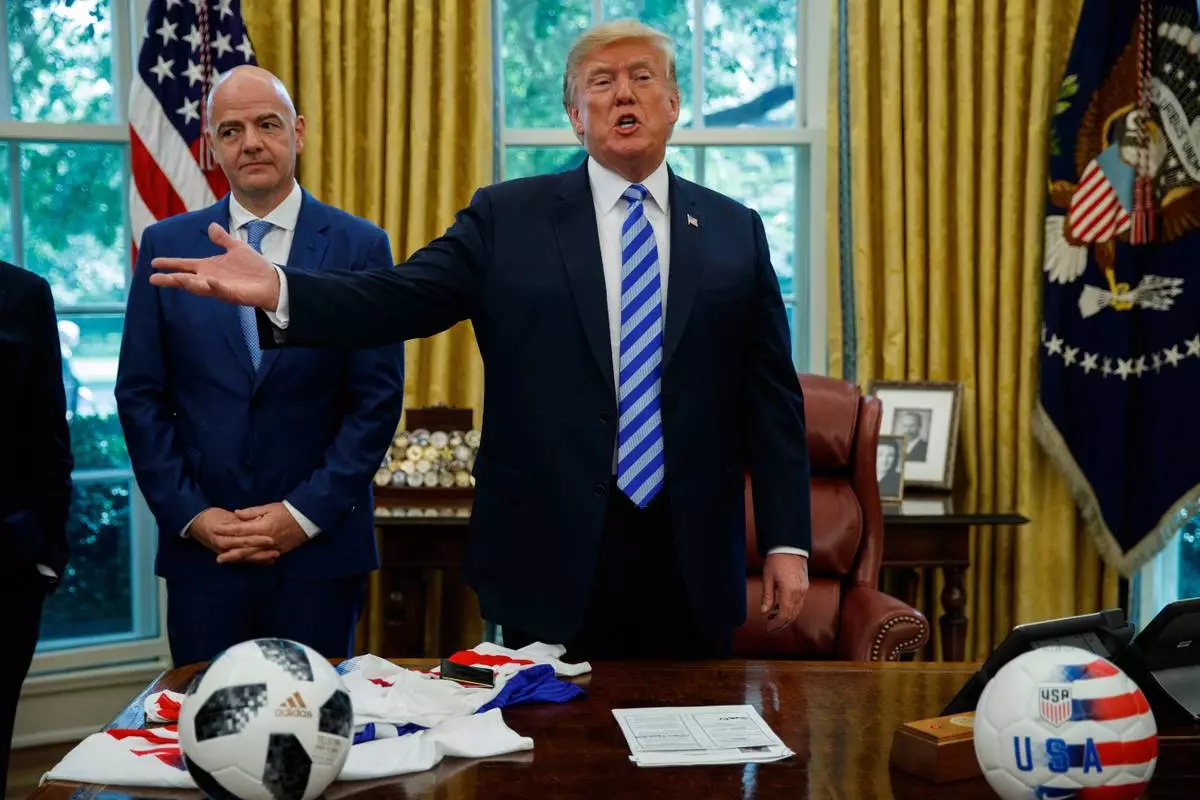
FILE - FIFA president Gianni Infantino, left, watches as President Donald Trump speaks to reporters during a meeting in the Oval Office of the White House, Aug. 28, 2018, in Washington. (AP Photo/Evan Vucci, File)
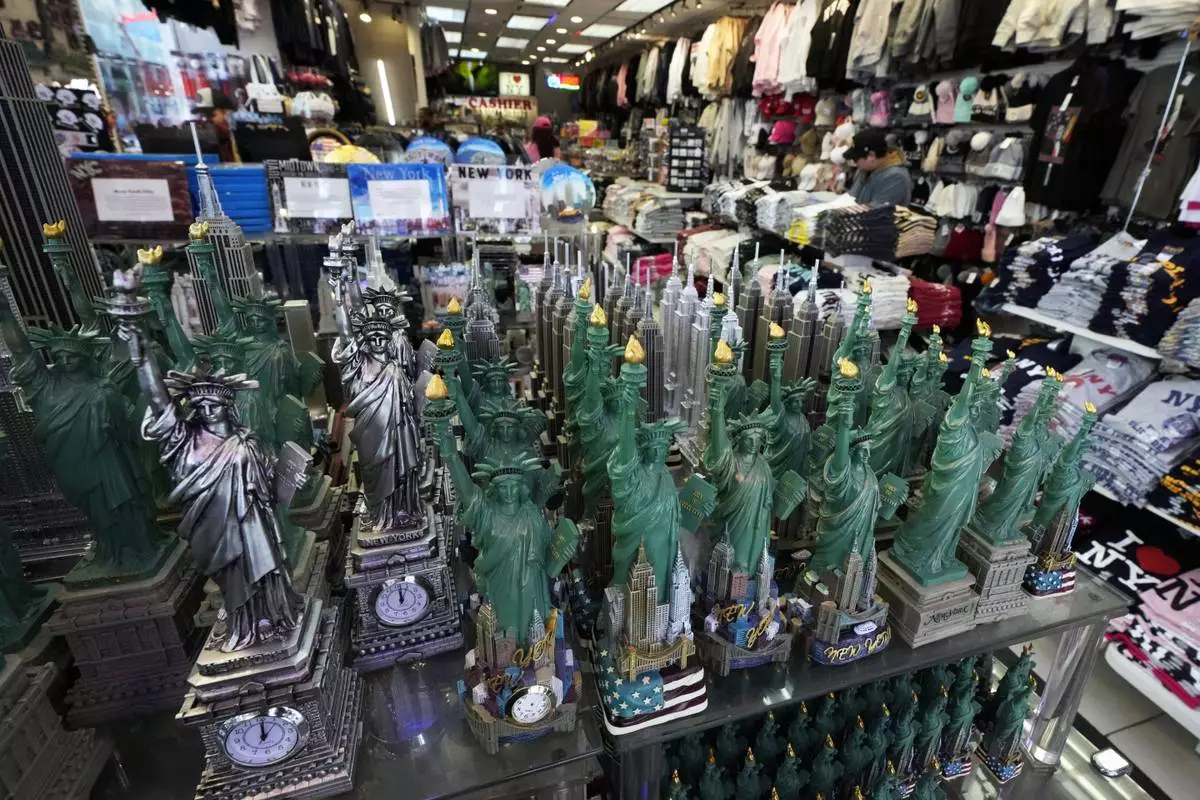
Miniature Statues of Liberty are among items for sale in a souvenir shop in New York's Times Square, Tuesday, April 1, 2025. (AP Photo/Richard Drew)
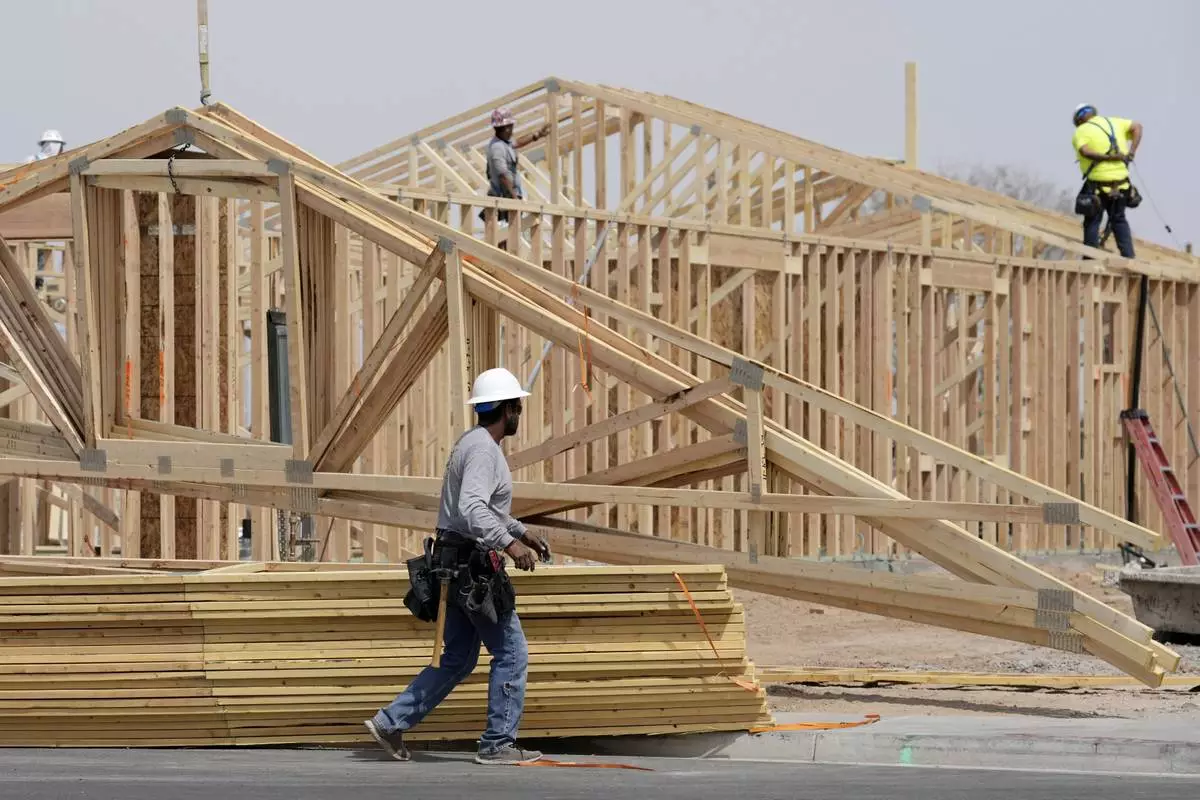
Construction workers install a lumber roof at a new home build Tuesday, April 1, 2025, in Laveen, Ariz. (AP Photo/Ross D. Franklin)
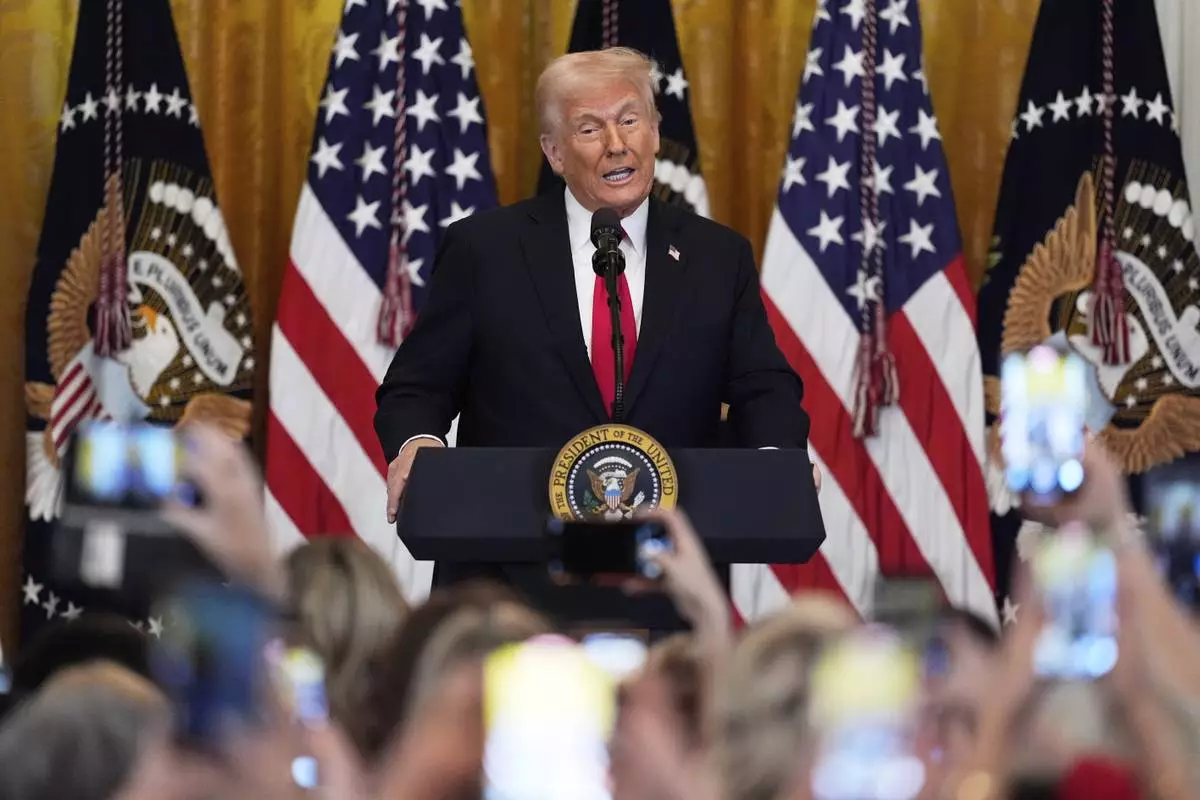
FILE - President Donald Trump speaks at a reception celebrating Women's History Month in the East Room of the White House, Wednesday, March 26, 2025, in Washington. (AP Photo/Mark Schiefelbein, File)