SAN DIEGO--(BUSINESS WIRE)--Apr 3, 2025--
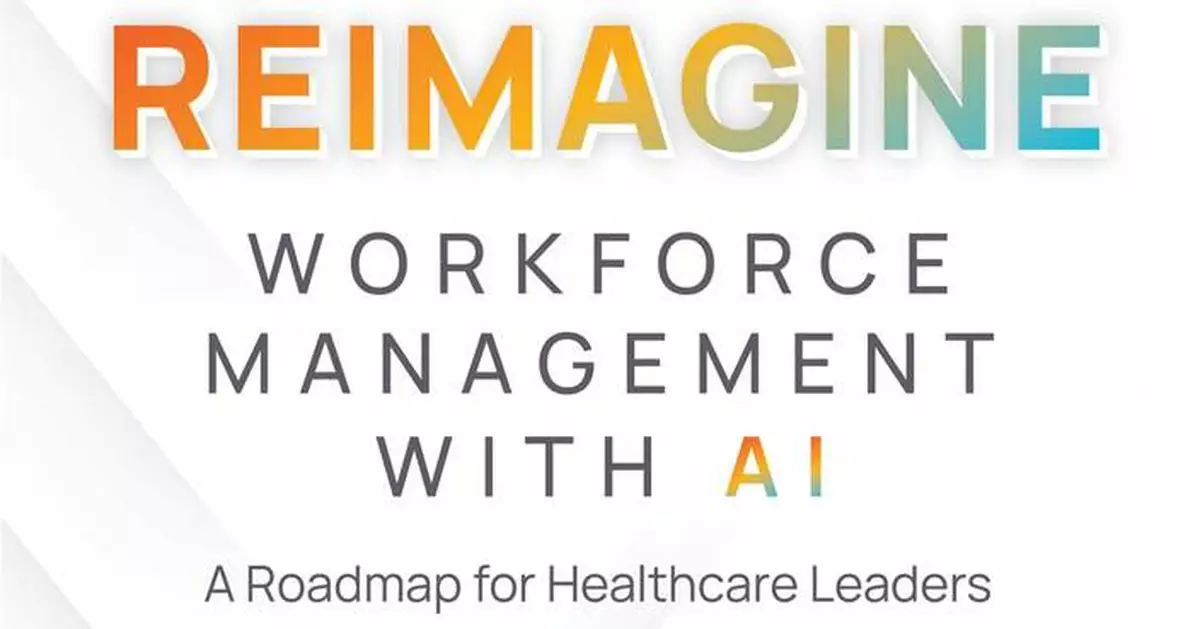
Nurse scheduling and staffing remains one of the most complex challenges for hospitals and health systems. With more than 15 years of experience in driving operational excellence in healthcare systems, Dr. Dani Bowie, DNP, RN, NE-BC, specializes in leading innovative staffing and scheduling technology initiatives that boost nurse engagement and cut labor costs. Dr. Bowie’s new book, “ Reimagine Workforce Management with AI: a Roadmap for Healthcare Leaders,” chronicles her journey with artificial intelligence (AI) over the past decade full of starts, pauses, failures, restarts and successes.
This press release features multimedia. View the full release here: https://www.businesswire.com/news/home/20250403623039/en/
“Nothing is more frustrating than being asked to do a job without the right tools and support and repeatedly getting less than optimal results,” said Dani Bowie, DNP, RN, NE-BC, SVP of Workforce AI at Aya Healthcare. “I’m able to show how healthcare leaders can use AI tools so that workforce planning, scheduling and staffing can be done with more precision than ever before.”
This eye-opening page-turner shows healthcare leaders how to revolutionize workforce management. Dr. Bowie’s 80-page book is chock full of tools, evidence-based best practices, key terminology and AI history. Healthcare leaders are given step-by-step solutions for how to create an effective scheduling and staffing system that includes operational strategies, goals and key performance indicators.
Topics and chapters include:
Industry peers and colleagues reviewed Dr. Bowie’s new book and have given rave reviews. “This is the book I wish I had when I took my first role as a healthcare executive. A must-read for anyone leading workforce strategy in healthcare,” said Rudy Jackson, DNP, MHA, RN, CENP, FNAP, SVP and System Chief Nurse Executive.
Hospitals and healthcare systems can attain a free copy of “Reimagine Workforce Management with AI: a Roadmap for Healthcare Leaders” here.
For more resources and information on how AI can transform your workforce, visit LotusOne.com.
About the author:
Dr. Dani Bowie brings over 15 years of experience in driving operational excellence in healthcare systems and specializes in leading innovative staffing and scheduling technology initiatives that boost nurse engagement and cut labor costs. She is currently the SVP of Workforce AI at Aya Healthcare.
Dr. Bowie received her Master of Science in nursing from Vanderbilt University School of Nursing and her doctorate in nursing from Yale University, where she built a predictive nurse scheduling model. She has conducted research and published extensively about the nursing workforce in many journals, including Nursing Economics, Nurse Leader and American Nurse.
Dr. Bowie has led and independently consulted for several health systems to design and build centralized staffing and scheduling offices, while simultaneously deploying staffing and scheduling technology platforms. She leverages her expertise in healthcare, technology, project and people management, along with her bold leadership strategies, to help organizations achieve clinical and financial KPIs.
About Aya Healthcare:
Aya Healthcare is the largest healthcare talent software and staffing company in the United States. Aya operates the world’s largest digital staffing platform delivering every component of healthcare-focused labor services, including travel nursing and allied health, per diem, permanent staff hiring, interim leadership, locum tenens and non-clinical professionals. Aya’s AI-enabled software solutions, which include vendor management, float pool technology, provider solutions and predictive analytics, combined with its digital talent marketplaces, provide hospital systems greater efficiencies, superior operating results and reduced labor costs. While technology drives efficiency and scale, Aya’s 6,000+ global employees power the company to deliver unparalleled accountability and exceptional experiences for clients and clinicians. Aya’s company culture is rooted in giving back and supports organizations around food security, education, healthcare, safe shelter and equity. To learn more about Aya Healthcare, visit www.ayahealthcare.com.
In Dr. Dani Bowie's new book, "Reimagine Workforce Management with AI: A Roadmap for Healthcare Leaders," healthcare leaders are given step-by-step solutions for how to create an effective scheduling and staffing system that includes operational strategies, goals and key performance indicators.

NEW YORK (AP) — U.S. stocks inched to more records Wednesday after oil prices fell and eased the pressure on households and businesses worldwide.
The S&P 500 edged up by less than 0.1% and added to its all-time high set the day before. The Dow Jones Industrial Average climbed 182 points, or 0.4%, and the Nasdaq composite gained 0.1% as both indexes also set records.
Stocks of companies with big fuel bills helped lead the way on hopes that lower oil prices will remove a big drag on their profits. Norwegian Cruise Line Holdings climbed 6.1%, and United Airlines rallied 6.3%. Delta Air Lines rose 3% and set an all-time high.
The price for a barrel of Brent crude oil fell 4.6% to $92.25 after the ceasefire between the United States and Iran appeared to hold despite the U.S. military launching what it called “self-defense” strikes in southern Iran. A barrel of benchmark U.S. crude fell even more, 5.5%, to settle at $88.68 and is back to where it was in mid-April on hopes that the United States and Iran can reach an agreement to reopen the Strait of Hormuz and allow oil tankers to exit the Persian Gulf for deliveries again.
Stocks have been able to run to records despite the painful inflation and uncertainty caused by high oil prices largely because companies have reported surprisingly strong profits for the start of 2026, and the forecast is for them to continue.
Bath & Body Works rallied 9.7%, and Abercrombie & Fitch climbed 8.9% after both reported bigger profit for the latest quarter than analysts expected. That’s even as U.S. consumers continue to say they’re feeling discouraged about the economy and inflation.
Lululemon Athletica rose 2.9% after reaching a deal with its founder, Chip Wilson, where it will add a former chief marketing officer of ESPN and a former co-CEO of On to its board of directors.
On the losing side of Wall Street was Dick’s Sporting Goods, which dropped 6% despite delivering a profit for the latest quarter that edged past expectations. Analysts pointed to how much profit it wrung out of each $1 in revenue, which some called a bit weak.
Oil-and-gas stocks also sank, hurt by the dropping prices for crude. Exxon Mobil fell 1.3%, and Chevron slipped 1.3%. Halliburton dropped 3.6% to bring its gain for the year so far back toward 40%.
All told, the S&P 500 rose 1.24 to 7,520.36. The Dow Jones Industrial Average climbed 182.60 points to 50,644.28, and the Nasdaq composite gained 18.55 to 26,674.73.
In the bond market, Treasury yields eased after falling oil prices took pressure off inflation. The yield on the 10-year Treasury slipped to 4.48% from 4.50% late Tuesday and from 4.67% roughly a week ago.
It’s a respite following recent gains for yields in bond markets worldwide, which threatened to slow economies and undercut prices for stocks and all kinds of other investments. High yields have already forced the average long-term U.S. mortgage rate to its most expensive level since last summer, and they could curtail companies’ borrowing to build the artificial-intelligence data centers that have supported the U.S. economy’s growth recently.
In stock markets abroad, indexes were mixed across Europe and Asia. South Korea’s Kospi was one of the world’s best performers and jumped 2.3% after SK Hynix, which is a big beneficiary of the AI boom, soared 9.3%.
A day before, Micron Technology surged to become the latest Big Tech company to be worth more than $1 trillion because of AI excitement. Its stock has more than tripled already in 2026, and analysts at UBS said Tuesday it could soar even more because of how fundamentally AI has improved demand for computer memory. It rose another 3.6% Wednesday.
AP Business Writer Elaine Kurtenbach contributed to this report.
Trader Edward Curran, left, and specialist Meric Greenbaum, center, work on the floor of the New York Stock Exchange, Friday, May 22, 2026. (AP Photo/Richard Drew)
A person looks at an electronic stock board showing Japan's Nikkei index at a securities firm Monday, May 25, 2026, in Tokyo. (AP Photo/Eugene Hoshiko)
A dealer walks past near the screens showing the Korea Composite Stock Price Index (KOSPI) and the foreign exchange rate between U.S. dollar and South Korean won at a dealing room of Hana Bank in Seoul, South Korea, Wednesday, May 27, 2026. (AP Photo/Lee Jin-man)
A dealer walks past near the screens showing the foreign exchange rates at a dealing room of Hana Bank in Seoul, South Korea, Wednesday, May 27, 2026. (AP Photo/Lee Jin-man)
A dealer walks past near the screens showing the Korea Composite Stock Price Index (KOSPI) and the foreign exchange rate between U.S. dollar and South Korean won at a dealing room of Hana Bank in Seoul, South Korea, Wednesday, May 27, 2026. (AP Photo/Lee Jin-man)
A dealer stands near the screens showing the Korea Composite Stock Price Index (KOSPI), the foreign exchange rate between U.S. dollar and South Korean won and the Korean Securities Dealers Automated Quotations (KOSDAQ) at a dealing room of Hana Bank in Seoul, South Korea, Wednesday, May 27, 2026. (AP Photo/Lee Jin-man)