Skip to Content Facebook Feature Image

Humanitarian organizations commend China for swift disaster response in Myanmar

China

China

China

Humanitarian organizations commend China for swift disaster response in Myanmar

2025-04-04 17:52 Last Updated At:19:37

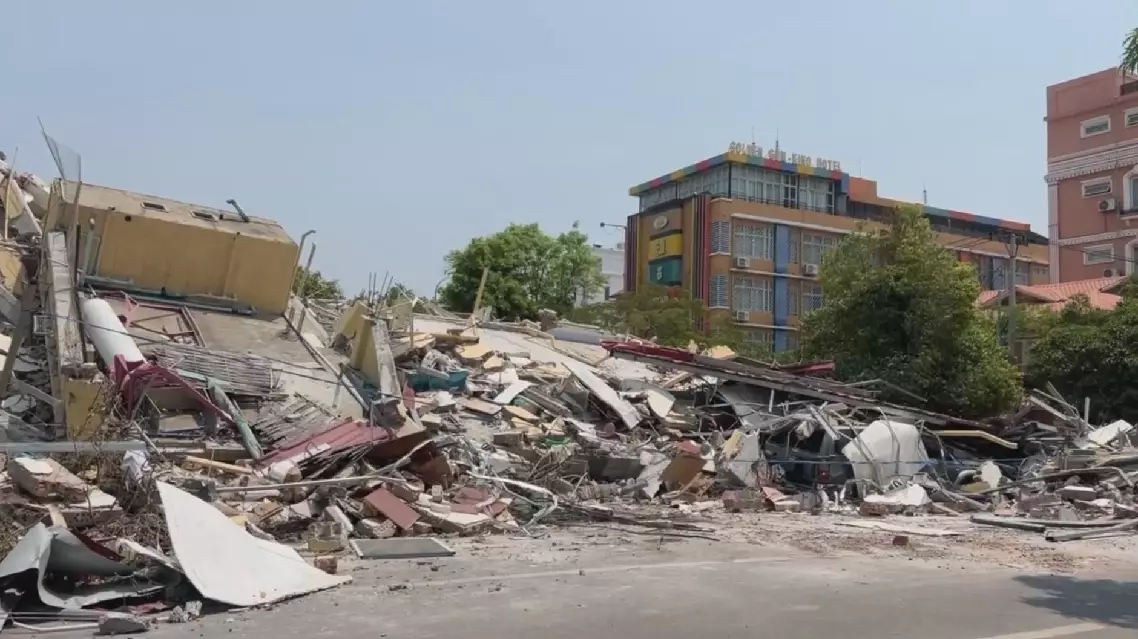
International humanitarian organizations, including the International Committee of the Red Cross (ICRC) and the International Federation of Red Cross and Red Crescent Societies (IFRC), emphasized the widespread destruction caused by the devastating earthquake in central Myanmar and commended China's rapid response to the crisis.

The death toll from the 7.9-magnitude earthquake has risen to 3,145, with 4,589 people injured and 221 reported missing, the Myanmar Radio and Television reported on Thursday.

Mandalay, Bago, Magway, the northeastern Shan state, Sagaing, and Nay Pyi Taw are among the hardest-hit regions.

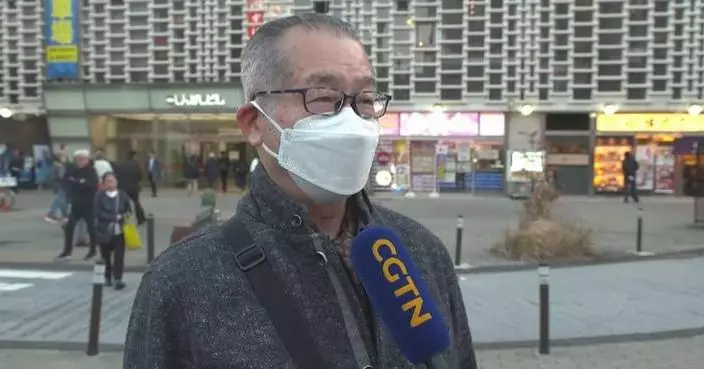
During interviews with China Global Television Network (CGTN), staff from the two global humanitarian organizations emphasized that numerous quake-hit areas remain inaccessible.

"There are many areas that we are still trying to access and see what the effects are and assess the situation. As you can imagine, a lot of the way of transportation to get to those areas has been destroyed and so accessing those communities has been really difficult," said Stephanie Xu, a Public Relations specialist at ICRC Myanmar.

"It's been a week now since the earthquake in Myanmar. We're still getting an emerging picture of the scale of the damage and the loss of life. Countless people are on the streets. People are still hoping that their loved ones might still be rescued. But hope is fading. There's clearly not enough medical care, not enough water. Electricity is down, water is not being pumped. It's extremely hot. These were some of the most vulnerable people in the world anyway, and now they've been dealt another terrible blow," said Alexander Matheou, Asia-Pacific regional director for the IFRC.

Stephanie Xu noted that damaged infrastructure and logistical hurdles are delaying the delivery of essential supplies, such as medicines, food, drinking water, and hygiene products, to the disaster-stricken area.

"With the ICRC, we have already sent out convoys of materials for the communities. So we have sent chlorine tabs for clean water. We sent help kits. We have sent body bags as well. I imagine in the next little while these items will be slowly dwindling as we recognize the needs for more of our populations. We also have relatively low amounts of food, they need food and basic supplies for cooking, like oil and again water. So, these are all concerns that we need to take into consideration. And of course, we are assessing on the ground how we can provide those items to the populations as well," she said.

The two humanitarian organizations highlighted China's swift response efforts, including the deployment of search and rescue teams, the provision of medical support, and the involvement of the Red Cross Society of China, while acknowledging the broader challenges posed by the disaster.

"From what we have seen so far and mostly that's from our colleagues on the ground is that the search and rescue efforts are extremely courageous, and they are applauded for their fast arrival and fast delivery of support. We have seen them in many parts of the affected areas in Nay Pyi Taw, in Mandalay. And so again, the fact that they are there at the center of the of the earthquake, but also supporting those in the areas that have been most affected is really courageous. We really applaud that and we recognize the efforts," Stephanie Xu continued.

"It was really encouraging right at the beginning. The search and rescue workers of the Red Cross Society of China, they were among the very first neighbors from other countries coming into providing lifesaving support. We hope that China will continue to play an active role in the relief phase, while people need water, shelter, food and in the long-term recovery phase," Matheou said.
Humanitarian organizations commend China for swift disaster response in Myanmar

Humanitarian organizations commend China for swift disaster response in Myanmar
South China's Guangdong Province is accelerating its transformation into an international medical tourism hub, positioning itself as a destination for patients worldwide seeking affordable, high-quality care.

The push follows a joint initiative announced in late March by nine Chinese government departments, including the Ministry of Commerce, aimed at boosting spending by foreign tourists and enhancing exports of tourism services as part of broader efforts to expand the country's service sector.

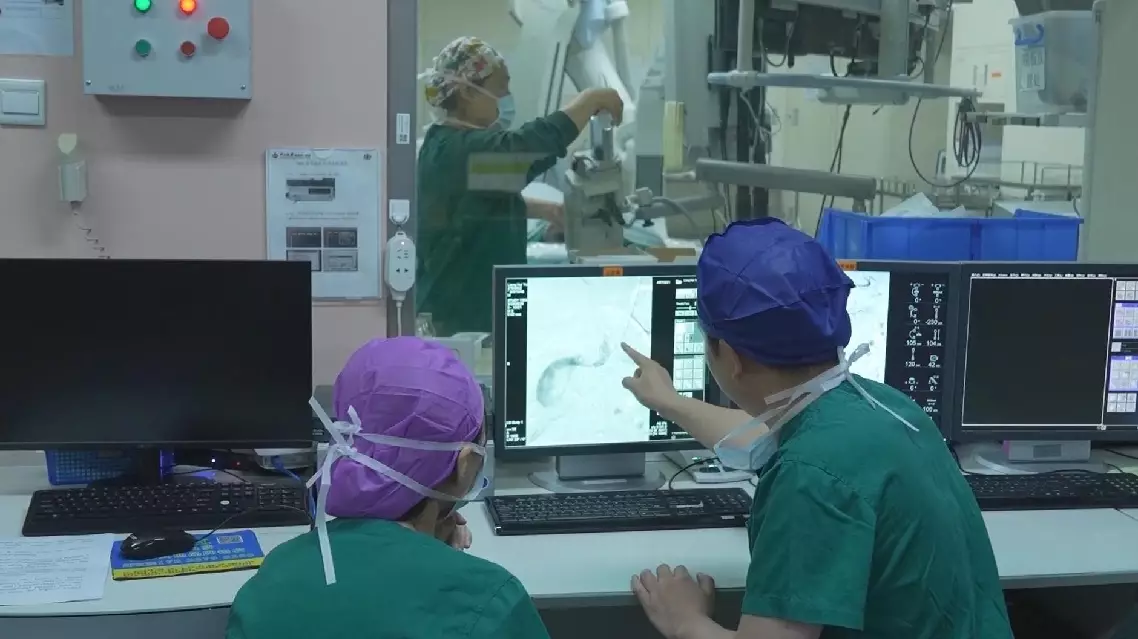
Every day, some of the most complex surgeries are performed here. Li Zilun, deputy director of the division of vascular surgery at the First Affiliated Hospital of Sun Yat‑sen University, is among the doctors capable of carrying out these intricate procedures.

He recently completed surgery on a patient with an aortic aneurysm, a condition often described as a "time bomb" in the body’s main artery, increasingly common in aging societies around the globe. Li also specializes in highly difficult and pioneering procedures, including repairing leaks caused by failed grafts.

"This was a very challenging case. And then, we implanted the covered stent to eliminate the endoleak. Actually, the outcome was pretty good. The patient will be discharged today," said Li Zilun.

The ability to handle such complex cases -- combining international techniques with domestically produced devices -- is drawing patients from around the world to seek treatment. In addition, high safety standards and low costs are also major draws.

"Our government is encouraging innovation. So, lots of physicians -- including our vascular surgeons -- we are actively involved in the innovation that helps to increase the effectiveness and safety, and also bring down the cost," said Li.

This hospital is one of the first in Guangdong to be designated by the provincial health commission as a pilot site for building an international medical service hub.

The growing number of patients has pushed the hospital to explore new ways to transform every step -- from treatment to payment and everything in between -- into a seamless experience, reducing waiting times and delivering better care for patients.

"I think it's fast. When the patient come here for just about, I think, one week, you can solve the problem," said Xiao Haipeng, president of the First Affiliated Hospital of Sun Yat-sen University.

The hospital is also deepening its international cooperation with top-tier medical institutions, including those at Harvard University.

"Not just for China, for the whole globe, we are facing health care challenges -- emerging infectious disease and chronic, lung infectious diseases, and also the aging population, also the shortage of healthcare workforce," said Xiao.

In response to these challenges, China is promoting its own solutions, including aggressive innovation in artificial intelligence (AI)-driven workflows, while stepping up research and development investment and global engagement along the way.

"In recent years, the innovation in Western medicine is dramatically growing. An example of my hospital -- in the past few years, we have 140 innovations and seven of them are international leading innovations," said Xiao.

As global demand for medical tourism grows, China is positioning itself as a new destination. Official data shows that the number of foreign patients in Guangdong increased by 20 percent last year. Among them, the growth in inpatient admissions was even faster, rising by 76 percent.

Guangdong fast-tracks pilot for int'l medical service hub

Guangdong fast-tracks pilot for int'l medical service hub

Recommended Articles