Multiple Chinese chambers of commerce on Saturday voiced their firm opposition to the unilateral imposition of "reciprocal tariffs" by the United States.
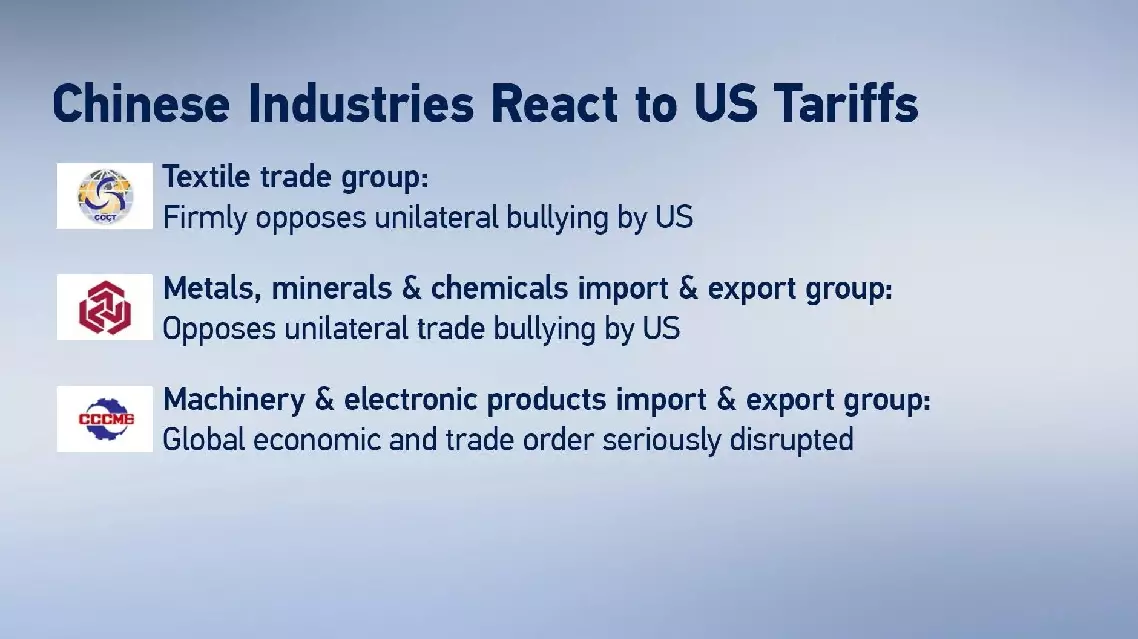
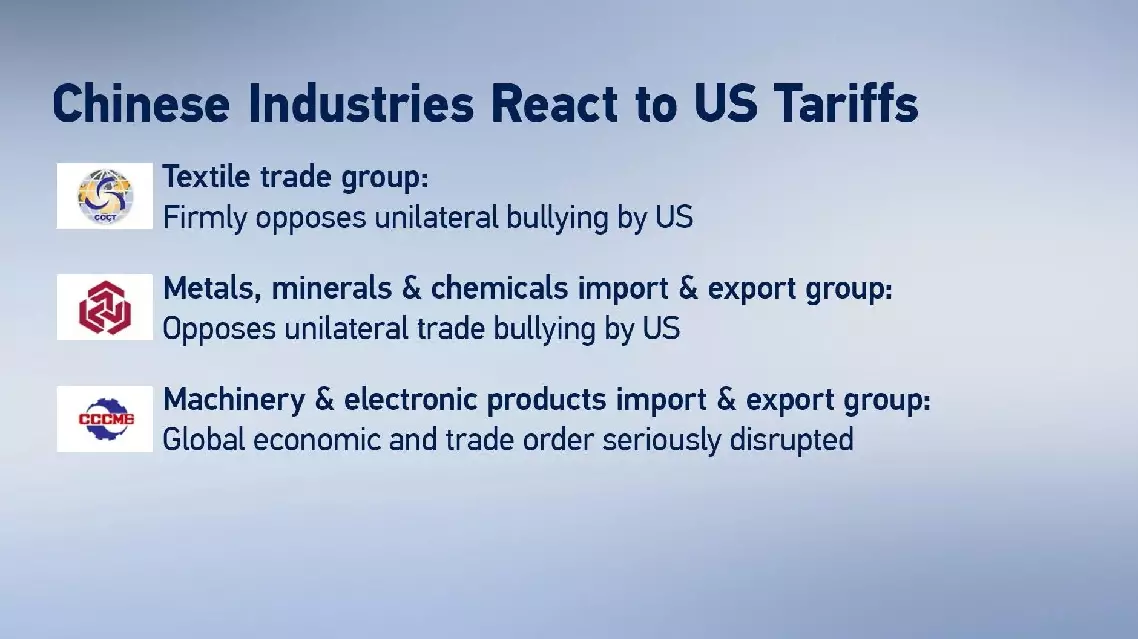
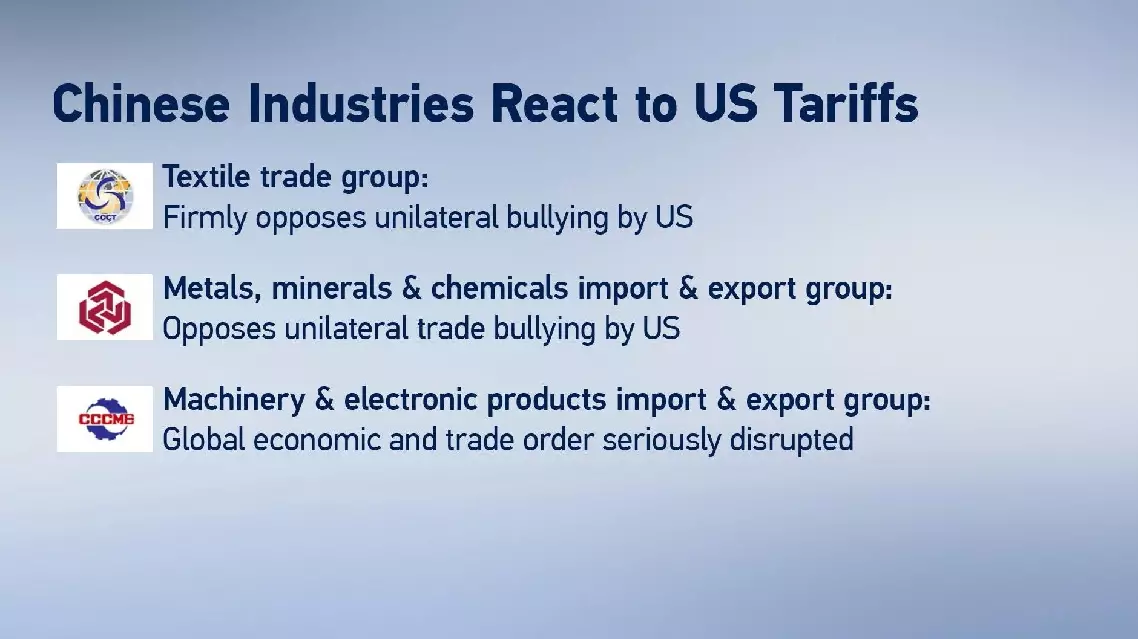
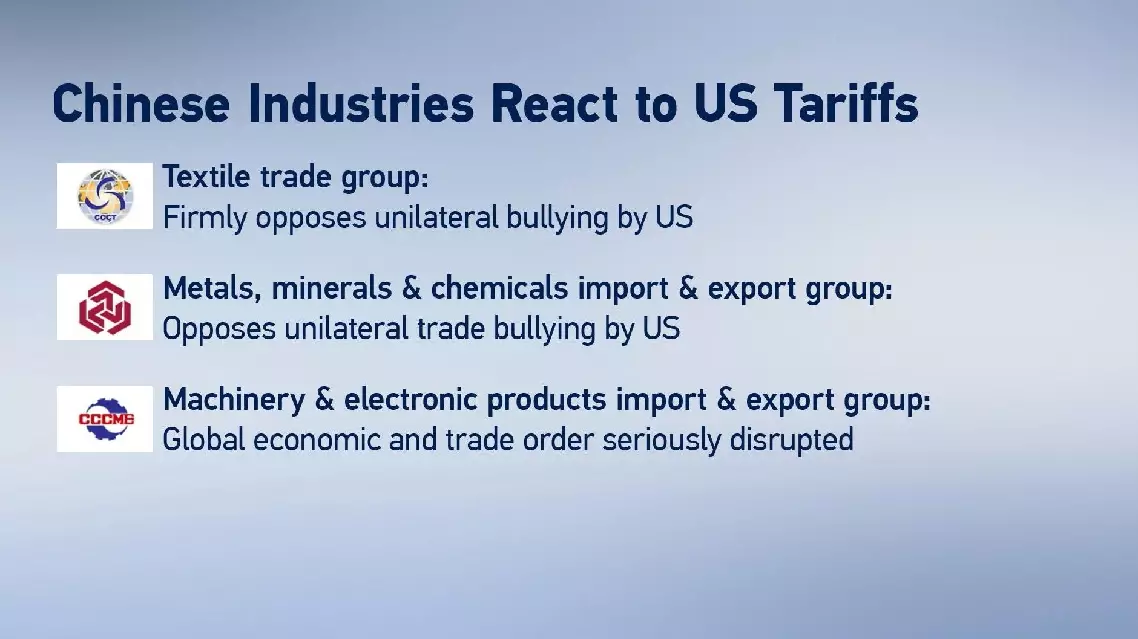
They also expressed strong support for the Chinese government in taking all necessary countermeasures, according to statements from the chambers of commerce for import and export in various sectors, including those related to textiles, foodstuffs, machinery and electronics, light industrial goods, medicines and health products, as well as metals, minerals and chemicals.
Click to Gallery
Chinese chambers of commerce resolutely oppose US "reciprocal tariffs"
Chinese chambers of commerce resolutely oppose US "reciprocal tariffs"
Chinese chambers of commerce resolutely oppose US "reciprocal tariffs"
Chinese chambers of commerce resolutely oppose US "reciprocal tariffs"
Chinese chambers of commerce resolutely oppose US "reciprocal tariffs"
Chinese chambers of commerce resolutely oppose US "reciprocal tariffs"
Multiple Chinese chambers of commerce resolutely oppose US "reciprocal tariffs"
Following the U.S. move to slap "reciprocal tariffs" on all its trading partners, China announced that it will impose an additional 34-percent tariff on all products imported from the United States starting from April 10.
Other measures against U.S. tariffs included the implementation of rare earth export controls starting April 4, the addition of 11 U.S. companies to the unreliable entity list, 16 U.S. companies being placed on the export control list, and the suspension of six U.S. firms from exporting food and agricultural products to China.
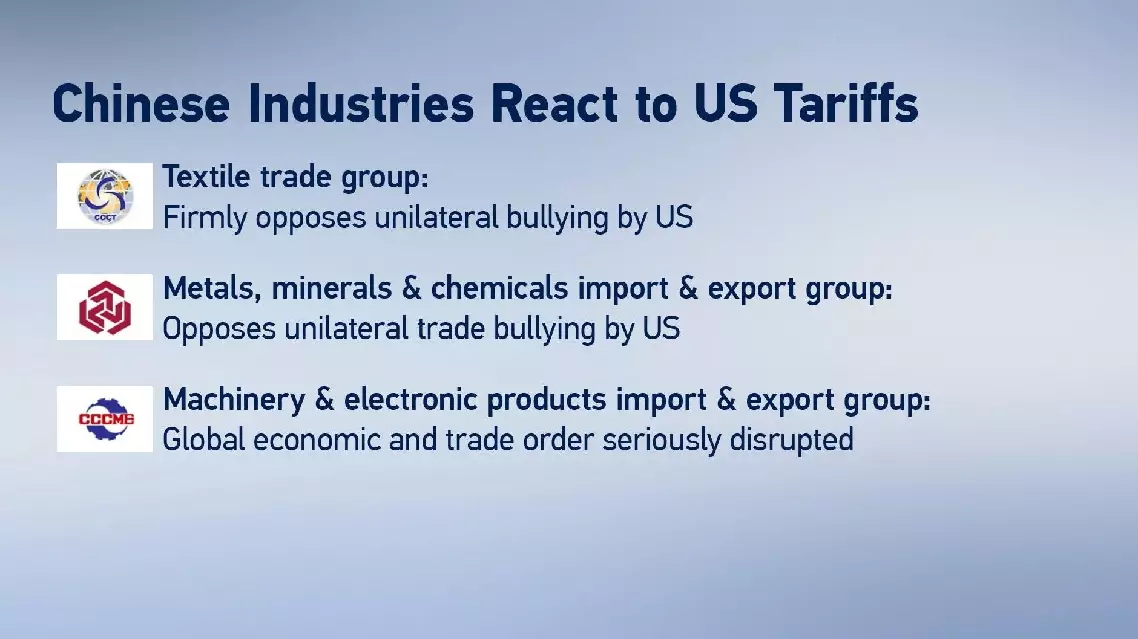
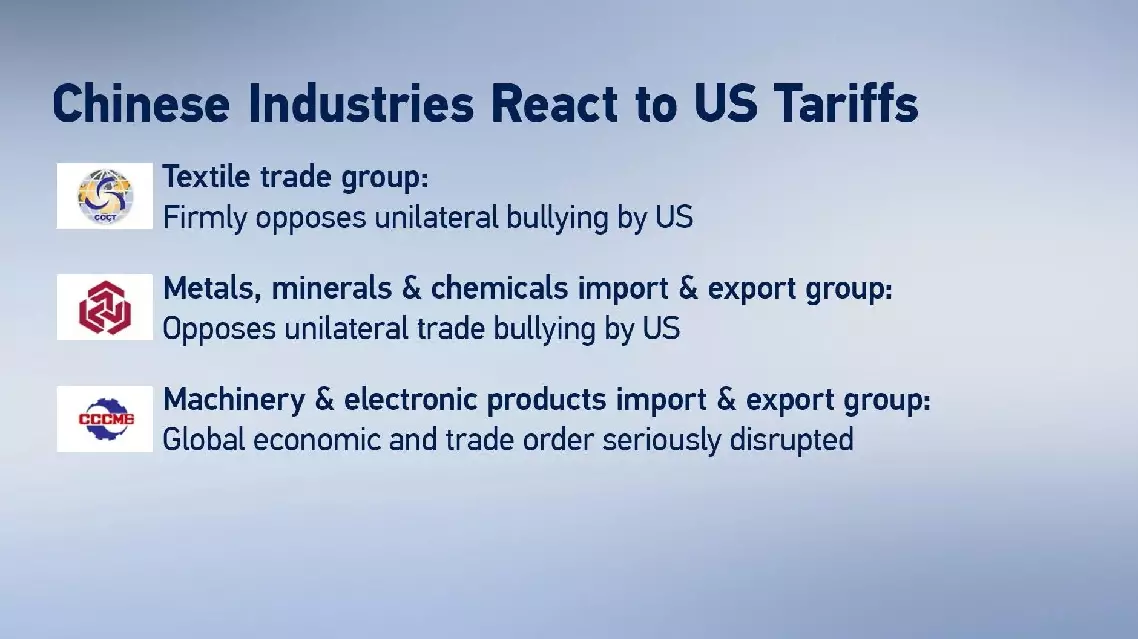
In its statement, the China Chamber of Commerce for Import and Export of Textiles called on the United States to listen to the voices of the global industry and consumers, correct its harmful and self-destructive actions as soon as possible, and return to the right course.
The China Chamber of Commerce of Import and Export of Foodstuffs, Native Produce and Animal By-Products firmly opposed the U.S. trade protectionism and called on enterprises to unite, strengthen cooperation, and jointly explore domestic and international markets.
The China Chamber of Commerce for Import and Export of Machinery and Electronic Products condemned the U.S. unilateral trade protectionism, noting the move not only seriously violates international trade rules, but also seriously disrupts the global economic and trade order. It urged its members and non-members to to remain united in adhering to an open, win-win internationalization strategy. It emphasized the importance of actively adjusting foreign trade strategies, diversifying export markets, and accelerating the transformation and upgrading of foreign trade.
The China Chamber of Commerce for Import and Export of Light Industrial Products and Arts-Crafts stated that U.S. actions seriously violate WTO rules and will have a significant negative impact on global economic development and supply chain stability. It also appealed to the global industry, industry enterprises from various countries, and upstream and downstream partners to join forces in opposing the U.S. trade bullying practices.
The China Chamber of Commerce of Metals, Minerals and Chemicals Importers and Exporters urged the U.S. government to immediately revoke its unilateral tariff measures.
Highlighting that the right to health of people worldwide should not be undermined by unfair trade measures, the China Chamber of Commerce for Import and Export of Medicines and Health Products strongly opposed the unilateral trade bullying actions taken by the United States.
Chinese chambers of commerce resolutely oppose US "reciprocal tariffs"
Chinese chambers of commerce resolutely oppose US "reciprocal tariffs"
Chinese chambers of commerce resolutely oppose US "reciprocal tariffs"
Chinese chambers of commerce resolutely oppose US "reciprocal tariffs"
Chinese chambers of commerce resolutely oppose US "reciprocal tariffs"
Chinese chambers of commerce resolutely oppose US "reciprocal tariffs"
Multiple Chinese chambers of commerce resolutely oppose US "reciprocal tariffs"