China's Shenzhou-19 crew, who has worked in the Tiangong space station for more than 150 days, performed a series of scientific experiments and tests last week, covering fields such as mechanics, robotics and medicine.
The experiments were conducted by the three astronauts -- Cai Xuzhe, Song Lingdong and Wang Haoze, after they completed the third extravehicular activities.
Click to Gallery
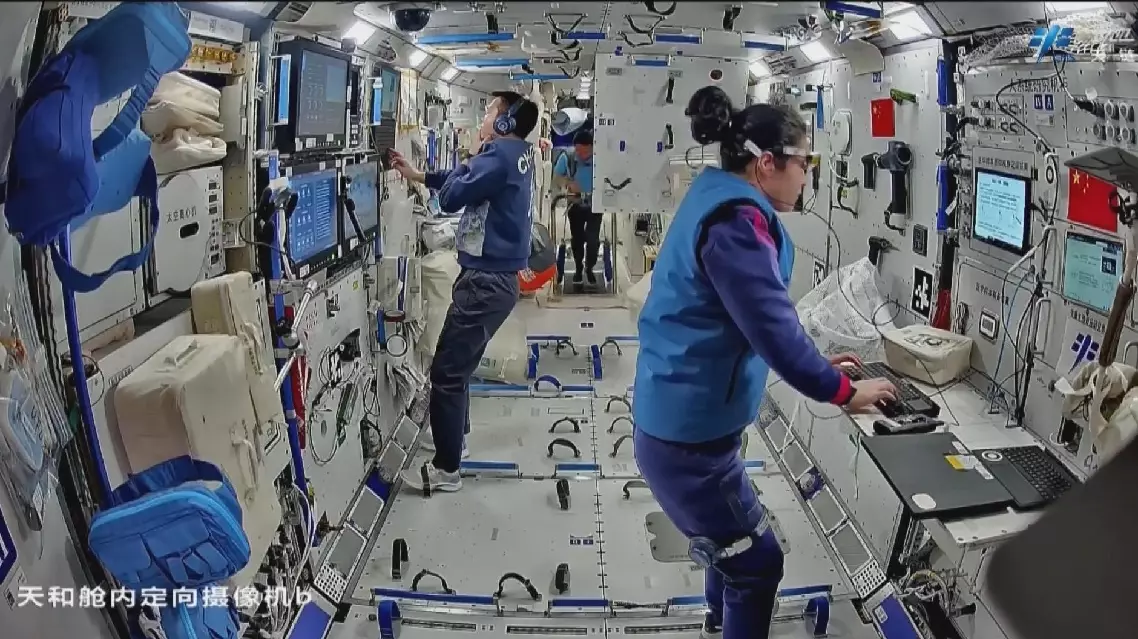
China's Shenzhou-19 crew performs in-orbit mechanical, robotic, medical tests
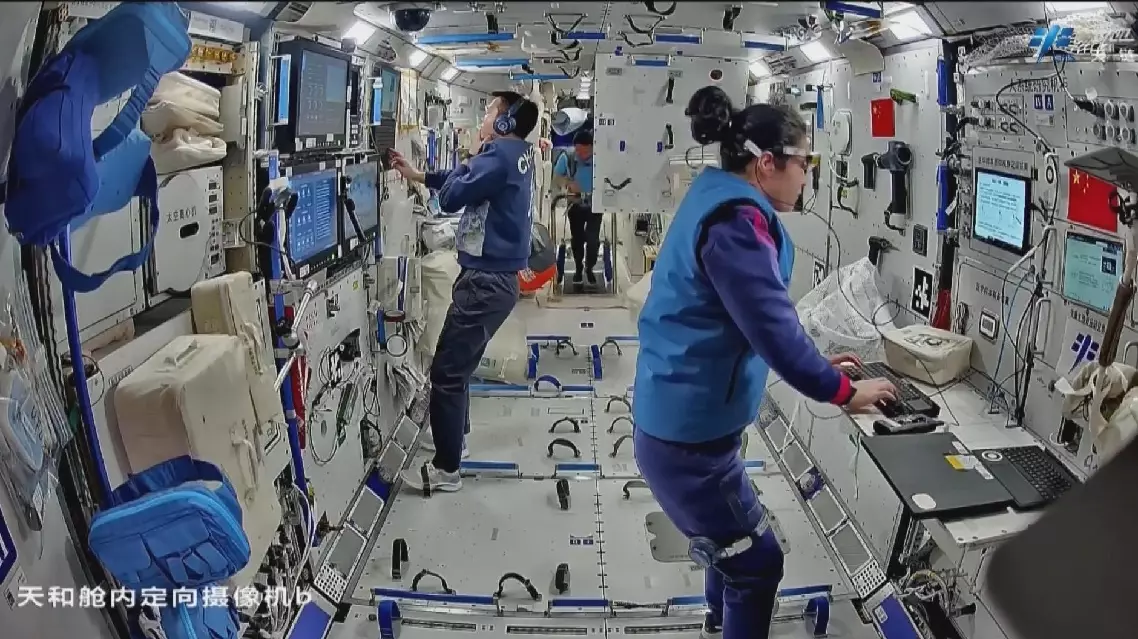
China's Shenzhou-19 crew performs in-orbit mechanical, robotic, medical tests
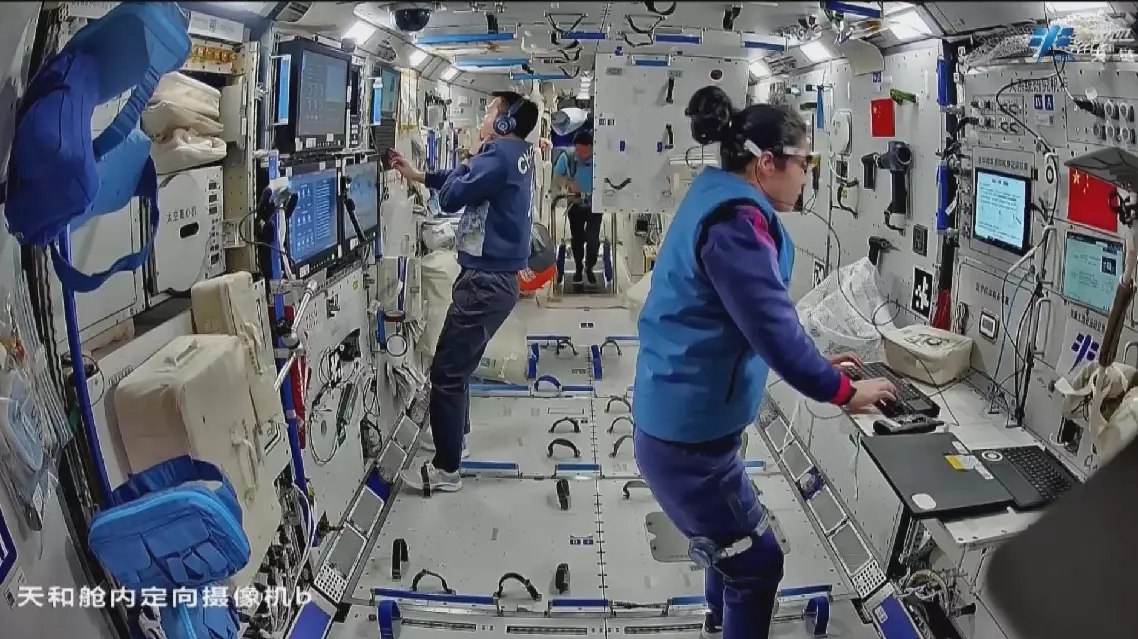
China's Shenzhou-19 crew performs in-orbit mechanical, robotic, medical tests
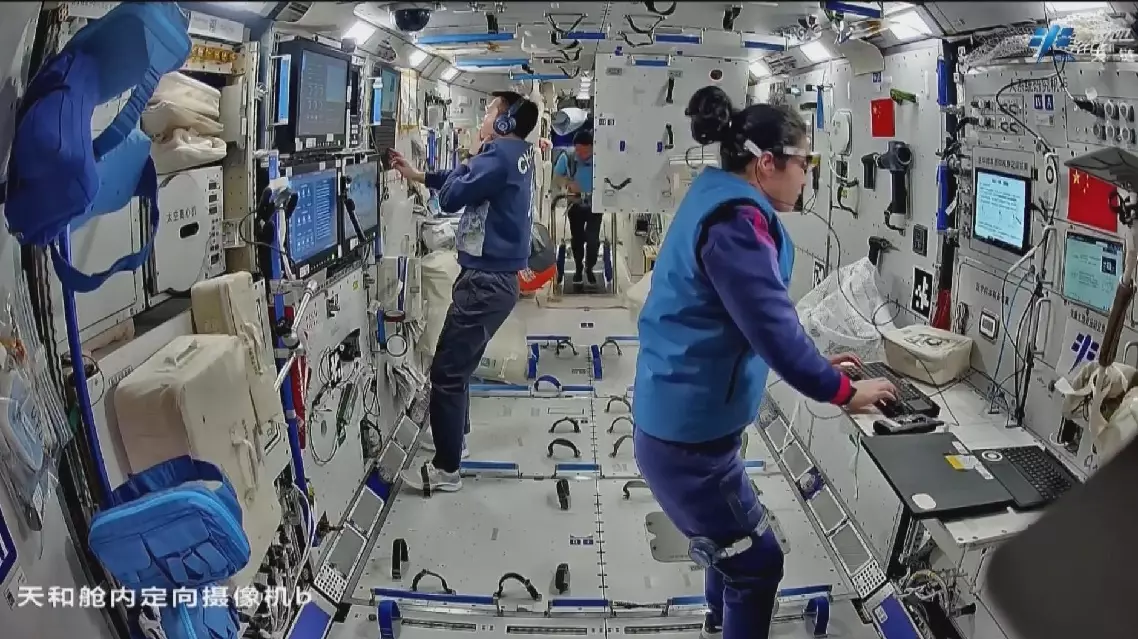
China's Shenzhou-19 crew performs in-orbit mechanical, robotic, medical tests
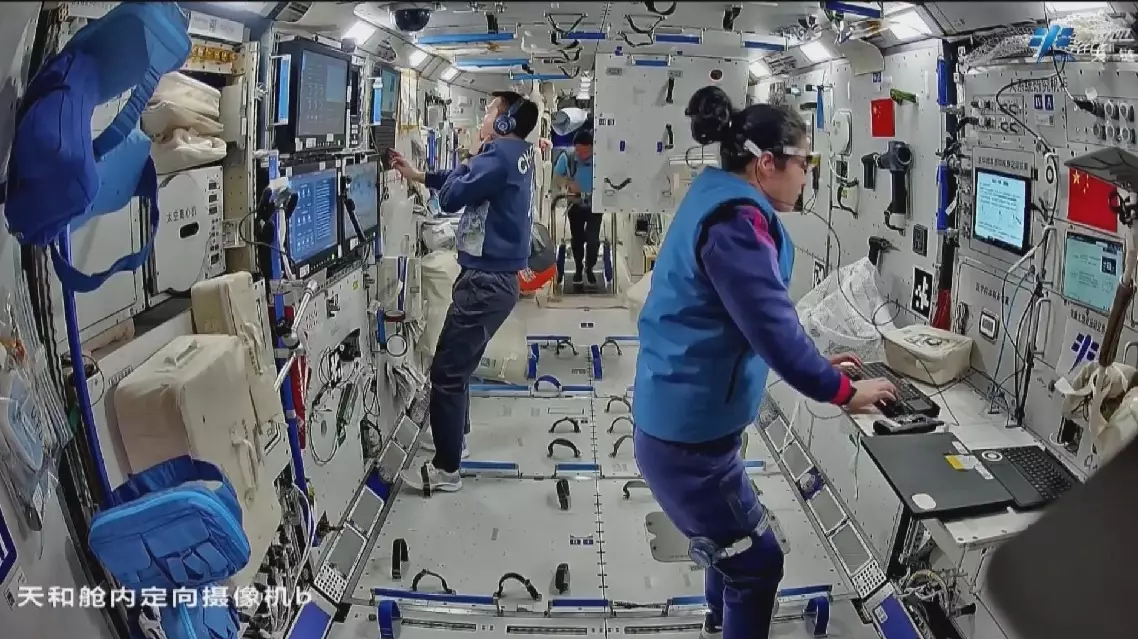
China's Shenzhou-19 crew performs in-orbit mechanical, robotic, medical tests
The trio carried out experiments on equipment withdrawal, sample collection, and component reassembly and reuse, aiming to provide data support for the research and development of high-performance space components.
They tested pipe inspection robots and achieved a image detection of ventilation ducts, laying a technical foundation for the space station to realize self-examinations in the future.
They also completed medical experiments such as blood collection, centrifugal treatment, and cryopreservation, and coordinated an eye tracker and a laptop to record data on their eye movements in the station's microgravity environment.
They maintained the regenerative life support system in the space station and conducted physical examinations for themselves, including blood routine and blood biochemistry tests, body weight measurement, and intraocular pressure and fundus checks.
With the assistance of the station's exercise equipment, they gathered data on what effects the zero-gravity environment has on human bodies.
Besides experiments and tests, the astronauts underwent emergency response trainings such as quickly putting on and taking off pressure suits to enhance their capability to respond the emergency situations in a zero-gravity conditions and provide data for the improvement of emergency withdrawal pre-planning.
The Shenzhou-19 crewed spaceship, atop a Long March-2F carrier rocket, was launched from the Jiuquan Satellite Launch Center in northwest China on Oct 30, 2024.
China's Shenzhou-19 crew performs in-orbit mechanical, robotic, medical tests
China's Shenzhou-19 crew performs in-orbit mechanical, robotic, medical tests
China's Shenzhou-19 crew performs in-orbit mechanical, robotic, medical tests
China's Shenzhou-19 crew performs in-orbit mechanical, robotic, medical tests
China's Shenzhou-19 crew performs in-orbit mechanical, robotic, medical tests