The latest discovery from rock samples returned by China's Chang'e-6 lunar mission reveals that the moon's mantle contains less water on the far side compared to the near side, suggesting that the "hidden hemisphere," which always faces away from Earth, tends to be much drier.
Published in the journal Nature on Wednesday, a new study by Chinese scientists found that the water content in each gram of the thick rocky layer beneath the moon's far side surface is less than 2 micrograms, the lowest record ever reported.
Previous studies on samples from the lunar near side have shown that the water concentrations within the moon's interior could reach up to 200 micrograms per gram.
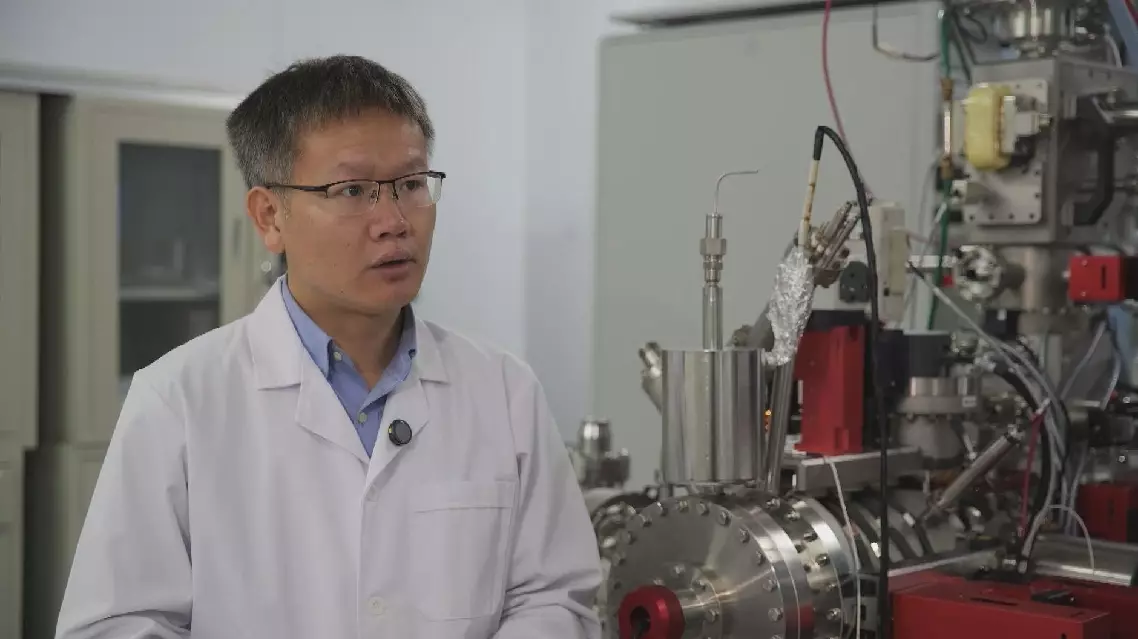
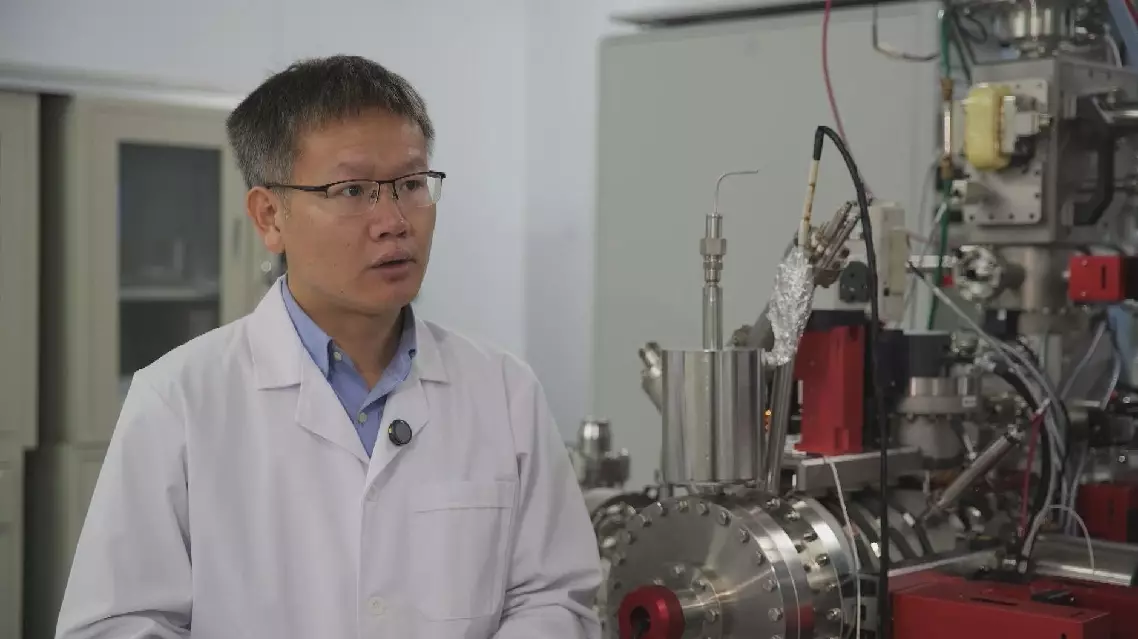
"Currently, we have measured the water content in the basaltic mantle source region of Chang'e 6, and it is approximately less than 2 micrograms per gram. The result we have obtained from the near side of the moon is around 7.5 micrograms per gram. This means that the water content in the mantle on the far side of the moon is even lower than that on the near side," said Hu Sen, a research fellow from the Institute of Geology and Geophysics of the Chinese Academy of Sciences.
The global scientific community widely believes that the moon was formed when a Mars-sized object collided with Earth 4.5 billion years ago. During this extremely hot impact event, the moon was thought to be depleted of water and other volatile elements.
Over the past two decades, there has been debate about whether the water content in the moon's mantle, the middle layer between its surface and its core, is abundant or scarce, and all the published estimates were derived from the near side samples of the moon.
The Chang'e-6 lunar probe, launched in early May 2024, landed in the moon's South Pole-Aitken Basin and returned to Earth in late June with more than 1,935 grams of the first-ever samples from the less-known far side of the moon.
The moon samples used in this study weigh 5 grams, consisting of 578 particles ranging in size from 0.1 to 1.5 millimeters. These particles were carefully sieved and hand-selected, with 28 percent of them being mare basalt fragments.
The newly found disparity in the moon's internal water content is of great significance, which may offer a fresh insight into the moon's formation and evolution.
"The water on the moon we are talking about is mostly water from the moon's interior, which is related to the processes of its origin, evolution, and formation. Our country's Chang'e 7 mission will focus on issues related to lunar surface water in the future," said Hu.
The findings of this study also hold significant implications for future lunar exploration tasks, as water on the moon is key to long-term human settlement.
Drier lunar far side offers insight on moon's evolution: Chinese study
Drier lunar far side offers insight on moon's evolution: Chinese study