Skip to Content Facebook Feature Image

EU to join hands with China, other countries to counter US tariffs: analyst

China

China

China

EU to join hands with China, other countries to counter US tariffs: analyst

2025-04-10 16:45 Last Updated At:23:57

A European policy analyst expressed hope that the European Union (EU) will collaborate with China and other nations to counter U.S. tariffs, after the bloc announced its initial retaliatory measures on Wednesday.

Varg Lukas Folkman, a policy analyst in the European Policy Centre's Political Economy programme, stressed that the EU must not show weakness in response to the Trump administration's aggressive tactics and should collaborate with China and other nations to counter the U.S.'s unfair tariff rules.

"In general, I think countries should team up and face Trump, [who] is acting in a fairly irresponsible way now in trade relations in general and in foreign policy in general. And that would include China as well and other global countries acting in a coalition to counteract Trump's moves," said the analyst.

This round of countermeasures is the result of weeks of close consultations among EU member states, the European Commission, and the European business community, and has received support from nearly all EU member countries.

According to EU diplomats familiar with the vote, only Hungary opposed the proposal, while the other 26 member states voted in favor.

In a statement released that day, the European Commission said that the recent U.S. tariff hikes lack legitimate justification and not only harm the economic interests of both sides but also undermine global economic stability.

Analysts pointed out that the EU's move signals widening rifts between Europe and the U.S. under U.S. tariff pressure, as former allies continue to drift further apart.

This marks the first time the European Union has taken retaliatory action against the U.S. since the latter began arbitrarily imposing tariffs worldwide. It also represents the EU's first step in responding to a series of U.S. tariff measures.

In addition to steel and aluminum, the Trump administration has imposed a 25 percent tariff on EU automobiles and a so-called 20 percent "reciprocal" tariff on all EU products, affecting 70 percent of the EU's exports to the U.S.

In response, the European Commission is preparing a second set of retaliatory measures.

Commission spokesperson Olof Gill said a day earlier that the new countermeasures will be announced next week.

European public opinion is also closely watching whether Italian Prime Minister Giorgia Meloni's visit to the U.S. next week will succeed in persuading Trump to make concessions.

EU to join hands with China, other countries to counter US tariffs: analyst

EU to join hands with China, other countries to counter US tariffs: analyst
EU to join hands with China, other countries to counter US tariffs: analyst

EU to join hands with China, other countries to counter US tariffs: analyst
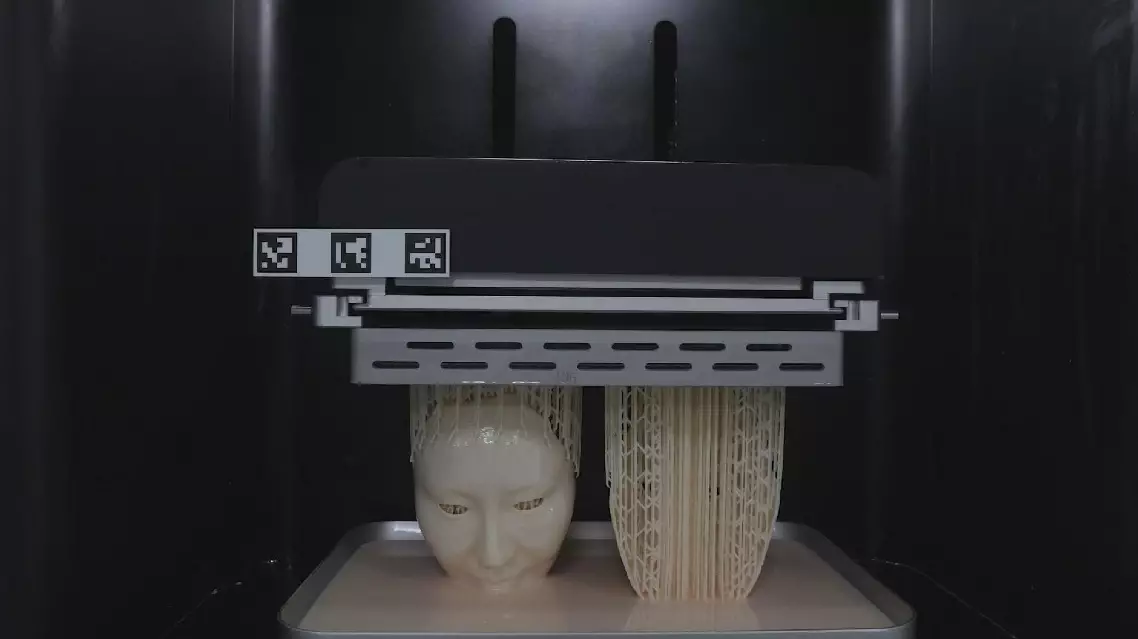
From everyday objects to fiber-type artificial muscles for robotic actuation, a groundbreaking photopolymerization-based 3D printing technology is playing a role in revolutionizing how we create, representing a fundamental shift from traditional methods and transforming industries and daily life.

Distinct from conventional layer-by-layer material deposition, the new technology employs light as a precision actuator. The process begins with instillation of liquid photopolymer resin that instantly solidifies when exposed to targeted ultraviolet (UV) light, which acts as an "on-off switch" for material formation.

Unlike traditional drying methods that rely on heat and air, UV curing employs specific wavelengths of UV light to achieve rapid and controlled polymerization.

This enables the material to reach its desired mechanical properties in a fraction of the time that other methods might require -- 20 to 100 times faster than traditional 3D printing -- allowing complete products to be created within just two to three hours.

At PollyPolymer -- a high-tech enterprise specializing in ultra-high-speed 3D printing technology based in Suzhou City of east China's Jiangsu Province, the technique has been hired to produce customized components, such as elastomer artificial muscles for robots that combine flexibility with durability.

"(This material) can provide shock absorption and protection. Additionally, due to its hollowed-out lattice structure, it can dissipate heat. Of course, another advantage is its lightweight nature, as it is filled with many lattices within the same structure," Wang Wenbin, the company's CEO, introduced.

More importantly, these materials can be pre-programmed and engineered to meet specific structural, elastic and mechanical performance requirements, enabling on-demand and customized manufacturing across multiple industries, Wang said, noting that precision control remains crucial to the process.

"We need very precise control because the light reaction can cause many falsifications such as distortion, leading to a decrease in accuracy. Therefore, we have designed quite a lot of algorithmic compensations in this process. Each printer has a force sensing parameter, which you can think of as a scale that knows the weight in every gram and makes corrections accordingly. Depending on the required scenario, for instance, our highest precision can now reach 2.8 microns," Wang said.

3D printing ushers in new era of instant manufacturing

3D printing ushers in new era of instant manufacturing

Recommended Articles