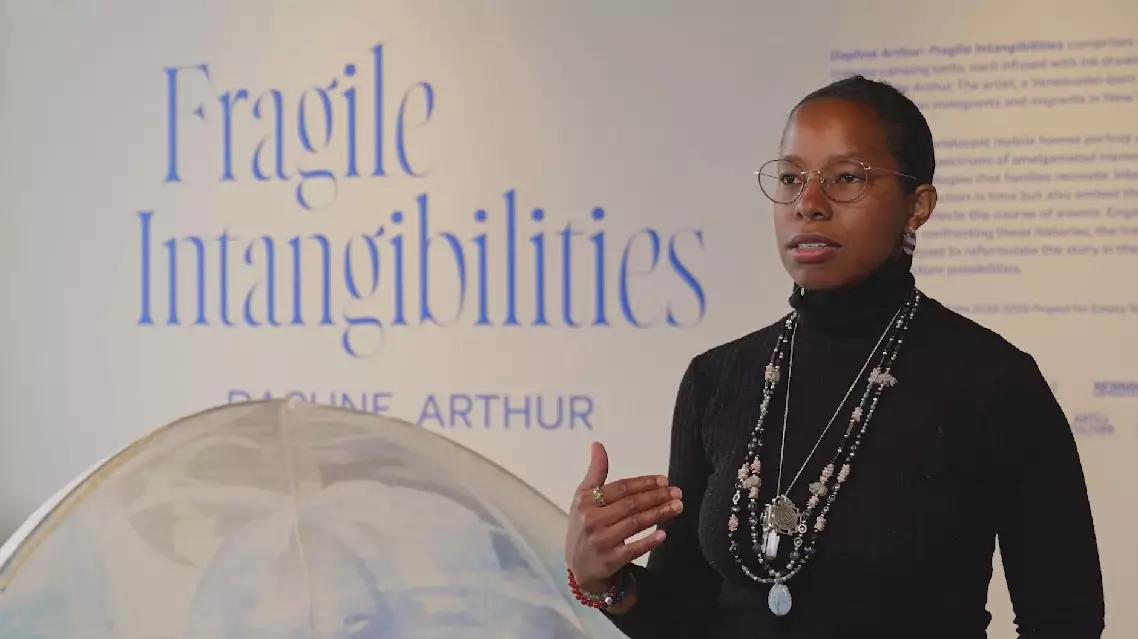
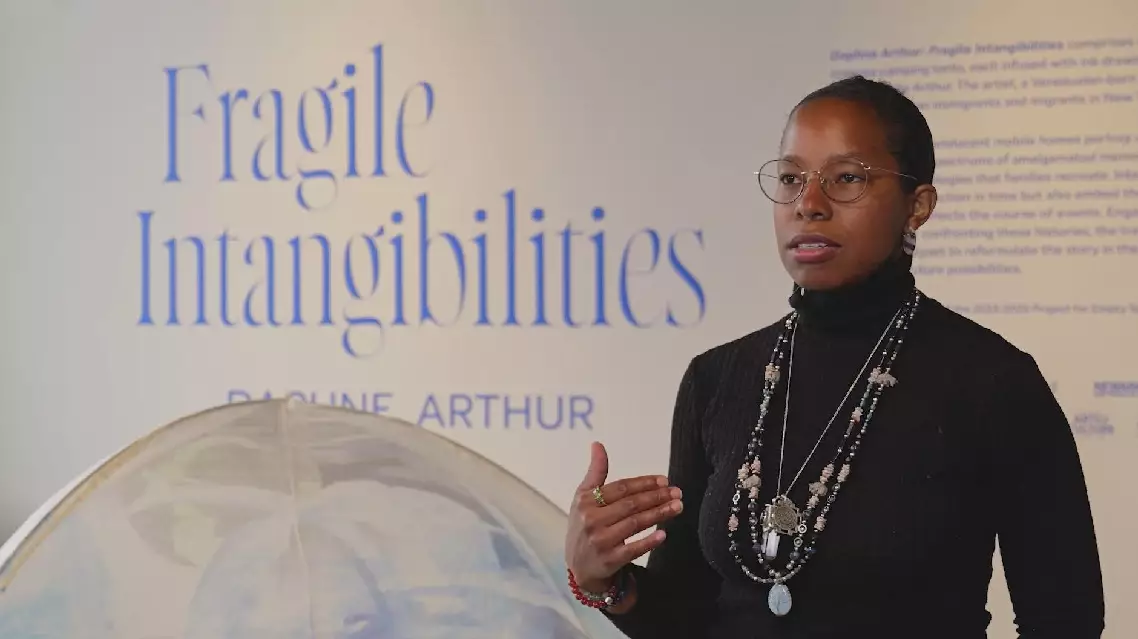
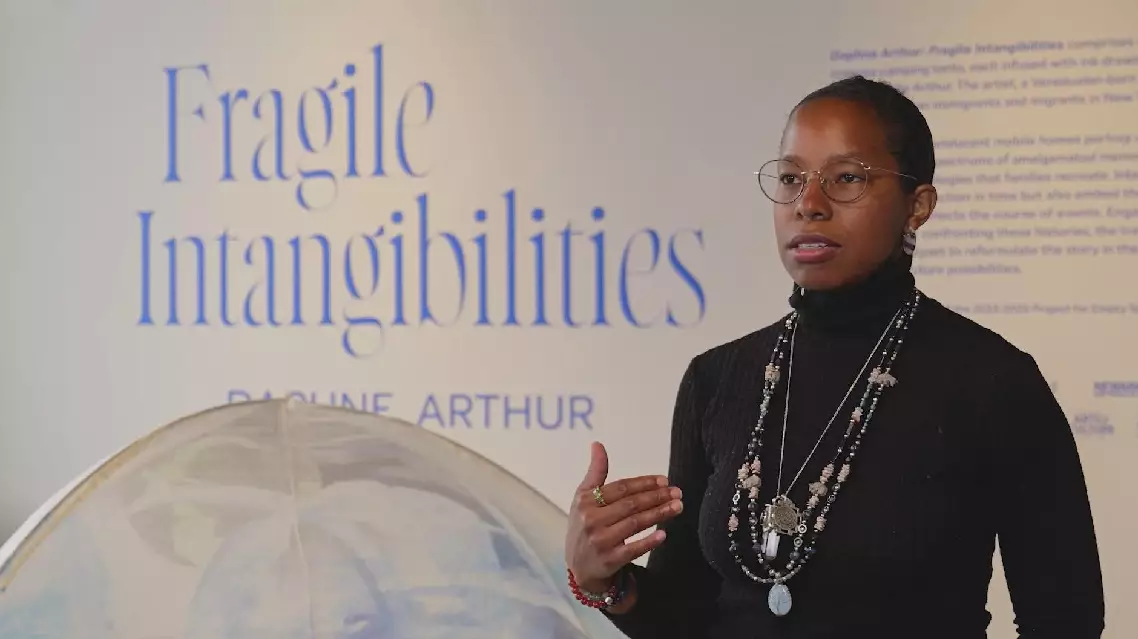
Venezuelan artist Daphne Arthur spotlights migrants' journeys in her new exhibit amid U.S. deportation tensions, drawing from her own experience immigrating at age 12 and the stories she has seen of migrants.
Named "Fragile Intangibilities", the new exhibit features a collection of hand-sewn silk organza camping tents inspired by a series of conversations Arthur had with 19 subjects - including from Africa, the Caribbean, and Asia.
"I was interested in the stories that people carry, and if you are forced to leave your home, how do you retain a sense of identity," Arthur said.
Graduated from the Yale School of Art, Arthur said the images of migrants living in temporary tents and being deported by the police provoked her to question what a home truly is.
Almost three decades later - her own experience as an immigrant settling in the U.S. helped inform her work as an artist - and was the genesis of her newest exhibition.
"I saw a segment of people in the border of the U.S. and Mexico, and there were, Haitians and Central American individuals that were attempting to cross the border, and they were, using tents as their mobile homes. And in this moment, the border police were mandated to remove these homes. And so I was kind of perplexed by this idea of, the fragility of a tent as a home, something that kind of helps you feel safe, but also the tenuous elements of the material and how easy it was, to be disposed off," she recalled the scenes of immigrants she saw.
Seven of Arthur's artworks are on display, each representing the story of an immigrant to the U.S., and four blank pieces symbolize the millions of nameless, faceless immigrants whose stories remain untold.
The hands holding the tents in the exhibit were created from molds of her subjects' hands, adding a deeper, more personal dimension to each individual's unique journey.
The installation is part of the artist-in-residence program at Project for Empty Space' in New Jersey. The co-director, Rebecca Pauline Jampol, believes Arthur's new exhibit gives voice to their journeys and how they've navigated the cultural shifts that come with picking up their roots.
"Her work around immigrant stories is so important not only to our program and to the city of New York, but to the moment that we're in right now where immigrant communities are being silenced and there is fear embedded in everyday livelihood," Jampol said.
Venezuelan artist highlights migrants’ stories amid US deportation tensions
Venezuelan artist highlights migrants’ stories amid US deportation tensions
Venezuelan artist highlights migrants’ stories amid US deportation tensions