WATERTOWN, Mass.--(BUSINESS WIRE)--Apr 17, 2025--
SiTration, a materials recovery company serving the mining and metals industries, on Thursday, April 10 th, celebrated the opening of its new R&D and pilot facility attended by state, and local officials; investors; and partners. The company plans to develop and scale its pilot systems for critical minerals recovery in the 11,000-square-foot facility in Watertown, MA. The company’s technology enables low cost, sustainable recovery of metals including copper, cobalt, and nickel which are key to the clean energy transition. SiTration’s technical approach enables profitable extraction even from waste streams, unlocking new resources and bolstering domestic sources of critical minerals. This new facility will support production of pilot systems, expansion of R&D efforts, and recent headcount growth.
This press release features multimedia. View the full release here: https://www.businesswire.com/news/home/20250417903605/en/
In recognition of SiTration’s commencement of operations, the event featured remarks from notable leaders including State Representative Steve Owens and Undersecretary of Economic Foundations Ashley Stolba. Co-founder and CEO Dr. Brendan Smith cut a ceremonial ribbon to mark the occasion. Attendees were later guided on a tour of the new facility.
"This new space marks an inflection point for SiTration,” said Dr. Smith “enabling us to expand our world-class team and build pilot systems larger and faster than previously possible. These systems will be deployed with mining partners around the world to demonstrate our uniquely profitable and sustainable critical minerals extraction capabilities, advancing us towards the commercial scale."
Founded as a spinoff from research conducted at MIT, SiTration is working to address the demand for critical materials needed to manufacture technologies that are key to electrification and AI adoption, including electric motors, batteries, and data centers. SiTration’s patented silicon filtration and electro-extraction technologies provide chemical-free, energy-efficient extraction and recycling. The company’s innovative solution lowers both the cost and the resource intensity of extracting and recycling materials, while also addressing localized pollution from mining operations. The company’s work has attracted the attention of industry, most notably through a partnership with Rio Tinto to valorize and remediate mining waste streams.
"We invested in SiTration because the energy transition is a materials transition -- the copper, lithium, rare earths, and other elements that SiTration can recover will increasingly power every sector of the global economy," said Matthew Nordan, General Partner at Azolla Ventures. "The company is a case study in how Massachusetts' innovation ecosystem brings powerful ideas to life. Private investors like us, state agencies like the Massachusetts Clean Energy Center, accelerator programs like Activate, and innumerable individual advisors and supporters all played a role in bringing a core innovation from the lab into the field."
To date, SiTration has raised $14.4 million in venture capital funding. The most recent Seed financing round was led by 2150 with participation from BHP Ventures, Extantia, and Orion Industrial Ventures. Previous investors Azolla Ventures and MIT-affiliated E14 Fund also participated in the oversubscribed round.
About SiTration
SiTration is a spin-out of MIT enabling full value mining by efficiently recovering critical minerals from even the most dilute and complex streams. The company's core technology combines uniquely durable silicon filtration and electro-extraction stages to enable profitable and sustainable recovery of critical minerals including copper, cobalt, nickel, and precious metals. SiTration’s technology can replace traditional resource-intensive mining processes and can be deployed to recover materials from traditionally inaccessible sources, including waste. SiTration is quickly scaling up its validated technology, while working with global mining leaders to deploy pilot systems.
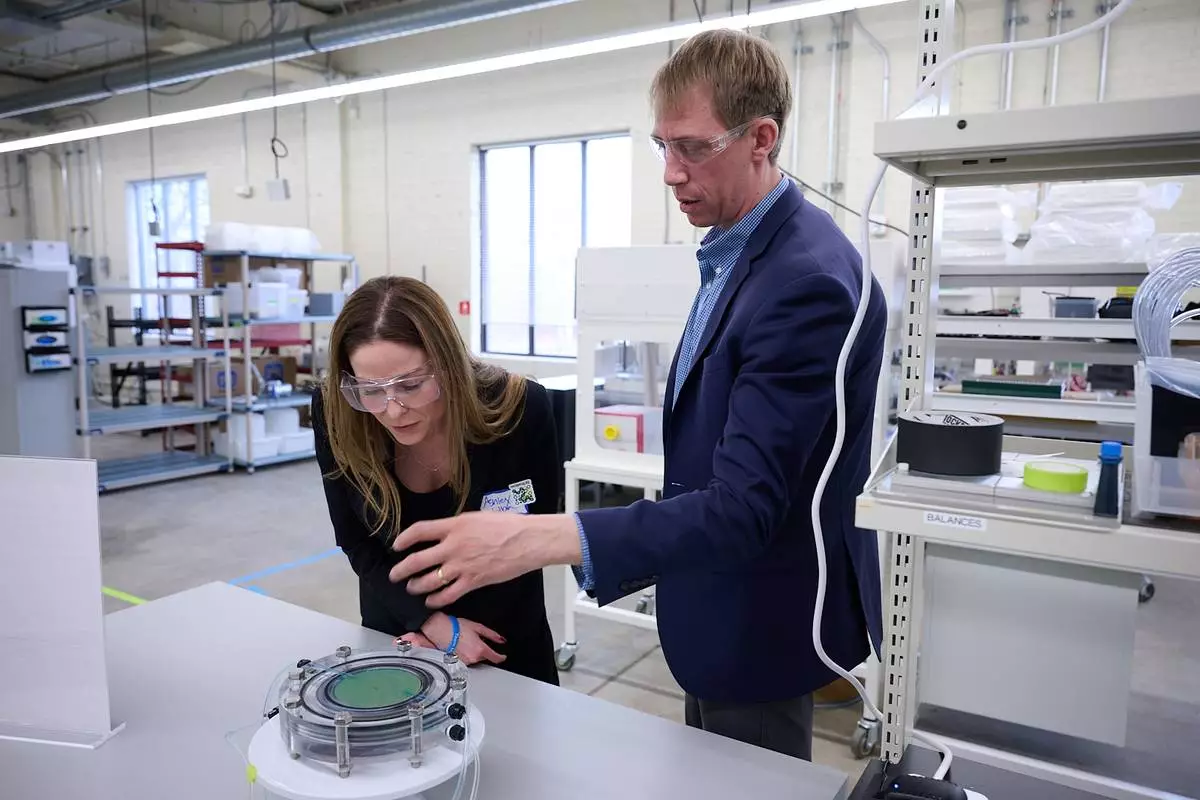
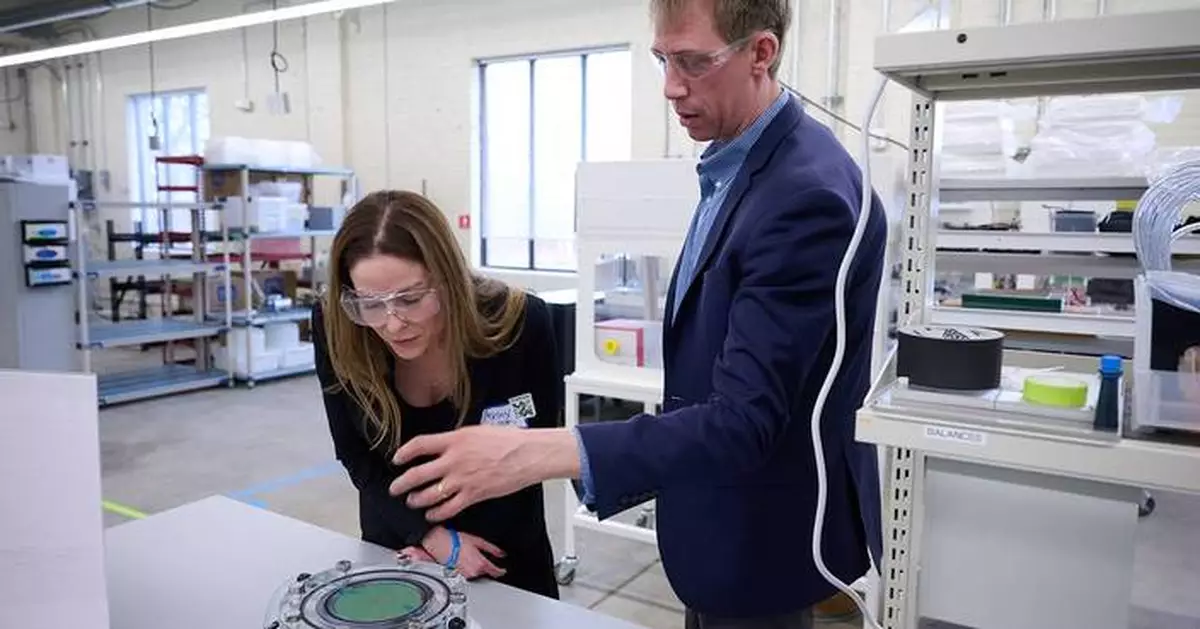
Brendan Smith and Undersecretary Ashley Stolba on a tour of SiTration's new pilot facility. Photo: Mark Wilson Images/for SiTration
The risk of a catastrophic explosion at a damaged chemical tank in Southern California has been eliminated following a close overnight inspection that confirmed a crack in the tank relieved pressure and cooled the chemical, authorities said Monday.
Officials said crews conducted tank temperature checks at night to reduce risks to firefighters, avoiding daytime operations when heat from the tank made conditions around it most dangerous. The overnight mission allowed crews to verify the crack and confirm temperatures were falling, Orange County Fire Authority division chief Craig Covey said Monday morning.
Covey said the results of overnight evaluation of the tank — that the temperature inside had dropped and that pressure had been released — was “incredibly positive news.”
However, evacuation orders remained in place for about 50,000 people in Garden Grove, California, located south of Los Angeles.
Covey said falling temperatures and the release of pressure from the tank were allowing officials to “turn the corner on this incident” after days of concern about a possible explosion.
There has been no chemical leak as of early Monday, but the Orange County Fire Authority said the risk to public safety is “ongoing.”'
After the tank overheated Thursday and began venting vapors, firefighters have repeatedly sprayed the tank with water in an attempt to cool the chemical inside, methyl methacrylate, which is used to make plastic parts.
The tank's interior reached 100 degrees (37.7 Celsius) Sunday, an increase of 10 degrees Fahrenheit (5.5 Celsius) since Saturday, according to Democratic state Sen. Tom Umberg. On Monday, Covey said the temperature fell to 93 degrees F (33.9 degrees C).
Gov. Gavin Newsom declared a state of emergency Saturday and said he asked President Donald Trump to issue an emergency declaration to bolster federal support for local and state officials.
The tank at GKN Aerospace Transparency Systems, which makes parts for commercial and military aircraft, holds 6,000 to 7,000 gallons (22,700 to 26,500 liters) of methyl methacrylate used to make plastic parts.
The first goal of firefighters was to cool off the chemical inside the tank to prevent a leak or explosion.
Drones were monitoring temperatures at 10-minute intervals to watch for any spikes. Containment barriers were set up to prevent the chemical from getting into storm drains or reaching creeks or the nearby ocean in the event of a spill, Covey said earlier.
As the interior temperature rises, methyl methacrylate converts from a liquid to a gas and increases the pressure, according to Purdue University engineering professor Andrew Whelton, who had said earlier that the crack could mean product or pressure is being released, reducing the chance of explosion.
“Think of a soda can. If you leave it in a hot car it can explode,” Whelton said. “But if you put a hole in the can, the product is released and the can itself doesn’t explode.”
An explosion that could spread the chemical over a broad area and send shrapnel flying would be the worst-case scenario, he said.
Aerial photos taken by The Associated Press showed streets in the area were empty Sunday, while several evacuation shelters were open. At a high school in neighboring La Palma, people slept in cars or on mats and sleeping bags on the asphalt.
Garden Grove is next to Anaheim, home to Disneyland’s two theme parks, which were not under evacuation orders. Park officials said they were monitoring the situation.
Exposure to methyl methacrylate can cause serious respiratory problems, neurological problems and irritation to the skin, eyes and throat, according to fact sheets about the chemical.
Whelton said if an explosion occurs, it will be crucial to conduct detailed air monitoring specifically for methyl methacrylate and not just generic tests for volatile organic compounds as officials did after a 2023 train derailment in East Palestine, Ohio, which released more than 115,000 gallons (435,000 liters) of vinyl chloride after officials blew open five tank cars and burned the chemical.
Orange County health officials said the chemical is easy to smell and people may notice it over a large area without being harmed.
Some Garden Grove residents filed a class-action federal lawsuit Saturday against GKN Aerospace Transparency Systems, which operates the facility where the tank is located. Lawyers for the residents argued that regardless of what happens, property values in the surrounding community are sure to be impacted.
GKN Aerospace did not comment on the lawsuit but has apologized to residents and businesses forced to evacuate. It said Sunday it was “working around the clock to mitigate the risk of a leak.”
GKN Aerospace agreed in 2025 to pay state regulators more than $900,000 to settle violations involving recordkeeping, permitting issues and nitrogen oxide emissions, according to a report on the South Coast Air Quality Management District website.
Associated Press journalist Ethan Swope in Garden Grove, California, contributed to this report.

An evacuation map is displayed at the incident command post at the Los Alamitos Race Course in Cypress, Calif., on Sunday, May 24, 2026. (AP Photo/Ethan Swope)
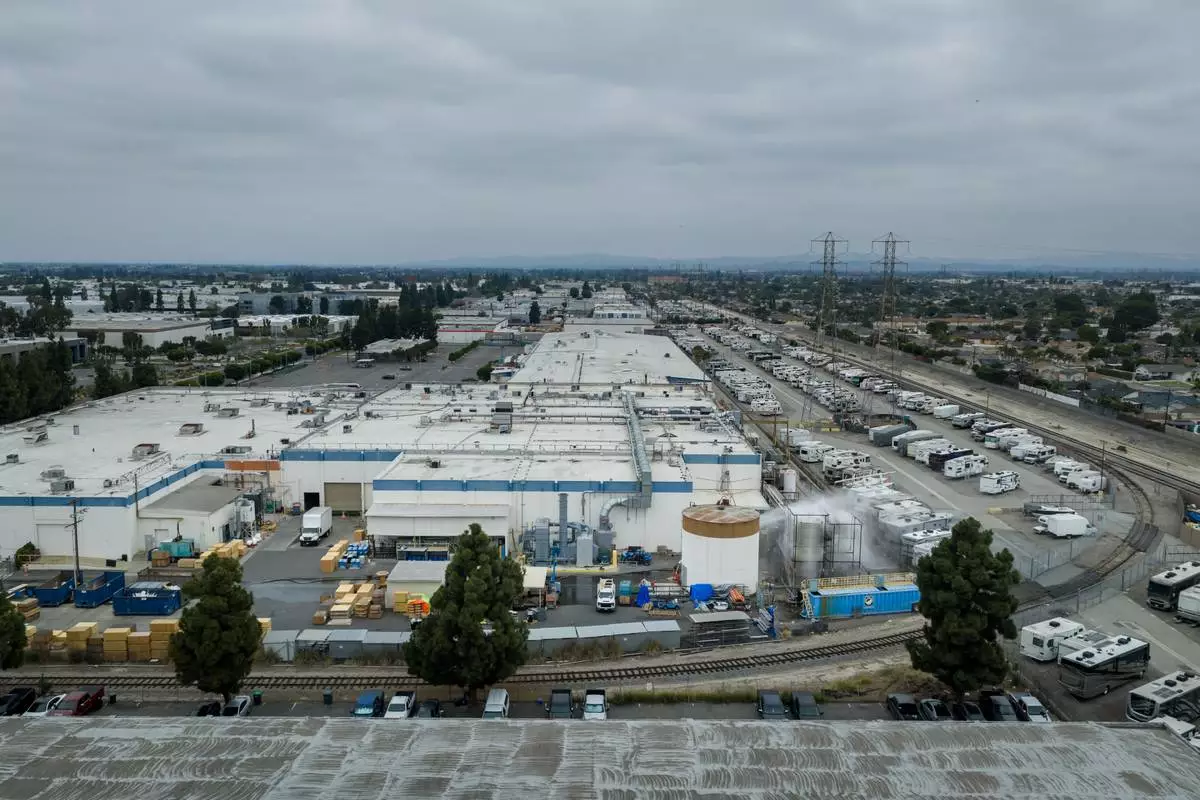
Water is sprayed on a damaged tank at GKN Aerospace in Garden Grove, Calif., on Sunday, May 24, 2026, after the tank containing a chemical used to make plastic parts overheated Thursday. (AP Photo/Ethan Swope)

The streets remain empty in Garden Grove, Calif., on Sunday, May 24, 2026, after a storage tank containing a chemical used to make plastic parts overheated Thursday at an aerospace plastics facility. (AP Photo/Ethan Swope)

Emergency personnel work at the incident command post at the Los Alamitos Race Course Sunday, May 24, 2026, in Cypress, Calif. (AP Photo/Ethan Swope)
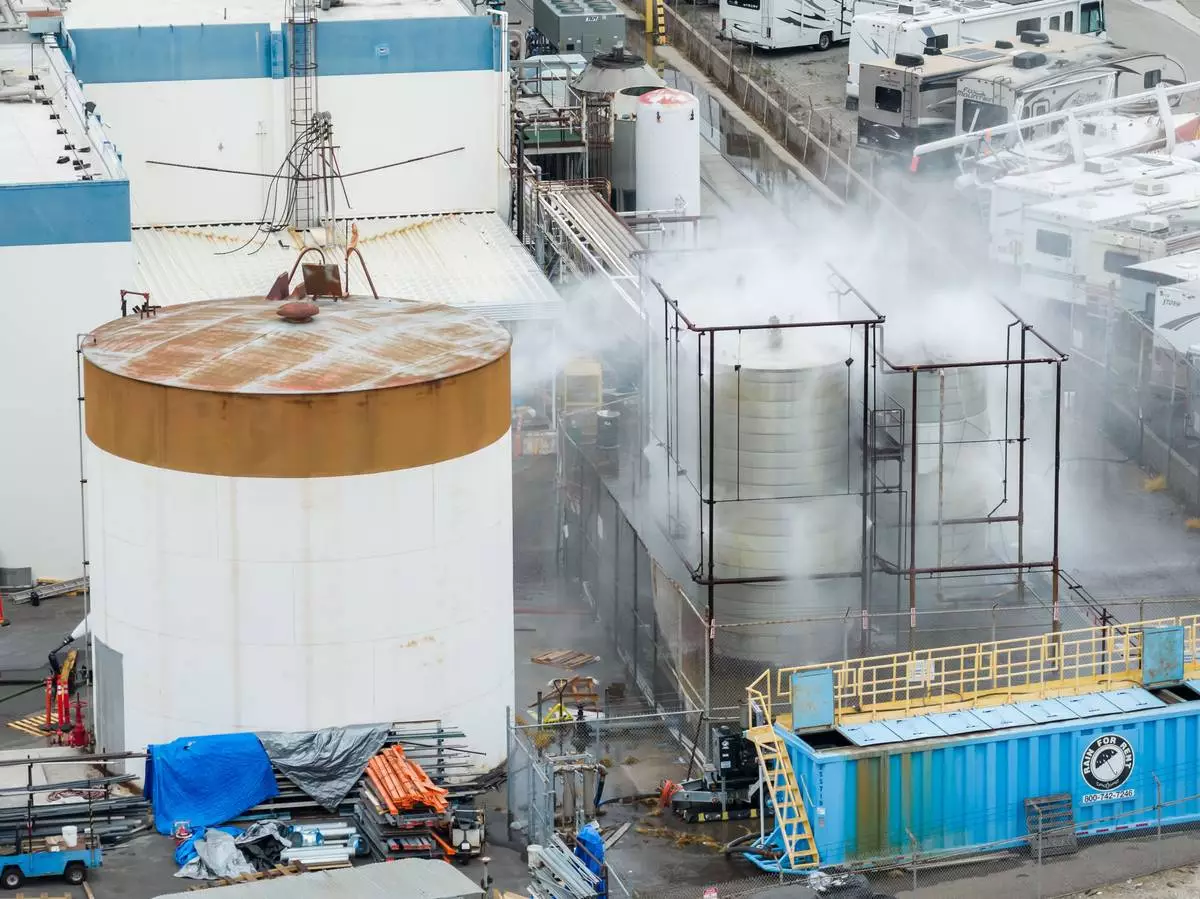
Water is sprayed on a damaged tank at GKN Aerospace in Garden Grove, Calif., on Sunday, May 24, 2026, after the tank containing a chemical used to make plastic parts overheated Thursday. (AP Photo/Ethan Swope)