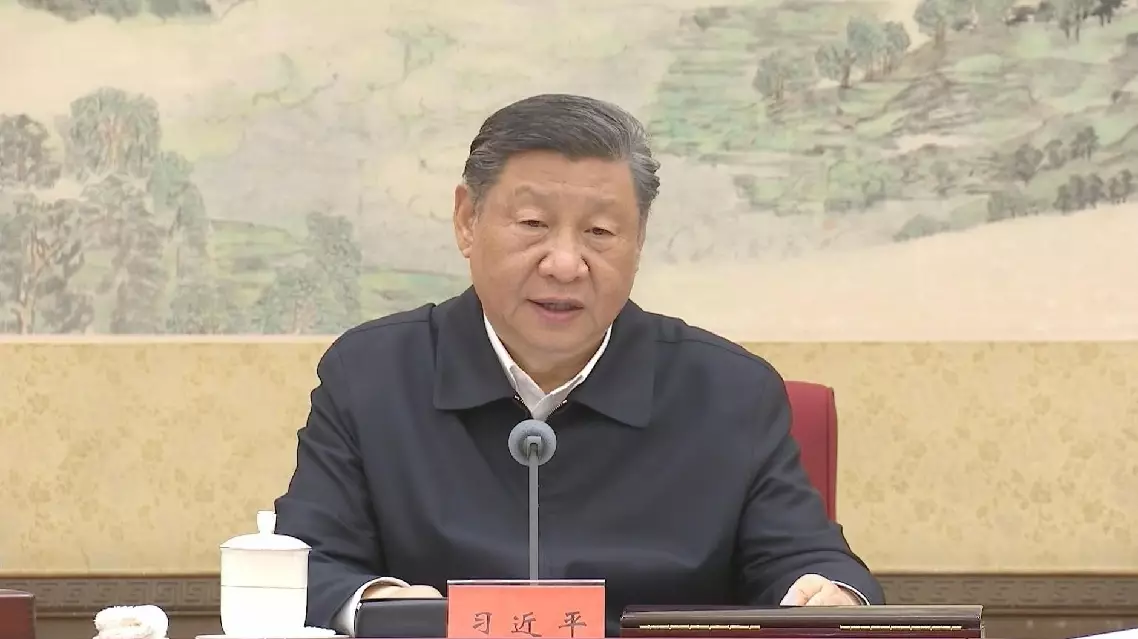
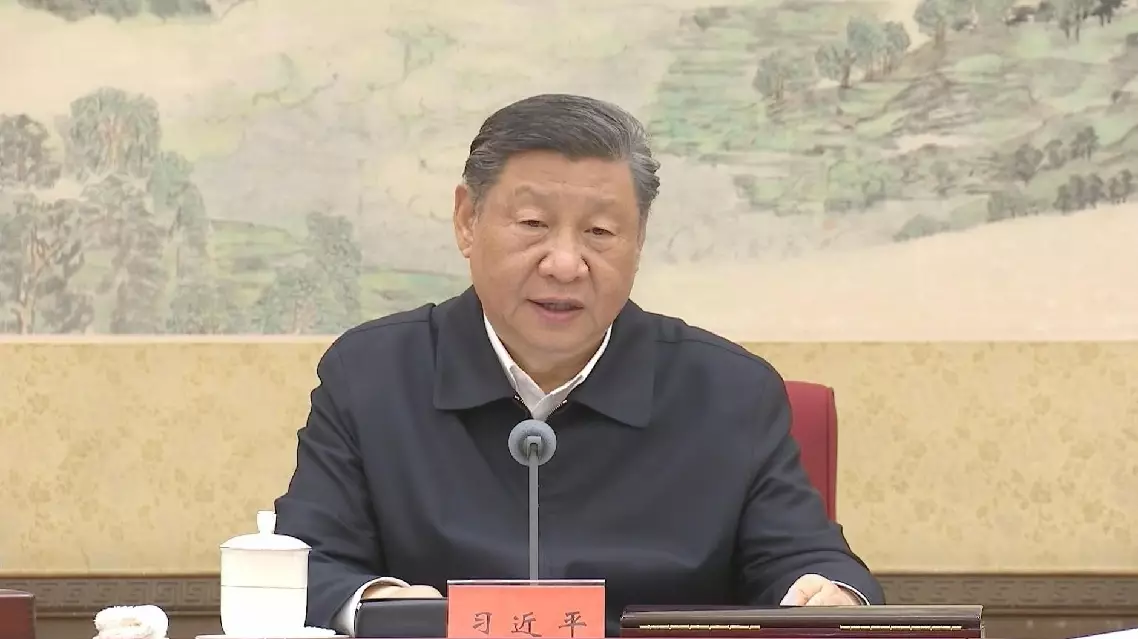
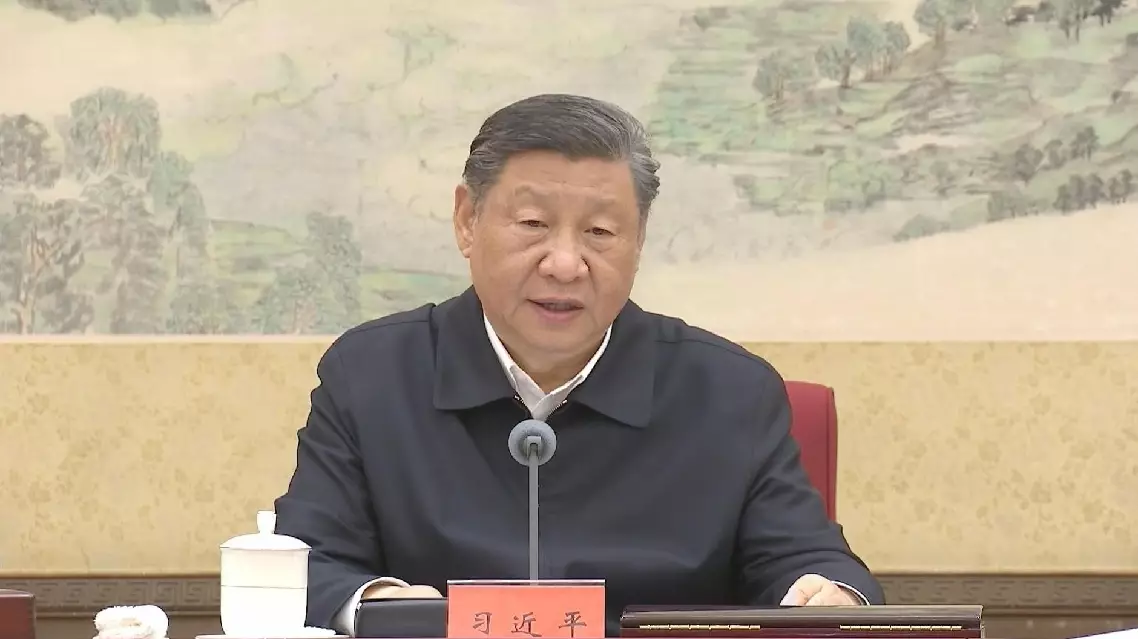
Xi Jinping, general secretary of the Communist Party of China (CPC) Central Committee, emphasized the importance of self-reliance and an application-oriented approach to promote the healthy and orderly development of artificial intelligence (AI) in a beneficial, safe and fair direction.
Xi made the remarks while presiding over a group study session of the Political Bureau of the CPC Central Committee on Friday.
Click to Gallery
Xi urges self-reliance and application-oriented approach in promoting healthy, orderly development of AI
Xi urges self-reliance and application-oriented approach in promoting healthy, orderly development of AI
Xi urges self-reliance and application-oriented approach in promoting healthy, orderly development of AI
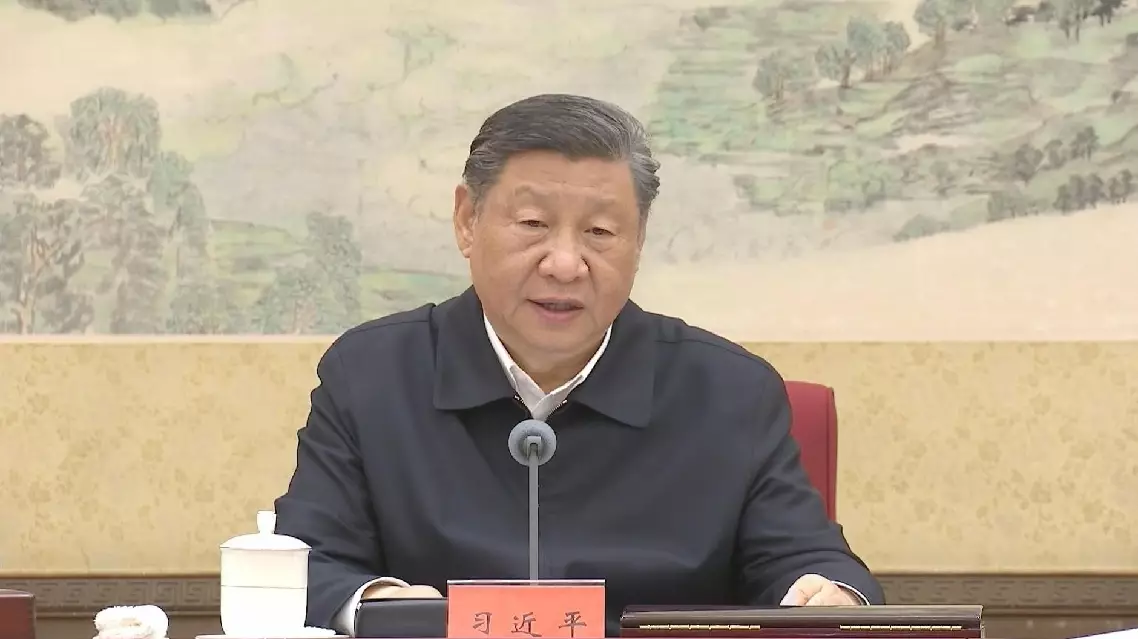
Xi urges self-reliance and application-oriented approach in promoting healthy, orderly development of AI
Xi emphasized that in the face of rapidly evolving new-generation AI technologies, China shall give full play to the advantages of the new system for mobilizing resources nationwide, uphold self-reliance and self-strengthening, prioritize application-oriented development, and promote the healthy and orderly advancement of the country's AI sector toward a beneficial, safe and equitable direction. Zheng Nanning, a professor at Xi'an Jiaotong University in northwest China's Shaanxi Province, gave a lecture on this issue and put forward suggestions. Members of the Political Bureau of the CPC Central Committee listened carefully to the lecture and held discussions. Speaking after these discussions, Xi pointed out that AI, as a strategic technology leading the new round of technological revolution and industrial transformation, has profoundly changed the way humans produce and live.
Xi noted that the Party Central Committee attaches great importance to the development of AI, and has improved top-level design and strengthened implementation efforts in recent years, thereby driving a holistic and systematic advancement of the country's comprehensive AI strength.
Noting that there are still gaps and deficiencies in areas such as fundamental theories and key core technologies, Xi urged acknowledging these shortcomings and strengthening efforts to comprehensively advance sci-tech innovation, industrial development and applications of AI, to improve AI regulatory systems and mechanisms, and to firmly grasp the initiative in both AI development and governance.
Xi stressed that breakthroughs must be achieved in fundamental theories, methodologies and tools to gain a first-mover advantage and secure a competitive edge in AI.
He urged efforts to consistently strengthen basic research and focus on overcoming challenges regarding core technologies such as high-end chips and foundational software, thereby building an independent, controllable, and collaboratively-functioning foundational software and hardware system for AI.
He emphasized leveraging AI to drive paradigm transformation in scientific research and accelerate breakthroughs in technological innovation across all fields.
Pointing out that China has rich data resources, a complete industrial system, a wide range of application scenarios and huge market space, Xi stressed that an industry-academia-research-application collaborative innovation system led by enterprises should be built to promote the in-depth integration of AI technological innovation and industrial innovation.
He highlighted AI's roles in the transformation and upgrading of traditional industries and opening up new tracks for strategic emerging industries and future industries.
The construction of computing power infrastructure should be promoted in a coordinated manner, and the development, utilization and sharing of data resources should be deepened, Xi said.
He stressed the importance of policy support for AI, including policies concerning intellectual property rights, fiscal and taxation matters, government procurement and the opening of facilities, while he also called for advancing financial services for science and technology.
He underlined the necessity to promote AI education across all phases of schooling and general education for the entire society, in order to continuously cultivate high-quality talents.
The mechanisms for AI scientific research support, career development and talent evaluation should be enhanced, and platforms and conditions should be created for talents to showcase their abilities, Xi added.
Xi noted that AI not only introduces unprecedented development opportunities, but also brings unprecedented risks and challenges. It is essential to grasp the trends and patterns of AI development, and to accelerate the formulation and improvement of relevant laws, regulations, policy systems, application standards and ethical guidelines. It is also crucial to establish systems for technology monitoring, early risk warning and emergency response -- to ensure that AI is safe, reliable and controllable.
He emphasized that AI can serve as a global public good that benefits humanity. It is important to widely carry out international cooperation in AI, help Global South countries strengthen their technological capacity building, and to make contributions to bridging the global AI divide.
Efforts should be made to promote the alignment and coordination of development strategies, governance rules, and technical standards among all parties, and to form a global governance framework and standards with extensive consensus as early as possible, Xi said.
Xi urges self-reliance and application-oriented approach in promoting healthy, orderly development of AI
Xi urges self-reliance and application-oriented approach in promoting healthy, orderly development of AI
Xi urges self-reliance and application-oriented approach in promoting healthy, orderly development of AI
Xi urges self-reliance and application-oriented approach in promoting healthy, orderly development of AI