A Chinese artist has transformed his cherished memories of his late grandmother into a nintendo game, sparking a strong emotional connection among netizens who resonate with the theme of close family bonds.
Recently, a game titled "Grandma" has captured the attention of many gamers. Despite being created without a professional team, with minimal production costs, retro-inspired artwork, and simple gameplay, it has deeply resonated with even the most seasoned players.
The game was developed by independent artist Zhou Yichen from central China's Hubei Province, serving as a heartfelt tribute to the final six months he spent with his grandmother before her peaceful passing.
"Players take on my role and experience the daily care I provided for my grandmother. Upon entering the game, they first interact with her, and then, through various game options, they are guided through different parts of the experience," said Zhou.
In March 2024, Zhou's grandmother suffered a fall, and her health deteriorated after her discharge from the hospital. At the time, Zhou had just returned from studying abroad and was without a permanent job, so he took on the responsibility of taking care of her.
"It was only natural for me to choose to care for my grandmother, as that is how I was raised. One experience that particularly stands out to me is from 2015, when I fell and suffered a comminuted fracture in my hip, which led to my hospitalization. I remember that all my family members came to care for me, including my grandmother, who often brought me meals. Their way of supporting me left a lasting impression on me. I don't feel that the time I spent caring for my grandmother was wasted," Zhou said.
During the six months Zhou spent living with his grandmother, they chatted, prepared meals, and took walks together. In her final days, his greatest wish was to ensure that she was as happy and comfortable as possible.
"In her last moments, my grandmother was unable to get out of bed, and her mood was low. Personally, I find that beverages can bring me a little joy, so I thought she might enjoy the sensation of bubbles on her taste buds," Zhou said.
As Zhou witnessed his grandmother's health deteriorate in July, he sought to turn his experiences with her into a game, featuring her as a central character.
"I did this to preserve the memories. I believe that while everyone ultimately faces death, each person's journey and experiences are uniquely rich. I wanted to transform this experience into a game, like amber, preserved in this game card," Zhou said.
Soon, Zhou completed most of the game content, incorporating the daily care he provided for his grandmother into the game's script and interactive process. However, he struggled with deciding how to conclude the game.
In October 2024, Zhou's grandmother passed away peacefully in her sleep. After mourning her loss, he found clarity for the game's ending.
"I dreamed about my grandmother. We had dinner together at a large round table, and then, unexpectedly, she boarded a paper plane and was carried away by a big bird. I later added this scene from my dream as a farewell moment in the game," he said.
In December 2024, he completed the game. Initially, he didn't intend to release it online but instead posted a note about it on social media, which unexpectedly drew the attention of many netizens.
"Every time I create a game, I simply post it on my social network as part of my creative journal. So when I posted 'Grandma' online, I thought I might receive a few likes at most. But later, I realized that things weren't exactly as I had imagined," Zhou said.
Many netizens were deeply moved by the game and the story behind it, which sparked reflections on their own loved ones. Many expressed a desire for the game to be launched so they could experience it for themselves.
"It works in my eyes because I regard it as a work of art. Even though it has some flaws, such as the game not running smoothly and the visuals being somewhat irregular, I embraced those imperfections. However, I was told it will be launched in February, and at that point, it may no longer be considered an art piece but rather a game. It will face the public's scrutiny, and I want to ensure that everyone who interacts with it can fully experience the core of this work in a short amount of time, leading to a better overall experience. So, I've spent some time polishing it," Zhou said. In February of this year, the "Grandma" was officially launched on the game platform, and its views quickly surged. To date, nearly 10,000 people have experienced the game.
"The experience I shared with my grandmother is a very personal one, and initially, I didn't want to make it public. But why did I change my mind? Because I saw many netizens drawing strength from my work. It's comforting—a kind of love they long for. So, I realized that this work may have social significance and value. The love and care for a grandmother that I expressed needs to be seen and shared," Zhou said.
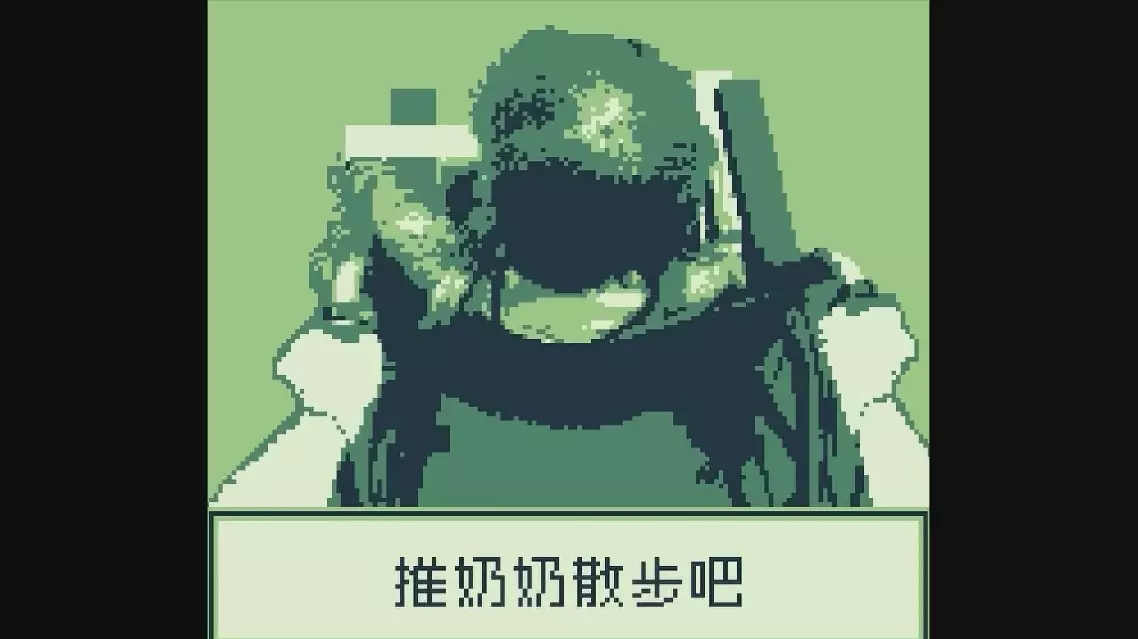
Chinese artist transforms memory of late grandma into game, resonating with netizens