Fresh vegetables from China are appearing on supermarket shelves in Dubai, United Arab Emirates, just 48 hours after being harvested, ensuring maximum freshness and meeting local demand in the vegetable-import-reliant country.
At a local supermarket, shelves are packed with fresh Chinese farm produce, reflecting growing imports of cool-season vegetables from China.
With its desert climate, high temperatures and humidity, especially in summer, the UAE is not well suited for large-scale production of leafy greens.
In recent years, Chinese vegetable imports have become an essential supplement to the local supply.
A manager at the Dubai supermarket said that the entire cold-chain process - from harvesting in China to shelf display in Dubai - is completed within 48 hours, maintaining the freshness of the produce.
"Our customs clearance department collects the goods from the airport and delivers them to our warehouse within four hours. Within another two hours, we will distribute the vegetables to all our stores across the UAE. Throughout the year, Chinese vegetables account for about 60 percent of our total vegetable sales here," said Zhou Qiang, head of fruit and vegetable procurement at Wenchao Group.
While enriching daily meals, Chinese cool-season vegetables are also adding flavor to the UAE's dining scene.
Hadi, a Dubai restaurant owner who once worked in Xi'an, capital of northwest China's Shaanxi Province, from 2008 to 2011, said he was drawn not only to the city's history but also to the unique taste of Chinese vegetables.
After returning home, Hadi opened a restaurant that now features several Chinese dishes on the menu.
Among them, stir-fried Shanghai bok choy has become a top seller.
"We don't [didn't] know about this [vegetable before], so now because of China, now we know bok choy. And many people are using bok choy, because of this. We get a lot of compliments not only from Chinese customers but also from foreigners. They really, really like bok choy," he said.

Fresh Chinese vegetables well received on Dubai supermarkets
A new China Global Television Network (CGTN) documentary explores how the historic Long March spirit is driving modern innovation, as young Chinese researchers and engineers are channeling this relentless drive to overcome critical bottlenecks in the EV and AI industries.
Titled "The Source of AI: Not a Single Rock Goes to Waste", the documentary highlights the pioneering journeys of Zhong Yu and He Pengyu.
Two years ago, Zhong made a pivotal career shift, leaving a long-established automaker to return to China and join Farasis Energy, a homegrown battery manufacturer based in Ganzhou City of east China's Jiangxi Province.
Working around the clock, Zhong and his team are developing solid-state batteries. This next-generation technology promises higher energy density and enhanced safety, having the potential to completely disrupt the current automotive landscape.
Through his research, Zhong is determined to establish China as a global leader in the battery sector.
While Zhong focuses on the power sources of the future, He Pengyu is tackling the foundational raw materials required for the EV and AI boom.
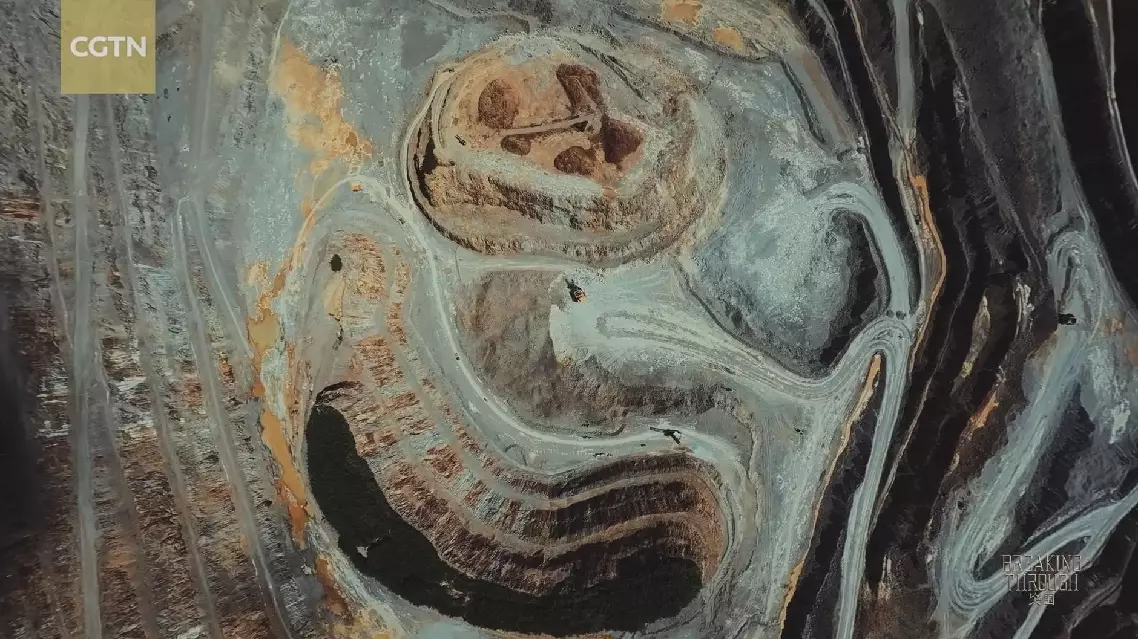
The rapid expansion of these sectors has triggered a massive surge in demand for copper and rare earth elements. However, extracting and separating these valuable minerals from raw ore has long been a formidable technical hurdle.
Without advanced equipment, China's mining industry once relied on grueling, inefficient manual sorting.
Determined to change this paradigm after returning from his studies in France, He founded HPY Sorting. The company has developed a revolutionary AI-driven optical ore sorting system capable of automatically separating waste rock from valuable ore.
Processing up to 300 tons of ore per hour, this intelligent sorting technology is now deployed in mines across the world, replacing tasks that once relied on human experience with precision-driven algorithms and automated machinery.
He Pengyu hopes that through his innovation, not a single rock goes to waste.
The documentary is part of CGTN's "Breaking Through" series, which traces China's journey from the historic Long March undertaken by the Red Army nine decades ago to its modern-day achievements, highlighting the resilience, ingenuity, and determination of its people.
Long March spirit drives critical breakthroughs in China's EV, AI industries: documentary