China's consumer goods trade-in program is driving a surge in domestic spending and boosting demand for high-quality appliances, with the Labor Day holiday sparking greater consumer enthusiasm.
This initiative dates back to March 2024, when an action plan was introduced to encourage large-scale equipment renewal and consumer goods trade-ins. In January, the program was further expanded, increasing the number of home appliance categories eligible for subsidies from eight in 2024 to 12 in 2025.
In Yifeng County, Jiangxi Province, 100-inch televisions are in high demand. Ms. Xiong, one of the buyers, shared that her family had used their TV for over a decade and decided it was time for an upgrade. Encouraged by enhanced subsidies, she opted for a brand-new purchase.
"I enjoyed a subsidy of over 2,000 yuan (about 275.05 U.S. dollars). The TV is smart and family-friendly," said Xiong.
Following the rollout of the trade-in program, demand for high-quality home appliances among county and town residents continues to surge. A local warehouse has reported a recent spike of over 30 percent in daily shipment volumes, with smart appliances such as large-screen TVs and washing-and-drying machines seeing a staggering 300 percent increase.
"This year we have built four new warehouses, and we can store 600,000 pieces of parcels. The popularity (of trade-ins) is still rising, so we are now building the fifth warehouse," said Yao Chengyuan, the head of JD Jiangxi logistics large parcel center.
Cities have registered similar growth in consumer spending thanks to trade-in program. In a newly-opened large shopping mall in Nanjing, capital of east China's Jiangsu Province, 90 percent of its more than 200,000 products are eligible for subsidies under the trade-in program.
On Thursday, the first day of China's ongoing five-day Labor Day holiday, the mall received more than 30,000 customers. Salespeople said consumers have shown a stronger desire to spend on higher-priced products.
"Many customers tend to buy mid-range and high-end products. Their average price used to be around 3,000 or 4,000 yuan, but now it is around 5,000 or 6,000 yuan," said Lyu Xiaodong, a salesman.
Sales platforms reported a 150 percent surge in store traffic on the first day of the holiday compared to last year. Sales of trade-in eligible products jumped 61 percent year on year, with computers, mobile phones, and smartwatches topping the list of best-sellers.
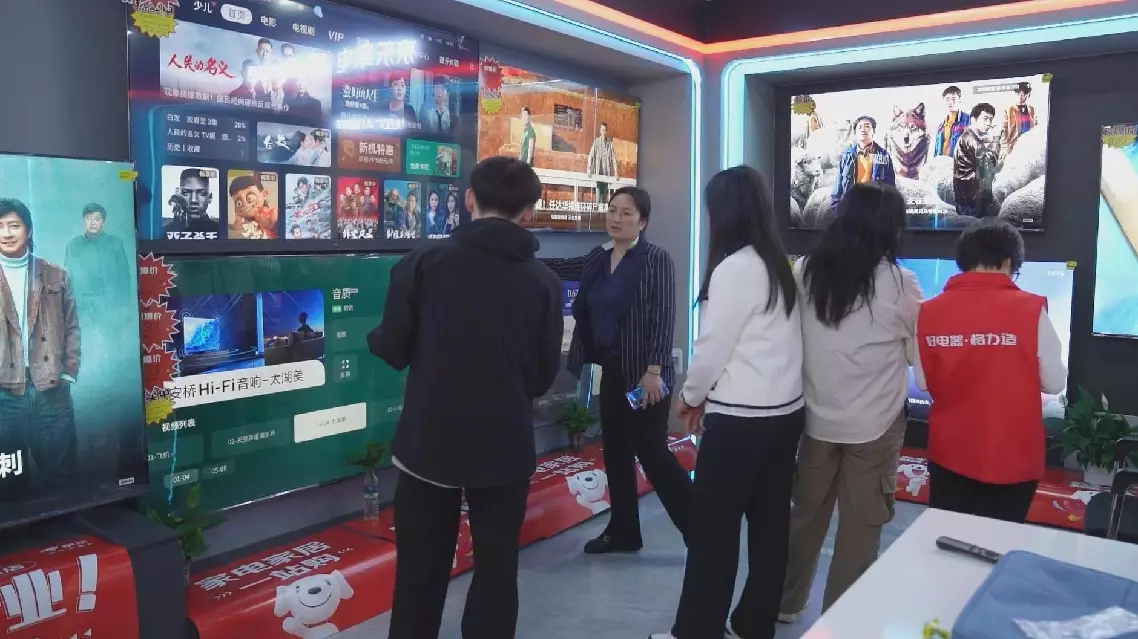
China's trade-in program drives holiday spending surge, boosts appliance demand