A young Tai Chi master from central China's Henan Province is revolutionizing the way the next generation perceives this ancient martial art. Through her innovative video content, Li Linghui is blending traditional Tai Chi with modern aesthetics, attracting thousands of young followers and revitalizing a centuries-old practice.
During the May Day holiday, amidst the scenic beauty of the Yellow River dike in Henan's Wenxian County, Li was busy filming her latest video. As the 13th-generation heir of Chen-style Tai Chi, Li has dedicated herself to modernizing the practice and making it more accessible to young people.
"Through videos, I want to show everyone the beautiful landscapes of China, as well as the outstanding cultural display of our traditional martial arts," said Li.
Li was born in the 1990s in Wenxian's Chenjiagou village, which is known as the "hometown of Tai Chi".
Growing up in a family where Tai Chi has been practiced, Li has been practicing the routines since she was a child. However, as a young girl, she couldn't quite grasp why this slow and gentle martial art didn't seem to have much bite. It wasn't until one day when her mother, Chen Chun'ai, a top Tai Chi master, challenged her to a few moves. Li, confident and prepared, was taken by surprise when her mother's expert technique effortlessly threw her off balance.
"When I was young, I always thought Tai Chi was soft and gentle. My mother, in order to make me truly understand the power of Tai Chi, used one of its moves and made me spin 360 degrees. It was the first time I felt the internal strength of Tai Chi, a power that's hidden within our own bodies," said Li.
While Li was always passionate about Tai Chi, she realized that most young people saw it as a sport for the elderly. As a university Tai Chi instructor, she was determined to change this perception. In 2021, she launched her online persona "Tai Chi Ling'er" to introduce Tai Chi in a way that is fresh and appealing to a younger audience.
Breaking down complex movements into simple, easy-to-follow steps, Li started by teaching the 13 most representative Tai Chi forms. She created simplified versions of the moves, similar to how yoga or fitness routines are taught.
However, teaching alone wasn’t enough. Li knew she needed to make Tai Chi more dynamic to challenge the stereotype of it being slow and lethargic. She began combining Tai Chi with elements of competition, aesthetics, traditional Chinese music, and natural landscapes, creating "fashionable Tai Chi" videos. These videos, blending ancient tradition with modern style, have attracted a wave of young followers.
"For example, in our tradition, there's a move called 'Lan Zha Yi' (literally 'Lazily Tying Coat'). After we creatively adapted it, it became more expansive, with broader, more fluid movements. We made the 'silk reeling' technique more open, like a flowing stream, pulling it out in a smooth, continuous motion. We also added some follow-up camera effects to capture the state of this flowing movement. When people see this action, they will find it beautiful," Li said.
In the past few years, "Tai Chi Ling'er" has posted over 600 creative videos. The integration of Tai Chi with stunning scenery and the philosophy of "harmony between man and nature" has resonated with viewers.
"The comment that left the deepest impression on me was: 'So this is how cool Tai Chi can be.' The post-00s and post-90s generations have already become a large fanbase for us. I think this is actually part of the process of our cultural awakening," said the Tai Chi master.
Aware that one person's impact can be limited, Li is now helping other Tai Chi masters bring their styles online and develop their unique brands. As Li continues to innovate, she is not only preserving Tai Chi's heritage but also ensuring it remains relevant and even becomes popular for generations to come.
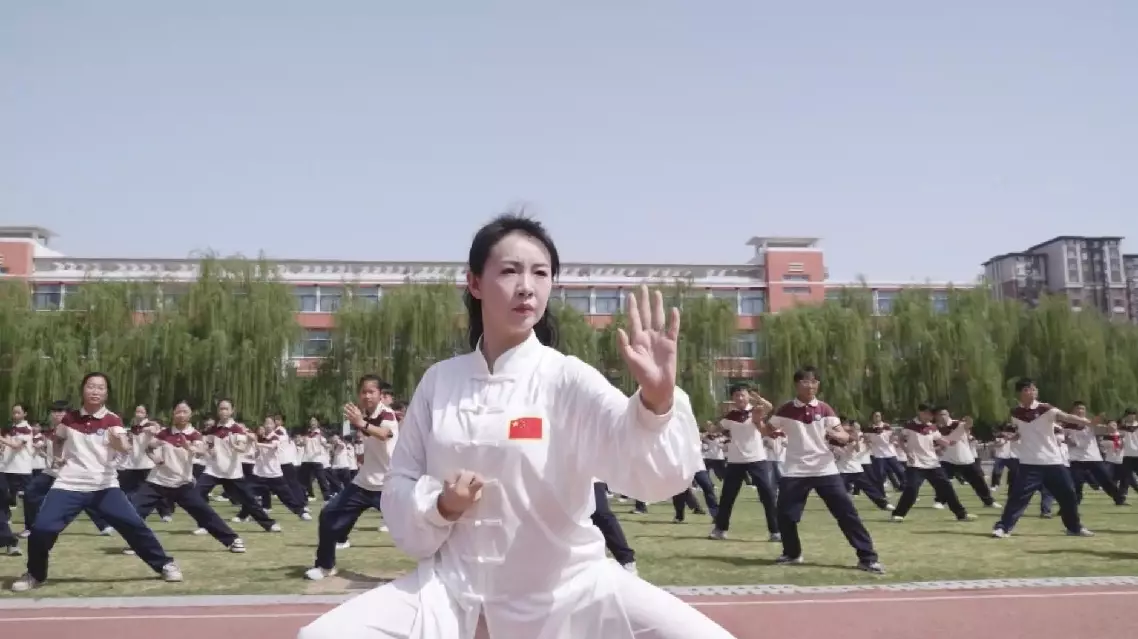
Young Tai Chi master revitalizes traditional martial art with creative videos
Chinese President Xi Jinping's just-concluded trip to Kyrgyzstan and Egypt demonstrated China's commitment to joining hands with all other countries for development and rejuvenation, and reforming and improving global governance, Chinese Foreign Minister Wang Yi said on Thursday.
Wang, also a member of the Political Bureau of the Communist Party of China Central Committee, made the remarks while briefing reporters on the conclusion of Chinese President Xi Jinping's attendance at the 26th Meeting of the Council of Heads of State of the Shanghai Cooperation Organization (SCO) in the Kyrgyz capital city of Bishkek and state visits to Kyrgyzstan and Egypt.
Wang said the trip, with solidarity and cooperation as its guiding theme, focused on a shared future and advocated fairness and justice.
It holds significant practical and far-reaching implications for building consensus on cooperation among all parties and reforming and improving global governance, he said, hailing the trip as a complete success.
Media outlets both at home and abroad paid close attention to the trip, noting that against a backdrop of deepening geopolitical rifts and challenges to the international order, it powerfully responded to the international community's aspirations for peace, stability, and development, and offered China's solutions and wisdom to a world fraught with turmoil and upheaval, according to the foreign minister, who said that China's image as a reliable partner and a responsible major power has become even more deeply rooted in people's hearts.
The SCO summit in Bishkek injected vitality into regional development through the collective efforts of all parties concerned, Wang said.
The summit also fostered synergy for global multipolarity, and provided fresh impetus for improving global governance, which once again demonstrated the vitality and capacity for action of the organization, he said.
At the Bishkek Summit, Xi said the SCO's most significant achievement has been its gradual transformation into a new type of regional cooperation organization that spans the largest geographical area, represents the largest population, and possesses enormous development potential in the world.
He said the SCO's most valuable spiritual asset is the pioneering initiative of and steadfast adherence to the "Shanghai Spirit" of mutual trust, mutual benefit, equality, consultation, respect for diversity of civilizations and pursuit of common development.
The SCO's most important experience for cooperation is that it has found the right way of coexistence featuring non-alliances, non-confrontation and not targeting any third party, while bringing countries in the region together to build a common home, he added.
Xi put forward a four-point proposal at the summit: stay committed to putting development first, and open up the prospects for shared prosperity; stay committed to taking security as a key goal, and foster an environment of common security; stay committed to a people-centered approach, and cement the foundation for everlasting friendship; and stay committed to dialogue and consultation, and strive for more equitable and orderly governance.
Wang recalled last year's SCO Tianjin Summit, where Xi and leaders of other SCO member states charted a blueprint for the organization's development over the next decade, ushering in a new stage of high-quality development for the SCO. The outcomes of the summit are being implemented at an accelerated pace, he noted.
At this year's SCO summit, Wang said, the strategic blueprint drawn up in Tianjin is gradually becoming a reality, with the organization's structure becoming more optimized, its operations more efficient, and its cooperation more effective.
Xi's state visit to Kyrgyzstan strengthened the bonds of permanent good-neighborliness and friendship between the two countries, Wang said.
It also opened up new prospects for shared prosperity, deepened commitment to a shared future, and demonstrated China's principle of amity, sincerity, mutual benefit and inclusiveness in its neighborhood diplomacy, he noted.
The visit to the Central Asian nation came as China-Kyrgyzstan cooperation has ushered in a "golden period" of rapid development, as noted by Xi in a written speech delivered upon his arrival, with the two countries working to translate their longstanding friendship and strong political mutual trust into broader cooperation and greater benefits for their people.
During the Kyrgyz leg of the trip, the most significant political outcome was the signing by the two heads of state of a treaty on permanent good-neighborliness, friendship and cooperation, which legally cemented their commitment to everlasting friendship, Wang said.
The treaty marks a new level of political mutual trust, mutual support and strategic cooperation, while opening broader avenues for future relations, he noted.
During the visit, the two sides signed more than 30 cooperation documents covering trade, transportation, science and technology, education, cultural and people-to-people exchanges, among other areas.
The two heads of state also agreed to elevate practical cooperation, with high-quality Belt and Road cooperation as the main focus, consolidating trade and investment, connectivity and green minerals cooperation while expanding into emerging fields such as the digital economy, clean energy and artificial intelligence, Wang recalled.
Xi, during his talks with Kyrgyz President Sadyr Japarov, said the two sides should ensure high-quality construction of the China-Kyrgyzstan-Uzbekistan Railway, calling it a major transportation artery that carries the development aspirations of the people across the region.
Japarov, for his part, said Kyrgyzstan stands ready to actively advance the construction of the railway project, so as to turn it into a "steel Silk Road" for the new era and a new bond of friendship between the two countries.
Xi's state visit to Egypt fully demonstrated the strategic, leading and exemplary nature of China-Egypt relations, marking a milestone in the development of bilateral ties, Wang said, adding that the historic visit is not only a journey to carry forward friendship but also one to expand cooperation.
During his talks with Egyptian President Abdel Fattah El-Sisi, Xi called for efforts from both China and Egypt to support each other, deepen cooperation, and continue advancing the building of a China-Egypt community with a shared future amid a turbulent international and regional landscape.
China has been, is now and will always be a trustworthy and reliable comprehensive strategic partner to Egypt, Xi said.
Wang said that the visit charted a new blueprint for mutually beneficial cooperation between China and Egypt.
The Belt and Road Initiative proposed by Xi is highly aligned with Egypt Vision 2030 put forward by Sisi, he said, adding that the two countries have achieved fruitful results in high-quality Belt and Road cooperation.
He also noted that the two heads of state's joint visit to the Grand Egyptian Museum is a vivid example of mutual learning between civilizations.
Last year, in his congratulatory message to Sisi on the opening of the Grand Egyptian Museum, Xi said that China and Egypt, both ancient civilizations, should continue to deepen exchanges and mutual learning among civilizations, inject fresh impetus into the development of their comprehensive strategic partnership, and contribute the strength of civilizations to the building of a community with a shared future for humanity.
During his visit to the Grand Egyptian Museum, Xi called for efforts from both sides to uphold the vision of equality, mutual learning, dialogue and inclusiveness among civilizations, and implement the Global Civilization Initiative, advancing the building of a community with a shared future for humanity.
Xi's four-point proposal on building a new security architecture in the Middle East once again offers a Chinese solution for achieving long-term peace and stability in the region, Wang said.
Xi put forward the proposal in his talks with Sisi, calling for unleashing internal drivers, advancing an integrated approach, cementing development foundation, and enhancing international coordination.
International observers expressed the belief that Xi's proposal has offered a viable path toward resolving the Middle East's security dilemma, Wang said.
During the visit, Xi had in-depth exchanges with leaders of various other countries on world affairs and hotspot issues, speaking up for peace and standing up for justice, according to Wang.
On the sidelines of the Bishkek summit, Xi held separate meetings with Russian President Vladimir Putin, Uzbek President Shavkat Mirziyoyev and Mongolian President Ukhnaa Khurelsukh.
Xi and Putin agreed to deepen China-Russia comprehensive strategic cooperation, advance reform of global governance, promote a multipolar world, and jointly safeguard world peace, stability and development, Wang noted.
Guided by the Xi Jinping Thought on Diplomacy, China has been exploring a distinctly Chinese approach to resolving hotspot issues, Wang said, adding that no matter how complex the disputes or how intense the conflicts is, China will always stand firmly on the side of peace and dialogue and on the right side of history.
Wang also mentioned cultural events attended by Xi's wife Peng Liyuan, along with Japarov's wife Aigul Japarova, and Sisi's wife Entissar El-Sisi, respectively, saying the activities fostered a bond between the people and strengthened people-to-people exchanges.
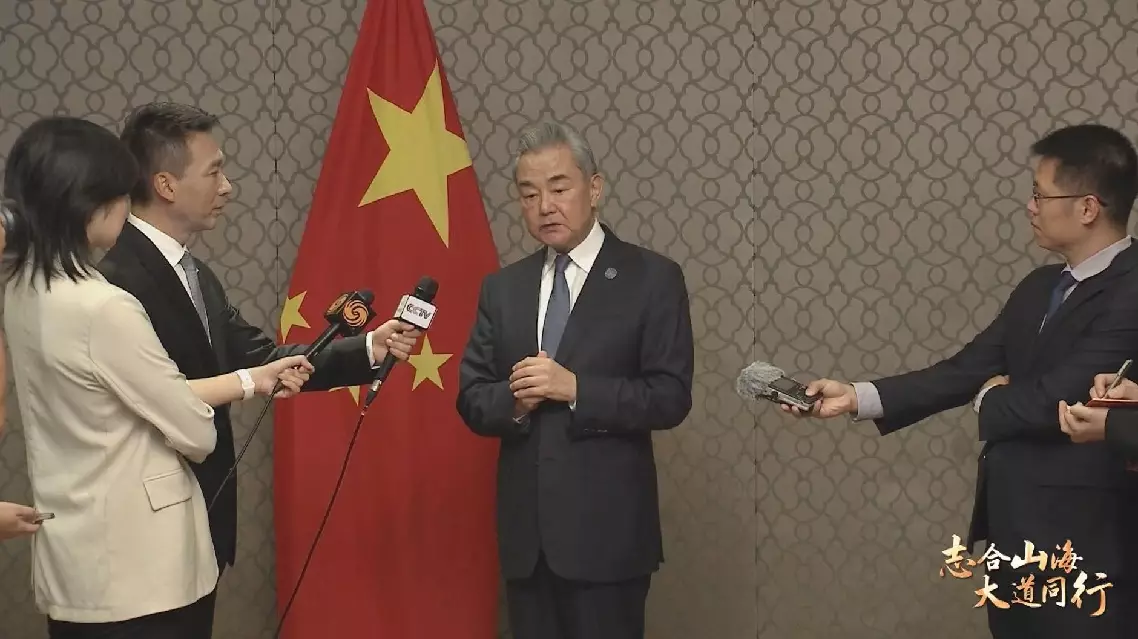
Xi's trip to Kyrgyzstan, Egypt demonstrates China's commitment to shared development, improving global governance: FM
Xi's trip to Kyrgyzstan, Egypt demonstrates China's commitment to shared development, improving global governance: FM