China's sports-related spending has ramped up during the May Day holiday, which runs from May 1 to 5 this year.
Happily out of the confines of winter, Chinese people are embracing outdoor activities as spring offers seemingly endless opportunities to keep fit and revel in the beauty of nature.
As temperatures edge up, many sports, such as marathons, cycling, fishing, camping, and skydiving, have transformed parks and commercial districts into vibrant hubs of activity, igniting a blooming "spring economy".
Sports tourism is rapidly becoming a key driver of consumer spending and a popular trend among Chinese travelers.
In recent years, air sports have gained significant traction in the country. During this holiday, air sports such as skydiving and paragliding have become the new favorites among adventure-seeking tourists in many places.
Located in Liangping District of southwest China's Chongqing Municipality, a skydiving base allows tourists to experience the speed and thrill of rapidly descending from a height of 4,000 meters. Early in the morning, a stream of people would arrive at the base to try out skydiving. After some training, beginners can enjoy tandem skydiving under the guidance of professional instructors.
"For those who enjoy thrills, come and experience the skydiving service. It's really great," said Meng Zhu, a tourist.
"Awesome! It's so exciting. I have checked off an item from my bucket list," said Cai Chang, another tourist.
The person in charge of the skydiving base mentioned that the number of tourists during this holiday is about three times higher than non-holiday time. Moreover, many people are not content with just one jump, and go on to participate in professional training to become certified skydivers.
"The consumer groups coming here are actually becoming more diversified. Not only young people, but even some elderly individuals would come to challenge themselves, which is quite a significant change," said Han Weiming, director of Chongqing Liangping Skydiving Base.
In addition to skydiving, many tourists also choose to experience powered paragliding. After fastening the safety belt, they can enjoy an aerial adventure with the instructor controlling the direction.
"I think this project can help me relax," said Ding Yanping, a tourist.
"Before, I used to see ['the scenery] through aerial photography, but this time, flying up there myself, I saw it. And it was especially beautiful," said Ou Huan, another tourist.
Currently, this base has been expanding its consumption scenarios of "low-altitude economy plus" by introducing the hot air balloon project to attract more tourists.
The enthusiasm for air sports has also driven the burgeoning development of the accommodation and catering industries at the base area. It is expected that the total operating income during the entire holiday will be close to one million yuan (about 0.14 million U.S. dollars).

China's sports-related spending ramps up during May Day holiday
A new round of trade-in subsidy program is energizing China's consumer market these days, with provinces across the country seeing a surge in demand for cars, home appliances and digital devices.
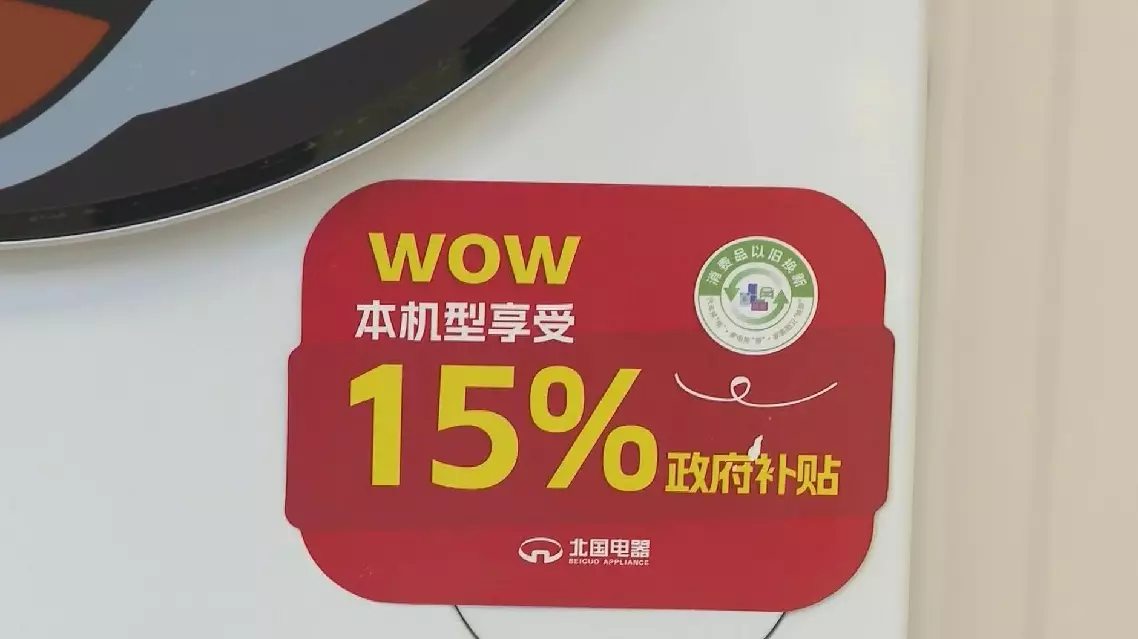
In north China's Shanxi Province, the new trade-in subsidy program, which started on January 9, has further helped boost sales in home appliances and digital devices which are covered by the new round of subsidies.
To enjoy the subsidies, six types of home appliances, including refrigerators and washing machines, must meet national Level 1 energy-efficiency or water-efficiency standards. Digital and smart products include four types, such as mobile phones and tablets, with a sales price cap of 6,000 yuan (about 800 U.S. dollars) per item.
In both categories, subsidies are set at 15 percent of the final transaction price. For home appliances, the maximum subsidy is 1,500 yuan per item. For digital products, the cap is 500 yuan per item. Each consumer can receive a subsidy for one unit in each category.
Neighboring Shanxi, Hebei Province kicked off the year of 2026 with the new round of trade-in subsidy program starting on January 1.
The subsidies cover automobiles, home appliances, and digital products. Individual consumers who purchase designated Level 1 energy-efficiency appliances or eligible digital products priced at no more than 6,000 yuan can receive subsidies equal to 15 percent of the transaction price. The maximum subsidy is 1,500 yuan per appliance and 500 yuan per digital or smart device, with each person limited to one subsidized item in each category.
Data showed that from Jan 1 to 9, Hebei's home appliance trade-in program alone disbursed more than 130 million yuan in subsidies, driving sales of over 920 million yuan.
In east China's Jiangsu Province, the new trade-in subsidy program, taking effect for two weeks, has brought the province a boom in trade-in.
At a local 4S store in Jiangsu's Suqian City, showroom traffic has spiked as salespeople walked customers through the new benefits from the trade-in subsidy program.
"Under the scrappage-and-replacement scheme, customers who buy a new energy vehicle (NEV) can receive a subsidy worth 12 percent of the vehicle price, capped at 20,000 yuan (about 2,860 U.S. dollars). For combustion-engine cars, the subsidy is 10 percent, with an upper limit of 15,000 yuan. For trade-ins, NEVs are able to receive a subsidy worth 8 percent of the vehicle price, up to 15,000 yuan, while combustion-engine cars will receive a 6-percent subsidy, with a cap of 13,000 yuan," said Sun Yue, a saleswoman at the store.
In the home appliance sector, Jiangsu's policy this year stipulates that only products that meet China's Level 1 energy-efficiency standard are eligible for subsidies. The scheme covers six major categories, including refrigerators and washing machines.
Consumers who purchase qualifying appliances can receive a subsidy equal to 15 percent of the final retail price, up to a maximum of 1,500 yuan per item. Each person is limited to one subsidized unit per product category.
Four types of digital and smart products, such as mobile phones and tablets, are eligible for a 15-percent subsidy capped at 500 yuan per unit, with a retail price no more than 6,000 yuan.
"With the national subsidy policy back in place this year, I went to the store to check what discounts I could get. It knocked 500 yuan off the price. [The discounted price is] very reasonable," said Wang Kang, a resident of Jiangsu's Xuzhou Province.
To enhance the shopping experience for consumers, many retailers are pairing subsidies with "one-stop" services that combine the delivery of new products with on-site collection of old ones.
"After consumers place an order for new home appliances, our staff will schedule a time to pick up the old units. Recycling the old appliance can also further offset the purchase price of the new one," said Yang Jie, a sales supervisor at a major home appliance company.
China's new trade-in program sparks consumption boom