ROME (AP) — The first clue of the next pope's direction will be the name the winner chooses.
The announcement “Habemus Papam” — “We have a pope" — from the balcony of St. Peter’s Basilica is followed first by the revelation of the new pontiff's baptismal name, in Latin, followed by his papal name, wrought with meaning.
A Pope Francis II would signify continuity with the late pontiff's pastoral legacy and his prioritizing of the marginalized. Francis himself quipped that his successor would be John XXIV, after the progressive Vatican II-era pope. The most popular papal name of the 20th century, Pius, would be a clear signal that a traditionalist is taking back the throne of St. Peter.
“In the deepest recesses of their mind, when they start the conclave, everyone will walk in there with a name in their head," said Natalia Imperatori-Lee, chair of religious studies at Manhattan University.
For most of the Catholic Church's first millennium, popes used their given names. The first exception was the 6th century Roman Mercurius, who had been named for a pagan god and chose the more appropriate name of John II.
The practice of adopting a new name became ingrained during the 11th century, a period of German popes who chose names of early church bishops out of “a desire to signify continuity," said the Rev. Roberto Regoli, a historian at Rome's Pontifical Gregorian University.
For many centuries, new popes tended to choose the name of the pope who had elevated them to cardinal. John was the most popular, chosen by 23 popes, followed by Benedict and Gregory, each with 16.
Only starting in the mid-20th century did new popes begin to choose names signaling the aim of their papacy, Regoli said.
“Even now, as we are waiting for the new pope, the name with which he will present himself will help us to understand the horizon towards which he wants to proceed," Regoli said.
Some names have been out of use for centuries, like Urban or Innocent.
“I don’t think anyone will pick Innocent,″ Imperatori-Lee said, given the abuse and other scandals that have rocked the church. ”I don’t think that would be the right choice."
FRANCIS: Pope Francis, elected in 2013, took the name of St. Francis of Assisi, known for his humility, life of poverty and love of all creatures. With it, Francis signaled a papacy focused on those who are often seen as outsiders, including the poor, prisoners and the LGBTQ+ community, while promoting peace, brotherhood and care of the environment.
BENEDICT: Last chosen by German Cardinal Joseph Ratzinger, elected in 2005. Pope Benedict XVI said he wanted to pay homage to Benedict XV, who led the church during World War I and dedicated himself to healing the rifts of war, and to the 6th century St. Benedict, founder of Western monasticism, who helped spread Christianity throughout Europe. One of Benedict XVI’s priorities was trying to revive the faith in Europe. “If we get a Benedict, then we will know that the cardinals chose to see Francis as an anomaly," Imperatori-Lee said.
JOHN PAUL: The papacy's first composite name was chosen by Cardinal Albino Luciani in 1978 to honor Pope John XXIII, who opened the Vatican Council II process that reformed the Catholic Church, and Paul VI, who closed it. The name signaled a commitment to reforms, including sidelining the Latin Mass in favor of local languages and opening to other faiths, most significantly Judaism. John Paul I’s papacy lasted just 33 days. Polish Cardinal Karol Wojtyla, who succeeded him, chose the name John Paul II.
JOHN: Chosen 23 times by popes, most recently in 1958 by Pope John XXIII. John can refer to St. John the Apostle, one of Jesus' 12 apostles and the author of one of the Gospels, or St. John the Baptist, the prophet who baptized Jesus. “John the XXIII was a pope that no one expected a lot from, but had a colossal impact on the church," Imperatori-Lee said. ”So that could be a sign of what they want their pontificate to be like."
PAUL: Chosen six times, most recently in 1963 by Paul VI. St. Paul the Apostle spread the teachings of Jesus in the 1st century.
PIUS: It is associated with popes known for their traditionalist, anti-reform bent. Pius IX ordered the kidnapping of the Jewish boy Edgardo Mortara in 1858 and raised him Catholic in the Vatican after learning he had been secretly baptized by a housekeeper; Pius X was the early 20th century anti-modernist who inspired the anti-Vatican II schismatic group, the Society of St. Pius X; Pius XII was the World War II-era pope criticized for not speaking out sufficiently about the Holocaust. "It is now a name that is hostage to some Catholic groups that can be considered traditionalists," Regoli said.
A new pope is free to choose a name never used before, as Francis did.
“This would open a new season and could mean that his program is not in line with any of his predecessors, so an even more personalized program," Regoli said.
Imperatori-Lee suggested another name that might signal a continuation of Francis' legacy: Ignatius, for the founder of Francis' Jesuit order.
“It would be interesting," she said. "We've never had one of those."
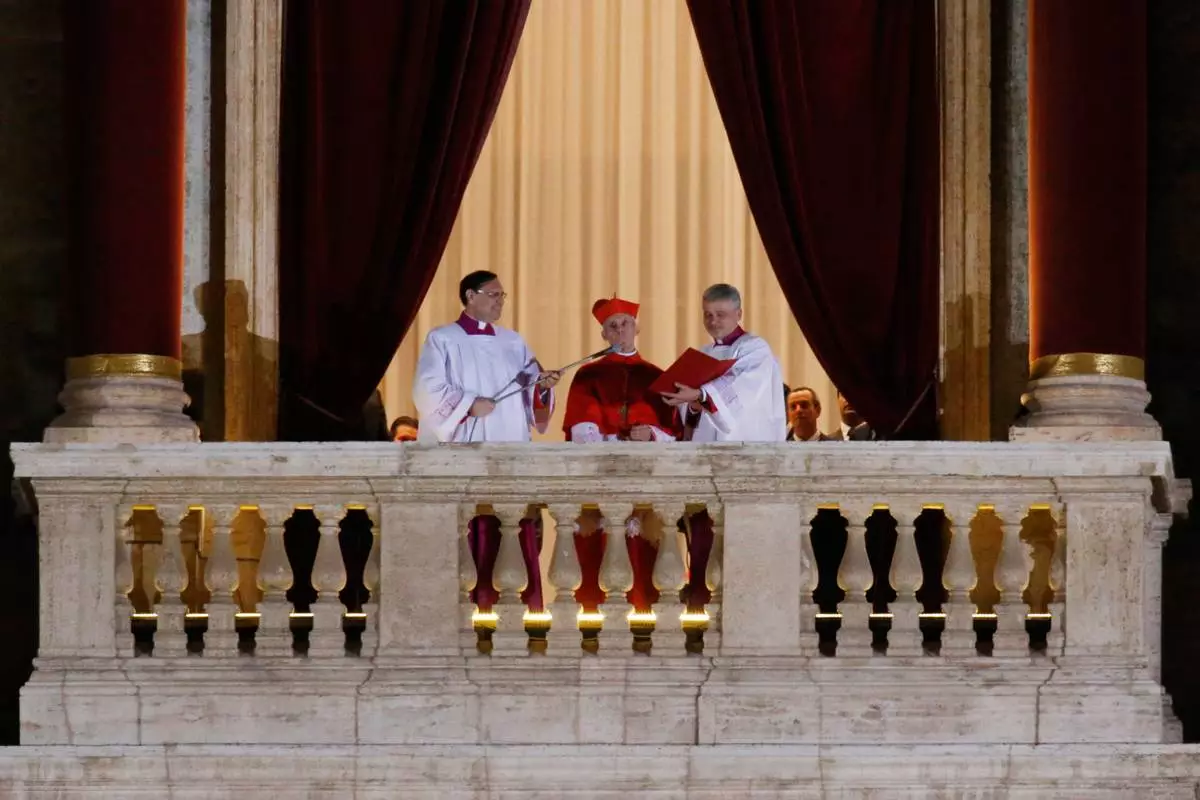
FILE - Cardinal Jean-Louis Tauran announces the newly elected Pope Jorge Mario Bergoglio, who took the name of Pope Francis, elected on March 13, 2013, the 266th pontiff of the Roman Catholic Church from the central balcony of St. Peter's Basilica at the Vatican. (AP Photo/Michael Sohn, File)
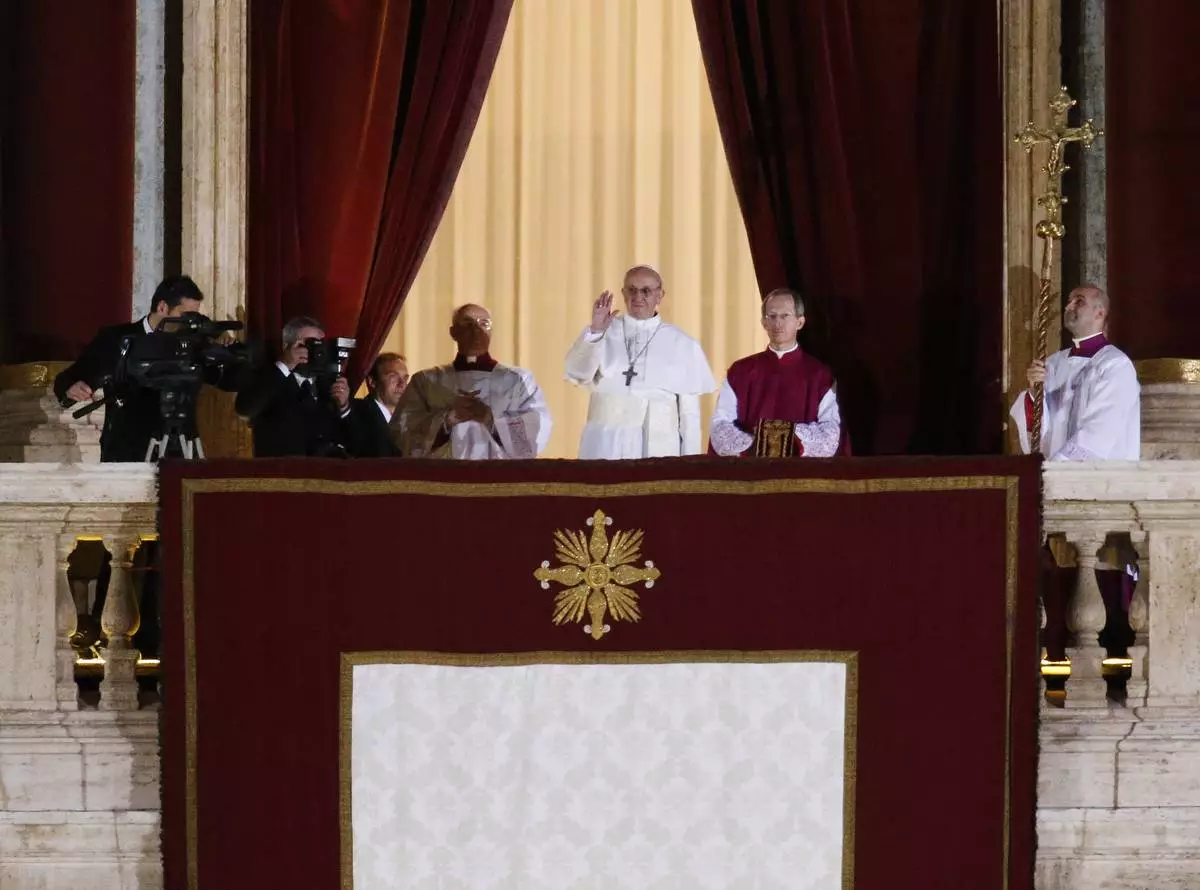
FILE - Pope Francis flanked by Monsignor Guido Marini, master of liturgical ceremonies, waves to the crowd from the central balcony of St. Peter's Basilica at the Vatican, Wednesday, March 13, 2013. (AP Photo/Michael Sohn, File)
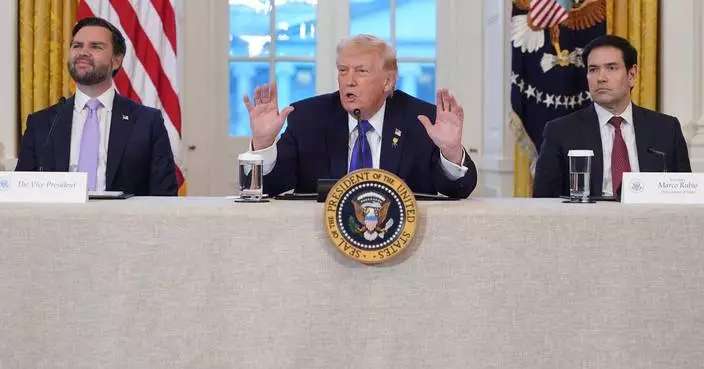
WASHINGTON (AP) — President Donald Trump said he’s dropping — for now — his push to deploy National Guard troops in Chicago, Los Angeles and Portland, Oregon, a move that comes after legal roadblocks held up the effort.
“We will come back, perhaps in a much different and stronger form, when crime begins to soar again - Only a question of time!" he said in a social media post Wednesday.
Governors typically control states' National Guardsmen, and Trump had deployed troops to all three cities against the wishes of state and local Democratic leaders. He said it was necessary as part of a broader crackdown on immigration, crime and protests.
The president has made a crackdown on crime in cities a centerpiece of his second term — and has toyed with the idea of invoking the Insurrection Act to stop his opponents from using the courts to block his plans. He has said he sees his tough-on-crime approach as a winning political issue ahead of next year’s midterm elections.
Troops had already left Los Angeles after the president deployed them earlier this year as part of a broader crackdown on crime and immigration.
In his post, Trump said the troops' presence was responsible for a drop in crime in the three cities, though they were never on the streets in Chicago and Portland as legal challenges played out. When the Chicago deployment was challenged in court, a Justice Department lawyer said the Guard’s mission would be to protect federal properties and government agents in the field, not “solving all of crime in Chicago.”
Portland Mayor Keith Wilson’s office in a statement said the city’s reduction in crime was due to the efforts of local police and public safety programs. Chicago officials echoed the sentiment, saying in a release Tuesday that the city had 416 homicides in 2025 — the fewest since 2014.
Trump’s push to deploy the troops in Democrat-led cities has been met with legal challenges at nearly every turn.
The Supreme Court in December refused to allow the Trump administration to deploy National Guard troops in the Chicago area. The order was not a final ruling but was a significant and rare setback by the high court for the president’s efforts.
Illinois Gov. JB Pritzker wrote on X Wednesday that Trump “lost in court when Illinois stood up against his attempt to militarize American cities with the National Guard. Now Trump is forced to stand down.”
Hundreds of troops from California and Oregon were deployed to Portland, but a federal judge barred them from going on the streets. A judge permanently blocked the deployment of National Guard troops there in November after a three-day trial.
Oregon Gov. Tina Kotek said in a statement Wednesday that her office had not yet received “official notification that the remaining federalized Oregon National Guard troops can return home. They were never lawfully deployed to Portland and there was no need for their presence. If President Trump has finally chosen to follow court orders and demobilize our troops, that’s a big win for Oregonians and for the rule of law.”
Trump's decision to federalize National Guard troops began in Los Angeles in June, when protesters took to the streets in response to a blitz of immigration arrests in the area. He deployed about 4,000 troops and 700 Marines to guard federal buildings and, later, to protect federal agents as they carried out immigration arrests.
The number of troops slowly dwindled until just several hundred were left. They were removed from the streets by Dec. 15 after a lower court ruling that also ordered control to be returned to Gov. Gavin Newsom. But an appeals court had paused the second part of the order, meaning control remained with Trump. In a Tuesday court filing, the Trump administration said it was no longer seeking a pause in that part of the order.
The U.S. Court of Appeals for the Ninth Circuit on Wednesday ordered the Trump administration to return control of the National Guard to Newsom.
“About time (Trump) admitted defeat,” Newsom said in a social media post. “We’ve said it from day one: the federal takeover of California’s National Guard is illegal.”
Troops will remain on the ground in several other cities. The U.S. Court of Appeals for the District of Columbia Circuit in December paused a lower court ruling that had called for an end to the deployment of National Guard troops in Washington, D.C., where they’ve been deployed since August after Trump declared a “crime emergency.”
Trump also ordered the deployment of the Tennessee National Guard to Memphis in September as part of a larger federal task force to combat crime, a move supported by the state’s Republican Gov. Bill Lee and senators. A Tennessee judge blocked the use of the Guard, siding with Democratic state and local officials who sued. However, the judge stayed the decision to block the Guard as the state appeals, allowing the deployment to continue.
In New Orleans, about 350 National Guard troops deployed by Trump arrived in the city's historic French Quarter on Tuesday and are set to stay through Mardi Gras to help with safety. The state's Republican governor and the city's Democratic mayor support the deployment.
Ding reported from Los Angeles. Associated Press reporters John O'Connor in Springfield, Illinois, Becky Bohrer in Juneau, Alaska, Jack Brook in New Orleans and Adrian Sanz in Memphis contributed.
FILE - A protester confronts a line of U.S. National Guard members in the Metropolitan Detention Center of downtown Los Angeles, Sunday, June 8, 2025. (AP Photo/Eric Thayer, File)
FILE - Protesters stand off against California National Guard soldiers at the Federal Building in downtown Los Angeles, during a "No Kings" protest, June 14, 2025. (AP Photo/Richard Vogel, File)
President Donald Trump speaks during a news conference with Israel's Prime Minister Benjamin Netanyahu at Mar-a-Lago, Monday, Dec. 29, 2025, in Palm Beach, Fla. (AP Photo/Alex Brandon)