NEW YORK (AP) — Columbia University said Tuesday that it will be laying off nearly 180 staffers in response to President Donald Trump's decision to cancel $400 million in funding over the Manhattan college's handling of student protests against the war in Gaza.
Those receiving non-renewal or termination notices Tuesday represent about 20% of the employees funded in some manner by the terminated federal grants, the university said in a statement Tuesday.
“We have had to make deliberate, considered decisions about the allocation of our financial resources,” the university said. “Those decisions also impact our greatest resource, our people. We understand this news will be hard.”
University spokesperson Jessica Murphy declined to say whether more layoffs were expected, but said Columbia is taking a range of steps to create financial flexibility, including maintaining current salary levels and offering voluntary retirement incentives.
Research will also be scaled back, with some departments winding down studies and others maintaining some level of research while pursuing alternate funding.
The work impacted ranges from a project to develop an antiviral nasal spray for infectious diseases to various scientific studies on maternal mortality and morbidity, treatments for chronic illnesses such as long COVID, caring for newborns with opioid withdrawal syndrome and screenings for colorectal cancer, according to the university.
The layoffs, while expected, were “dispiriting" for faculty, said Marcel Agueros, secretary of Columbia’s chapter of the American Association of University Professors, which has filed a federal lawsuit against the Trump administration arguing the cuts are unlawful.
University officials say they’re working with the Trump administration in the hopes of getting the funding restored. But Agueros, an astronomy professor, said it will take years to undo the damage already inflicted.
“When there’s an interruption in funding, people have to leave, new people can’t be hired, some initiatives have to be put on hold, others need to be stopped, so research stops moving forward,” he said.
In March, the Trump administration pulled the funding over what it described as the Ivy League school’s failure to squelch antisemitism on campus during the Israel-Hamas war that began in October 2023.
Within weeks, Columbia capitulated to a series of demands laid out by the Republican administration as a starting point for restoring the funding.
Among the requirements was overhauling the university's student disciplinary process, banning campus protesters from wearing masks, barring demonstrations from academic buildings, adopting a new definition of antisemitism and putting the Middle Eastern studies program under the supervision of a vice provost who would have a say over curriculum and hiring.
After Columbia announced the changes, U.S. Education Secretary Linda McMahon said the university was “ on the right track," but declined to say when or if Columbia's funding would be restored. Spokespersons for the federal education department didn't immediately respond to an email seeking comment Tuesday.
Columbia was at the forefront of U.S. campus protests over the war last spring. Pro-Palestinian demonstrators set up an encampment and seized a campus building in April, leading to dozens of arrests and inspiring a wave of similar protests nationally.
Trump, when he retook the White House in January, moved swiftly to cut federal money to colleges and universities he viewed as too tolerant of antisemitism.
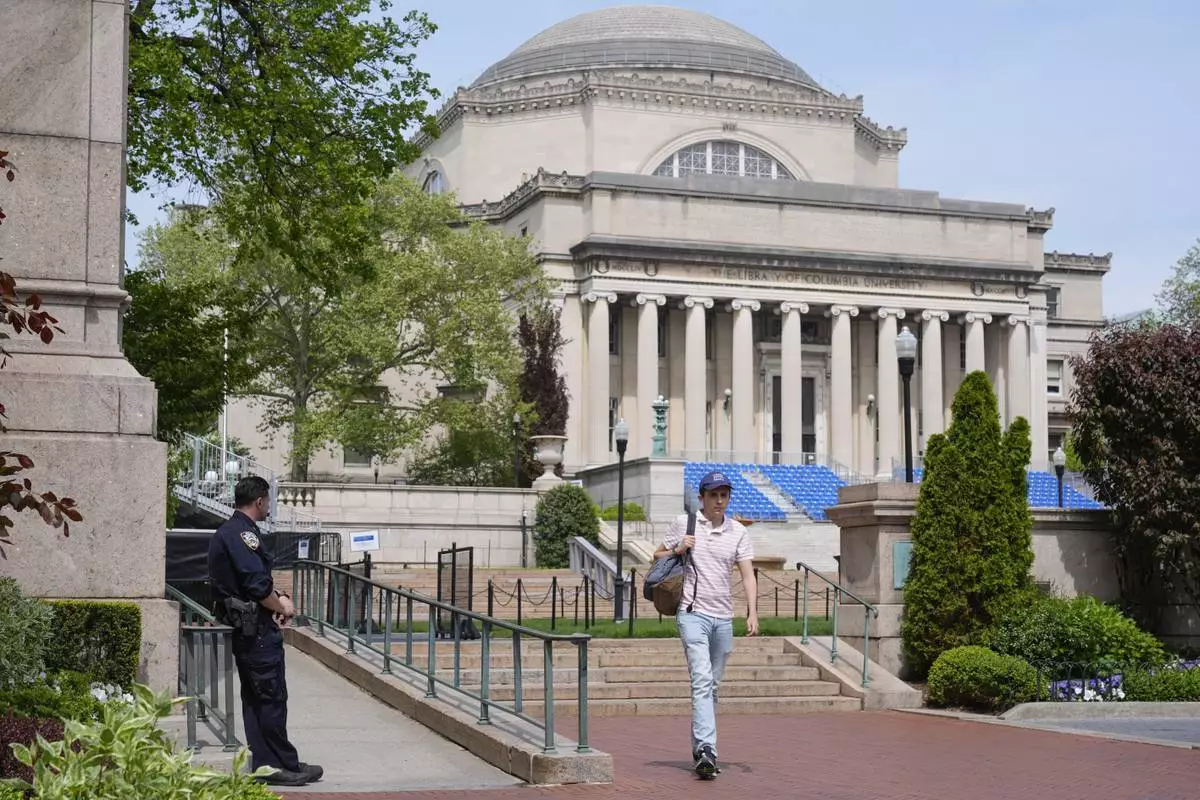
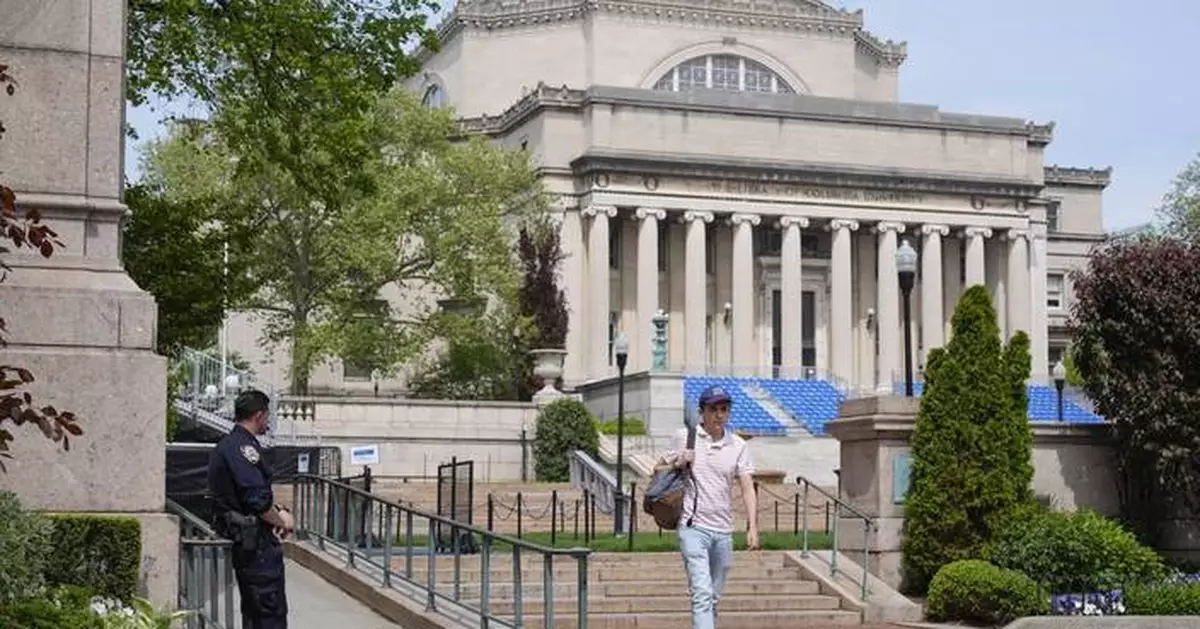
FILE - A New York City police officer keeps watch on the campus of Columbia University in New York, Monday, May 6, 2024. (AP Photo/Seth Wenig, File)
DETROIT (AP) — President Donald Trump is traveling to Michigan on Tuesday to promote his efforts to boost U.S. manufacturing, trying to counter fears about a weakening job market and worries that still-rising prices are taking a toll on Americans' pocketbooks.
The day trip will include a tour of a Ford factory in Dearborn that makes F-150 pickups, the bestselling domestic vehicle in the U.S. The Republican president is also set to deliver a speech at the Detroit Economic Club at the MotorCity Casino.
It comes as the Trump administration’s criminal investigation of Federal Reserve Chair Jerome Powell has sparked an outcry, with defenders of the U.S. central bank pushing back against Trump's efforts to exert more control over it.
Federal data from December released before the president left Washington showed Inflation declined a bit last month as prices for gas and used cars fell — a sign that cost pressures are slowly easing. Consumer prices rose 0.3% in December from the prior month, the Labor Department said, the same as in November.
“We have very low inflation,” Trump told reporters on the White House lawn as he left Washington, adding “and growth is going up. We have tremendous growth numbers.”
November's off-year elections in Virginia, New Jersey and elsewhere illustrated a shift away from Republicans as public concerns about kitchen table issues persist. In their wake, the White House said Trump would put a greater emphasis on talking directly to the public about his economic policies after doing relatively few events around the country earlier in his term.
The president has suggested that jitters about affordability are a “hoax” unnecessarily stirred by Democrats. Still, though he's imposed steep tariffs on U.S. trading partners around the world, Trump has reduced some of them when it comes to making cars — including extending import levies on foreign-made auto parts until 2030.
Ford announced last month that it was scrapping plans to make an electric F-150, despite pouring billions of dollars into broader electrification, after the Trump administration slashed targets to have half of all new vehicle sales be electric by 2030, eliminated EV tax credits and proposed weakening the emissions and gas mileage rules.
Trump's Michigan swing follows economy-focused speeches he gave last month in Pennsylvania — where his gripes about immigrants arriving to the U.S. from “filthy” countries got more attention than his pledges to fight inflation — and North Carolina, where he insisted his tariffs have spurred the economy, despite residents noting the squeeze of higher prices.
Trump carried Michigan in 2016 and 2024, after it swung Democratic and backed Joe Biden in 2020. He marked his first 100 days in office with a rally-style April speech outside Detroit, where he focused more on past campaign grudges than his administration's economic or policy plans.
During that visit nearly nine months ago, Trump also spoke at Selfridge Air National Guard Base and announced a new fighter jet mission, allaying fears that the base could close. It represented a win for Michigan Democratic Gov. Gretchen Whitmer — and the two even shared a hug.
This time, Democrats have panned the president's trip, singling out national Republicans' opposition to extending health care subsidies and recalling a moment in October 2024 when Trump, then also addressing the Detroit Economic Club, said that Democrats' retaining the White House would mean “our whole country will end up being like Detroit."
"You’re going to have a mess on your hands,” Trump said during a campaign stop back then.
Curtis Hertel, chair of the Michigan Democratic Party, said that “after spending months claiming that affordability was a ‘hoax’ and creating a health care crisis for Michiganders, Donald Trump is now coming to Detroit — a city he hates — to tout his billionaire-first agenda while working families suffer."
“Michiganders are feeling the effects of Trump’s economy every day,” Hertel said in a statement.
Weissert reported from Washington.
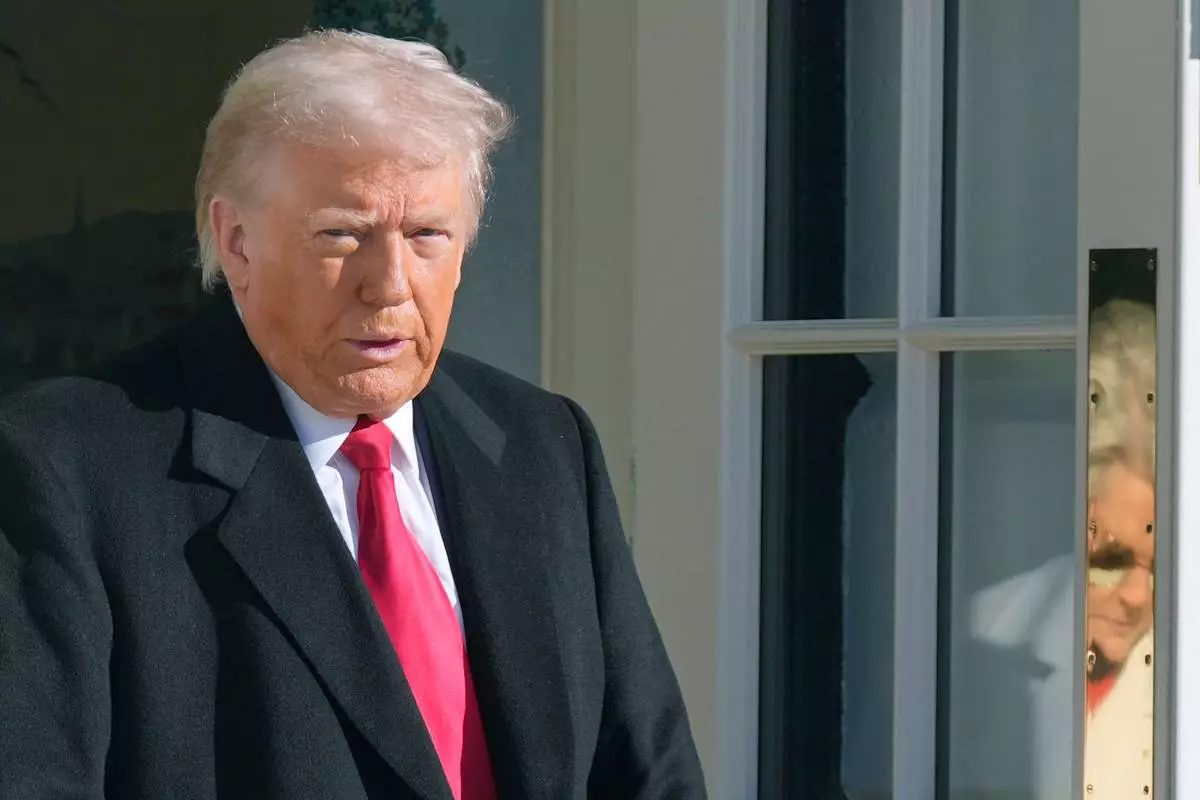
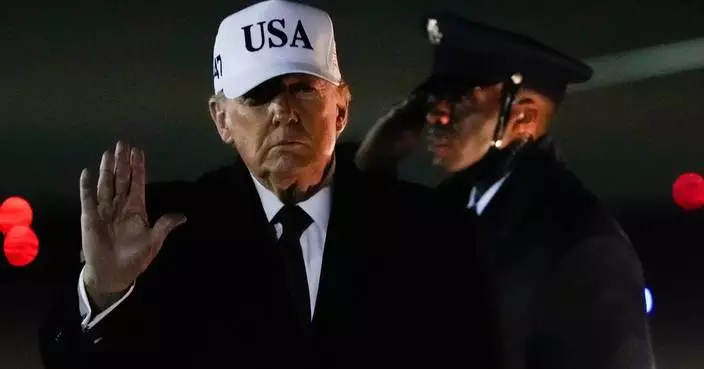
President Donald Trump and White House Chief of Staff Susie Wiles, reflected on door, leave to board Marine One, Tuesday, Jan. 13, 2026, in Washington. (AP Photo/Mark Schiefelbein)
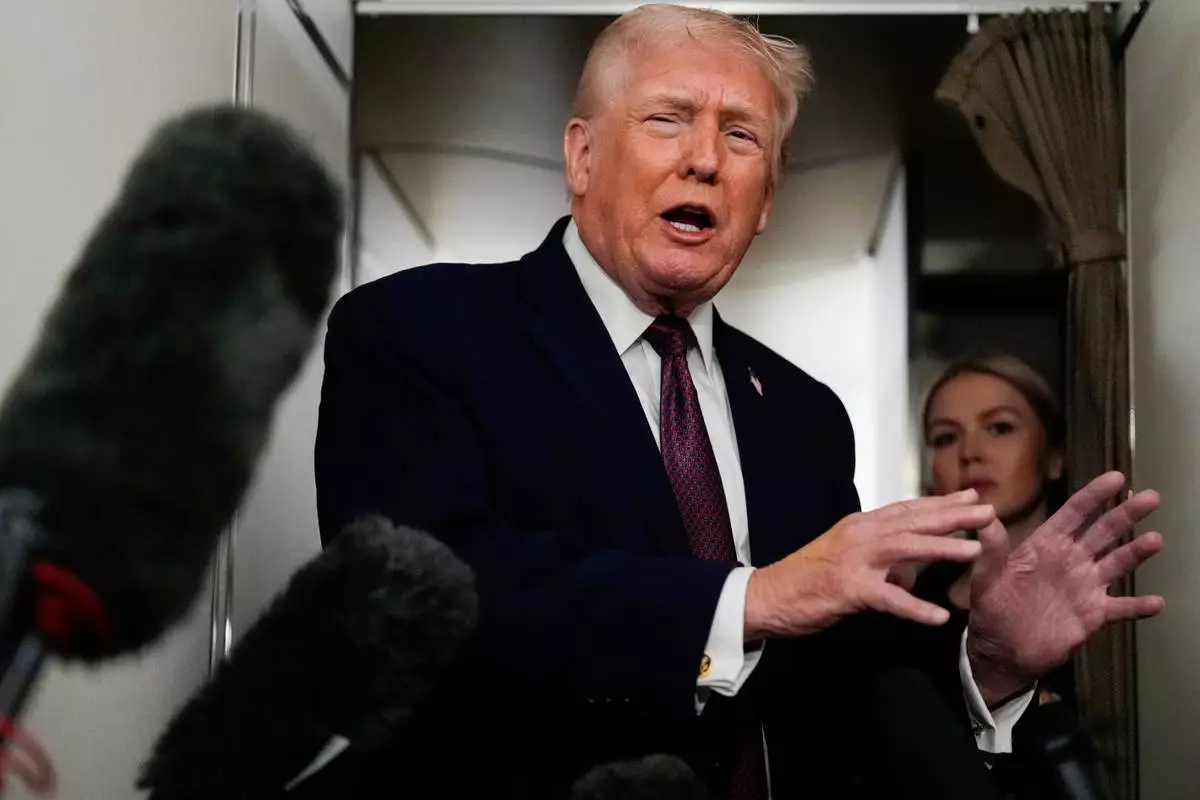
President Donald Trump speaks to reporters while in flight on Air Force One to Joint Base Andrews, Md., Sunday, Jan. 11, 2026. (AP Photo/Julia Demaree Nikhinson)