
Skip to Content Facebook Feature Image

FMI Unveils Key Trends Shaping the Future of Food Shopping: Consumer Tradeoffs, Grocery Sentiment and the Future of SNAP

News

FMI Unveils Key Trends Shaping the Future of Food Shopping: Consumer Tradeoffs, Grocery Sentiment and the Future of SNAP
News

News

FMI Unveils Key Trends Shaping the Future of Food Shopping: Consumer Tradeoffs, Grocery Sentiment and the Future of SNAP

2025-05-07 23:59 Last Updated At:05-08 00:11

ARLINGTON, Va.--(BUSINESS WIRE)--May 7, 2025--

American consumers continue to enjoy grocery shopping and have kept their shopping habits remarkably consistent despite persistent economic challenges, according to the latest annual survey by FMI – The Food Industry Association, conducted by The Hartman Group. The analysis, which kicks off FMI’s 2025 series, U.S. Grocery Shopper Trends: The Logic of Food Shopping, offers timely insights into consumer grocery shopping behaviors and shoppers’ logic behind food budgets and shopping decisions.

This press release features multimedia. View the full release here: https://www.businesswire.com/news/home/20250507079857/en/

FMI found that despite several years of economic uncertainty, shoppers’ attitudes and habits around grocery shopping have remained stable. To better understand this dynamic, FMI explored shopper aspirations to “eat well,” an outlook that forms the foundation for how shoppers think about value and shapes their choices about what food to buy, how to cook and where to shop.

“Despite the economic pressures they face, consumers overwhelmingly tell us they enjoy grocery shopping and that they are willing and able to budget in order to ‘eat well’ based on their specific values and needs,” said Leslie G. Sarasin, president and CEO of FMI. “In fact, our U.S. Grocery Shopper Sentiment Index is currently holding steady at 72 out of 100. While individual needs vary, by and large, most shoppers prioritize four things when shopping for food: health, entertainment, exploration and convenience. Satisfying these key needs are important to shoppers, and they tailor their overall budgets and food spending behaviors to ensure they ‘eat well’.”

Still, several factors are weighing on consumers. Most Americans (70%) say they are extremely or very worried about rising grocery prices, and 78% said they are at least somewhat concerned about the impact of tariffs on the cost of imported food and ingredients.

The analysis revealed a silver lining: most consumers (75%) report feeling in control over their grocery spending. However, that confidence has declined in recent months; 85% of consumers expressed confidence in control over food spending in September 2024. In response, shoppers report using various strategies to stretch their food budget further. Traditional methods like list-making (83%), taking household inventory (79%), meal planning (69%), and seeking out coupons or discounts (60%) remain the most common.

Sarasin emphasized, “Our latest grocery shopper research underscores a critical opportunity for the industry to meet their customers where they are—navigating rising costs and economic uncertainty—while reinforcing the importance of the Supplemental Nutrition Assistance Program, SNAP, a vital anti-hunger program that provides just $6 a day to those most in need.”

“The American public is clear on this: 70% support SNAP, and a majority oppose any effort to reduce its funding, according to an FMI national survey by leading pollster, Fabrizio, Lee & Associates. The future strength of this program isn’t just a policy issue—it’s a moral imperative and an economic necessity.”

For Media:

Methodologies:

About FMI

As The Food Industry Association, FMI works with and on behalf of the entire industry to advance a safer, healthier, and more efficient consumer food supply chain. FMI brings together a wide range of members across the value chain — from retailers to producers to companies supplying critical services — to amplify the collective work of the industry. www.FMI.org
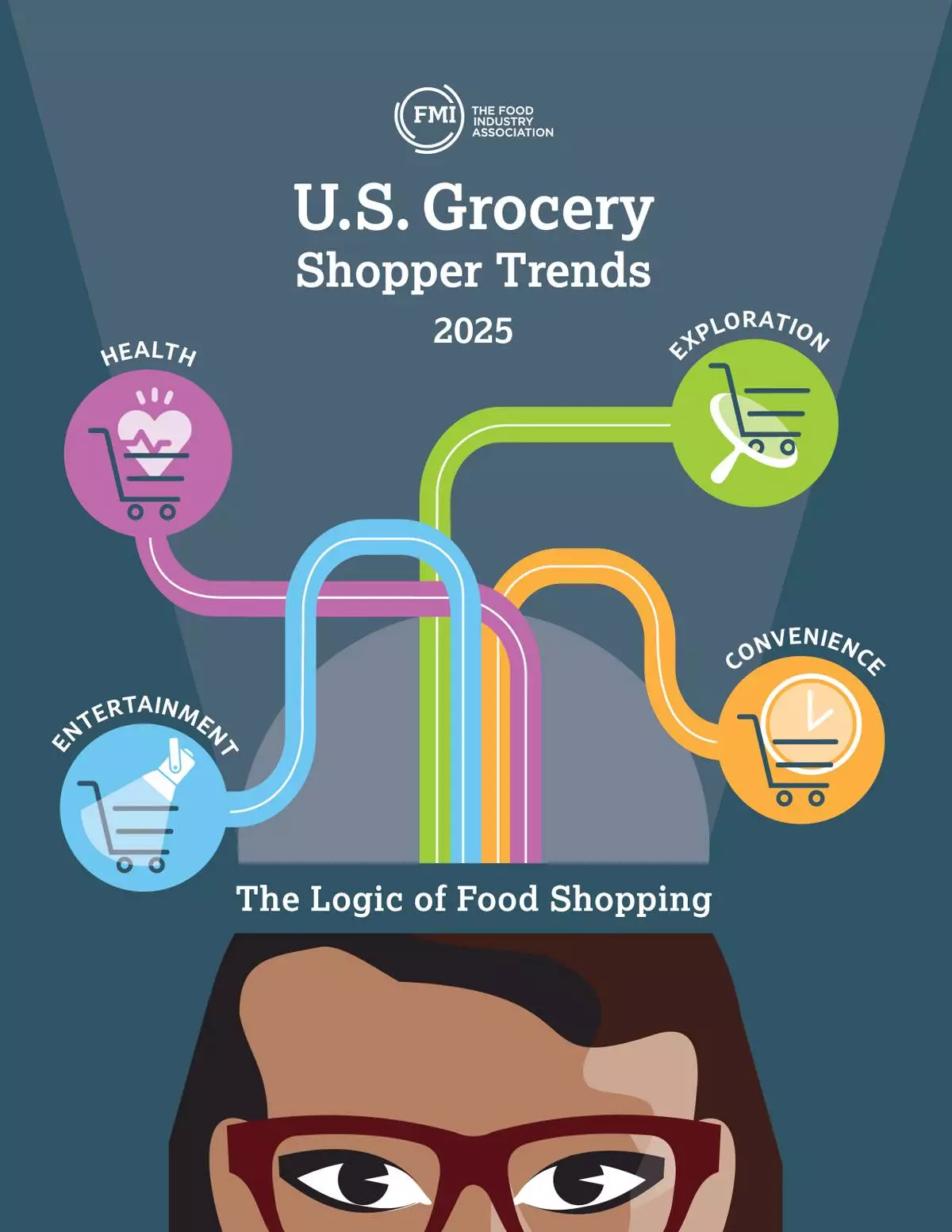
FMI's U.S. Grocery Shopper Trends report offers timely insights into consumer grocery shopping behaviors and shoppers’ logic behind food budgets and shopping decisions.


FMI's U.S. Grocery Shopper Trends report offers timely insights into consumer grocery shopping behaviors and shoppers’ logic behind food budgets and shopping decisions.

BRISBANE, Australia (AP) — This rematch between the Australian Open finalists was lopsided and Aryna Sabalenka flipped the outcome with a straight-sets win over Madison Keys.

Top-ranked Sabalenka broke Keys' in five straight service games on the way to a 6-3, 6-3 win in 1 1/2 hours Friday to reach the semifinals of the Brisbane International, an important tuneup event for the Australian Open which begins Jan. 18.

“I didn’t really have the throwback to the Australian Open last year, to be honest," Sabalenka said. "I know that I lost in Australia against her and it's a big motivation, of course, to go out and get the win.

"But I always look into the (next) match as like a new match against a new player. That's my approach."

The defending Brisbane champion will next take on 11th-seeded Karolina Muchova, who had a 6-2, 2-6, 6-4 win over Elena Rybakina to end a 13-match streak for the No. 3 seed. Fourth-seeded Jessica Pegula had a 6-3, 7-6 (3) quarterfinal win over No. 10 Liudmila Samsonova and will face either Mirra Andreeva or Marta Kostyuk in the semis.

Muchova has the better of the career head-to-head meetings against WTA Finals champion Rybakina. She also has a 3-1 record against No. 1 Sabalenka.

“Doesn’t matter if I’m the one who is leading head-to-head or I’m the one who is losing — I don’t care,” Sabalenka said, adding that her focus is to control the kinds of emotions that derailed her sometimes when she was younger.

“In the past, I could lose a match because I’d be so frustrated. Now I’m just trying to move on like, ‘OK, whatever,'” she said. “I feel like it’s been working well for me.”

Keys will head to Adelaide aiming to retain the title there and then hope to repeat the sequence from 2025, when she went on to win her first Grand Slam title two weeks later in Melbourne.

“Hopefully I can gain and then just keep a lot of momentum going,” she said. “Hopefully there is many more firsts to come.”

On a warm Friday afternoon on Pat Rafter Arena, Sabalenka got the first service break in the seventh game and then took six of the next seven games. Keys broke serve to open the second set in the only interruption in that sequence.

The 30-year-old American faced immense pressure on her second serve, finishing the match with eight double-faults and winning just 33% of points on her second serve.

Keys saved two match points in the eighth game of the second set but it barely slowed down Sabalenka, who served out at love.

Sabalenka has two straight-set wins over Keys — the other was 6-0, 6-1 at Indian Wells — since that loss at Melbourne Park almost 12 months ago. She also reached the French Open final, won the U.S. Open and finished the competitive season with a runner-up finish at the WTA Finals.

Earlier at the Brisbane tournament, she described the season schedule as “insane” and said she’ll risk fines in order to skip tournaments to avoid injuries or burnout. Still, she wants as much competition as possible before the season's first major.

“I’m just trying to get some matches, get some wins,” she said, "and get the rhythm going again.”

AP tennis: https://apnews.com/hub/tennis

Aryna Sabalenka serves against Nick Kyrgios during their Battle of the Sexes tennis match, in Dubai, United Arab Emirates, Sunday Dec. 28, 2025. (Amr Alfiky/Pool Photo via AP)

Aryna Sabalenka serves against Nick Kyrgios during their Battle of the Sexes tennis match, in Dubai, United Arab Emirates, Sunday Dec. 28, 2025. (Amr Alfiky/Pool Photo via AP)

Recommended Articles