The ongoing 27th China Beijing International High-tech Expo boasts a strong international presence with over 120 companies from more than 30 countries and regions. Making up about 15 percent of the total, these global exhibitors turn the event into a showcase of high-tech innovation from around the world.
Running from May 8 to 11, the expo, themed "Science and Technology for A Better Future", features over 800 technology companies and institutions from home and abroad.
At the expo, companies from countries including Singapore and South Korea brought technological products in the fields of artificial intelligence large models, biomedicine, and intelligent manufacturing, hoping to open up the Chinese market through the expo.
"We've always been very interested in the Chinese market, I mean, obviously due to the size of it. So we want to be able to get closer to it to really understand it. So we are looking for partners, investors and strategic investors, anyone who can really give us the knowledge of omnichannel distribution in China, both online and offline," said Nicholas Lang, an exhibitor from Singapore.
The expo has created a convenient environment for trade negotiations. More than ten trade fairs and investment consultation meetings have been held during the event to promote pragmatic cooperation, focusing on the characteristics of different markets.
"It is the absolutely perfect opportunity to come here and in the open space, see what every company brings here and just come to see and ask everybody on this platform what this technology is, why is it so special. That's the reason why we want everyone [to be] invited here," said Jermakov, a Czech exhibitor.
"China is the biggest electronic manufacturing market in the world, and also potentially the largest consumer market in the world. Partners, clients, we're in discussions with various electronic manufacturers and we are also actively looking for partners for customized manufacturing," said Greg Pak, an exhibitor from South Korea.

27th China Beijing Int'l High-tech Expo attracts participation of over 120 foreign companies
Chicago policymakers have introduced measures to increase housing supply, in a move that local activists and construction industry stakeholders have hailed as key to easing affordability pressures on residents.
According to the city's 2025 annual report on homelessness, Chicago is facing its largest gap in affordable and available housing in a decade, with the annual Point-in-Time (PIT) Count estimating that 7,452 people were experiencing homelessness, either in shelters or unsheltered locations, on January 23, 2025.
Steven Vance, a social worker in Chicago, said policies that previously curbed the city's housing supply have pushed up rent costs amid demographic changes.
"Households are declining in size, and that means we need more homes, and I thought it was strange that we would artificially restrict how many homes could get built in Chicago. Right now in Chicago, we have one of the highest rent growths, compared year to year in the country, and so now is a pivotal time to allow more housing," he said.
To address the challenge, Chicago has introduced zoning and land-use reforms, including the Additional Dwelling Units (ADU) Ordinance, aimed at increasing residential density and expanding housing supply.
The ordinance effectively expands housing access across the city by allowing ADUs in attics, basements, and accessory buildings, easing the rent burden and creating more budget-friendly housing options.
"In December 2020, City Council adopted an ordinance that would legalize ADUs in five pilot areas. (With ADU,) rents will maybe not always come down, but they will not climb as quickly as they are now if we have more housing options," he said.
The construction sector in the city has welcomed the policy change, with builders jumping on the opportunity to create new structures. For many in the industry, boosting housing supply is not just about doing business, but about addressing the issue of affordability as Chicago residents themselves.
"The housing market in Chicago has been impacted by the ADU program, to me, in a really big way. It's enabled a lot more rental projects to be constructed. I want there to be more housing in Chicago. I think there is a need for that, and I think there's also a need for responsible development that maintains the character of the neighborhood. Affordable housing to me is a really important issue, and to me, the biggest denominator in affordable housing is the lack of supply. The best route to affordable housing is to have an influx of housing," said Nick Serra, a construction professional.
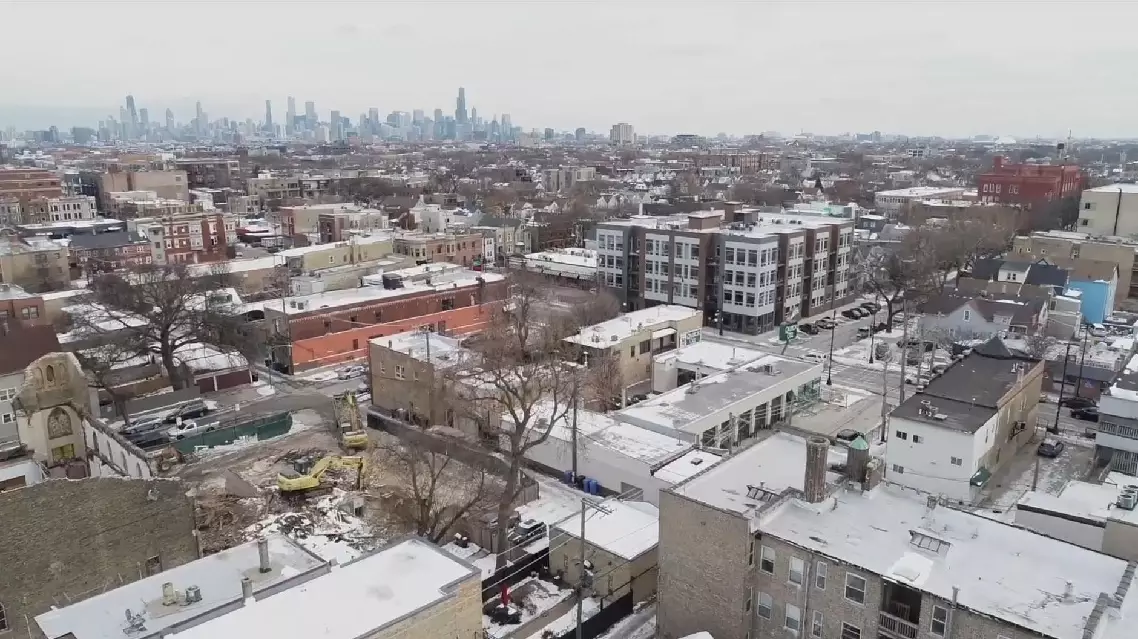
Chicago expands housing supply to ease affordability pressure