NEW YORK (AP) — News that the global Catholic church would get its first-ever U.S.-born pope was welcomed by Catholics across the ideological spectrum in Pope Leo XIV ’s homeland, raising the question of whether he might be able to ease some of the deep divisions within its ranks.
From U.S. Catholics to the left of the ideological center, there is optimism that Leo will carry on Pope Francis’ outreach to poor and marginalized people, including migrants, and provide a counterweight to policies of the Trump administration that distress them. To the right, there is hope the new pope will faithfully uphold Catholic doctrine, including opposition to abortion, same-sex marriage and women’s ordination.
One reason for optimism: The new pope has made clear — in his remarks and his choice of a motto — that unity within the global church will be a paramount priority.
“In these early days, he’s still an empty vessel,” said Steven Millies, a public theology professor at the Catholic Theological Union in Chicago. “Until we all get to know him better, we can pour our expectations into him.”
Notre Dame Provost John McGreevy, a historian of Catholicism, said he was “completely stunned” after the papal announcement, having shared the conventional wisdom that a pope from the U.S. was a near-impossibility.
But Leo “is a global Catholic citizen,” McGreevy said, citing the pontiff’s time in Peru, at the Vatican and leading an international religious order.
“Even though he’s an American, and we’re super proud that he’s American, it’s hard to think of someone more embedded in a lot of the global church,” he said.
It’s too soon to tell what Leo’s relationship will be with his fellow American prelates and the broader U.S. Catholic Church, McGreevy cautioned.
“The early indications are that there’ll be some similarities to Pope Francis,” he said – suggesting that differences with conservative U.S. bishops could continue.
McGreevy said he expects some tension between the Vatican and the White House over immigration and climate change, two of Francis’ key priorities that are likely to be reaffirmed by Leo.
Chad Pecknold, a professor of systematic theology at the Catholic University of America, suggested that Francis either disliked or misunderstood the United States.
“With Leo XIV, it’s clear he not only loves America, but he even loves the White Sox,” Pecknold said via email. “That can only have a good effect, not only upon American Catholics, but also American bishops, and indeed, everyone. It’s good to feel like the pope is on your side.”
During the latter years of Francis’ papacy, one of the most divisive issues among U.S. bishops was whether Catholic politicians who supported abortion rights — including then-President Joe Biden and then-House Speaker Nancy Pelosi — should be barred from receiving Communion.
Francis stressed he would not reject politicians who support abortion rights and Biden received Communion during a visit to Rome in 2021.
San Francisco Archbishop Salvatore Cordileone, who barred Pelosi from receiving Communion in the archdiocese, described Leo as a "bridge builder."
"He will be a good force for unity in the church,” Cordileone told KPIX-TV in San Francisco. “Even with differences of opinion and different ideas of strategy and so forth, we can have unity in the church.”
U.S. Rep. Chris Smith, a New Jersey Republican and outspoken abortion opponent, took heart from a homily delivered early this year by Leo when he was Cardinal Robert Prevost. The passage cited by Smith: “God’s mercy calls us to protect every life, especially those society overlooks — the child yet to be born and the elderly nearing their journey’s end — because each bears Christ’s face.”
Smith depicted this remark as “underscoring the protection of the right to life as first among the many humanitarian responsibilities of the Church.”
The interim president of Catholics for Choice, which supports abortion rights, acknowledged that Leo opposes abortion and said the group would send him letters from Catholics who disagree with that stance.
“We are praying that he will be a pope guided by a commitment to peace, justice, and inclusion,” said Chris Wimbush. “The future of our church depends on greater inclusion and nuance on reproductive health decisions like abortion, contraception and IVF."
Francis, during his papacy, took major strides to give women more senior leadership positions in the church. But he upheld the ban on female priests and tamped down hopes that women could be ordained as deacons.
Ellie Hidalgo of Discerning Deacons, which advocates for women deacons in the church, said she hopes Leo will support the church’s ongoing review of women’s participation in ministry. A years-long Vatican process left open the contentious question of whether women should be ordained as deacons.
Hidalgo, who lives in Miami, heard then-Cardinal Prevost speak in February when she was in Rome for a celebration of deacons.
“He was asking deacons to be humble in their service,” Hidalgo said. "I could tell just from meeting him that that’s something he really values himself ... that you are to be of service and you’re there in a posture of humility.”
The U.S.-based Women’s Ordination Conference, which advocates for women to be accepted as priests, welcomed the inclusive tone of Leo’s initial remarks.
“His clear emphasis on bridge-building and dialogue offer WOC hope that Pope Leo XIV might be a leader who will also build bridges to Catholic women,” the group’s statement said. It envisioned “a long-overdue day when women are recognized as equals in Christ.”
Francis, in many ways, saw Robert Prevost as a possible successor, assigning him to positions in Peru that bolstered his global resume and later calling him to the Vatican to oversee the influential office that vets bishop nominations.
“Francis was paying close attention to new U.S bishops,” said Millies, the public theology professor. “Prevost has been Francis’ man overseeing the careful selection of a different sort of bishop to fill important posts in the U.S.”
Millies said the top leadership of the U.S. Conference of Catholic Bishops — which was sometimes at odds with Francis — remains relatively conservative.
But in the ranks of bishops below them, “the change has already happened,” Millies said. “They are men who are more pastoral than focused on doctrine. The election of Leo means we are firmly in a different era.”
Traditionally, the taboo against a U.S. pope reflected reluctance to give the world's No. 1 superpower even more influence. That shouldn't be a concern with Leo, according to Austen Ivereigh, a British-based journalist and author of two books on the Francis papacy.
“If anybody thinks he (Leo) is going to take a different line from Francis on migration or climate change, they’re in for a surprise," Ivereigh said. "Francis was putting into practice church teaching, and Leo will do the same.”
There was muted reaction to Leo's election from Bishop Robert Strickland, who was ousted by Francis in 2023 from leadership of the Diocese of Tyler in Texas. Strickland had been a fierce critic of Francis and came to symbolize the polarization within the U.S. hierarchy.
In social media posts after Leo assumed the papacy, Strickland expressed hope that he would faithfully uphold the sacred Scriptures and traditions known as the Deposit of Faith.
“With the heavy weight of the papacy now on his shoulders he needs our prayers,” Strickland added.
Stanley reported from Washington. Associated Press journalists Nicole Winfield in Rome and Peter Smith in Pittsburgh contributed to this report.
Associated Press religion coverage receives support through the AP’s collaboration with The Conversation US, with funding from Lilly Endowment Inc. The AP is solely responsible for this content.
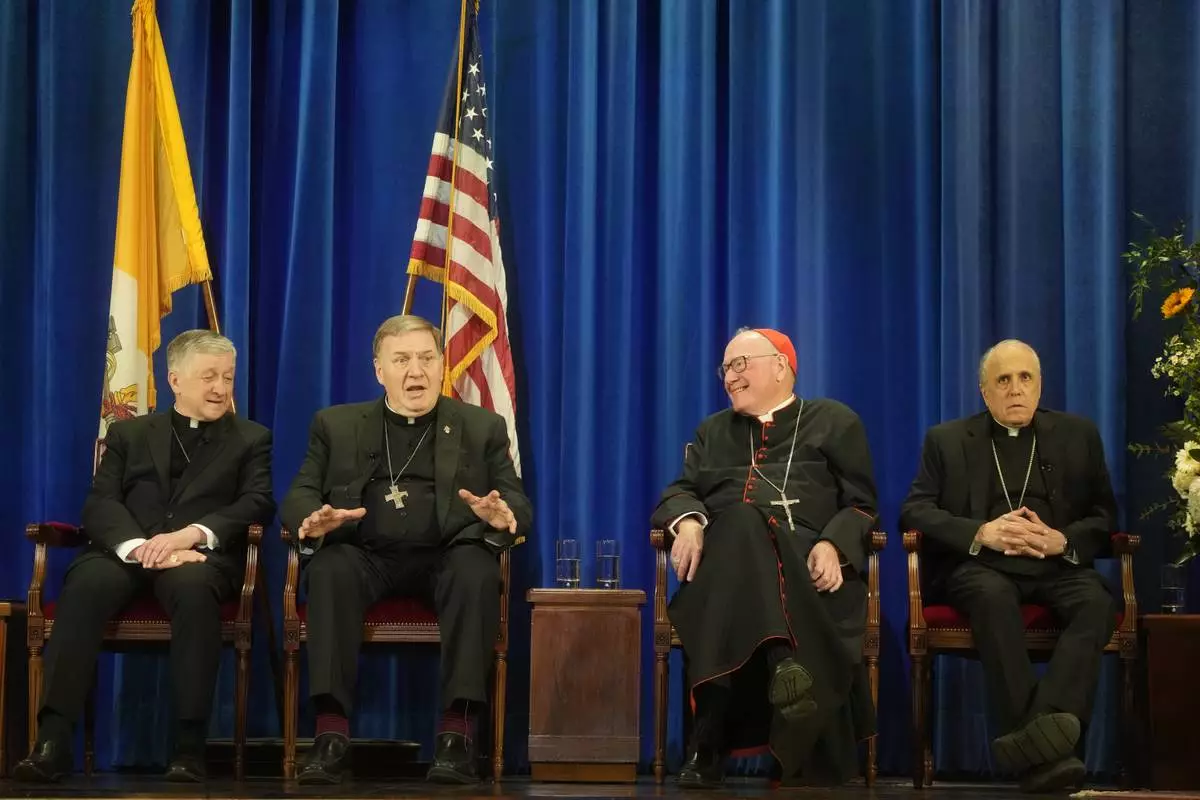
From left, U.S. Cardinals Blase Cupich of Chicago, Joseph Tobin of Newark, Timothy Dolan of NY, and Daniel Di Nardo, archbishop emeritus of Galveston Houston, attend a press conference at the North American College in Rome, Friday, May 9, 2025, one day after U.S. Cardinal Robert Francis Prevost was elected Pope Leo XIV. (AP Photo/Gregorio Borgia)
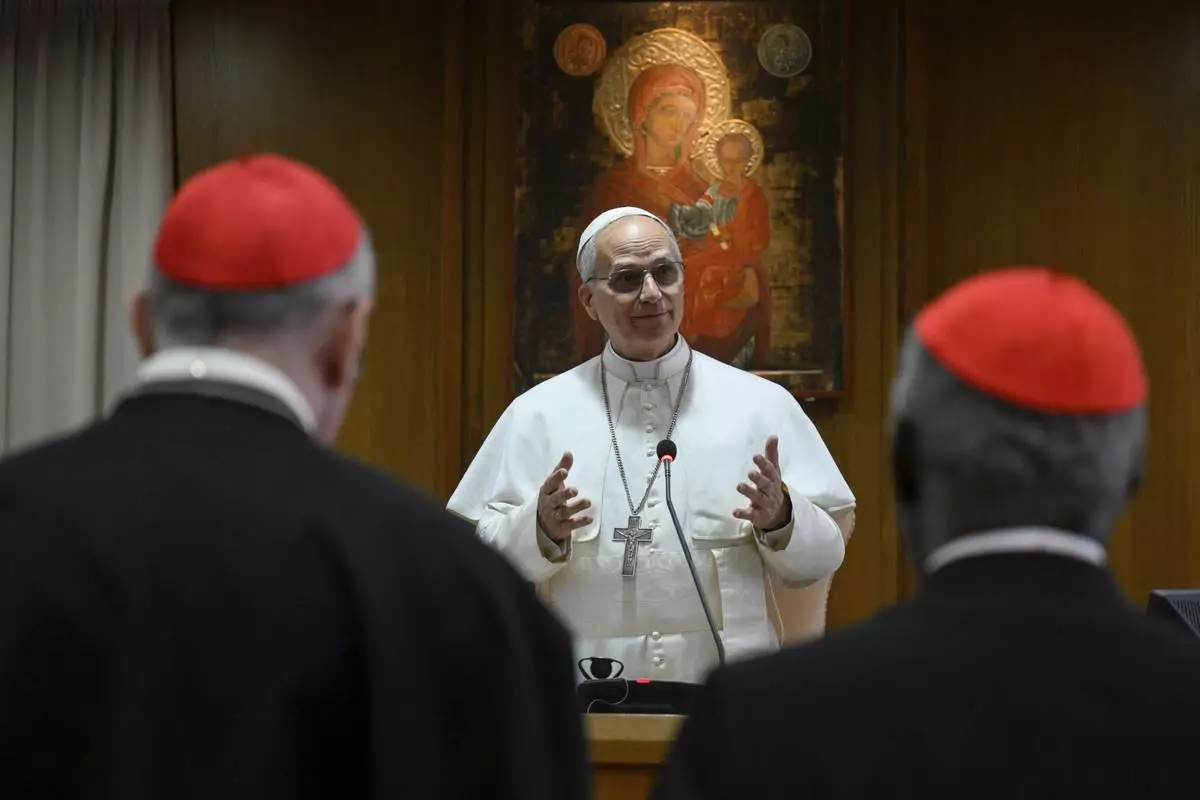
Pope Leo XIV meets the College of Cardinals in the New Synod Hall at the Vatican, Saturday, May 10, 2025. (Vatican Media via AP)
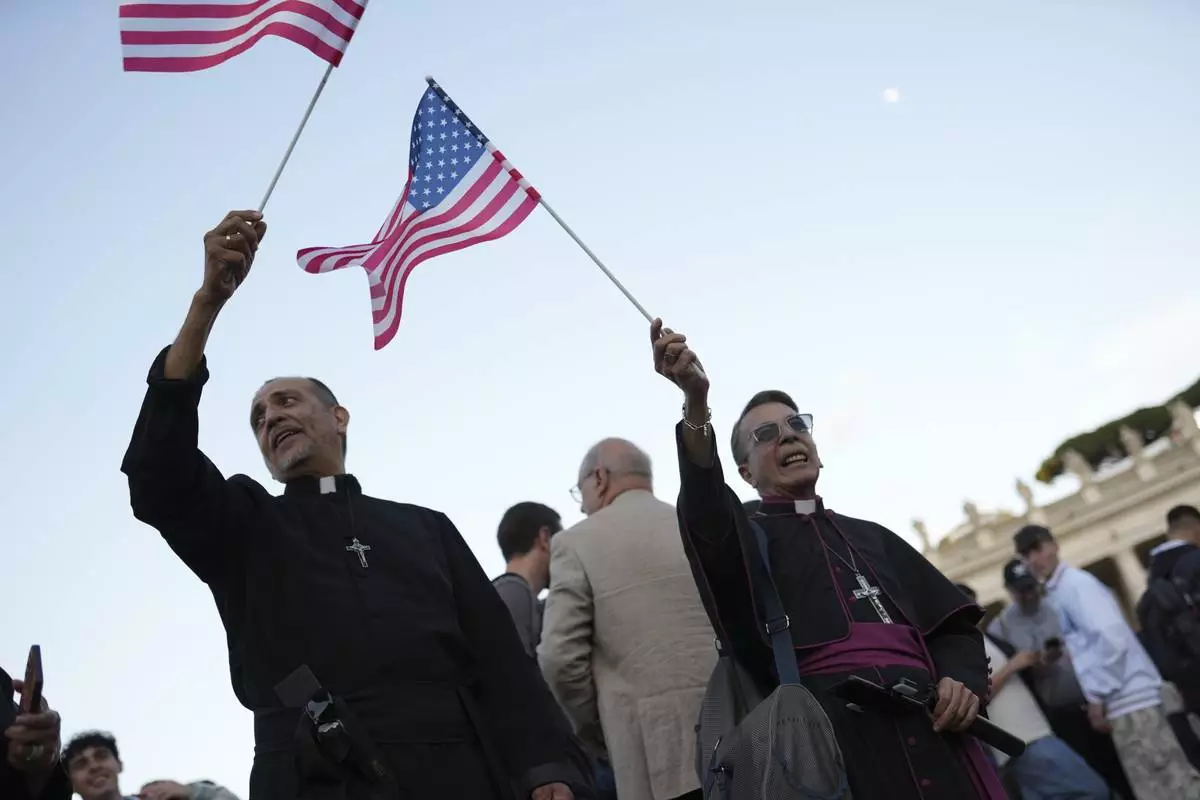
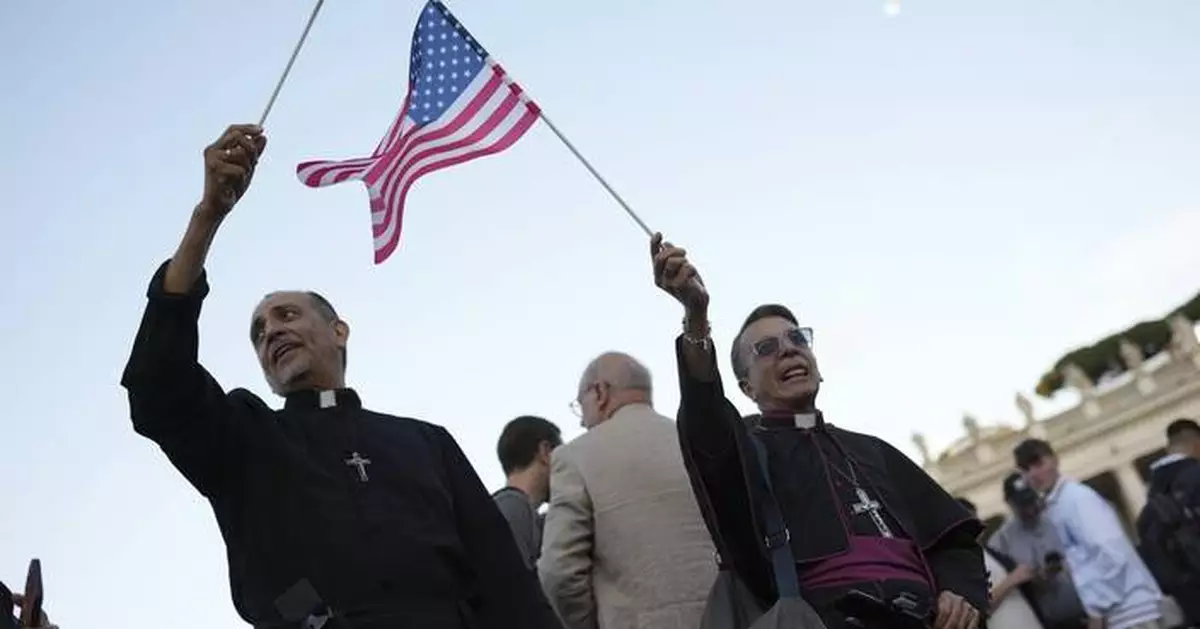
Clerics wave US flags during the speech of the newly elected Pope Leo XIV at the Vatican, Thursday, May 8, 2025. (AP Photo/Francisco Seco)