The People's Liberation Army (PLA) Garrison stationed in Macao Special Administrative Region (SAR) participated in the 22nd voluntary blood donation event on Friday.
The event was jointly organized by the garrison and the SAR government, with approximately 120 service members donating nearly 50,000 milliliters of blood.
This year, the garrison conducted pre-donation health screenings for participating personnel and organized educational campaigns on voluntary blood donation, clearly outlining eligibility criteria and precautions to ensure both blood quality and donor safety.
The donated blood will be used to treat patients in Macao suffering from cancer, surgical blood loss, anemia, and congenital diseases, according to the organizer.
Since the garrison's stationing in Macao, PLA personnel have donated approximately 1 million milliliters of blood over 2,500 donations. The annual event highlights the garrison's enduring support for public health and social welfare in the region.
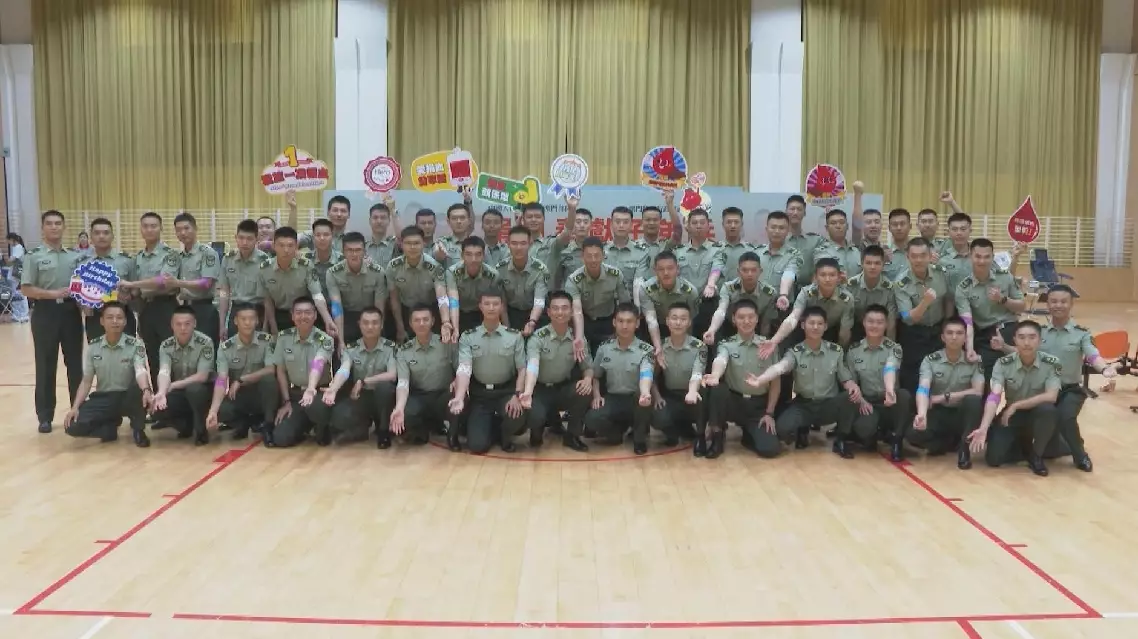
PLA Garrison in Macao joins 22nd voluntary blood donation drive
China on Monday began construction of a mega waterway project, including what is expected to become the world's largest inland ship lock, in response to the rising shipping demand along the Yangtze, the world's third-longest river.
Chinese Vice Premier Ding Xuexiang, also a member of the Standing Committee of the Political Bureau of the Communist Party of China Central Committee, kicked off the construction of the Three Gorges new waterway project at a commencement ceremony in Yichang, central China's Hubei Province.
The 77.2-billion-yuan (about 11.3 billion U.S. dollars) project will add a five-tier, dual-track ship lock north of the existing lock at the Three Gorges Dam, the world's largest water conservancy project, and upgrade navigation facilities at a smaller downstream dam.
Once completed, it will almost double the annual throughput capacity at the Three Gorges to 336 million tonnes.
It is the first major project to break ground during China's 15th Five-Year Plan period (2026-2030), a critical stage in the country's efforts to advance toward its goal of basically realizing socialist modernization by 2035.
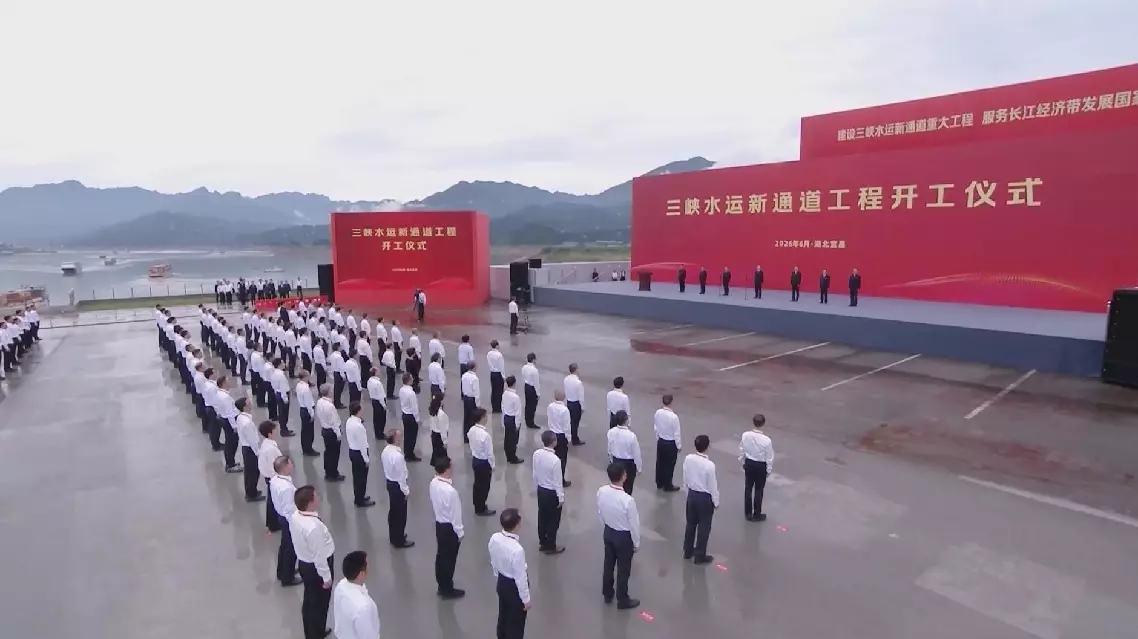
China starts mega waterway project on world's third-longest river