Skip to Content Facebook Feature Image

China completes 1st inter-provincial peak-shifting green electricity trading

China

China

China

China completes 1st inter-provincial peak-shifting green electricity trading

2025-05-11 22:23 Last Updated At:22:37

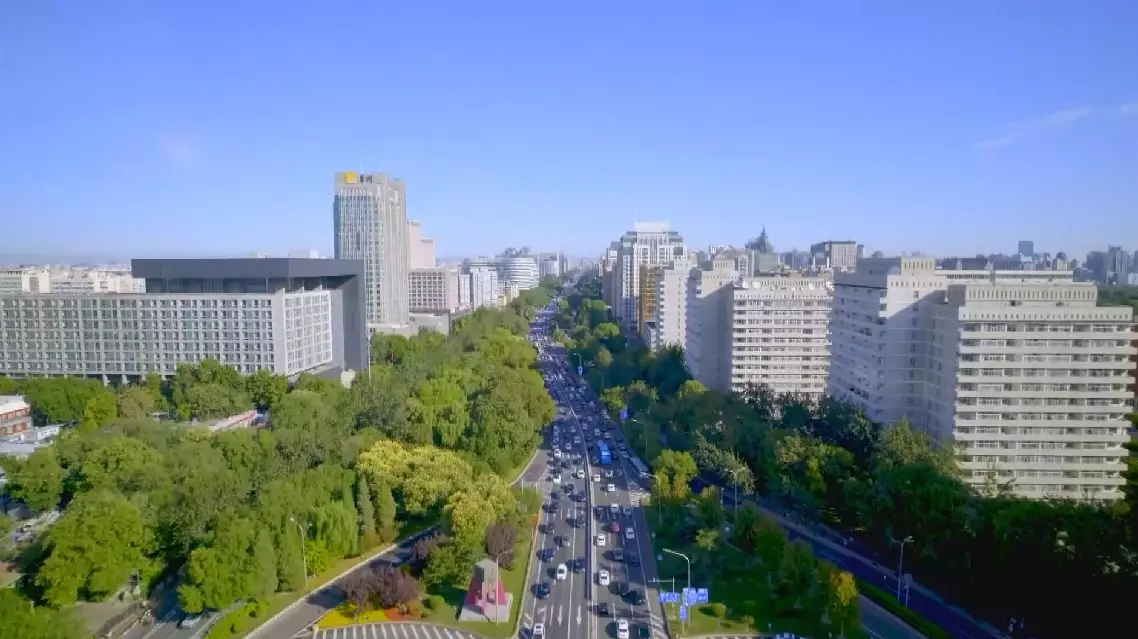
China has recently completed its first market-based inter-provincial peak-shifting green electricity trading, transferring 12 million kilowatt-hours of green power from northwest China's Xinjiang Uygur Autonomous Region to the city of Beijing.

Green electricity is characterized by zero or near-zero carbon dioxide emissions during production.

Xinjiang, rich in wind and solar resources, has a renewable energy capacity of more than 100 million kW.

Due to a time difference of at least two hours in sunlight between Beijing and Xinjiang, when Beijing hits its evening electricity consumption peak around 17:00, Xinjiang is generating solar power at its highest rate.

This unique timing allowed for China's first market-based green electricity transaction, involving 12 million kilowatt-hours of power. This not only boosts the supply of green electricity entering Beijing but also optimizes the use of solar energy during the peak sunlight hours in Xinjiang.

"Market-based mechanisms enable the large power grid to effectively coordinate and optimize resource allocation, fostering energy complementarity between new energy resource-rich areas in the west like Xinjiang, and load centers in the east like Beijing. This approach provides fresh perspective on resource allocation in China's power market and has important demonstration significance for promoting cross-regional energy optimization and the buildup of a unified national electricity market," said Yu Le, a market trading director at Beijing's electricity transaction center.

Beijing has experienced significant growth in the volume of green electricity imported into the city in recent years. By 2024, the green electricity reaching Beijing hit 35 billion kilowatt-hours, accounting for 29 percent of the city's overall electricity consumption. This figure is expected to rise to 40 billion kilowatt-hours in 2025.
China completes 1st inter-provincial peak-shifting green electricity trading

China completes 1st inter-provincial peak-shifting green electricity trading
Voting for the second phase of Myanmar's multi-party democratic general election concluded on Sunday afternoon.

Voting began at 06:00 local time on Sunday. At 16:00, an election official at a polling station in Yangon's Latha township announced the closure of the polling station.

Following the closure, election staff at the polling station, in the presence of domestic and international media, candidates, and observers, counted the votes, including advance votes, for seats in the Pyithu Hluttaw (Lower House), Amyotha Hluttaw (Upper House), and State and Region Hluttaws (State and Region Parliaments).

The second phase of the election was held in 100 townships across 12 of the 14 regions and states. In the Yangon region, it was held in 16 townships, including the townships of Latha, Bahan, Kyimyindaing and Kawhmu.

"We welcome the election, which is expected to bring new changes to the country," said a Yangon resident.

"I hope the parties can lead us and make it a better country, which is why I support the election," said another voter.

Myanmar's multi-party democratic general election is being held in three phases, with the first phase held in 102 townships on Dec 28 last year, and the third phase scheduled for Jan 25 this year in 63 townships.

"The parliament is scheduled to convene in March. Following the conclusion of the session, the new government will officially take office in April. We hope that more foreign investment will flow into Myanmar, enabling the public to enjoy the opportunities generated by the country's economic development more fully," said Zaw Min Tun, leader of the Information Team of Myanmar's National Defense and Security Council.

The Union Election Commission (UEC) said that about 5,000 candidates from 57 political parties are competing in the three phases of the election, adding that it plans to set up over 21,000 polling stations across the country for all three phases of the general election.

The election will produce the elected members of the Union Parliament (Pyithu Hluttaw and Amyotha Hluttaw) and State and Region Parliaments; the new Union Parliament will then elect a new president, who will form a new Union Government.

Voting for 2nd phase of Myanmar's general election concludes

Voting for 2nd phase of Myanmar's general election concludes

Recommended Articles