Hand-carved Mahjong tiles are becoming a dying art in Hong Kong, as machine-made ones are replacing the handcrafts with lower prices, and the last inheritors of the skill are mostly in their old ages.
Mahjong, a tile game that derived in the late Qing Dynasty (1644-1911) and that has captivated China for more than a century, has been a sweet memory of family and friends' gatherings for many Chinese people.
Ho Sau-Mei, one of the last three Mahjong-tile artisans and the only female carver in Hong Kong, is still dedicated to the skill.
Tucked away in a tiny alcove, Ho have been working in her shop for 40 years since she inherited the business from her father in the 1970s, when the business was still booming.
"I was an apprentice at 13, and became a master at 17. My brothers didn't want to take over, so my father passed it on to me," Ho recalled.
Traditionally, mahjong tiles are hand-carved tiles of jade, bamboo, or animal bones. With cheaper machine-made sets and digital versions of Mahjong games on the rise, the traditional craft no longer prevails. But customers are coming from all over the world for Ho's works, respecting her handmade pieces as artworks that bear a piece of the fading tradition.
"Handmade items are dying out, so to get a part of this for ourselves is something meaningful and something to remember in this trip on," said Joe from the U.S., who paid around 375 U.S. dollars for their set of 144 tiles.
Beyond Ho's craving skills, Mahjong by itself is no longer among the favorite activities of the younger generation. As of now, there are only around 60 mahjong parlors in business in Hong Kong.
The owners of the mahjong parlors are trying hard to hold events to attract the younger generations to know about the traditional game, and shift the old perceptions away from its association with gambling and gang activities that is often featured in Hong Kong films. By now, mahjong has been a formal competitive sport officially recognized by many countries and regions.
"When we learn the mahjong, we can share to others and play together in home. Yeah, maybe it's not for money, but just for fun. It's our culture," said a boy at a mahjong parlor, who just won an on-site competition.
While for Ho, it seems inevitable that the traditional craft of mahjong tile carving will fade away. With no younger craftsmen joining, the craft is entering into its sunset era, but she will carry on working, trying to preserve the unique heritage, Ho said.
"It's tiring, and realistically, it doesn't make money. There's nothing we can do, it could disappear. But as long as I can work, I'll continue," she said.
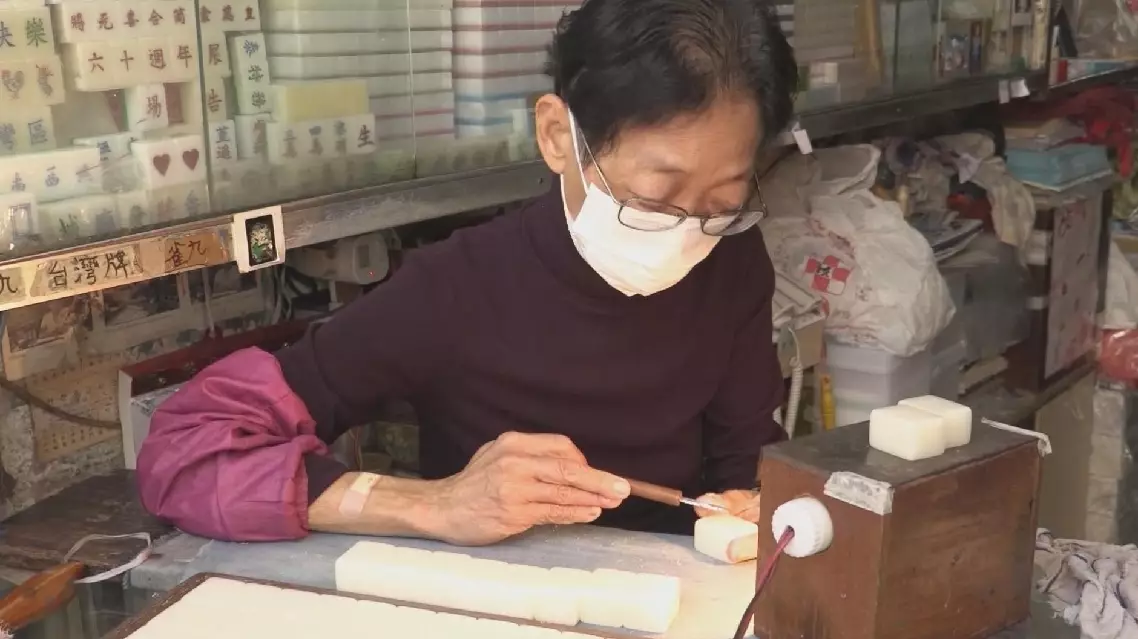
Traditional craft Mahjong carving in Hong Kong fading away
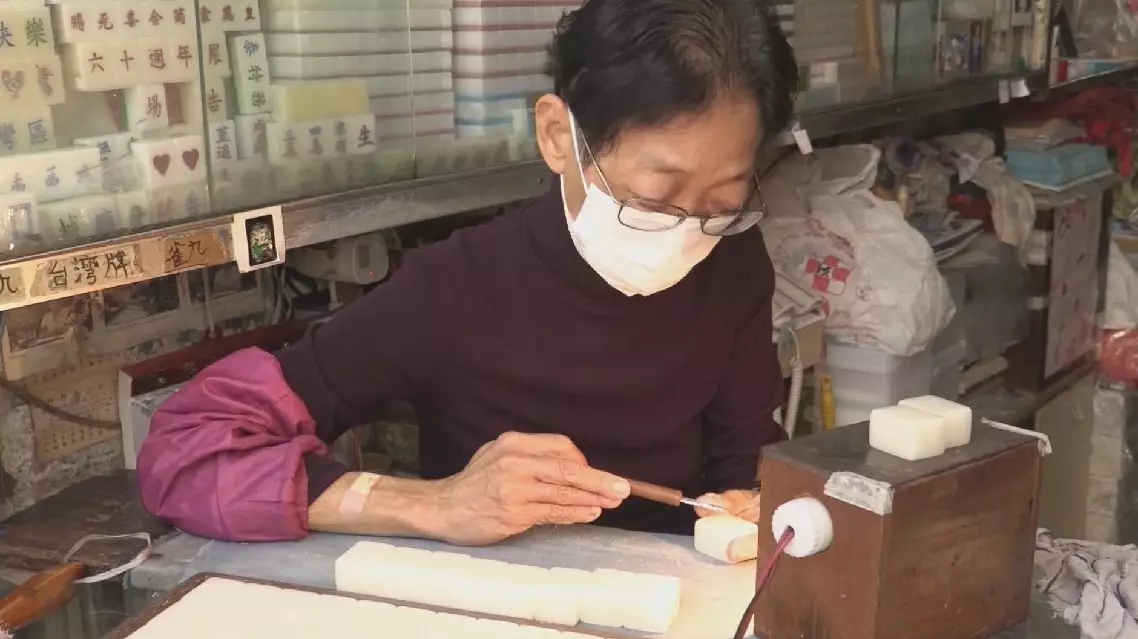
Traditional craft Mahjong carving in Hong Kong fading away
A new round of trade-in subsidy program is energizing China's consumer market these days, with provinces across the country seeing a surge in demand for cars, home appliances and digital devices.
In north China's Shanxi Province, the new trade-in subsidy program, which started on January 9, has further helped boost sales in home appliances and digital devices which are covered by the new round of subsidies.
To enjoy the subsidies, six types of home appliances, including refrigerators and washing machines, must meet national Level 1 energy-efficiency or water-efficiency standards. Digital and smart products include four types, such as mobile phones and tablets, with a sales price cap of 6,000 yuan (about 800 U.S. dollars) per item.
In both categories, subsidies are set at 15 percent of the final transaction price. For home appliances, the maximum subsidy is 1,500 yuan per item. For digital products, the cap is 500 yuan per item. Each consumer can receive a subsidy for one unit in each category.
Neighboring Shanxi, Hebei Province kicked off the year of 2026 with the new round of trade-in subsidy program starting on January 1.
The subsidies cover automobiles, home appliances, and digital products. Individual consumers who purchase designated Level 1 energy-efficiency appliances or eligible digital products priced at no more than 6,000 yuan can receive subsidies equal to 15 percent of the transaction price. The maximum subsidy is 1,500 yuan per appliance and 500 yuan per digital or smart device, with each person limited to one subsidized item in each category.
Data showed that from Jan 1 to 9, Hebei's home appliance trade-in program alone disbursed more than 130 million yuan in subsidies, driving sales of over 920 million yuan.
In east China's Jiangsu Province, the new trade-in subsidy program, taking effect for two weeks, has brought the province a boom in trade-in.
At a local 4S store in Jiangsu's Suqian City, showroom traffic has spiked as salespeople walked customers through the new benefits from the trade-in subsidy program.
"Under the scrappage-and-replacement scheme, customers who buy a new energy vehicle (NEV) can receive a subsidy worth 12 percent of the vehicle price, capped at 20,000 yuan (about 2,860 U.S. dollars). For combustion-engine cars, the subsidy is 10 percent, with an upper limit of 15,000 yuan. For trade-ins, NEVs are able to receive a subsidy worth 8 percent of the vehicle price, up to 15,000 yuan, while combustion-engine cars will receive a 6-percent subsidy, with a cap of 13,000 yuan," said Sun Yue, a saleswoman at the store.
In the home appliance sector, Jiangsu's policy this year stipulates that only products that meet China's Level 1 energy-efficiency standard are eligible for subsidies. The scheme covers six major categories, including refrigerators and washing machines.
Consumers who purchase qualifying appliances can receive a subsidy equal to 15 percent of the final retail price, up to a maximum of 1,500 yuan per item. Each person is limited to one subsidized unit per product category.
Four types of digital and smart products, such as mobile phones and tablets, are eligible for a 15-percent subsidy capped at 500 yuan per unit, with a retail price no more than 6,000 yuan.
"With the national subsidy policy back in place this year, I went to the store to check what discounts I could get. It knocked 500 yuan off the price. [The discounted price is] very reasonable," said Wang Kang, a resident of Jiangsu's Xuzhou Province.
To enhance the shopping experience for consumers, many retailers are pairing subsidies with "one-stop" services that combine the delivery of new products with on-site collection of old ones.
"After consumers place an order for new home appliances, our staff will schedule a time to pick up the old units. Recycling the old appliance can also further offset the purchase price of the new one," said Yang Jie, a sales supervisor at a major home appliance company.
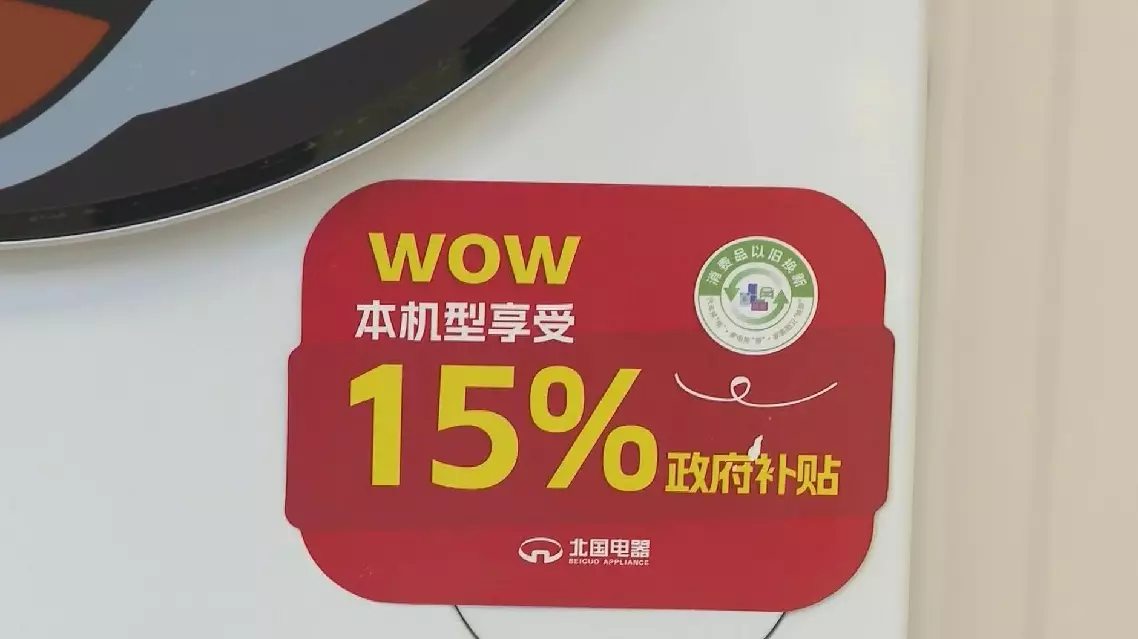
China's new trade-in program sparks consumption boom