Chinese Foreign Minister Wang Yi met collectively with the foreign ministers and representatives of nine Caribbean countries that have diplomatic ties with China in Beijing on Monday.
The foreign guests from Antigua and Barbuda, the Bahamas, Barbados, Dominica, Grenada, Guyana, Jamaica, Suriname, and Trinidad and Tobago are in the Chinese capital to attend the fourth ministerial meeting of the China-CELAC (Community of Latin American and Caribbean States) Forum scheduled for Tuesday.
Wang, also a member of the Political Bureau of the Communist Party of China (CPC) Central Committee, noted that this year marks the 10th anniversary of the China-CELAC Forum, a significant milestone to build on past achievements and chart the way forward for China-CELAC relations.
He said the forum has helped China and the Caribbean countries achieve mutual empowerment and shared success, while also advancing South-South cooperation and amplifying the influence of the Global South.
Wang emphasized that Caribbean countries are indispensable members of the China-CELAC Forum and that cooperation between China and the Caribbean countries has broad prospects. He called for joint efforts to advance and consolidate the comprehensive cooperative partnership between China and Caribbean countries.
The Caribbean foreign ministers highlighted the mutual trust and respect between their countries and China. They expressed appreciation for China's long-standing support, saying it has set an example for South-South cooperation.
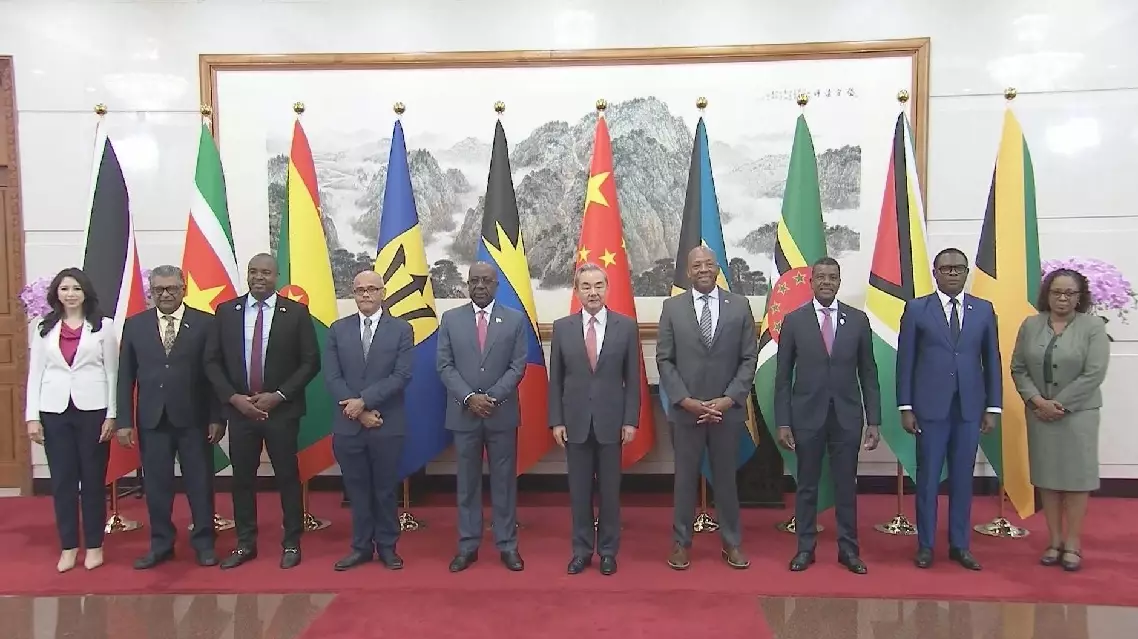
Chinese FM meets with Caribbean counterparts ahead of China-CELAC Forum
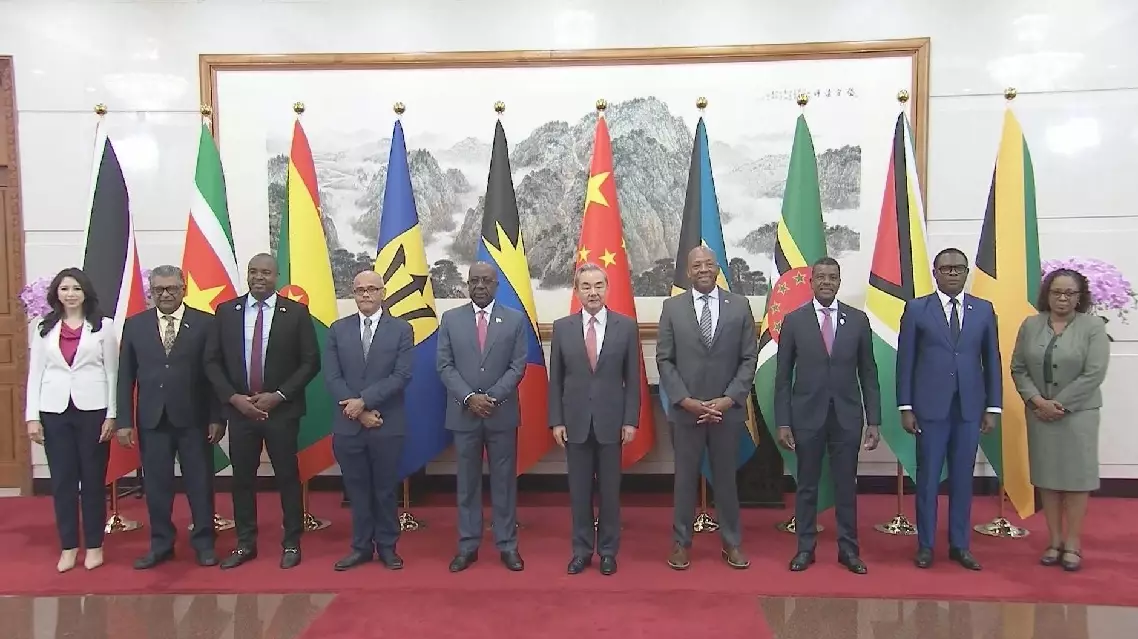
Chinese FM meets with Caribbean counterparts ahead of China-CELAC Forum
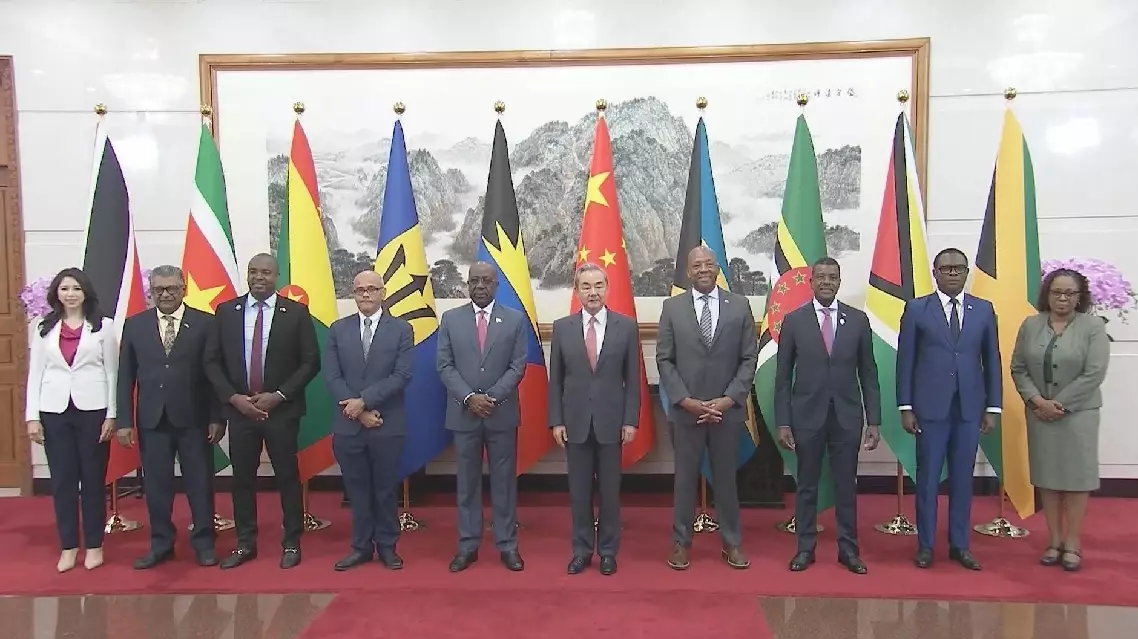
Chinese FM meets with Caribbean counterparts ahead of China-CELAC Forum
China's manufacturing sector has continued to accelerate its transformation and upgrading this year, moving faster toward high-end, intelligent and green development.
The country's consumer electronics industry has recently rolled out a steady stream of new models. A smartphone now features multiple advances in high-end manufacturing, such as a domestically developed memory chip used commercially in a flagship phone for the first time, offering lower power consumption and faster data transfer, or a flexible screen capable of withstanding millions of folds without breaking.
"Ultra-thin glass, only one-third the thickness of a human hair, is supported by more than 10 core technologies, and the entire chain is independently controllable," said Qi Yanjie, deputy director of the research and development center of a high-tech enterprise in east China's Wuhu City, while introducing a smartphone screen.
China's advanced manufacturing industry has continued to expand this year. In August, the added value of high-tech manufacturing and digital product manufacturing by industrial firms above the designated size increased 16.7 percent and 15.7 percent year on year, respectively. New growth drivers contributed more than 60 percent to growth in industrial output above the designated size, becoming a key engine driving the industrial economy.
Production methods have also been upgraded. At an intelligent manufacturing base in south China's Shenzhen City, nearly 30,000 orders pour in every day, with about 90 percent involving personalized customizations.
The base handles these orders using an intelligent system that increases efficiency and reduces costs. "Our intelligent production scheduling system can coordinate the overall scheduling of 300 million materials, and can basically complete the process from order intake to product shipping within 24 hours," said Liu Chuchun, head of the intelligent manufacturing base.
To date, China has built more than 56,000 basic-level smart factories, and artificial intelligence technologies have been adopted by over 30 percent of industrial enterprises above the designated size.
China's rising high-end manufacturing momentum not only strengthens the foundations of the domestic industrial economy, but also provides strong impetus for exports.
In August, the exports value of industrial enterprises above the designated size increased 11.1 percent year on year, maintaining double-digit growth for five consecutive months, with high-end equipment products serving as the main engine of foreign trade growth. "High-tech products such as photovoltaic modules, wind power equipment, high-end machine tools and industrial robots have become new calling cards for Chinese manufacturing going global, effectively contributing to technological progress, industrial upgrading and green transformation in other countries," said Ji Jianjun, a research fellow with the Institute for International Economic Research under the National Development and Reform Commission.
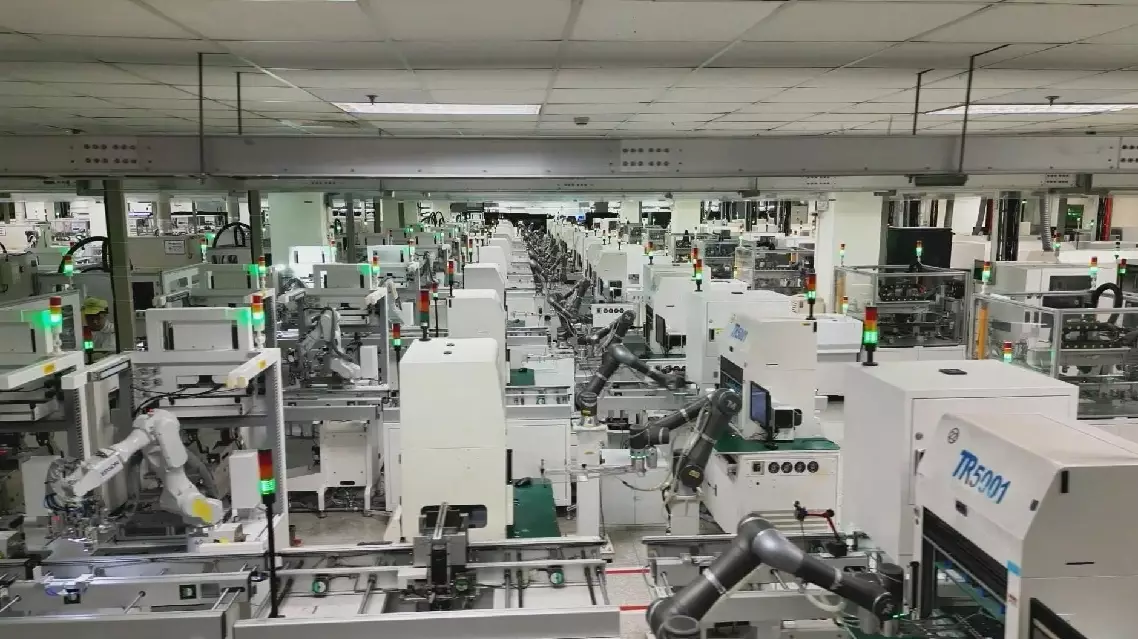
China's manufacturing sector moves further up value chain