An artificial intelligence (AI)-empowered monitoring system developed by a team of Chinese researchers has been put into operation in biomanufacturing companies, with the potential to optimize processes, predict outcomes, and propel life science towards a new era of efficiency.
The AI system, developed by a research team at Shanghai Jiao Tong University (SJTU), is used in industrial fermentation. It can accurately predict and control the fermentation process, promoting the transformation of the biological fermentation industry from experience-driven to data-driven.
Time is a critical factor in fermentation, one of the core technologies of biomanufacturing, as microorganisms vary greatly at different growth stages, and their growth directly determines the success or failure of the fermentation process.
In the past, in order to ensure the quality of fermentation, engineers needed to monitor production lines in three shifts 24 hours a day.
In an AI-assisted fermentation workshop, hundreds of sensors are mounted on key equipment such as fermentation tanks, to monitor in real time hundreds of important parameters such as microorganism growth status and oxygen levels in the tanks.
The AI model will analyze the data, to ensure that the fermentation process is always in the best state.
In addition, the AI technology can draw up plans in advance.
For example, the antibiotic fermentation cycle is seven days. When the fermentation reaches the 20th hour, the AI tech can generate a complete fermentation operation plan from the 21st hour to the remaining 150 hours, making predictions about the entire process.
"It serves as an 'intelligent brain' and can make predictions about production process. Based on predictions about the production process, it can generate the best process plan in real time, so as to greatly increase production," said Li Jinjin, director of the artificial intelligence and micro structure laboratory (AIMS-Lab) at SJTU.
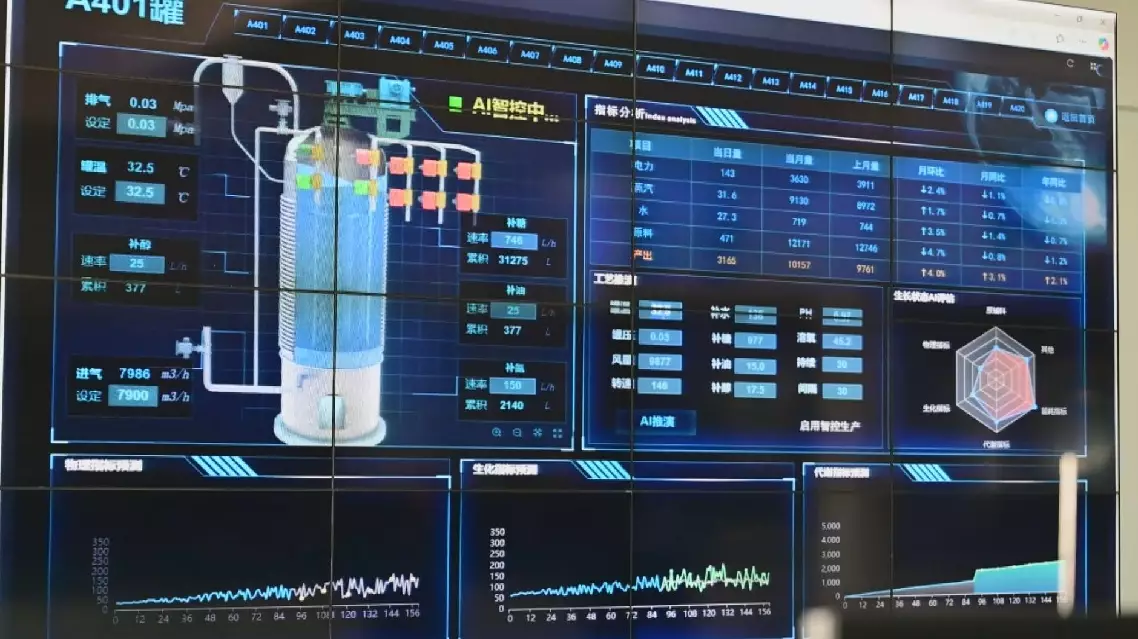
Chinese-developed AI system revolutionizes industrial fermentation process
The U.S. state of Utah's Chinese Dual Language Immersion Program has served nearly 12,000 students from grades 1 to 12 in 98 schools, as many local parents are showing a vision that learning Chinese will help their kids gain better opportunities in the future.
Implementation of the program started in Utah in 2009, one year after the state adopted a legislation to provide financial support for bilingual immersion education.
"I have been learning Chinese for seven years," said a local student with a Chinese name He Jie in Chinese.
"Those were my parents' choice. I didn't want to do it at first, but I've kind of grown to like it more," said another student named Nel Sume.
"We thought it might open more opportunities learning Chinese. Around the world, U.S. is a big country, China is a big country. And so we thought they would be potentially given more opportunities as they get older if they learn Chinese," said a local parent named Asher.
Stacy Lyon, the state director for the Utah Chinese Dual Language Immersion Program, said that more local parents see their kids learning the Chinese language as a preparation for the future.
"In fact, I think the parents understand the particularly important ties between China and the United States, so they hope that their children can be prepared in language and culture," said Lyon.
Local mother Victoria said her daughter became much more confident in having contacts with people after coming back from a China trip earlier this year.
"Her confidence. She became really confident after we went to China and she could speak to the locals. So that was really, really cool to see," said Victoria.
"I can talk to others (in Chinese). I can order things (in Chinese). I know I can talk to Chinese people, so (Chinese) is a very useful tool," said a student named Sarah in Chinese.
The eagerness for face-to-face communication is precisely what makes the people-to-people exchanges between Chinese and American people so valuable.
"I got to go to China, I got to enjoy the food, I got to see everyone, I got to see how the world looks differently through everyone else's perspective. And I think that's just such a cool way. I would love to do a study abroad to China in my college years," said He Jie.

Utah's Chinese Dual Language Immersion Program serves 12,000 students in 98 schools