DEIR AL-BALAH, Gaza Strip (AP) — Israeli airstrikes pounded northern and southern Gaza on Wednesday, killing at least 70 people, including almost two dozen children, according to hospitals and health officials, a day after Israeli Prime Minister Benjamin Netanyahu said there was “no way” he would halt Israel’s offensive in the Palestinian territory before Hamas is defeated.
At least 50 people, including 22 children, were killed in strikes around Jabaliya in northern Gaza alone, according to hospitals and Gaza's Health Ministry.
Click to Gallery
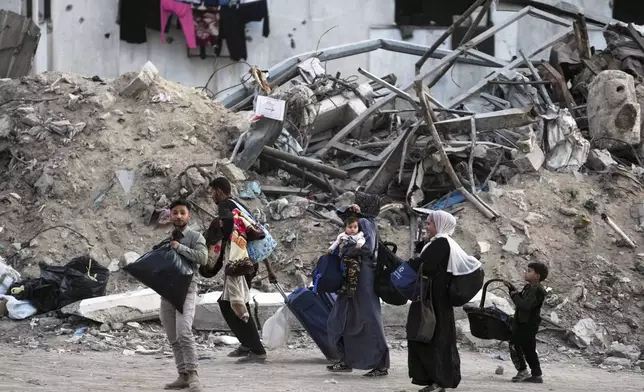
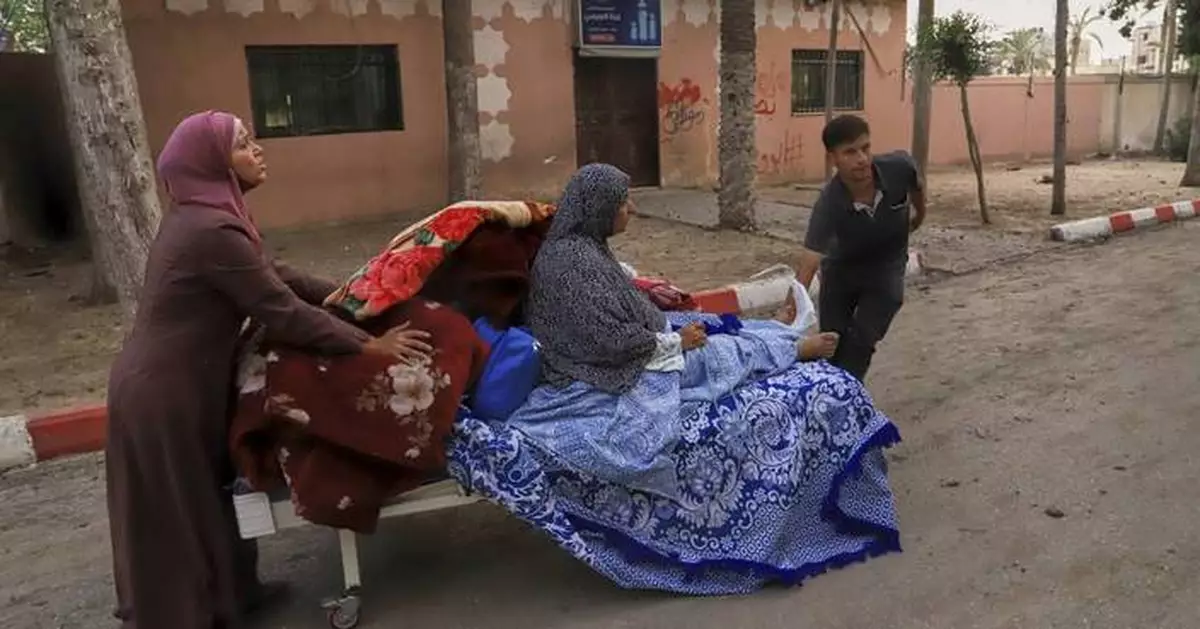
Palestinians evacuate after the Israeli army issued an evacuation warning for several schools and a hospital in Gaza City's Rimal neighborhood, Wednesday, May 14, 2025. (AP Photo/Jehad Alshrafi)
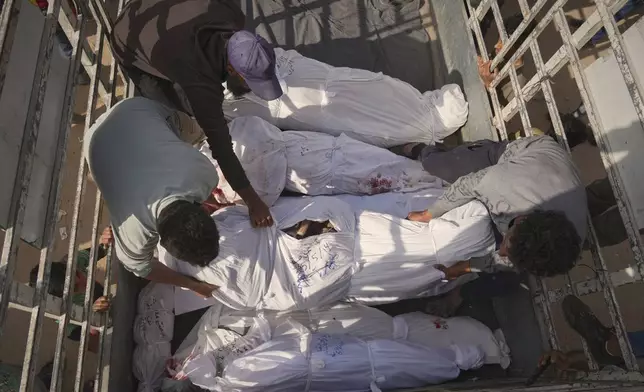
Palestinians load bodies of their relatives killed in the Israeli army airstrikes in Jabalia, northern Gaza Strip, on Wednesday, May 14, 2025. According to local hospitals, 48 people were killed in the strikes, including 22 children. (AP Photo/Jehad Alshrafi)
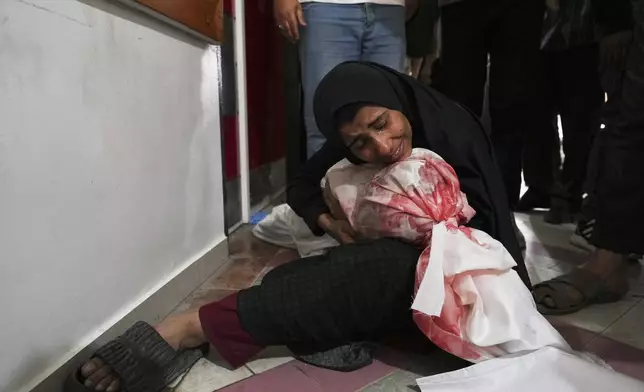
A Palestinian woman mourns her son, killed in an Israeli airstrikes in Jabalia, northern Gaza Strip, on Wednesday, May 14, 2025. According to local hospitals, 48 people were killed in the strikes, including 22 children. (AP Photo/Jehad Alshrafi)
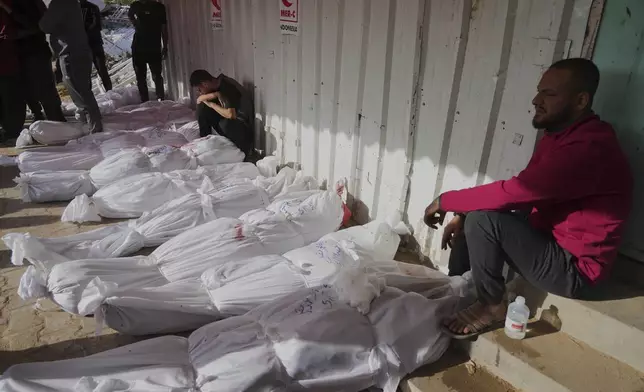
Palestinians mourn their relatives killed in an Israeli airstrikes in Jabalia, northern Gaza Strip, on Wednesday, May 14, 2025. According to local hospitals, 48 people were killed in the strikes, including 22 children. (AP Photo/Jehad Alshrafi)
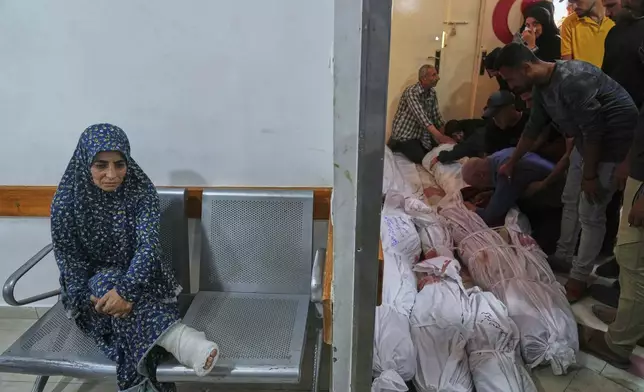
Palestinians mourn their relatives killed in an Israeli airstrikes in Jabalia, northern Gaza Strip, on Wednesday, May 14, 2025. According to local hospitals, 48 people were killed in the strikes, including 22 children. (AP Photo/Jehad Alshrafi)
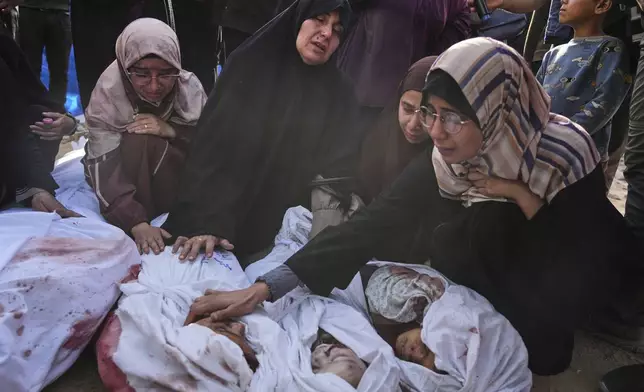
Palestinians mourn children from their families who were killed in Israeli airstrikes in Jabalia, in the northern Gaza Strip, on Wednesday, May 14, 2025. According to local hospitals, the strikes killed 48 people, including 22 children. (AP Photo/Jehad Alshrafi)
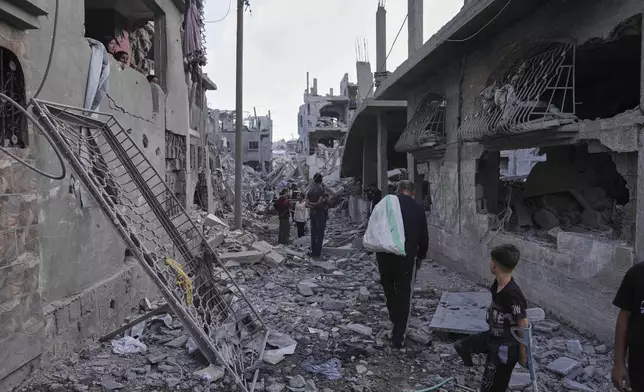
Palestinians inspect the rubble of homes destroyed by Israeli airstrikes in Jabalia, northern Gaza Strip, on Wednesday, May 14, 2025. According to local hospitals, 48 people were killed in the strikes, including 22 children. (AP Photo/Jehad Alshrafi)
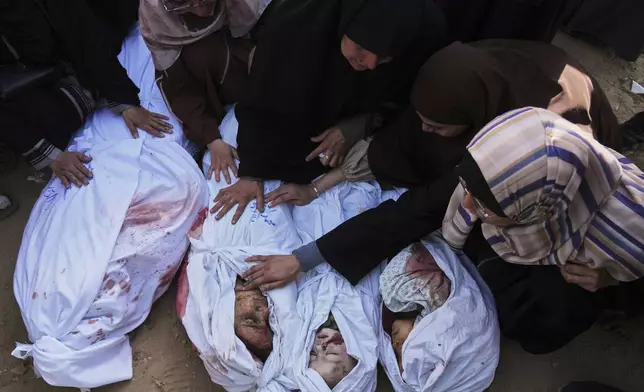
Palestinians mourn children from their families who were killed in Israeli airstrikes in Jabalia, in the northern Gaza Strip, on Wednesday, May 14, 2025. According to local hospitals, the strikes killed 48 people, including 22 children. (AP Photo/Jehad Alshrafi)
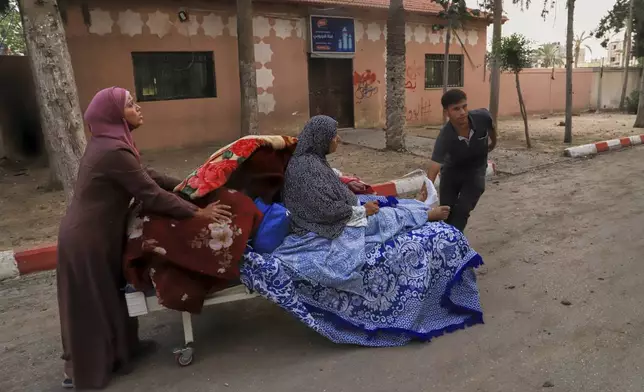
Palestinians evacuate patients from the European hospital in Khan Younis, Gaza, after it was hit by an Israeli army airstrike, Tuesday, May 13, 2025. The Israeli military said it had carried out a strike targeting what it said was a Hamas "command and control center" located beneath the hospital. (AP Photo/Mariam Dagga)
The strikes came after Hamas on Monday released an Israeli-American hostage, a gesture that some thought could lay the groundwork for a ceasefire, and as U.S. President Donald Trump visited Saudi Arabia during a multi-day trip to Gulf countries.
Israel's military refused to comment on the strikes. It warned Jabaliya residents to evacuate late Tuesday, citing militant infrastructure in the area, including rocket launchers.
In Jabaliya, rescue workers smashed through collapsed concrete slabs using hand tools, lit by the light of cellphones, to remove children's bodies.
In comments released by Netanyahu’s office Tuesday, the prime minister said Israeli forces were days away from a promised escalation of force and would enter Gaza “with great strength to complete the mission ... It means destroying Hamas.”
There had been widespread hope that Trump’s visit to the Middle East could usher in a ceasefire deal or renewal of humanitarian aid to Gaza. An Israeli blockade of the territory is now in its third month.
The war began when Hamas-led militants killed 1,200 people in a 2023 intrusion into southern Israel. Israel’s retaliatory offensive has killed over 52,928 Palestinians, many of them women and children, according to Gaza’s Health Ministry, which does not say how many were combatants. Almost 3,000 have been killed since Israel broke a ceasefire on March 18, the ministry said.
Israel’s offensive has obliterated vast swathes of Gaza’s urban landscape and displaced 90% of the population, often multiple times.
Israeli media reported that one target in a strike on a hospital in Khan Younis on Tuesday was Mohammed Sinwar, younger brother of the late Hamas leader Yahya Sinwar, who was killed by Israeli forces last October. The military would not comment beyond saying it had targeted a Hamas “command and control center” which it said was located beneath the European Hospital.
Mohammed Sinwar is believed to be Hamas’ top military leader in Gaza. Israel has tried to assassinate him multiple times over the past decades.
A senior health official in Gaza said Wednesday that ambulances were no longer able to reach the hospital due to damage from the strike, which had also forced the facility to suspend surgical operations.
Dr. Marwan al-Hams, director general of Field Hospitals at Gaza's Health Ministry, said the strike had severely damaged the hospital’s water and sewage systems, as well as its courtyard. He added that the Israeli military hit a bulldozer brought in by hospital authorities to repair the area to allow ambulances reach the building.
“Until these damages are fixed, we will have to shut down most departments of the hospital,” he said, adding that he had no information about Israel's claimed target of the strike.
International food security experts warned earlier this week that Gaza will likely fall into famine if Israel doesn’t lift its blockade and stop its military campaign.
Nearly half a million Palestinians are facing possible starvation while 1 million others can barely get enough food, according to findings by the Integrated Food Security Phase Classification, a leading international authority on the severity of hunger crises.
French President Emmanuel Macron strongly denounced Netanyahu’s decision to block aid as “a disgrace” that has caused a major humanitarian crisis.
“I say it forcefully, what Benjamin Netanyahu’s government is doing today is unacceptable,” Macron said Tuesday evening on TF1 national television. “There’s no medicine. We can’t get the wounded out. Doctors can’t get in."
Macron, who visited injured Palestinians in Egypt last month, called for the reopening of the Gaza border to humanitarian convoys. “Then, yes, we must fight to demilitarize Hamas, free the hostages and build a political solution,” he said.
Netanyahu retorted that Macron was “echoing the false propaganda” of an extremist militant organization.
Gaza’s population of around 2.3 million people relies almost entirely on outside aid to survive. Israel’s 19-month-old military campaign has wiped away most capacity to produce food in the territory. Markets are empty of most items, and prices for what remains have skyrocketed.
The United Nations says the number of meals that charity kitchens are providing in Gaza has plunged to around 260,000 under Israel’s blockade, down from more than 1 million a day in late April.
Charity kitchens are the last lifeline for most of Gaza’s population, but they are rapidly shutting down because supplies are running out. In the first two weeks of May, at least 112 kitchens – more than 60% of the total – closed, the U.N. humanitarian office said Wednesday. Only 68 kitchens still operate.
The World Health Organization said it has only enough stocks to treat 500 children with acute malnutrition, a fraction of the need. Thousands of children have been diagnosed with malnutrition in recent weeks.
Israel says the blockade is aimed at pressuring Hamas to release remaining hostages and disarm. Israeli officials have asserted there is enough food in the territory after a surge in aid entered during the recent two-month ceasefire.
Lidman reported from Tel Aviv, Israel. Associated Press writers Fatma Khaled and Lee Keath in Cairo and Sylvie Corbet in Paris contributed to this report.
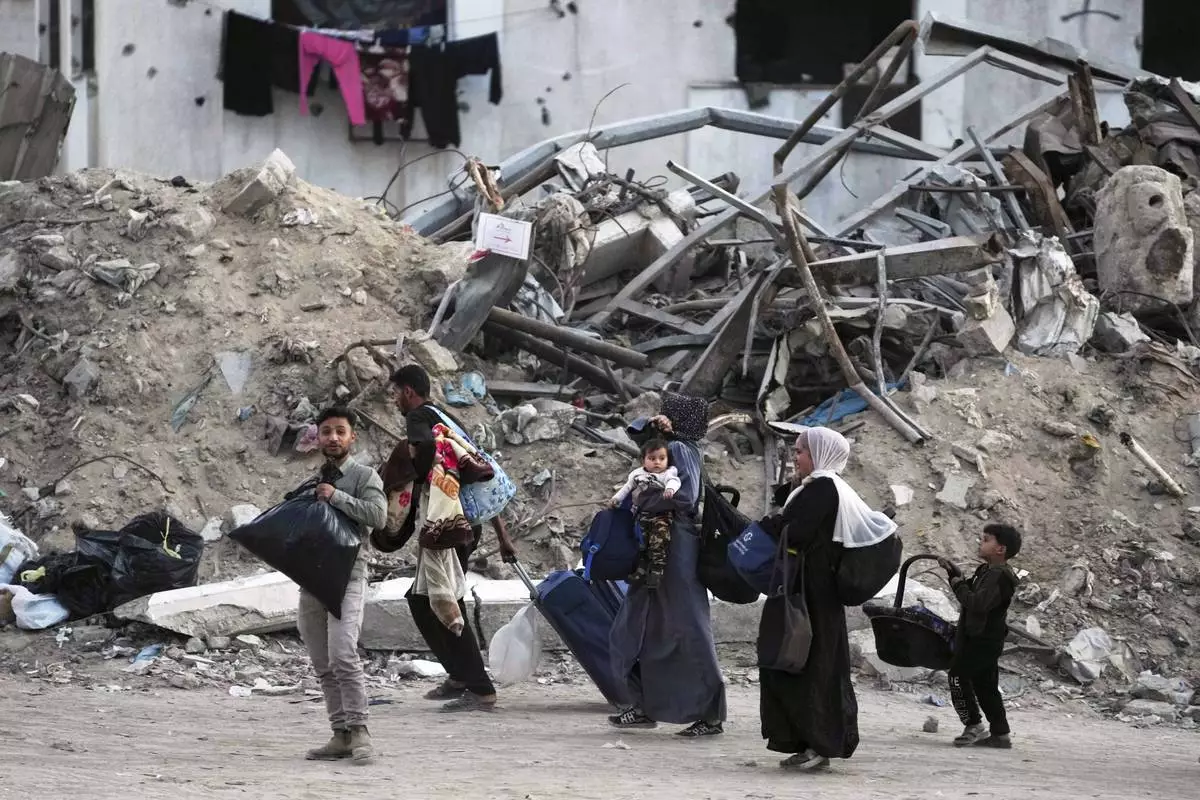
Palestinians evacuate after the Israeli army issued an evacuation warning for several schools and a hospital in Gaza City's Rimal neighborhood, Wednesday, May 14, 2025. (AP Photo/Jehad Alshrafi)
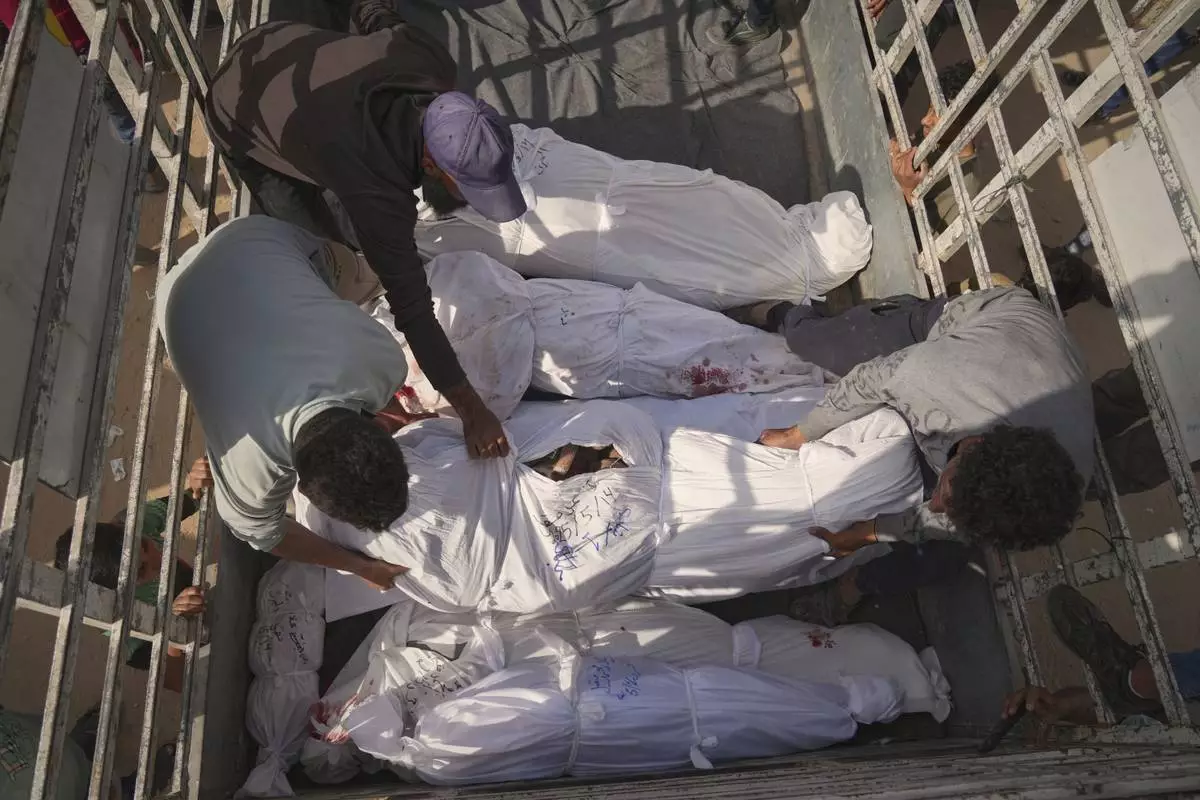
Palestinians load bodies of their relatives killed in the Israeli army airstrikes in Jabalia, northern Gaza Strip, on Wednesday, May 14, 2025. According to local hospitals, 48 people were killed in the strikes, including 22 children. (AP Photo/Jehad Alshrafi)
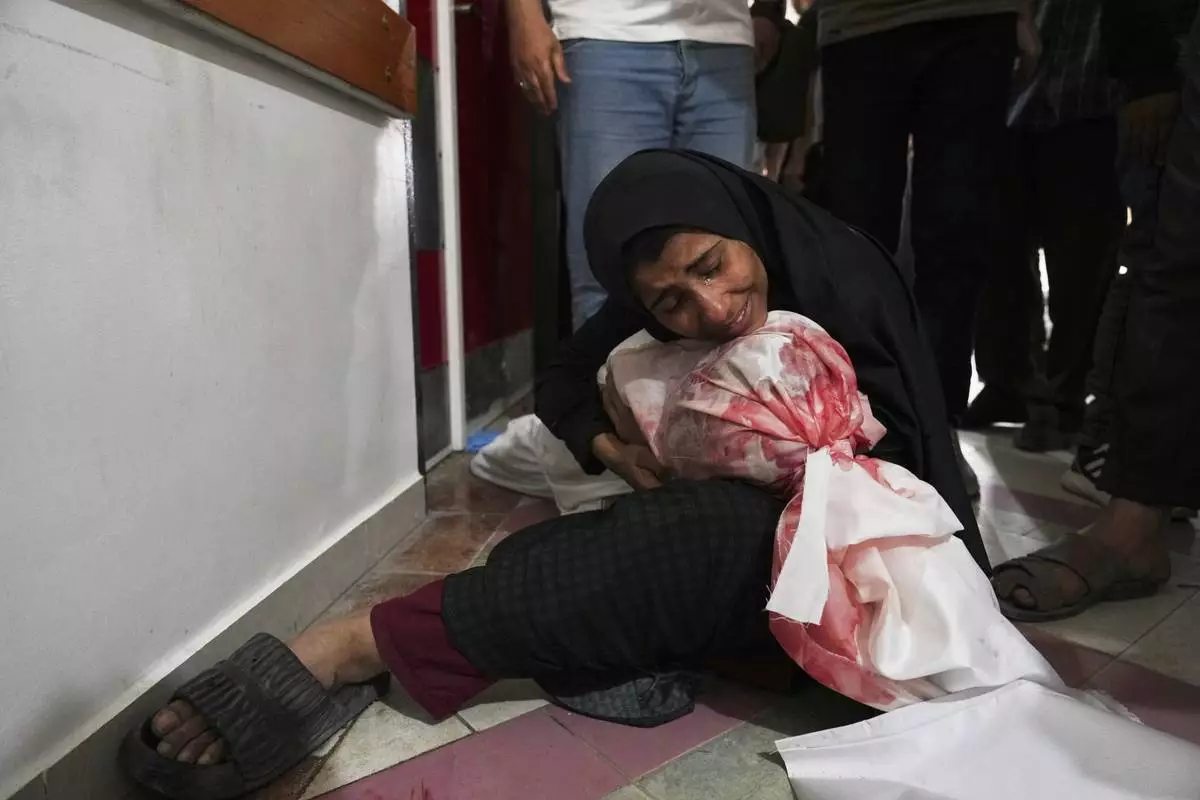
A Palestinian woman mourns her son, killed in an Israeli airstrikes in Jabalia, northern Gaza Strip, on Wednesday, May 14, 2025. According to local hospitals, 48 people were killed in the strikes, including 22 children. (AP Photo/Jehad Alshrafi)
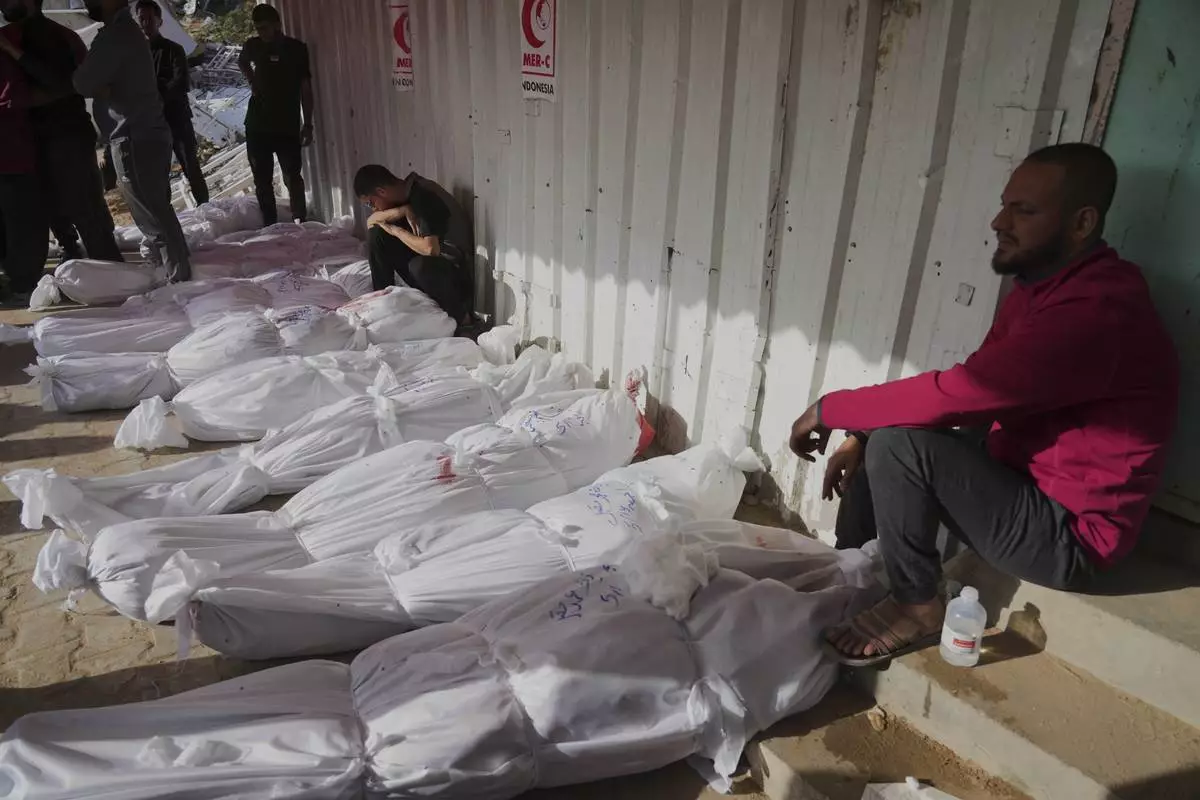
Palestinians mourn their relatives killed in an Israeli airstrikes in Jabalia, northern Gaza Strip, on Wednesday, May 14, 2025. According to local hospitals, 48 people were killed in the strikes, including 22 children. (AP Photo/Jehad Alshrafi)
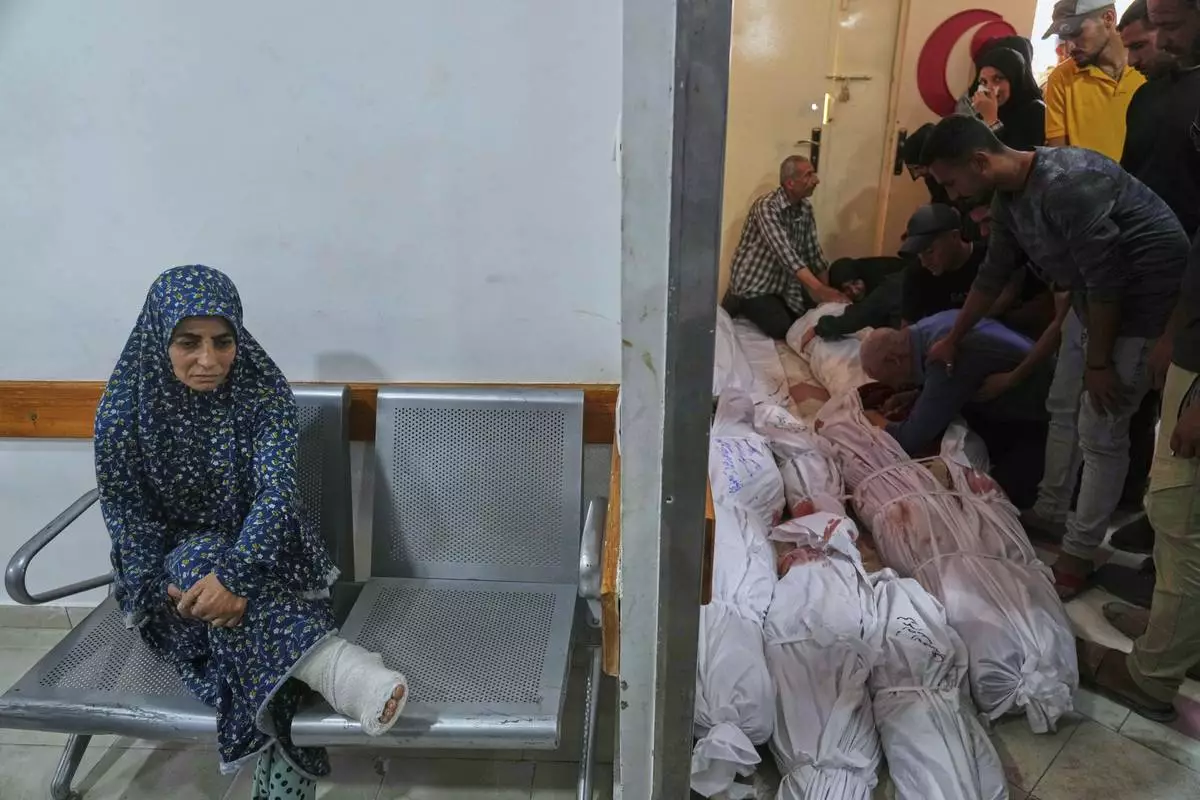
Palestinians mourn their relatives killed in an Israeli airstrikes in Jabalia, northern Gaza Strip, on Wednesday, May 14, 2025. According to local hospitals, 48 people were killed in the strikes, including 22 children. (AP Photo/Jehad Alshrafi)
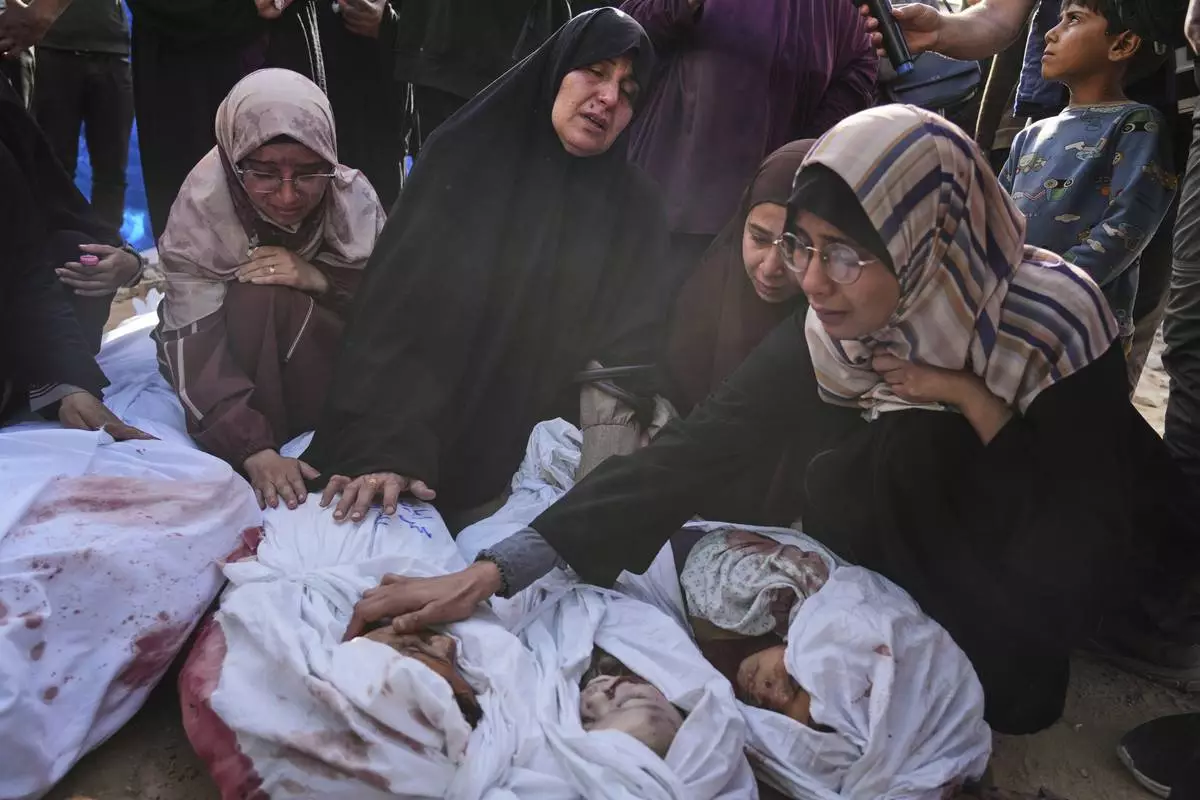
Palestinians mourn children from their families who were killed in Israeli airstrikes in Jabalia, in the northern Gaza Strip, on Wednesday, May 14, 2025. According to local hospitals, the strikes killed 48 people, including 22 children. (AP Photo/Jehad Alshrafi)
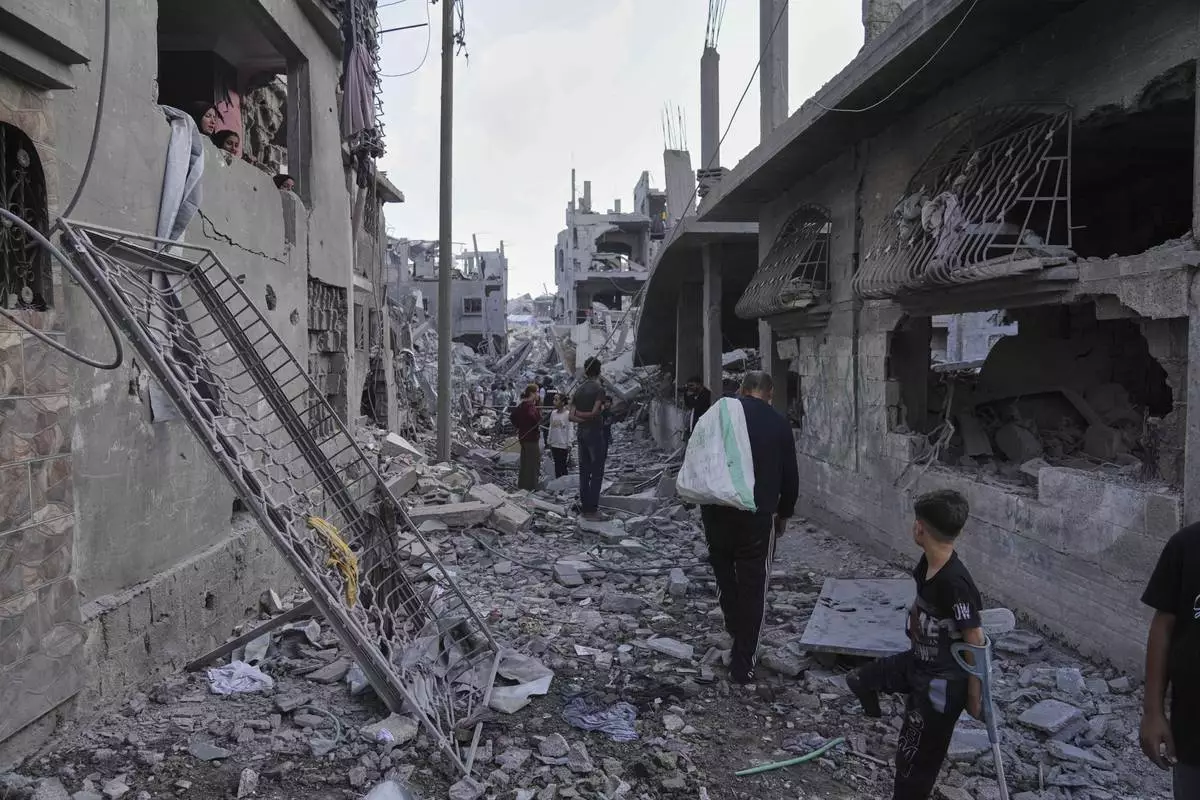
Palestinians inspect the rubble of homes destroyed by Israeli airstrikes in Jabalia, northern Gaza Strip, on Wednesday, May 14, 2025. According to local hospitals, 48 people were killed in the strikes, including 22 children. (AP Photo/Jehad Alshrafi)
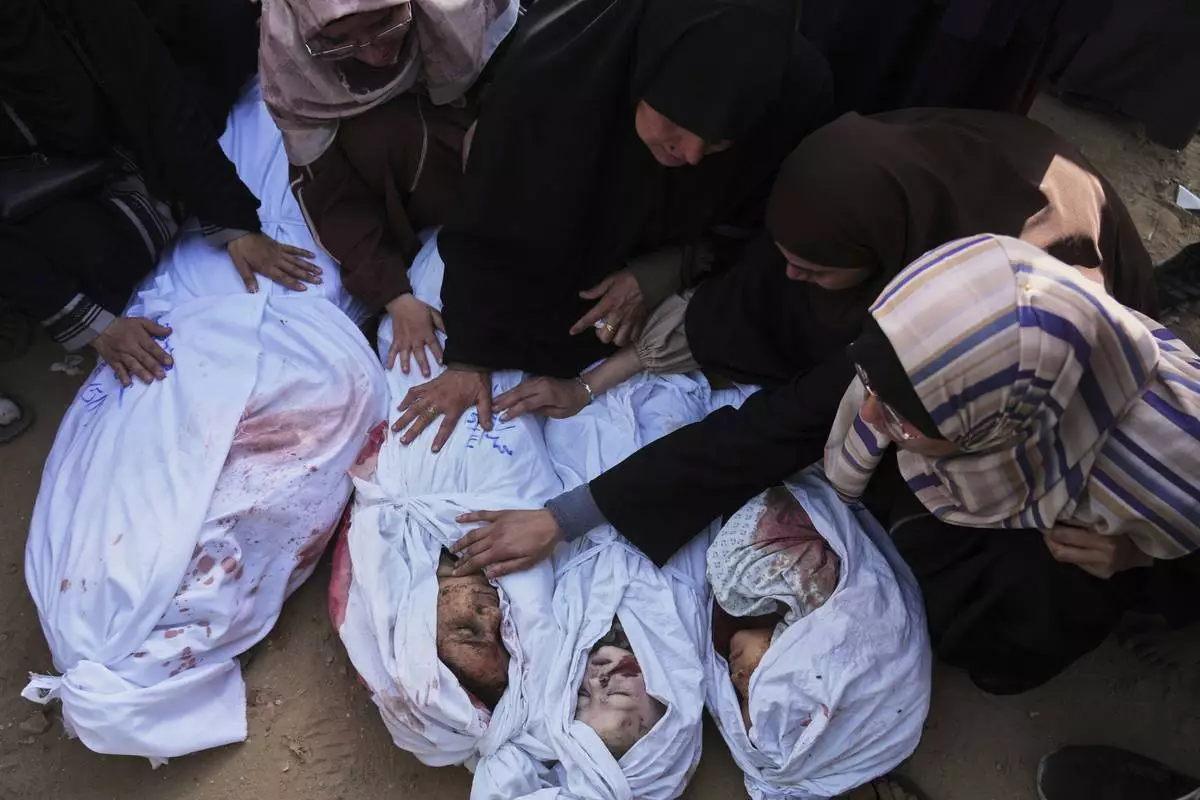
Palestinians mourn children from their families who were killed in Israeli airstrikes in Jabalia, in the northern Gaza Strip, on Wednesday, May 14, 2025. According to local hospitals, the strikes killed 48 people, including 22 children. (AP Photo/Jehad Alshrafi)
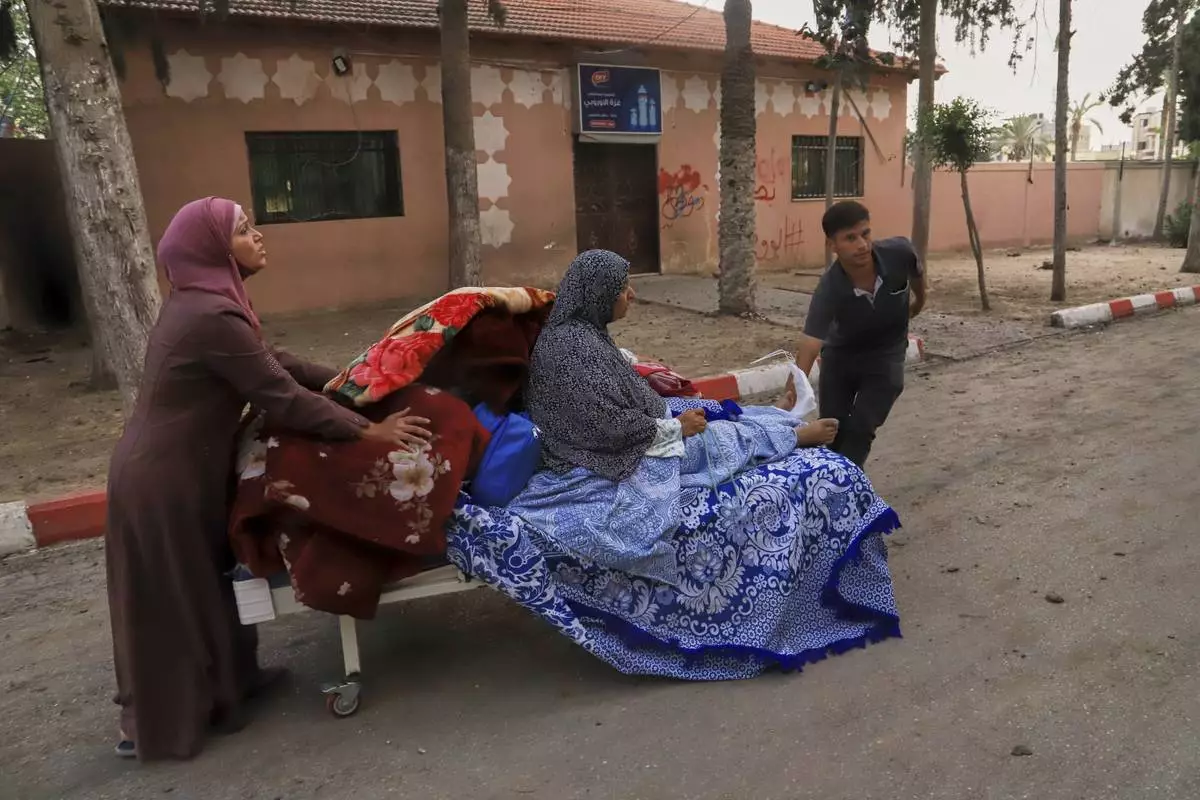
Palestinians evacuate patients from the European hospital in Khan Younis, Gaza, after it was hit by an Israeli army airstrike, Tuesday, May 13, 2025. The Israeli military said it had carried out a strike targeting what it said was a Hamas "command and control center" located beneath the hospital. (AP Photo/Mariam Dagga)