A 0.5-percentage points reduction in the reserve requirement ratio (RRR) for eligible financial institutions takes effect in China on Thursday, which is expected to inject roughly 1 trillion yuan (about 139 billion U.S. dollars) of long-term liquidity into the financial market.
The RRR cut, the first such move since the start of this year, was announced last week by the People's Bank of China, China's central bank.
The RRR cut was among a raft of supportive measures that also included policy rate cut and increased financial support through relending facilities announced by the monetary and financial regulatory bodies recently, as the world's second-largest economy steps up efforts to stabilize markets and sustain economic recovery amid external headwinds.
Also starting Thursday, the RRR for auto financing and financial leasing companies is slashed by 5 percentage points to 0 percent, with the cut expected to increase the credit supply capacity of these two types of institutions in their respective fields.
Experts said that the reserve requirement cut will help boost domestic demand and stabilize investments. "The lowered RRR will increase the long-term stable funds in the banking system, allowing businesses and residents to obtain loans at lower interest rates. This will help boost domestic demand and stabilize investments. The reduction will also ease liquidity management pressure on banks. Following this round of cuts, the RRR for large banks in China remains relatively high, providing ample policy flexibility," said Wang Yifeng, deputy director of the Research Institute at Everbright Securities.
"To ensure ample liquidity, the People's Bank of China has been conducting short-term liquidity operations almost daily, with significant volumes. Currently, the main issue in market liquidity is structural. This reserve requirement cut will increase the supply of long-term liquidity, reduce the reliance on short-term liquidity tools, and improve the maturity structure of market liquidity. Additionally, the cut will lower banks' funding costs, reduce their incentive to attract deposits with high interest rates, and limit arbitrage opportunities for non-bank institutions," said Dong Ximiao, chief researcher of the Merchants Union Consumer Finance Co., Ltd.
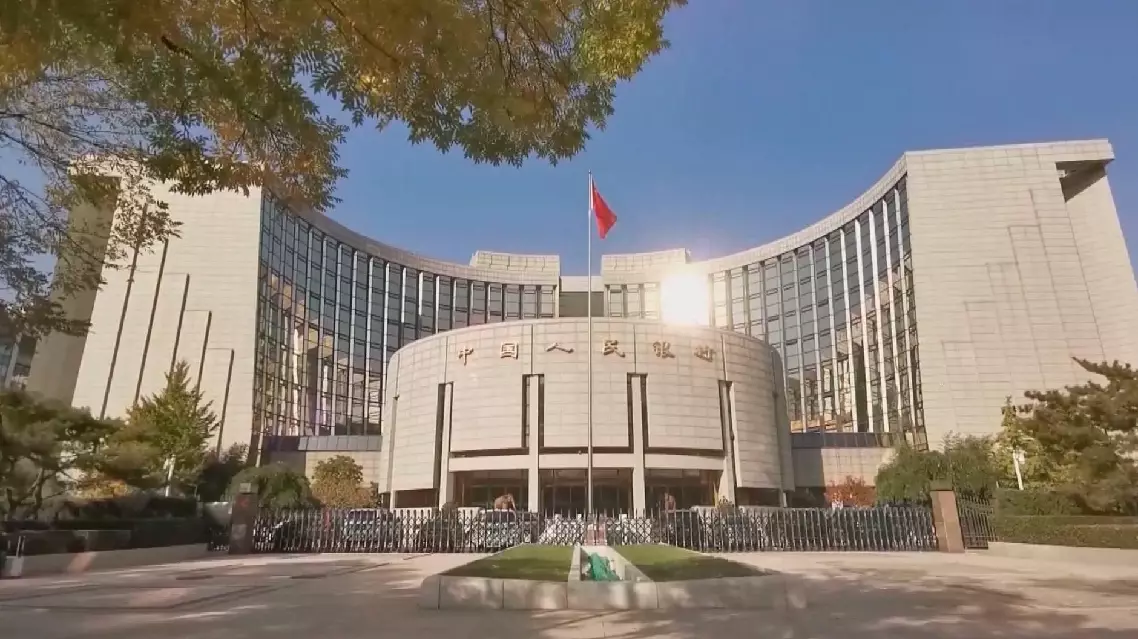
China's first RRR cut for financial institutions in 2025 takes effect
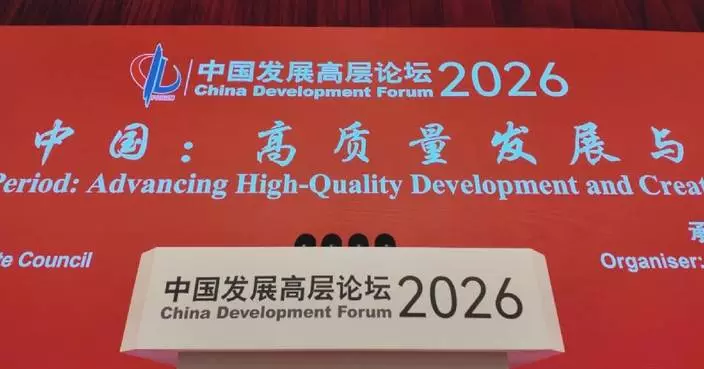
China's development blueprint for the 2026-2030 period will create strong market opportunities for industries worldwide, said Judy Marks, president and CEO of American elevator maker Otis, in Beijing on Sunday. The China Development Forum 2026 began on Sunday in Beijing. With the theme of "China in Its 15th Five-Year Plan Period: Advancing High-Quality Development and Creating New Opportunities Together," the two-day event is bringing together global officials, industry leaders, and experts for 13 thematic sessions and a series of closed-door discussions, covering topics including new trends in consumption growth, green and low-carbon transition, the development of future industries, and the industrial application of artificial intelligence (AI).
In an interview with China Global Television Network (CGTN) on the sidelines of the event, Marks shared her insights on the significant role of China's research capabilities and market environment for the global economy.
She said that Otis's research and development center in China, leveraging local resources, is well-positioned to advance its innovation strategy.
"So I would tell you to us in China, it's an innovation hub and an agility engine. And, that really describes China for us. We do work in China for China, but we also do both manufacturing and development and research for the rest of the world. And China, in Shanghai, has our largest development team of anywhere in the world. It makes us go faster. It's AI and digital driven -- and it really allows us to set the benchmark," said Marks.
She said that China is advancing rapidly in areas including smart cities and digital infrastructure, developments that will bring new opportunities and shape the future of the global elevator industry.
"Now to us, the world is digital and connected. They're the two highest priorities we have. If an elevator is part of an ecosystem in the building, we can share information with transportation systems, with energy systems. As China pursues even more of a low carbon world, our elevators actually push power back into the building and capture power when they break with our regenerative drives," she said.
Speaking of China's recently-approved 15th Five-Year Plan (2026-2030), aimed at expanding high-level opening up and driving high-quality development, Marks described it as highly encouraging for multinational companies.
"I would tell you everything we see in the 15th Five-Year Plan is encouraging: high-quality development, which is a commitment from the government and the whole ecosystem to serve its citizens, digitalization, urban renewal -- all of this combines. It's created a large market for a company like Otis. It's where we're going to invest, and it's in sync with our strategy and our mission," she said.
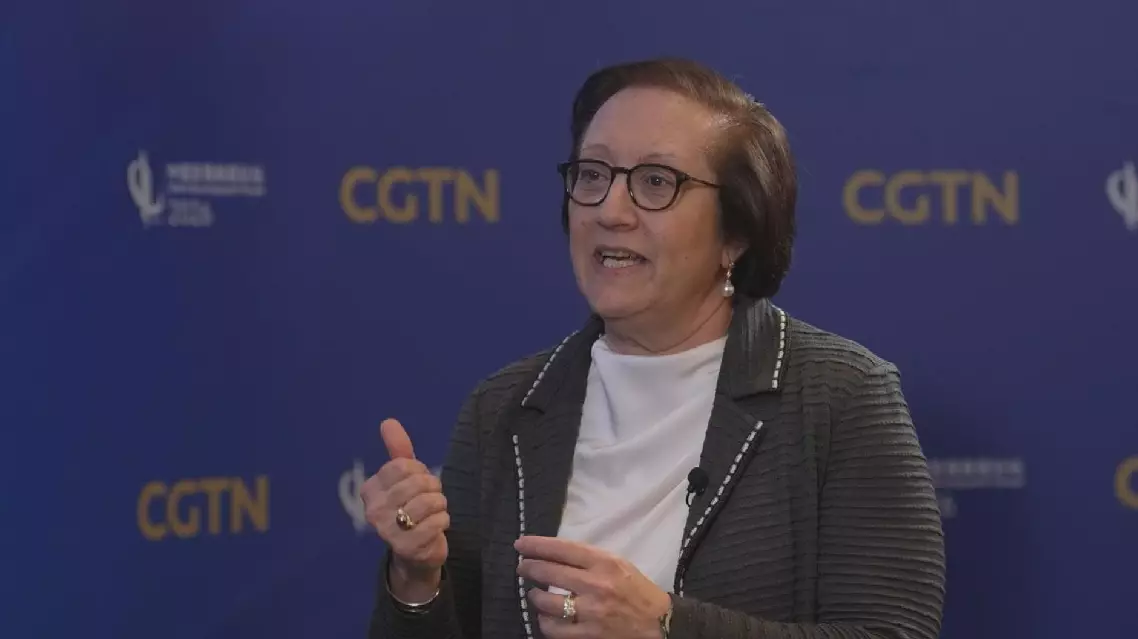
China's development blueprint brings opportunities to global industries: Otis CEO