ISLAMABAD (AP) — Pakistan’s premier Twenty20 cricket tournament resumes Saturday after a ceasefire between India and Pakistan was achieved. There will be a handful of foreign players returning for the remaining eight games.
The Pakistan Super League was suspended on May 9 but last weekend Pakistan and India agreed to a ceasefire after talks to defuse their most serious military confrontation in decades.
Click to Gallery
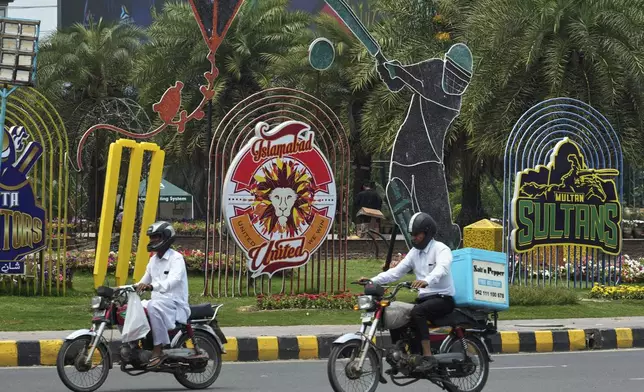
Motorcyclists drive past an advertisement of Pakistan Super League Twenty20 tournament displayed along a roadside in Lahore, Pakistan, Friday, May 9, 2025. (AP Photo/K.M. Chaudary)
Workers prepare an enclosure of the Rawalpindi Cricket Stadium following the Pakistan Super League resumption, in Rawalpindi, Pakistan, Thursday, May 15, 2025. (AP Photo/W.K. Yousufzai)

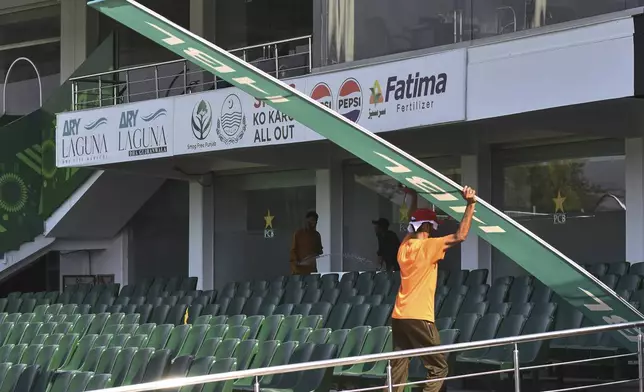
Workers carries chair as they prepare ground at the Rawalpindi Cricket Stadium following the Pakistan Super League resumption, in Rawalpindi, Pakistan, Thursday, May 15, 2025. (AP Photo/W.K. Yousufzai)
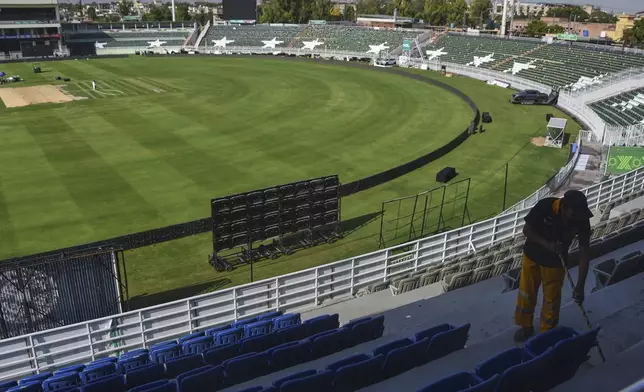
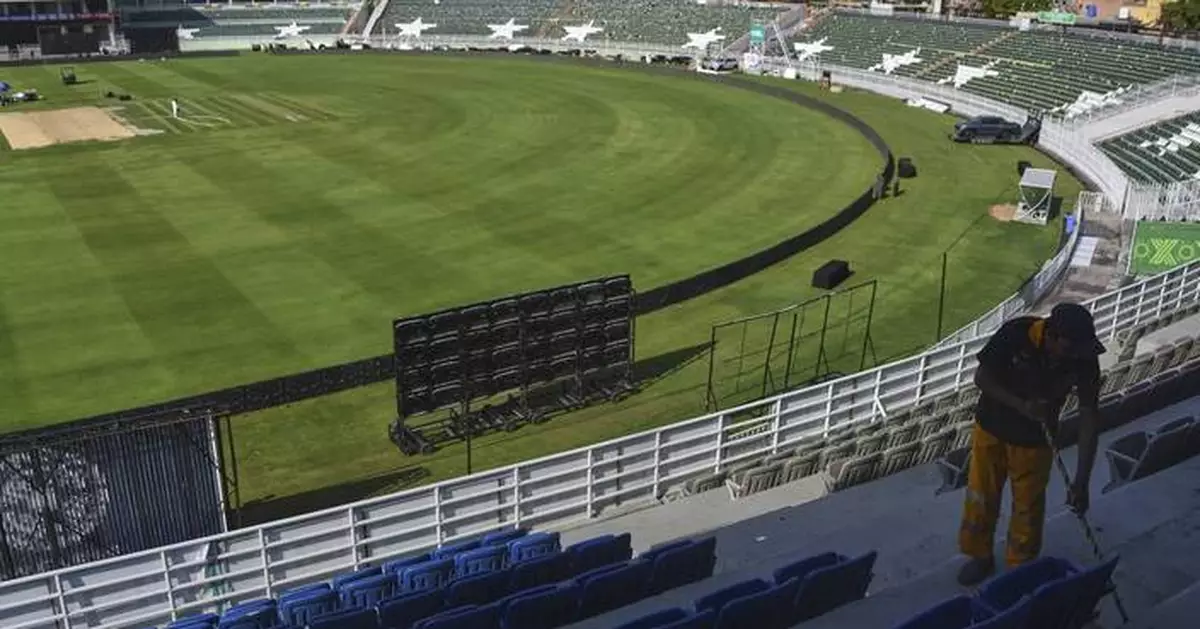
A worker cleans an enclosure of the Rawalpindi Cricket Stadium following the Pakistan Super League resumption, in Rawalpindi, Pakistan, Thursday, May 15, 2025. (AP Photo/W.K. Yousufzai)
The Indian Premier League, also suspended due to the outbreak between the countries, will also resume this weekend.
PSL organizers first proposed moving the tournament to Dubai but later decided to postpone it after foreign players were reluctant to participate in the tournament due to security concerns. Around 43 foreign cricketers — competing on six PSL teams — were flown out of Pakistan from an airbase in Rawalpindi.
Rawalpindi will host the remaining four league matches between May 17-19 before Lahore hosts the playoffs from May 21, including the final at Gaddafi Stadium on May 25.
Zimbabwean all-rounder Sikander Raza is among some of foreign players who have returned to Pakistan. Raza, who plays for Lahore Qalandars, is available for Lahore’s crucial last league game against Peshawar Zalmi on Sunday before he flies to England for test duty starting next week.
Raza will not be available for Lahore if the two-time champions qualify for the playoffs due to his test commitments.
He said that if the PSL resumed, he planned to return to Pakistan, even for just one match.
“I was very clear in my head that I was always going to go back,” Raza told The Associated Press as he trained with his teammates at Islamabad Club ground on Thursday.
“This PSL is not just about winning a trophy, there’s a lot more to it. All the overseas (players) that have come back, whether they’re in Pakistan or India, I think credit must be given to them because cricket unites and the whole purpose of sports all around the world is to unite cultures, countries.”
Lahore will also have Sri Lanka batter Bhanuka Rajapaksa and Bangladesh all-rounder Shakib Al Hasan for its must-win last league game against the Babar Azam-led Peshawar side after Tom Curran and Daryl Mitchel were ruled out due to injuries.
Raza said it was tough for the families of all the players living abroad after there was escalation at the borders.
“Whether it’s Pakistan or India, what happened was tough for everybody,” Raza said. “Sometimes when you’re on the ground, things may not be as bad, but (for) people back home watching TV, sometimes it’s very hard to control what media tells you.”
Lahore team director Sameen Rana said it was important that the PSL returns to finish the season.
“There’s a lot of uncertainty and the conditions which were happening on the ground was not the best, it's unfortunate,” Rana said. “But from our perspective . . . the important thing is that the PSL is resuming, and that’s what matters.”
Defending champions Islamabad United has brought in Alex Hales of England and Rassie van Dussen of South Africa after initially picking both of them in the supplementary draft while Ben Dwarshuis of Australia is flying back to rejoin the team.
Islamabad, the three-time PSL champions, won five games in a row at the start of the season before four successive defeats.
Finn Allen of New Zealand and Rilee Rossouw of South Africa are rejoining first-place Quetta Gladiators, who have 13 points, three points ahead of Karachi and Islamabad.
Karachi is expecting to have its captain David Warner back from Australia in time to lead the team against Peshawar on Saturday.
AP cricket: https://apnews.com/hub/cricket
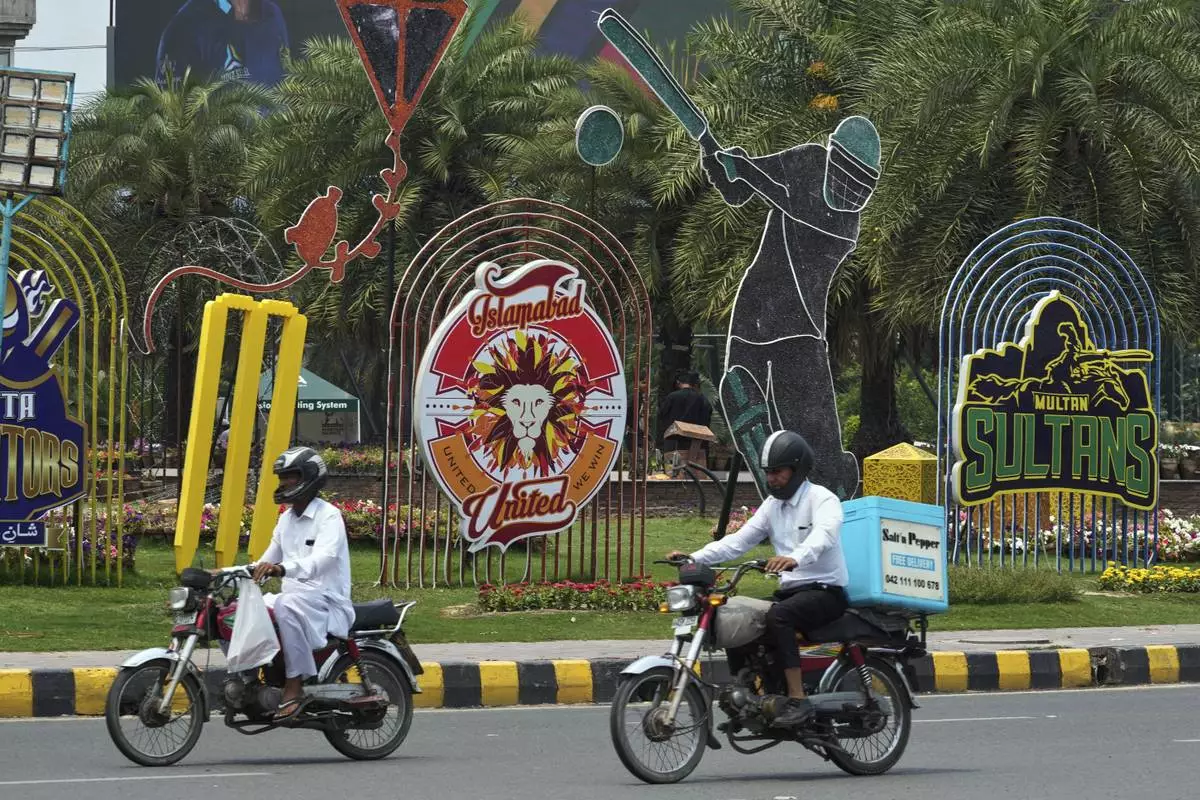
Motorcyclists drive past an advertisement of Pakistan Super League Twenty20 tournament displayed along a roadside in Lahore, Pakistan, Friday, May 9, 2025. (AP Photo/K.M. Chaudary)
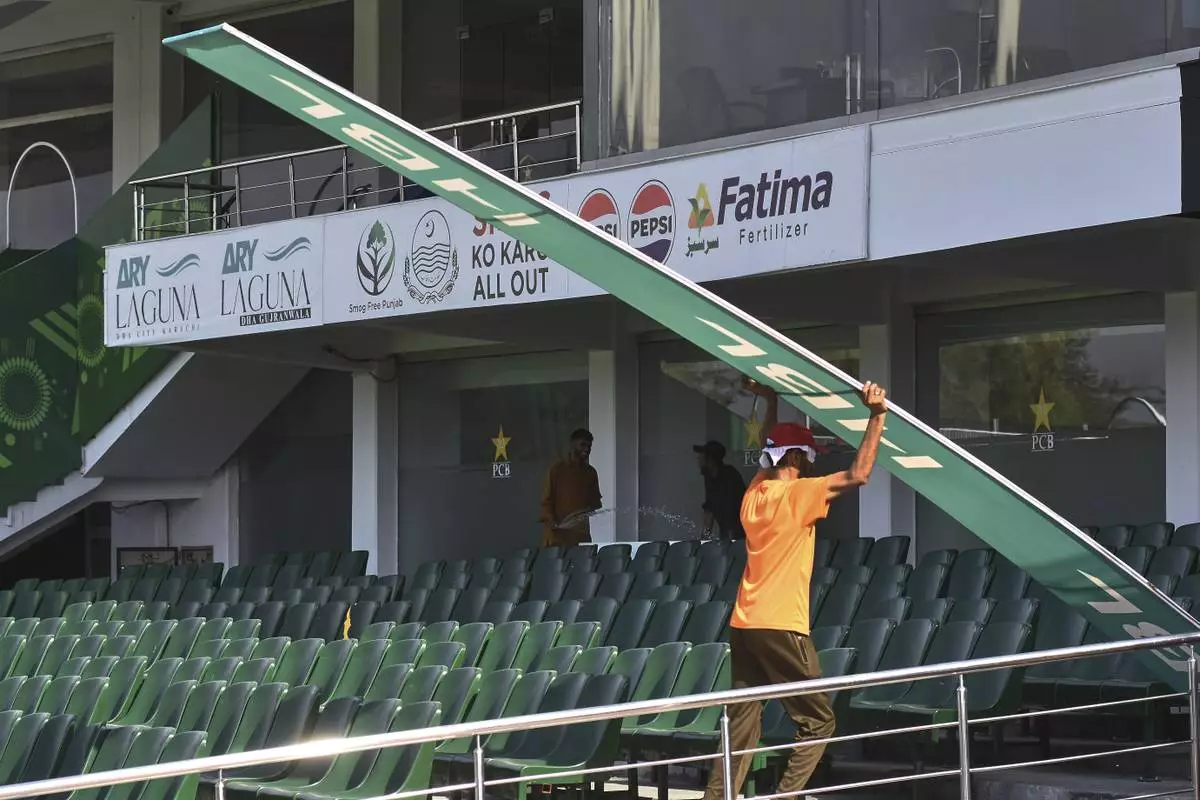
Workers prepare an enclosure of the Rawalpindi Cricket Stadium following the Pakistan Super League resumption, in Rawalpindi, Pakistan, Thursday, May 15, 2025. (AP Photo/W.K. Yousufzai)
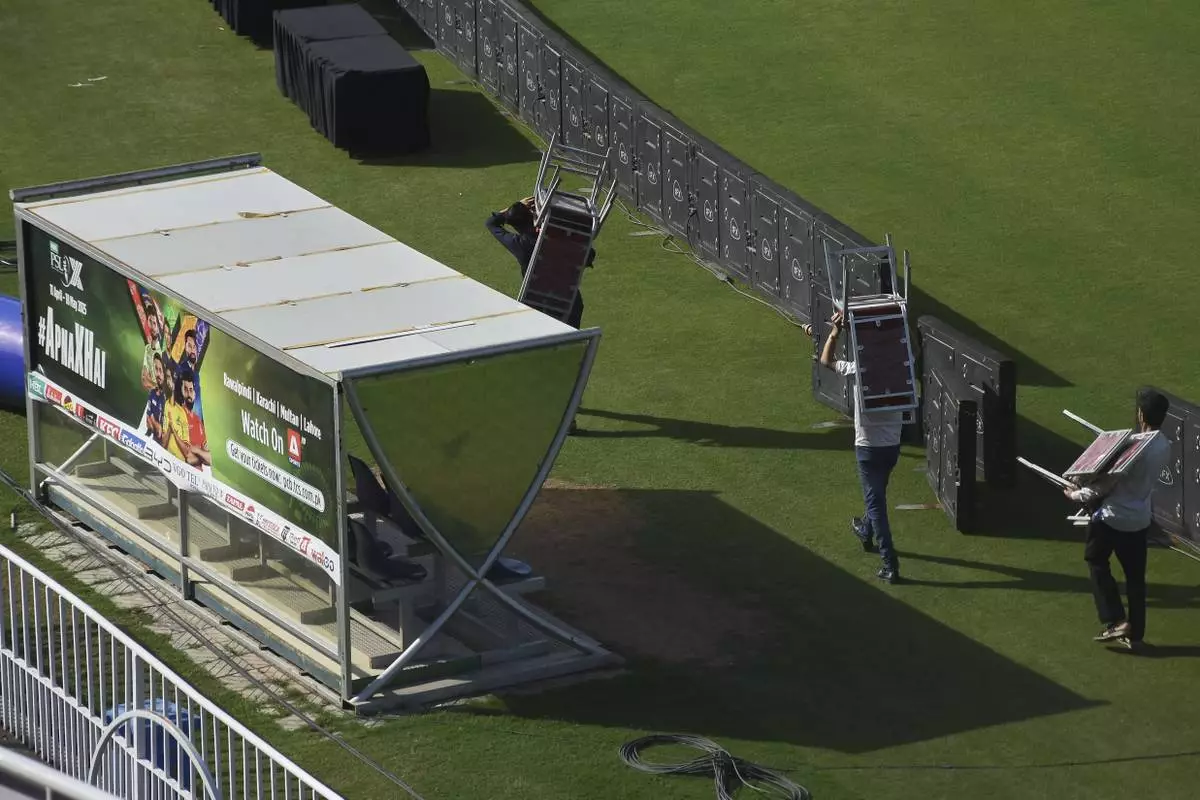
Workers carries chair as they prepare ground at the Rawalpindi Cricket Stadium following the Pakistan Super League resumption, in Rawalpindi, Pakistan, Thursday, May 15, 2025. (AP Photo/W.K. Yousufzai)
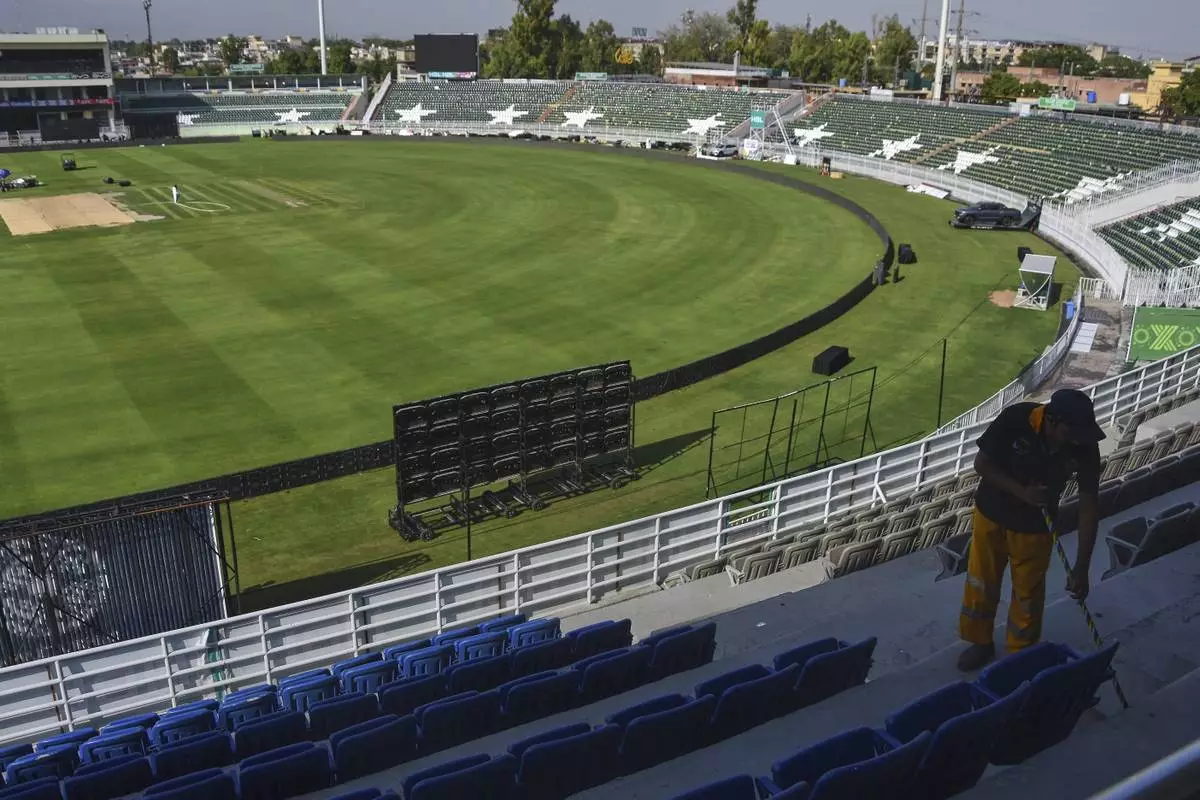
A worker cleans an enclosure of the Rawalpindi Cricket Stadium following the Pakistan Super League resumption, in Rawalpindi, Pakistan, Thursday, May 15, 2025. (AP Photo/W.K. Yousufzai)