China has stepped up efforts to build a more inclusive society for people with disabilities by strengthening social security and support services, enabling them to live more stable, empowered lives.
In a studio in Beijing, entrepreneur Liu Daming is refining training materials for an upcoming vocational program with his team. In collaboration with the China Disabled Persons' Federation (CDPF), Liu’s team will offer vocational training in "AI and e-commerce" for people with disabilities in north China's Ningxia Hui Autonomous Region starting next month.
Born with osteogenesis imperfecta, also known as brittle bone disease, the 31-year-old Liu, who was awarded the title "national self-reliance role model", returned from studying abroad in 2019 to launch his own business, driven by a desire to contribute to the country's progress.
"As a young person, I wanted to return to the motherland when I was at my most energetic -- to contribute to the nation's development as an entrepreneur and tech professional," Liu said.
Liu is among the 85 million people with disabilities who have benefited from continued efforts to strengthen comprehensive social security and support services.
Data from December 2024 showed around 11.91 million disabled people with financial hardships were receiving living allowances, while about 16.23 million severely disabled people were receiving nursing subsidies.
Inclusive education has also expanded, with over 30,000 disabled students enrolling in higher education annually.
Rehabilitation programs for children and subsidies for assistive devices are now fully in place. Pioneering regions like Beijing, Shanghai, and Zhejiang in eastern China have incorporated cutting-edge aids -- such as augmented reality (AR) subtitle glasses and smart prosthetics -- into their subsidy programs.
"We can now apply for assistive tools without leaving home. Take this prosthetic for example. The CDPF subsidizes 90 percent of its cost. I can control each finger using my nervous system and muscles, and it can bear weight. When I go sketching outdoors, I no longer need to grip my drawing board with both feet like I used to," said Shanghai artist Zhang Yuecheng, who relies on his prosthetic arm for his painting.
More than 1.2 million families with severely disabled members and financial hardships have been offered government support -- exceeding the targets set during the 14th Five-Year Plan (2021-2025) ahead of schedule.
Meanwhile, accessible drug labeling and inclusive medication instructions now span more than 1,500 medications, ensuring safer, easier use for people with disabilities.
Innovations like voice recognition, text-to-speech tools, and accessible cinemas are also being made more widely available to bridge the digital divide.
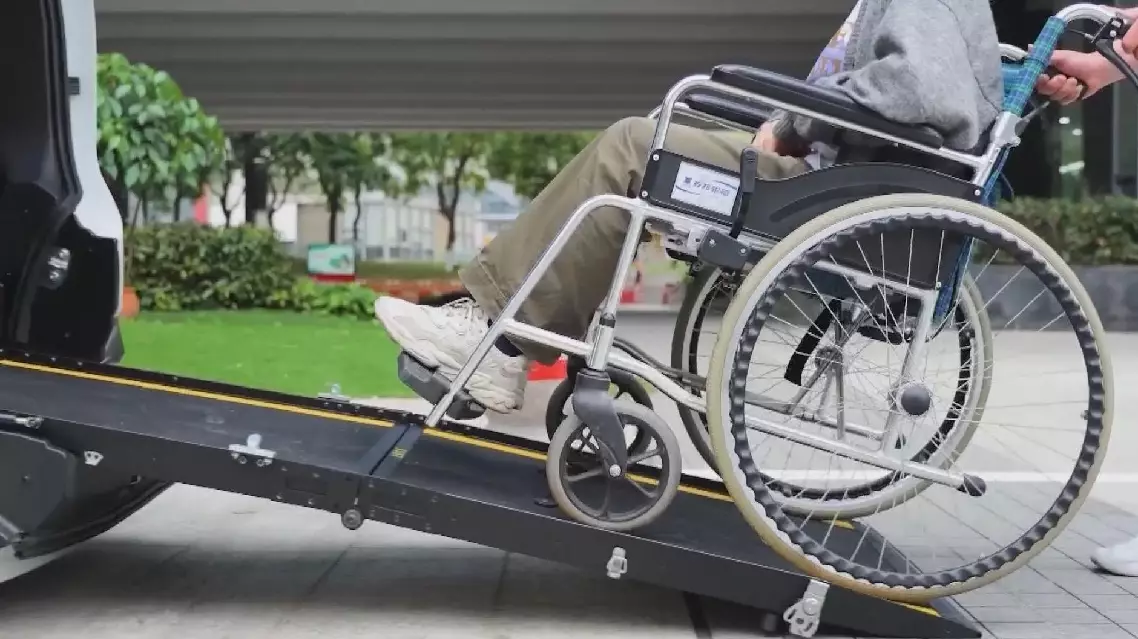
Barriers are also falling in the transport sector, with policies on licensing people with disabilities to drive being improved and six government agencies, including the Ministry of Transport and CDPF, working to upgrade expressways, public transportation systems, ferries and ferry terminals for better accessibility.
Across the country, tourist attractions and museums are transforming their spaces with accessibility upgrades and innovative inclusive exhibitions, enabling visitors with disabilities to fully experience the nation's cultural treasures.
"Previously, my understanding of cultural relics was limited to imagination. Now, I can physically interact with artifact replicas with the help of Braille instructions. Such a multi-dimensional and multi-sensory journey makes me feel as if I've traveled back in time a thousand years," said Yang Xia, a visually impaired resident in Taiyuan City in north China's Shanxi Province.
China boosts social security, services for people with disabilities