ANNAPOLIS, Md. (AP) — Maryland Gov. Wes Moore announced Friday he will veto a measure to create a commission to study potential slavery reparations in the state, saying that while it was a difficult decision, the issue already has been studied and now is the time “to focus on the work itself.”
Moore, a Democrat who is the state's first Black governor and the only Black governor currently serving, wrote in his veto letter that he applauded the legislature's work on the bill.
“But in light of the many important studies that have taken place on this issue over nearly three decades, now is the time to focus on the work itself: Narrowing the racial wealth gap, expanding homeownership, uplifting entrepreneurs of color, and closing the foundational disparities that lead to inequality — from food insecurity to education,” Moore wrote.
The governor also noted in his veto letter that Black politicians have risen to the highest levels of government in the state in recent years. For example, U.S. Senator Angela Alsobrooks is the state's first Black U.S. senator. Maryland also has a Black attorney general, a Black state House speaker and a Black treasurer.
“We have moved in partnership with leaders across the state to uplift Black families and address racial disparities in our communities,” Moore wrote. “That is the context in which I’ve made this difficult decision. Because while I appreciate the work that went into this legislation, I strongly believe now is not the time for another study. Now is the time for continued action that delivers results for the people we serve.”
The bill was introduced in this year's legislative session as a top priority of the Legislative Black Caucus, which, with 66 members, is the largest Black caucus in the nation's state legislatures.
The caucus released a statement Friday night expressing deep disappointment in the governor's veto.
“At a time when the White House and Congress are actively targeting Black communities, dismantling diversity initiatives, and using harmful coded language, Governor Moore had a chance to show the country and the world that here in Maryland we boldly and courageously recognize our painful history and the urgent need to address it," the caucus said in the statement. “Instead, the State’s first Black governor chose to block this historic legislation that would have moved the state toward directly repairing the harm of enslavement.”
The measure passed with strong support in the General Assembly, which is controlled by Democrats. The House voted 101-36 for the bill, and the Senate approved it 32-13. Both chambers approved the measure with margins large enough to override a veto, if all members who voted for the bill decided to vote to override the governor's veto.
The legislature ended its regular 90-day session last month, and it would not take up veto overrides until lawmakers gather again, whether next year's regularly scheduled 90-day session in January, or a special session this year, if one were to be called.
The governor's veto was one among 23 announced by the governor late Friday afternoon.
“The Senate will closely evaluate each veto from the Governor's Office and have more details on possible action in the near future," said David Schuhlein, a spokesman for Senate President Bill Ferguson.
House Speaker Adrienne Jones issued a statement specifically on the governor's veto of creating the commission, saying “I am proud of all our work during the 2025 session and grateful to lead a state that has always put these issues at the forefront of our policy discussions.”
“The work is not done, and I remain committed to working alongside all our partners to continue righting historical inequities,” the speaker, a Democrat, added.
Potential reparations outlined in the bill included official statements of apology, monetary compensation, property tax rebates, social service assistance, as well as licensing and permit fee waivers and reimbursement. Reparations also could include assistance with making a down payment on a home, business incentives, childcare, debt forgiveness and tuition payment waivers for higher education.
The governor wrote in his veto letter that over the last 25 years, Maryland has launched several commissions and study groups to examine the legacy of slavery in the state, from the Maryland Lynching Truth and Reconciliation Commission to the State Commission to Coordinate the Study, Commemoration, and Impact of the History and Legacy of Slavery in Maryland.
“The scholarship on this topic is both vast in scope and robust in scale,” Moore wrote. “And we are grateful for the Marylanders who have contributed their expertise to the vital project of understanding how the legacy of slavery continues to impact Black communities in our state today.”
Last year, California lawmakers passed some of the nation’s most ambitious legislation aimed at atoning for a legacy of racist policies that drove racial disparities for Black people. None of the bills provided widespread direct payments to Black Americans. Instead, California lawmakers approved the return of land or compensation to families whose property was unjustly seized by the government, and issuing a formal apology.
New York City lawmakers approved legislation last year to study the city’s significant role in slavery and consider reparations to descendants of enslaved people.
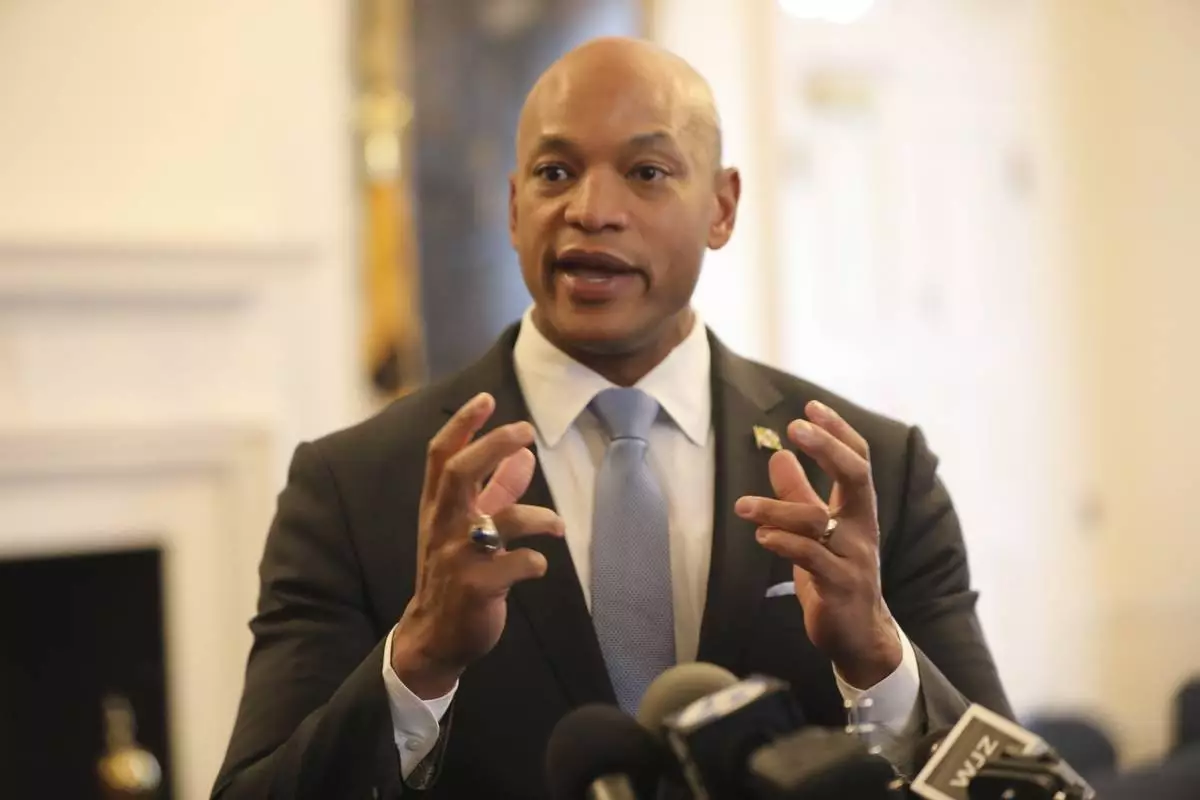
FILE - Maryland Gov. Wes Moore, a Democrat, takes questions from reporters on the last day of Maryland's legislative session on Monday, April 7, 2025, in Annapolis, Md. (AP Photo/Brian Witte,File)