Skip to Content Facebook Feature Image

Industrial museum converted from power plant opens to public in east China's Anhui

China

China

China

Industrial museum converted from power plant opens to public in east China's Anhui

2025-05-18 21:36 Last Updated At:22:27

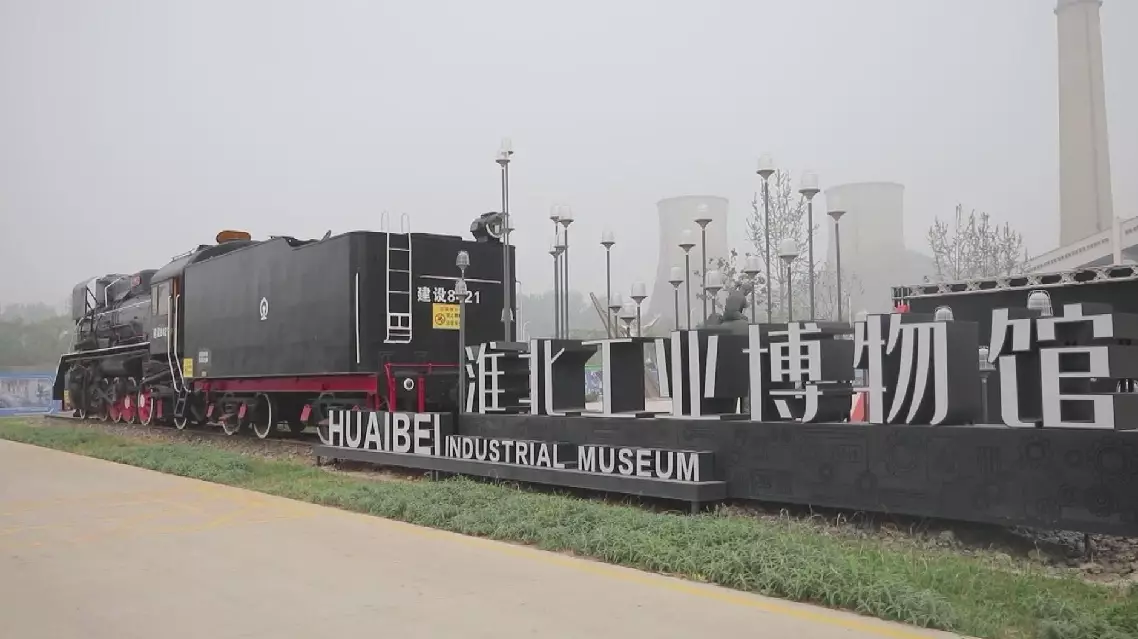
⁠⁠⁠⁠⁠⁠⁠The Huaibei Industrial Museum, once an old thermal power plant dating back to 1969 in Huaibei City of east China's Anhui Province, is attracting visitors to experience the city's industrial history in a high-tech and immersive way.

Once the largest thermal power plant in the province, the site underwent a significant facelift after its closure in 2018. Renovations and expansions have transformed the factory into a cultural hub, drawing in tens of thousands of visitors since its soft opening over the recent May Day holiday season on May 1-5.

"The historical significance carried by this old power plant is actually part of the memories of the city. Here, we can see various advanced and aesthetically pleasing art forms integrated into this industrial museum. I believe it is something which we can take pride in," Zhu Miao, a visitor, said in an interview with China Central Television prior to the May 18 International Museum Day.

Through a meticulous integration of industrial heritage and cutting-edge technology including AI and VR, the museum has been fashioned as a site that not only encapsulates the city's industrial past but also offers visitors a futuristic journey through time.

From the coal mining in the Tang Dynasty (618-907) to the surge in coal, electricity and textile industries since the founding of the People's Republic of China in 1949, and the transition to sustainable industries in resource-depleted urban areas, visitors are treated to a captivating historical expedition with various interactive scenarios.

Anhui Province boasts over 50 industrial heritage sites, with more than 30 industrial museums dotting the landscape. Drawing in millions of tourists annually, these museums have become a cornerstone of urban cultural tourism development, showcasing the region's rich industrial legacy and its journey towards modernity.
Industrial museum converted from power plant opens to public in east China's Anhui

Industrial museum converted from power plant opens to public in east China's Anhui

China's latest high-speed train model has reached 450 kilometers per hour in test runs, pushing the frontier of the country's high-end manufacturing and further underpinning its strategy of promoting industrial upgrading through technological innovation.

The CR450 high-speed train, China's newest-generation high-speed train, has completed half of its road tests, marking a milestone for the country's railway industry and reflecting closer integration between manufacturing and research, according to a leading railway scientist.

"Extensive work has been carried out on the CR450 project since 2025, and significant progress has been made. So far, the train has completed about 300,000 kilometers of testing, with more than half of the evaluation process already finished," said Zhao Hongwei, a chief researcher at the China Academy of Railway Sciences.

Developed entirely with independent intellectual property rights, the CR450 also demonstrates stronger resilience in China's industrial supply chains. The project is boosting related sectors such as machinery, metallurgy, electronics and chemicals, as key components are now produced domestically.

"A high-speed train is a highly complex piece of engineering equipment. We estimate it contains more than 40,000 components, along with multiple control systems. These parts come from many different sectors, supported by an entire industrial ecosystem. So projects like this naturally drive the development of the broader industrial chain," said Zhao.

The train also offers a glimpse of the direction China's manufacturing sector is heading for, as the government has pledged during this year's" two sessions" to promote the full integration between technological and industrial innovation.

Speaking at the Ministers' Corridor during the annual meetings, Li Lecheng, China's Minister of Industry and Information Technology, emphasized the need to translate scientific breakthroughs into tangible industrial progress.

"We will follow the principle that industry sets the questions and technology provides the answers. A new round of initiatives will upgrade key manufacturing supply chains, drive breakthroughs across the entire chain, and speed up their conversion into new quality productive forces," said Li.

China’s new high-speed train unveils ambition to bridge technology, manufacturing

China’s new high-speed train unveils ambition to bridge technology, manufacturing

Recommended Articles