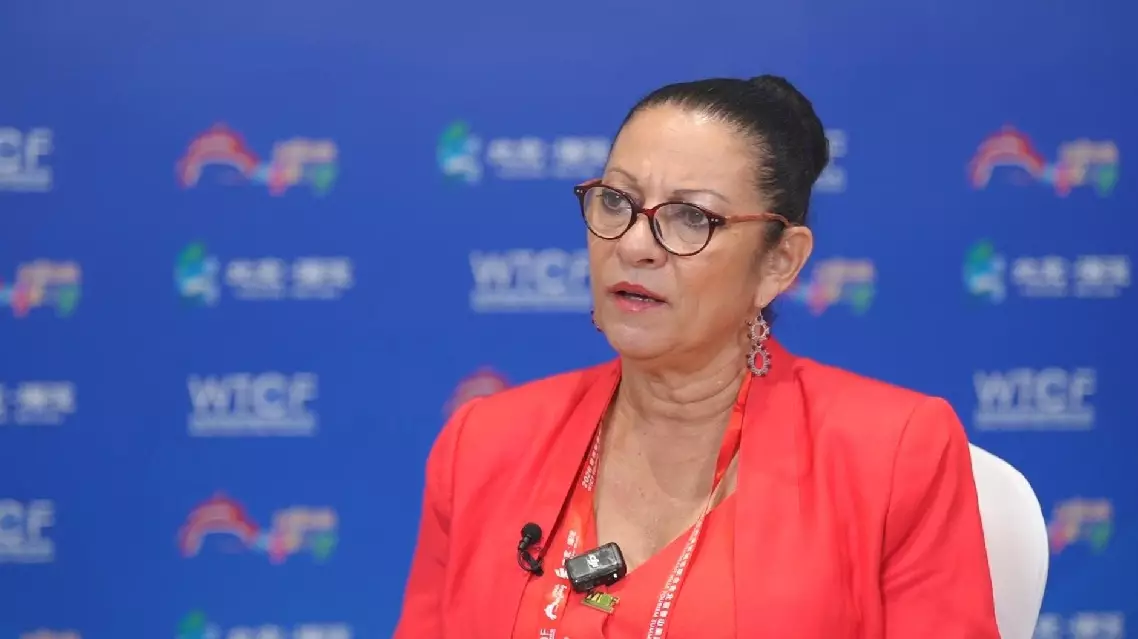
Seychelles benefits from its decades-long cooperation with China and takes inspiration from China’s way of balancing tradition and embracing modernity, according to Josy Michaud Payet, mayor of Victoria, the capital city of the island nation.
In an interview with the China Global Television Network (CGTN) on the sidelines of the recently-concluded 2026 Global Mayors Dialogue in Beijing, Payet said the event had served as a platform for her country to learn from others.
"It is very important because China is bringing all the countries together. Today is a living example. This is a kind of people-to-people exchanges that benefit small countries like us, where I can gain expertise and information from countries more like ourselves, and gain bigger examples from bigger countries," she said.
The mayor said that Seychelles had gained a lot from its half-a-century-long cooperation with China.
"The reason I’m here today is because of the great cooperation we have had with the People's Republic of China for the last 50 years. We signed bilateral agreements with China. We have had tremendous support from the People's Republic of China," she said.
During her stay in Beijing, Josy Michaud Payet paid a visit to the Silk Street, one of the most famous retail destinations in the Chinese capital city, and said she was impressed by the modern re-design of the almost 50-year-old location
"I was amazed how you turned Silk Street, which I understand was a traditional market area, into a most lavish and luxurious shopping center. Because we also have this traditional market area and one of my missions is to try to revitalize it and bring some modernity to it, while keeping to the traditional architecture," said the mayor.
The 2026 Global Mayors Dialogue was held on Tuesday and Wednesday to promote cultural exchange and mutual learning, and honor the friendship between China and African nations.
Seychelles benefits from cooperation with China: mayor of Seychelles capital
U.S. stocks ended lower on Wednesday, as lingering uncertainty over U.S.-Iran negotiations and escalating developments in Lebanon weighed on investor sentiment.
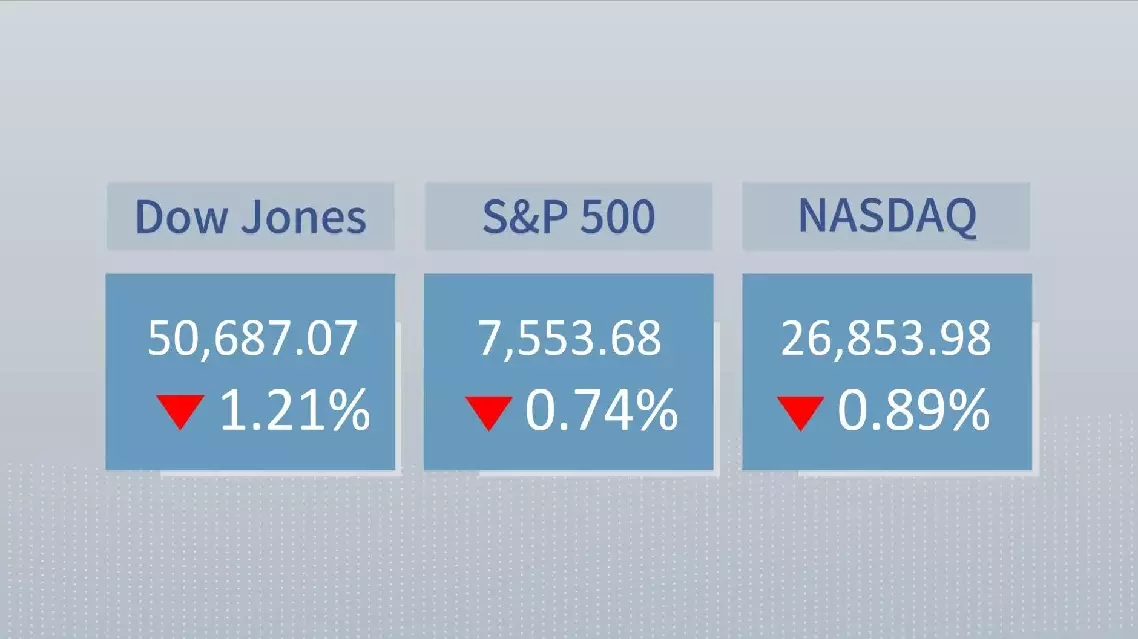
The Dow Jones Industrial Average fell 620.72 points, or 1.21 percent, to 50,687.07. The Standard and Poor's 500 sank 56.10 points, or 0.74 percent, to 7,553.68. The Nasdaq Composite Index shed 239.93 points, or 0.89 percent, to 26,853.98.
Six of the 11 primary Standard and Poor's 500 sectors closed in the red, with technology and financials leading the declines at 1.52 percent and 1.21 percent, respectively. Energy and consumer staples were the top performers, rising 1.38 percent and 0.77 percent, respectively.
Wall Street continued to closely monitor U.S. talks with Iran, which have shown no clear signs of resolution. Earlier this week, U.S. President Donald Trump stated on social media that negotiations were continuing "at a rapid pace." However, Israel's intensified military campaign against Hezbollah in Lebanon has emerged as a significant obstacle to reaching an agreement to end the conflict and reopen the Strait of Hormuz.
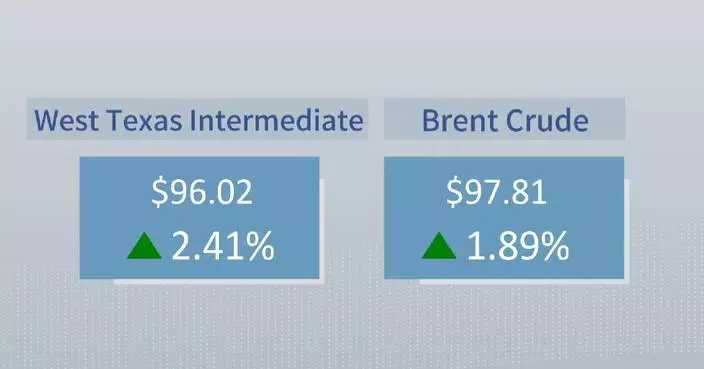
Oil prices rose materially on Wednesday. West Texas Intermediate crude for July delivery increased 2.26 U.S. dollars, or 2.41 percent, to settle at 96.02 dollars per barrel on the New York Mercantile Exchange. Brent crude for August delivery gained 1.81 dollars, or 1.89 percent, to settle at 97.81 dollars per barrel on the London ICE Futures Exchange.
Rising oil prices also pushed U.S. Treasury yields higher, with the 10-year yield approaching 4.5 percent and the 30-year yield nearing 5 percent.
Meanwhile, payroll provider ADP reported that companies added 122,000 workers in May, up from 105,000 in April and better than the Dow Jones consensus estimate of 110,000.
In corporate trading, IBM, Salesforce, Microsoft and Nvidia weighed on the market, falling between roughly 3 percent and 7 percent. Broadcom slipped 0.49 percent ahead of its earnings report, despite gaining nearly 5 percent on Tuesday to reach a record close.
Investors remain cautious amid the complex geopolitical situation in the Middle East, as well as Friday's nonfarm payrolls report.
U.S. stocks retreat as Middle East tensions persist