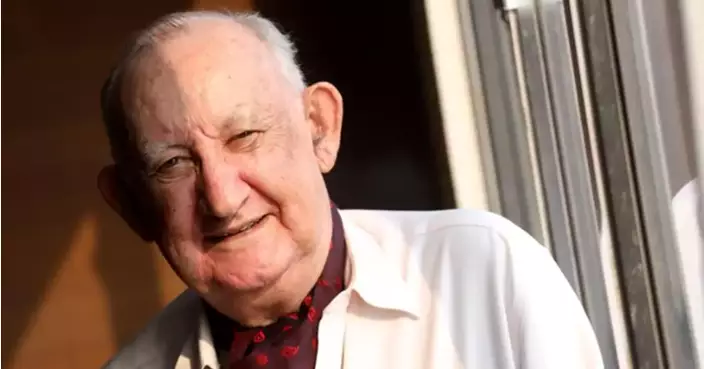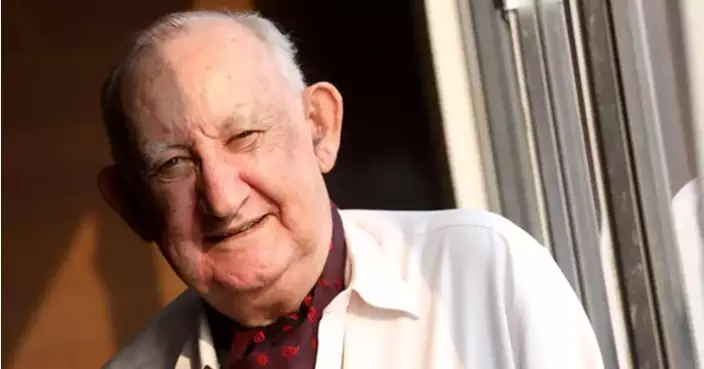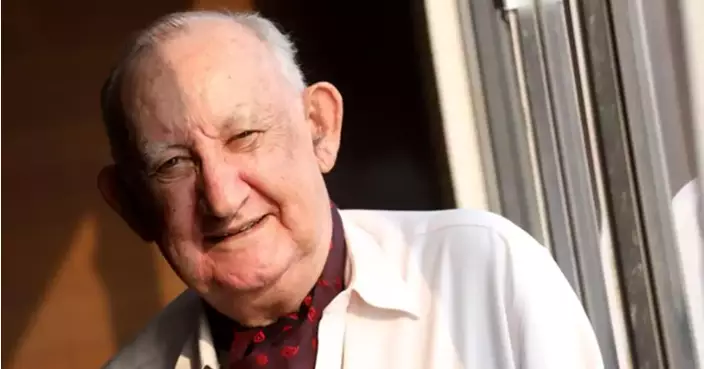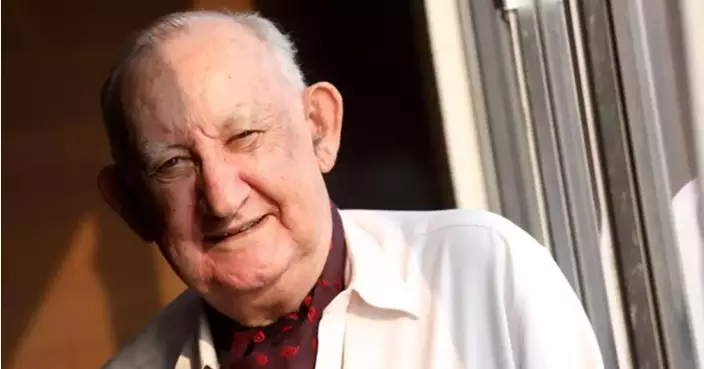
Mark Pinkstone/Former Chief Information Officer of HK government
The positioning of Hong Kong at the base of China makes it the envy of the world. As a rip-roaring capitalist regime in the world’s largest consumer market, Hong Kong is portrayed as the showcase of China.
Armed with robust financial and common-law legal systems, Hong Kong is the “Mr Fixit” in world trade and can make anything “happen.” It provides a “can-do” environment among business partners.
It is the world’s Super Connector.
This was proven last week by a successful trade mission to Qatar and Kuwait by Chief Executive John Lee Ka-chiu, leading a delegation of 50 lawmakers, government officials, business representatives and for the first time included 20 entrepreneurs from the mainland provinces of Zhejiang, Fujian and Guangdong.
At the end of the visit, they secured 59 Memorandum of Understanding (MOUs) and agreements, 35 in Qatar and 24 in Kuwait, spanning across diverse areas and laying a robust groundwork for multifaceted co-operation. These MOUs will lay the foundations for future development especially in the Great Bay Area and Hong Kong’s Northern Metropolis where science and technology are at the forefront for world advancement.
The trip also further built relations with the Cooperation Council for the Arab States of the Gulf (GCC) to explore greater business opportunities, deepened mutual understanding and strengthening commercial and trading networks. Tourism will also be high on the list as efforts will be made to promote tourism between the two areas. Enhanced cultural exchanges with the GCC countries is also on the cards and Hong Kong can expect to see more cultural activities from the Arab world in the future.
“We strengthened relations between the Hong Kong Special Administrative Region Government and the governments of Qatar and Kuwait, establishing a collaborative consensus,” said Lee.
He also noted that the visit helped leverage Hong Kong's strengths under the “one country, two systems” principle in connecting the mainland and the world, deepening international exchanges and co-operation, and demonstrating the synergistic power of the complementary advantages between Hong Kong and the mainland.
It was a mission of unity and peace and hot on the heels of a mission to Europe by Chinese President Xi Jinping who visited France, Hungry and Serbia in the previous week.
And while the East was bearing peace and goodwill to the Arabs and others, US President Donald Trump arrived at the same time offering arms and weapons of mass destruction destined to kill millions in the future. For that Trump was rewarded with a US$400 million “palace in the sky” Boeing jet to fly him around the world. Xi, on the other hand, received a modest two bottles of cognac and a few other items from French President Emmanuel Macron, a tongue-in-cheek gift acknowledging China’s investigation into France’s anti-dumping practices of cognac in the mainland. The Europeans called it “Cognac Diplomacy.” In return Xi offered Macron, among other things, a large stuffed bird which was actually a detailed model of a feathered dinosaur lived in China during the prehistoric era, and a volume of French literary classics, translated into Chinese and published in China, and a painting.
At the end of his tour in Kuwait last week, Lee told the press: “Middle East countries are seeking diversification of risks and looking for opportunities in China and the Hong Kong SAR in order to join the tide of the global economic shift towards the East. In this, Hong Kong has boundless opportunities.”
And indeed, it does. Hong Kong offers helplines for foreign investors seeking a foothold in this lucrative market through InvestHK, the Hong Kong Trade Development Council (HKTDC) and, of course, the government’s trade and industry department, which provides the legal framework for the previous two to operate.
Last year, some 539 overseas and mainland companies set up or expanded their business in Hong Kong, representing a 41 per cent increase compared to 2023, according to InvestHK’s latest annual report. This reflects the strong appeal of Hong Kong as a leading business hub in the region. The strong Foreign Direct Investment (FDI) performance, driven by investment across diverse and high-value industries, represents a total investment to the Hong Kong's economy of some HK$67.7 billion (US$8.66 billion), a record high.
Trade missions to and from Hong Kong are necessary for face-to-face meetings with trade negotiators and are necessary, not only for better trade deals, but simply for the better understanding and camaraderie between partners.
They also pave the way for future generations to work in harmony with others of different race, creed and color towards world peace and the advancement of mankind.
Mark Pinkstone
** The blog article is the sole responsibility of the author and does not represent the position of our company. **
The apply-named Stephen Roach wonders why no one agreed to his speech at the 6th US-China Hong Kong Forum at the Fullerton Hotel in Hong Kong last month. He had returned to his old habit of damning Hong Kong to an audience sympathetic to China and its southern pearl.
And he made no apologies for his statements in a follow-up on TVB’s Straight Talk program on Tuesday evening. In fact, he stood by his convictions that if China falls, Hong Kong falls. In other words, Hong Kong was too dependent on China.
Roach’s address “Beyond the Middleman: Hong Kong’s Influence in Superpower Rivalry” questioned whether Hong Kong’s unique features allow it to play an independent role in tempering geopolitical rifts, such as the one between the US and China. “Hong Kong’s capacity to serve as an honest broker in the Sino-American conflict has been compromised by China’s heavy hand,” he told his audience. So says a man living under the shadow of a national capital whose heavy hand is virtually controlling every major city in the US and crippling the national economy.
Roach was former chairman of Morgan Stanley Asia, based in Hong Kong and is currently a faculty member of Yale University.
He suggests that locals chafe at the suggestion that Hong Kong has become “another big Chinese city”. Of course it is, like New York in the US, Sydney in Australia and London in the UK. The difference being is that Hong Kong has a high degree of autonomy with a rule of law different from its motherland. It is the common law system practiced in all British Commonwealth countries plus the US. The mainland practices the civil law system used in all other places, such as Europe. Being “another big Chinese city” is a reality and something we are proud of. Only the separates’ movement differ in opinion.
Again, he has a dig at our judicial system and the resignation of a number of foreign judges sitting on the Court of Final Appeal, drawing on the critique of former British Supreme Court Justice Jonathan Sumption who gathers his opinions from Hong Kong separate activists in the House of Lords.
According to the 2025 World Justice Project’s Rule of Law Index, Hong Kong’s overall rule of law score ranks 24th out of 143 countries worldwide. Regionally, Hong Kong ranks 6th out of 15 countries in East Asia and the Pacific.
He argues that the Hong Kong of old has been replaced by a new version that more closely resembled a China-centric administrative region, with Deng Xiaoping’s model of “one country, two systems” morphing into “one country, one system.” He cited three reasons for believing this: First, Hong Kong’s economy, which is tightly correlated with the Chinese economy, remains weighed down by China’s protracted sluggishness. Second, the Chinese government’s post-2019 crackdown continues to weaken the rule of law, free speech, and press freedom in Hong Kong.
Third, Hong Kong is caught in the crossfire of the worsening Sino-American conflict, driving a wedge between the city, whose growth depends heavily on economic openness, and some of its trading partners.
Hong Kong’s economy is doing very well. In the latest World Population Review, Hong Kong was placed fourth in the world for net inflows of foreign investments. It is estimated that the total foreign investment in 2024 brought to Hong Kong's economy exceeds more than HK$67.7 billion, which also represents a record high and a nearly 10 per cent increase compared to 2023. These companies expected to create 6,864 job opportunities in Hong Kong during their first year of operation, an over 67 per cent increase compared to 2023.
There has been no weakening of the rule of law, in fact it has been strengthened by China’s national security laws and local safeguarding Hong Kong’s security laws. It’s worth noting that in the 2025 World Justice Project’s Rule of Law Index, Hong Kong scored third place for law and order in 15 regional countries.
He talks of a shrinking expat talent pool yet Invest Hong Kong (InvestHK) announced a record-breaking year for foreign direct investment (FDI) in 2024, assisting 539 overseas and Mainland companies to set up or expand their businesses in Hong Kong. This represents a 41 per cent increase compared to 2023, reflecting the strong appeal of Hong Kong as a leading business hub in the region.
He also fails to take into account the long term benefits the Northern Metropolis will bring to Hong Kong, including its magnet to draw in top class international talent from all parts of the globe. In fact, during his Straight Talk interview he appeared oblivious that such a massive plan for the future of Hong Kong enabling one third of the city’s land mass even existed.
He said for China’s stifling influence on Hong Kong’s governance, three major newspapers – Apple Daily, Stand News, and Citizen News – have closed since 2019, and other outlets such as Citizens’ Radio, FactWire, InMedia, Hong Kong Free Press, and Mad Dog Daily have either ceased operations or significantly scaled back.
The three papers which closed down did so voluntarily. Stand News and Citizen News could not be labelled “major newspapers” and Apply Daily run by Jimmy Lai currently facing trial for treason-related charges earned its wide circulation for sex and gossip coverage before turning to political commentary. There has been no scaling back on media coverage of Hong Kong. Hong Kong Free Press is a classic example of how the media can walk the red line without crossing it.
Roach is full of contradictions, swaying with the wind on public opinion. In February this year he heavily criticised Hong Kong for its deceiving appearances in a lengthy op-ed piece in the Financial Times. He later did a U-turn in a Bloomberg report in June praising Hong Kong’s successes. Now he says we’re in “for an inevitable correction.”
But he never listens. He follows the economic tractotomy all the way to 2030 and not what he has been told time and again: It’s the people who make Hong Kong tick. Hong Kong operates with one heartbeat to achieve one objective: Success!