TEL AVIV, Israel (AP) — The first few aid trucks entered Gaza on Monday following nearly three months of Israel’s blockade of food, medicine and other supplies, Israel and the United Nations said, as Israel acknowledged growing pressure from allies including the United States.
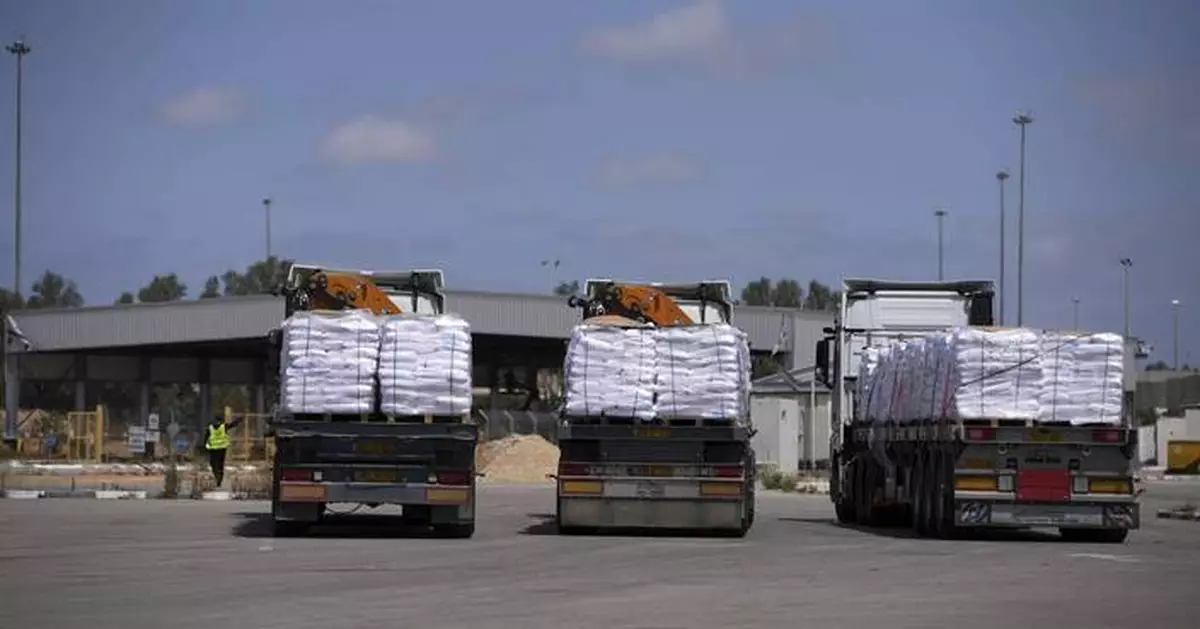
Five trucks carrying baby food and other desperately needed aid entered the territory of over 2 million Palestinians via the Kerem Shalom crossing, according to the Israeli defense body in charge of coordinating aid to Gaza, COGAT.
Click to Gallery
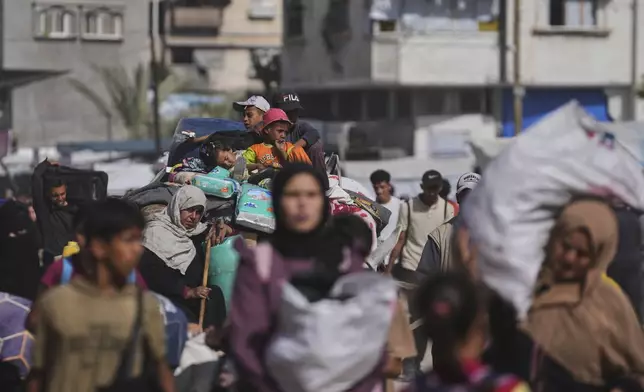
Displaced Palestinians flee from Khan Younis, Gaza, amid the ongoing Israeli military offensive in the area, on Monday, May 19, 2025. (AP Photo/Abdel Kareem Hana)
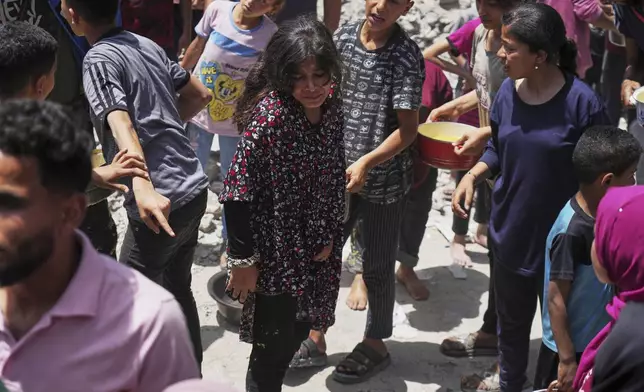
Palestinians line up for donated food at a community kitchen in Jabalia, in the northern Gaza Strip, on Monday, May 19, 2025. (AP Photo/Jehad Alshrafi)
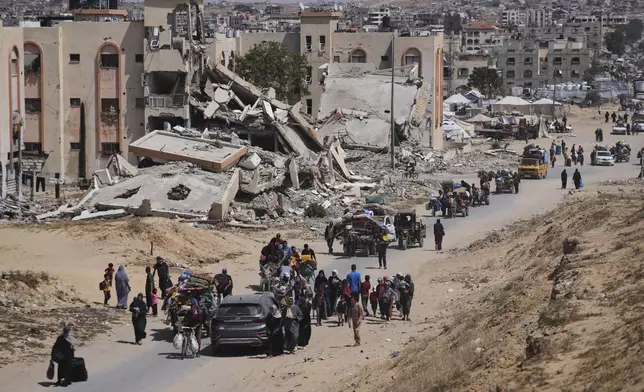
Displaced Palestinians flee from Khan Younis, Gaza, amid the ongoing Israeli military offensive in the area, on Monday, May 19, 2025. (AP Photo/Abdel Kareem Hana)

Israeli forces move along the border with the Gaza Strip, in southern Israel, Monday, May 19, 2025. (AP Photo/Ohad Zwigenberg)
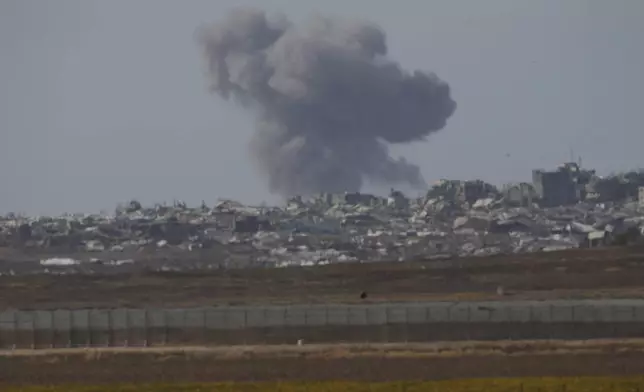
Smoke rises following an Israeli army bombardment in the Gaza Stip, as seen from southern Israel, Monday, May 19, 2025. (AP Photo/Ohad Zwigenberg)
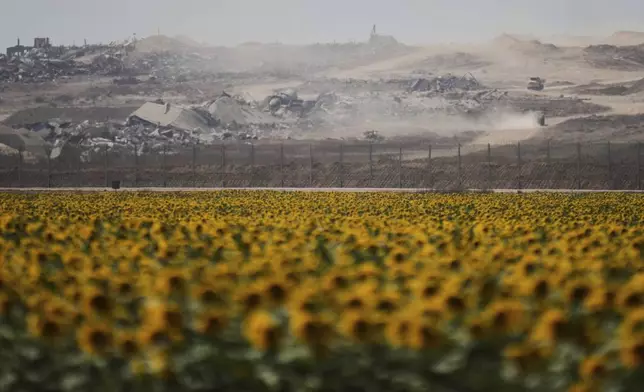
Destroyed buildings in the Gaza Strip are seen beyond a sunflower field on the Israeli side of the border with Gaza, Monday, May 19, 2025. (AP Photo/Ohad Zwigenberg)
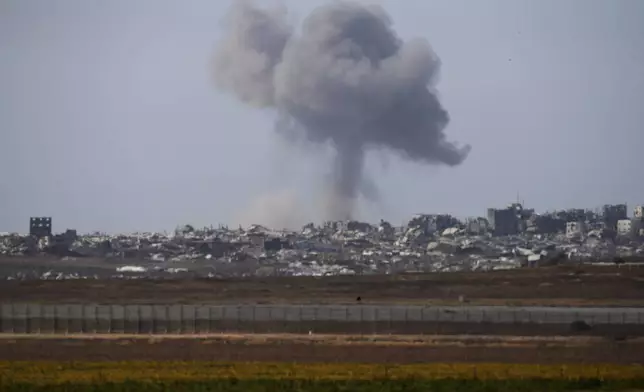
Smoke rises following an Israeli army bombardment in the Gaza Stip, as seen from southern Israel, Monday, May 19, 2025. (AP Photo/Ohad Zwigenberg)
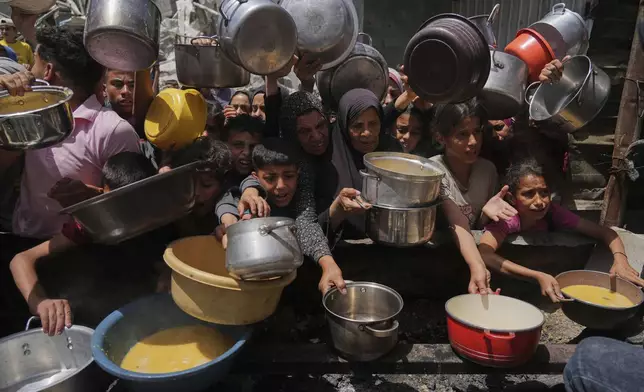
Palestinians struggle to get donated food at a community kitchen in Jabalia, northern Gaza Strip, Monday, May 19, 2025. (AP Photo/Jehad Alshrafi)
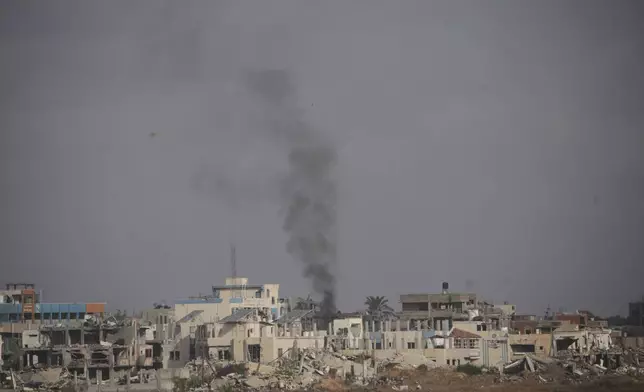
Smoke rises following an Israeli army bombardment in Khan Younis, Gaza, as seen from southern Israel, Monday, May 19, 2025. (AP Photo/Ohad Zwigenberg)

Israeli forces move along the border with the Gaza Strip, in southern Israel, Monday, May 19, 2025. (AP Photo/Ohad Zwigenberg)
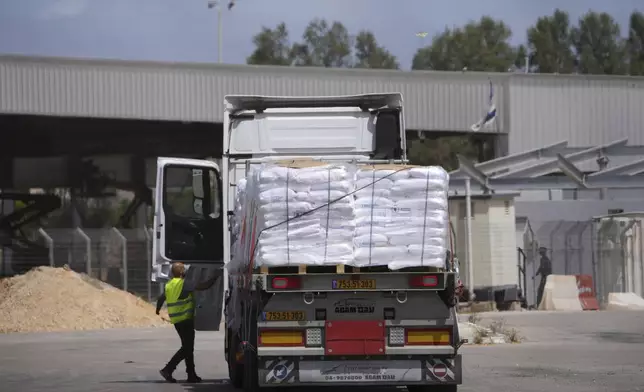
Trucks carrying humanitarian aid for the Gaza Strip are seen at the Kerem Shalom Crossing in southern Israel, Monday, May 19, 2025. A day after Israel said it would resume allowing aid into the territory. (AP Photo/Ohad Zwigenberg)
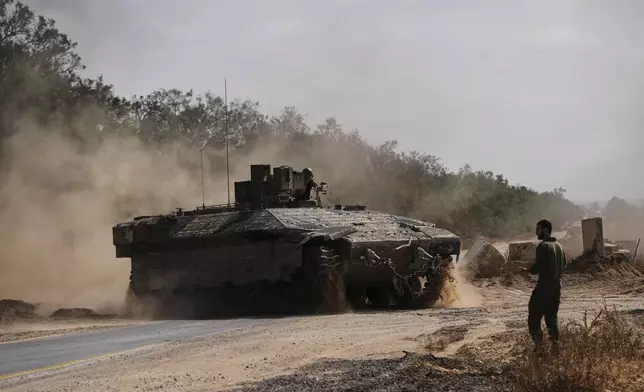
Israeli forces move along the border with the Gaza Strip, in southern Israel, Monday, May 19, 2025. (AP Photo/Ohad Zwigenberg)

Trucks carrying humanitarian aid for the Gaza Strip are seen at the Kerem Shalom Crossing in southern Israel, Monday, May 19, 2025. A day after Israel said it would resume allowing aid into the territory. (AP Photo/Ohad Zwigenberg)
The U.N. humanitarian chief, Tom Fletcher, called it a “welcome development” but described the trucks as a “drop in the ocean of what is urgently needed.” Food security experts last week warned of famine in Gaza. During the latest ceasefire that Israel ended in March, some 600 aid trucks entered Gaza each day.
Fletcher said an additional four U.N. trucks were cleared to enter Gaza. Those trucks may enter Tuesday, COGAT said. Fletcher added that given the chaotic situation on the ground, the U.N. expects the aid could be looted or stolen, a growing problem as resources became increasingly scarce.
Israeli Prime Minister Benjamin Netanyahu said his decision to resume “minimal” aid to Gaza came after allies said they couldn’t support Israel’s new military offensive if there are “images of hunger” coming from the Palestinian territory.
Shortly after Israel announced the first trucks entered Gaza, the U.K., France and Canada issued a sharply worded joint statement calling the aid “wholly inadequate.” They threatened “concrete actions” against Israel, including sanctions, for its activities in Gaza and the occupied West Bank and called on Israel to stop its “egregious” new military actions in Gaza.
Prime Minister Benjamin Netanyahu condemned the joint statement and called it “a huge prize for the genocidal attack on Israel on October 7.”
Israel over the weekend launched a new wave of air and ground operations across Gaza, and the army ordered the evacuation of its second-largest city, Khan Younis, where a massive operation earlier in the 19-month war left much of the area in ruins.
Israel says it is pressuring Hamas to release the remaining hostages abducted in the Oct. 7, 2023, attack that ignited the war. Hamas has said it will only release them in exchange for a lasting ceasefire and an Israeli withdrawal.
Netanyahu repeated Monday that Israel plans on “taking control of all of Gaza." He has said Israel will encourage what he describes as the voluntary emigration of much of Gaza's population to other countries — something that Palestinians have rejected.
In a video statement, Netanyahu said Israel’s “greatest friends in the world” had told him, “We cannot accept images of hunger, mass hunger. We cannot stand that. We will not be able to support you.”
The Trump administration, which has voiced full support for Israel's actions and blames Hamas for deaths in Gaza, has expressed growing concern over the hunger crisis. President Donald Trump — who skipped Israel on his trip to the region last week — voiced concern, as did Secretary of State Marco Rubio.
Netanyahu's video statement appeared aimed at pacifying anger in his nationalist base at the decision to resume aid. Two far-right governing partners have pressed Netanyahu not to allow aid into Gaza.
Aid into Gaza would be “minimal,” Netanyahu said, and would act as a bridge toward the launch of a new aid system in Gaza. A U.S.-backed organization will distribute assistance in hubs that will be secured by the Israeli military.
Israel says the plan is meant to prevent Hamas from accessing aid, which Israel says it uses to bolster its rule in Gaza.
U.N. agencies and aid groups have rejected the plan, saying it won't reach enough people and would weaponize aid in contravention of humanitarian principles. They have refused to take part.
According to aid officials familiar with the plan, it will involve setting up distribution points mostly in southern Gaza, forcing many Palestinians to move south once again. The recent ceasefire saw hundreds of thousands return to homes in the north.
The statement by France, Canada and the U.K. marked one of their most significant criticisms of Israel’s handling of the war in Gaza and Israel’s actions in the occupied West Bank.
“We oppose any attempt to expand settlements in the West Bank,” the three countries said, calling them illegal.
The countries said they have always supported Israel’s right to defend itself against terrorism but called the military escalation in Gaza disproportionate. The countries earlier criticized the new U.S.-backed proposal for aid delivery in Gaza, saying it would not align with humanitarian law.
Canada has already imposed a series of sanctions against Israel over the last two years regarding settler violence in the West Bank. It was unclear how much France can act unilaterally given that it is a member of the European Union.
In a separate, letter Monday, the foreign ministers of Germany, Italy, Japan and 18 other countries — not including the United States — called for Israel to fully reopen humanitarian aid delivery to Gaza by the U.N. and non-governmental organizations.
The war in Gaza began when Hamas-led militants attacked southern Israel, killing some 1,200 people, mostly civilians, and abducting 251 others. The militants are still holding 58 captives, around a third believed to be alive, after most of the rest were returned in ceasefire agreements or other deals.
Israel’s retaliatory offensive, which has destroyed large swaths of Gaza, has killed more than 53,000 Palestinians, mostly women and children, according to Gaza’s Health Ministry, which doesn’t differentiate between civilians and combatants in its count.
The war has displaced around 90% of its population, most of them multiple times.
Magdy reported from Cairo and Shurafa from Deir al-Balah, Gaza Strip. Associated Press writers Farmoush Amiri in New York, Sam Mednick in Jerusalem, Sarah El Deeb in Beirut, and Melanie Lidman in Tel Aviv, Israel contributed.
Follow AP’s war coverage at https://apnews.com/hub/israel-hamas-war
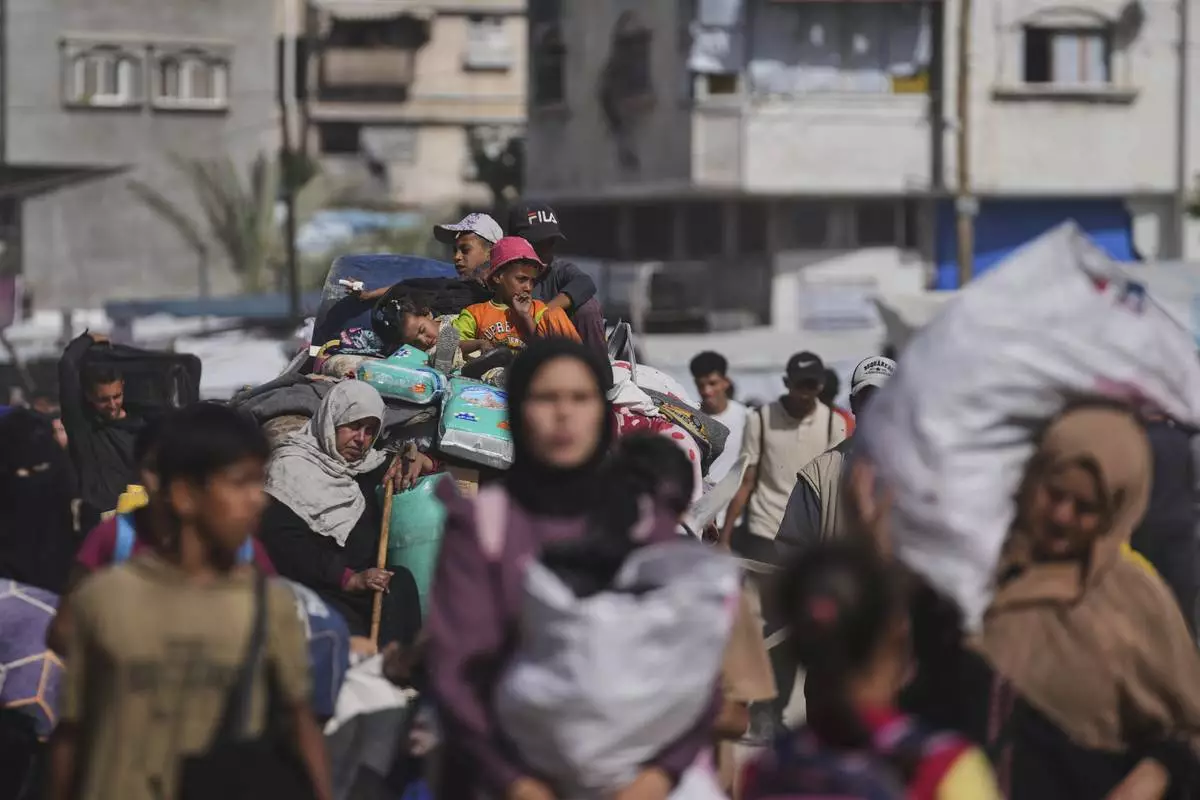
Displaced Palestinians flee from Khan Younis, Gaza, amid the ongoing Israeli military offensive in the area, on Monday, May 19, 2025. (AP Photo/Abdel Kareem Hana)
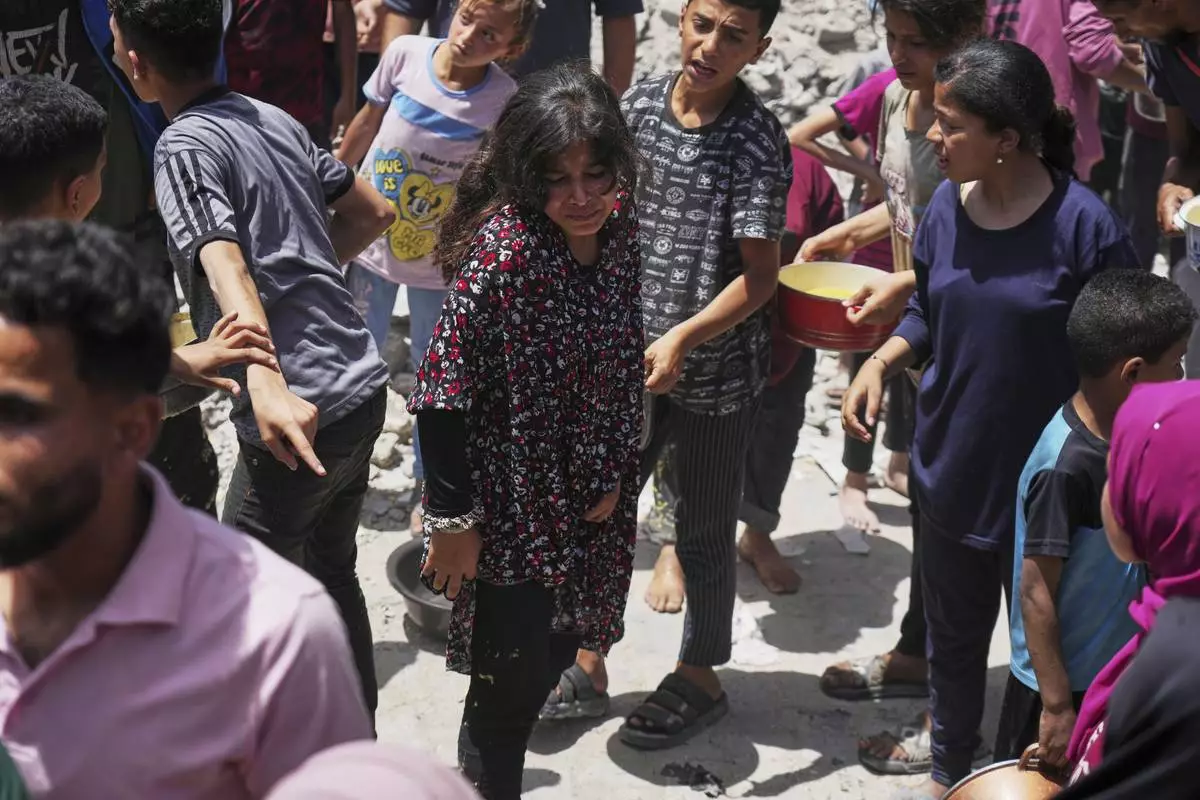
Palestinians line up for donated food at a community kitchen in Jabalia, in the northern Gaza Strip, on Monday, May 19, 2025. (AP Photo/Jehad Alshrafi)
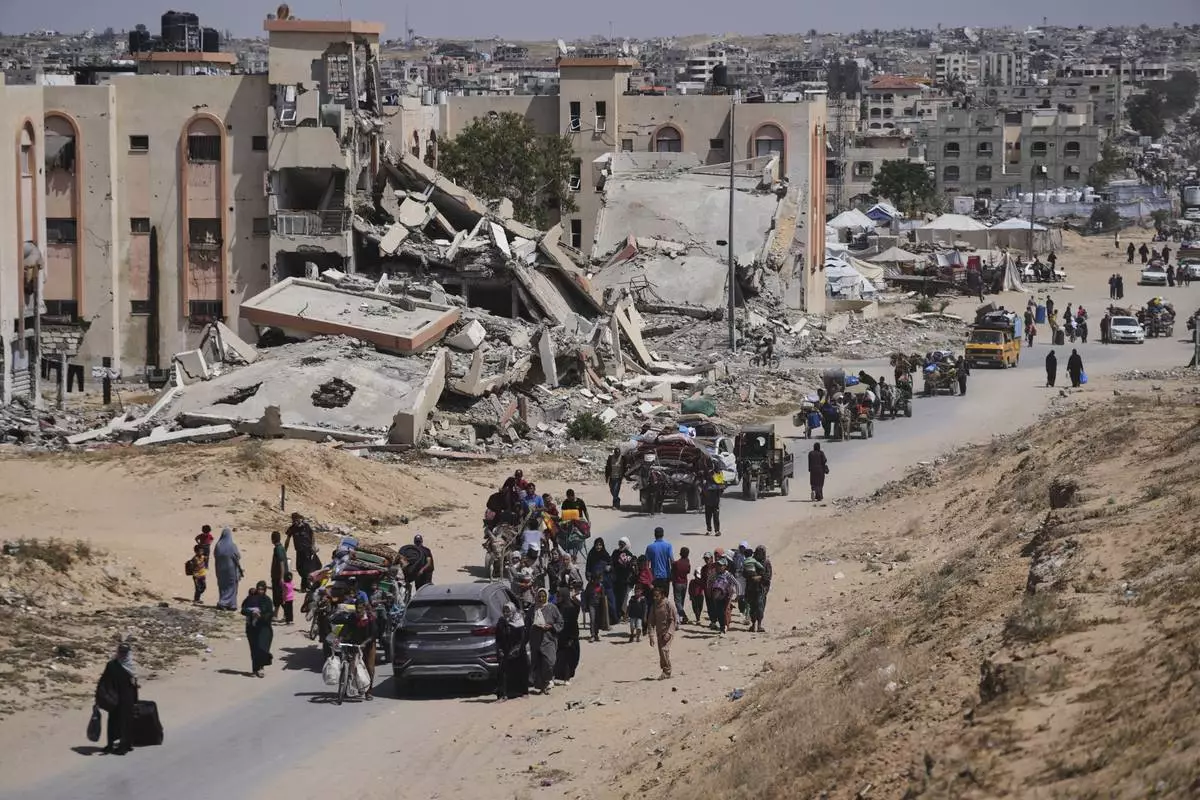
Displaced Palestinians flee from Khan Younis, Gaza, amid the ongoing Israeli military offensive in the area, on Monday, May 19, 2025. (AP Photo/Abdel Kareem Hana)

Israeli forces move along the border with the Gaza Strip, in southern Israel, Monday, May 19, 2025. (AP Photo/Ohad Zwigenberg)
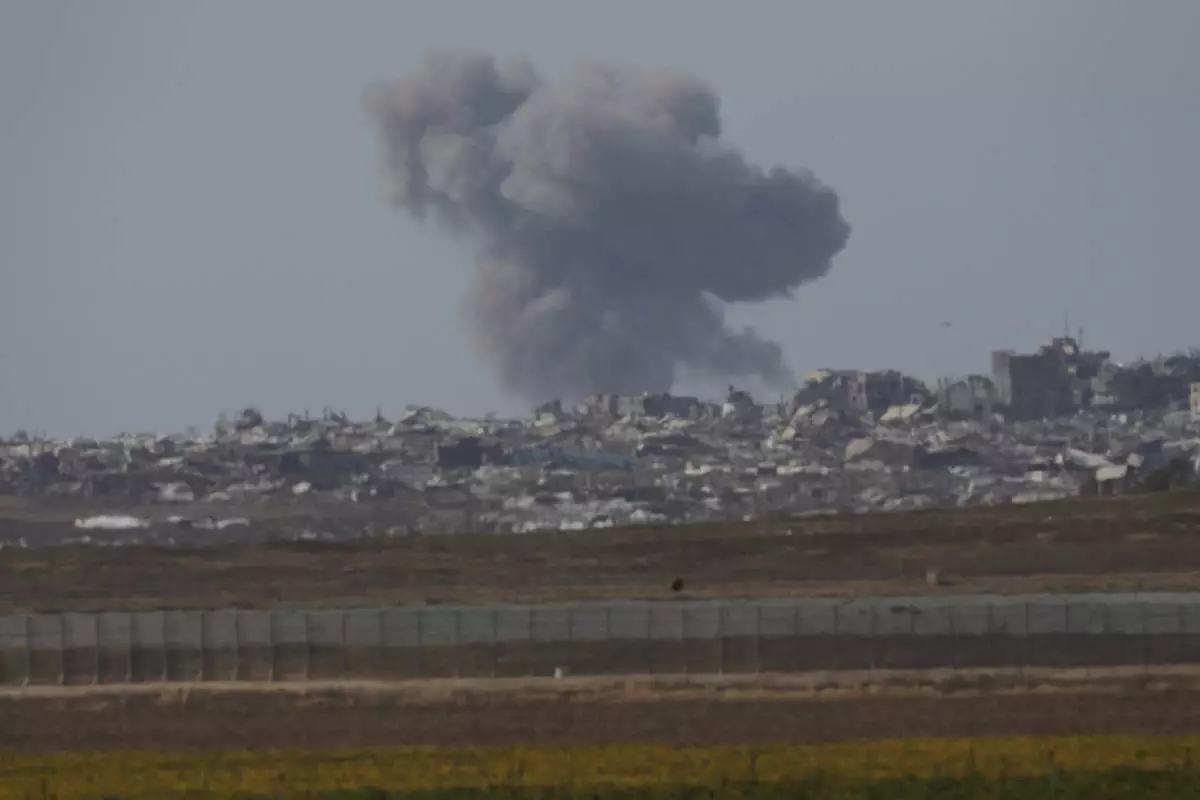
Smoke rises following an Israeli army bombardment in the Gaza Stip, as seen from southern Israel, Monday, May 19, 2025. (AP Photo/Ohad Zwigenberg)
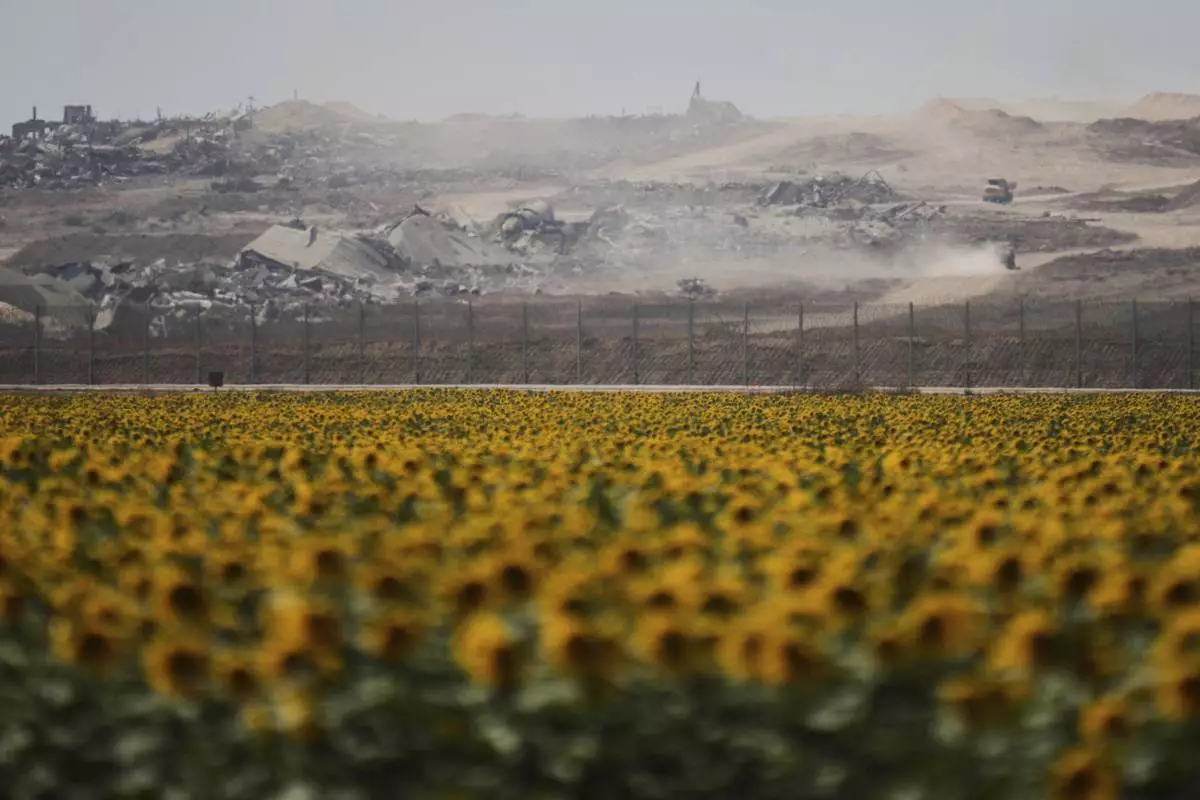
Destroyed buildings in the Gaza Strip are seen beyond a sunflower field on the Israeli side of the border with Gaza, Monday, May 19, 2025. (AP Photo/Ohad Zwigenberg)
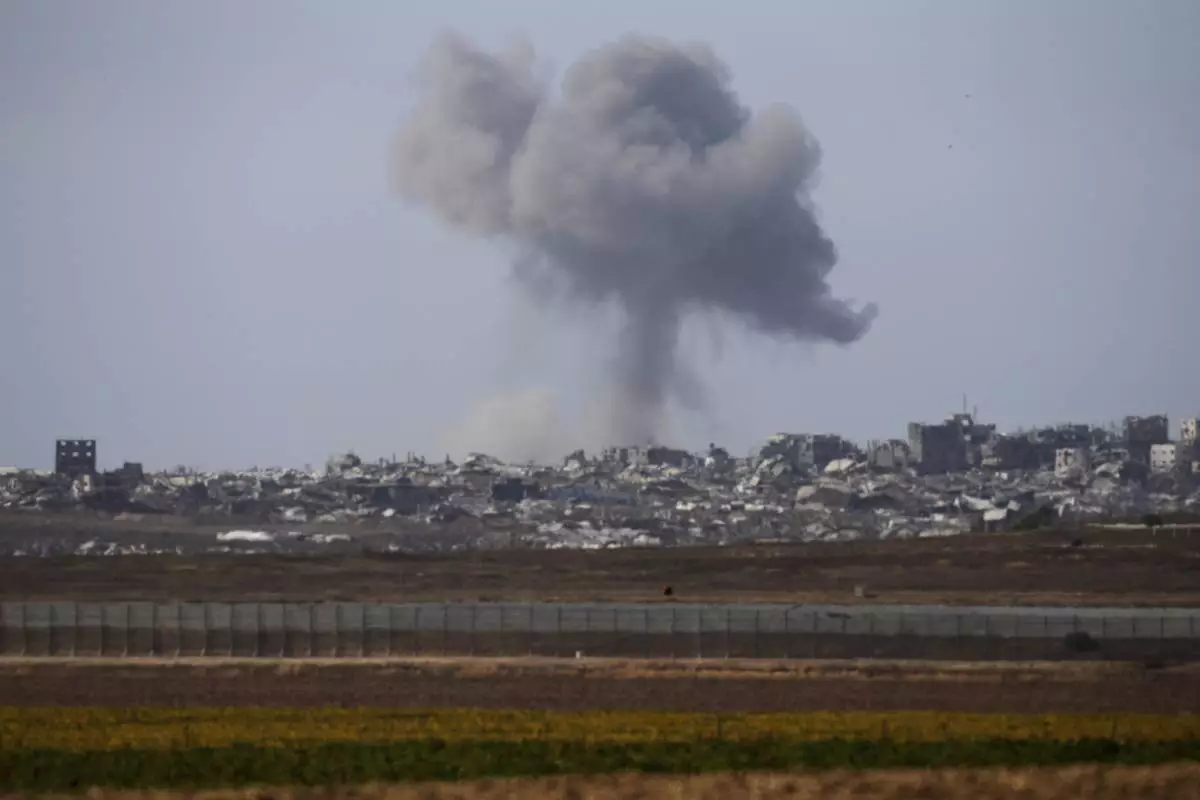
Smoke rises following an Israeli army bombardment in the Gaza Stip, as seen from southern Israel, Monday, May 19, 2025. (AP Photo/Ohad Zwigenberg)
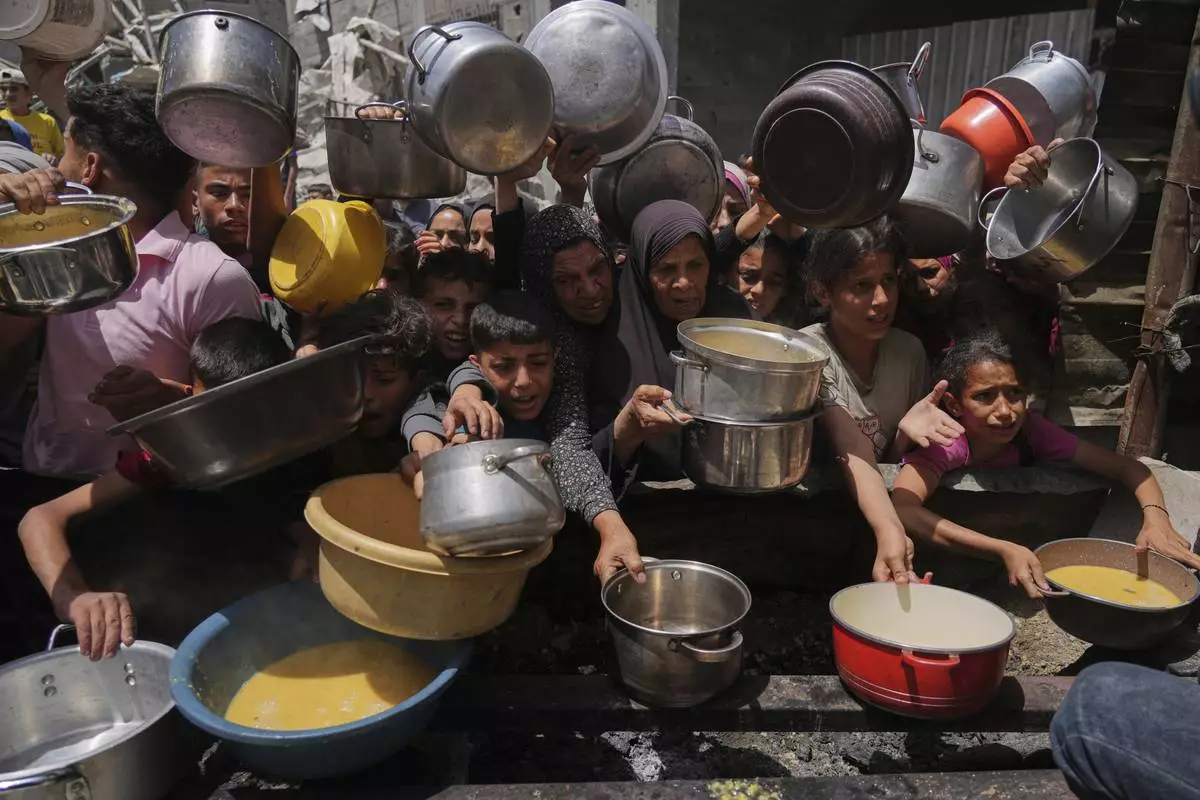
Palestinians struggle to get donated food at a community kitchen in Jabalia, northern Gaza Strip, Monday, May 19, 2025. (AP Photo/Jehad Alshrafi)
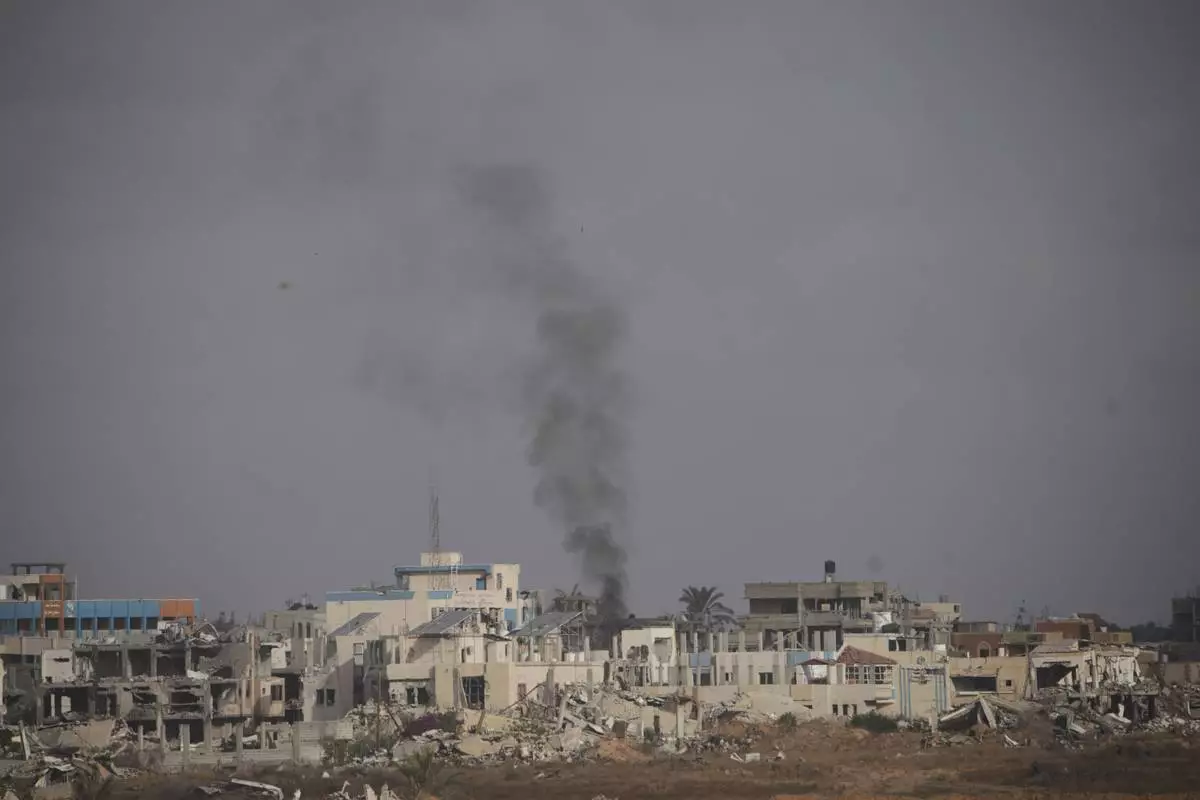
Smoke rises following an Israeli army bombardment in Khan Younis, Gaza, as seen from southern Israel, Monday, May 19, 2025. (AP Photo/Ohad Zwigenberg)

Israeli forces move along the border with the Gaza Strip, in southern Israel, Monday, May 19, 2025. (AP Photo/Ohad Zwigenberg)
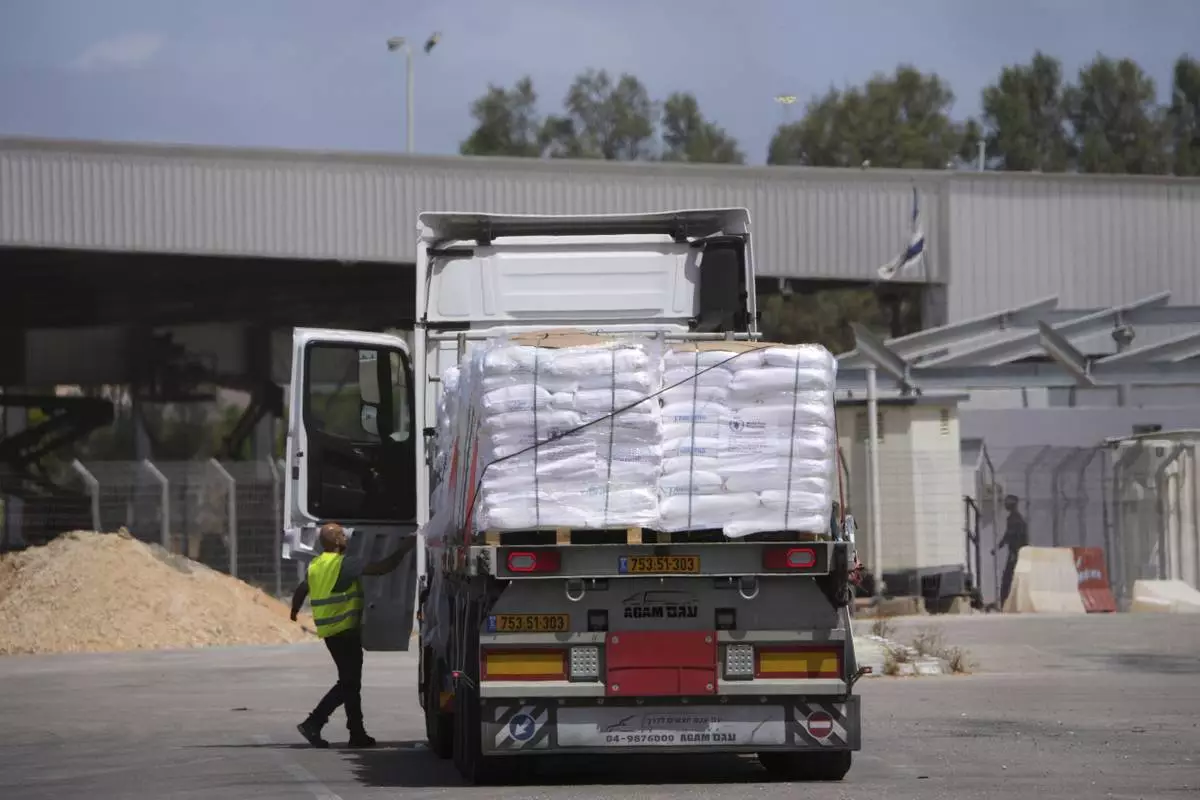
Trucks carrying humanitarian aid for the Gaza Strip are seen at the Kerem Shalom Crossing in southern Israel, Monday, May 19, 2025. A day after Israel said it would resume allowing aid into the territory. (AP Photo/Ohad Zwigenberg)

Israeli forces move along the border with the Gaza Strip, in southern Israel, Monday, May 19, 2025. (AP Photo/Ohad Zwigenberg)
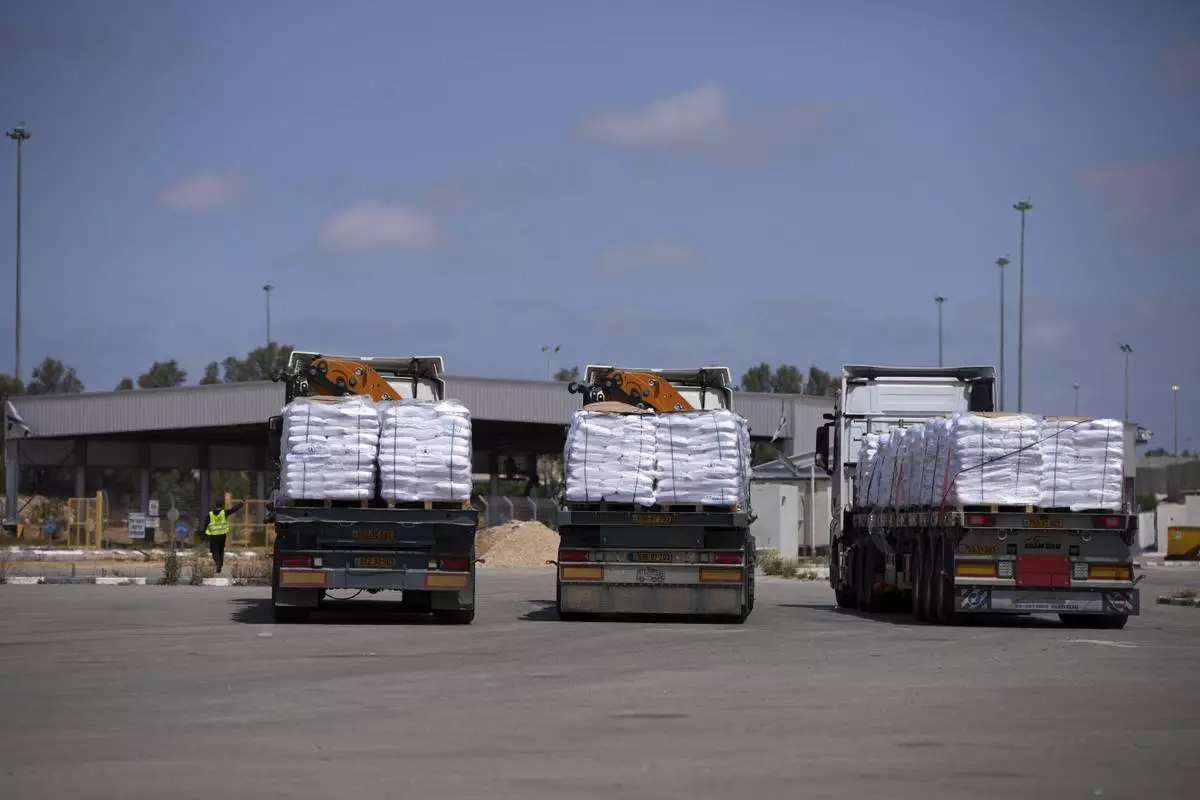
Trucks carrying humanitarian aid for the Gaza Strip are seen at the Kerem Shalom Crossing in southern Israel, Monday, May 19, 2025. A day after Israel said it would resume allowing aid into the territory. (AP Photo/Ohad Zwigenberg)