China's first law on promoting the private economy officially takes effect on Tuesday, which focuses on resolving the issues of concern to private enterprises, said a spokeswoman of the National Development and Reform Commission (NDRC).
The Private Economy Promotion Law, passed on April 30, clarifies the status of the private sector as a major component and promoter of the Chinese economy, and highlights its contribution to scientific and technological development.
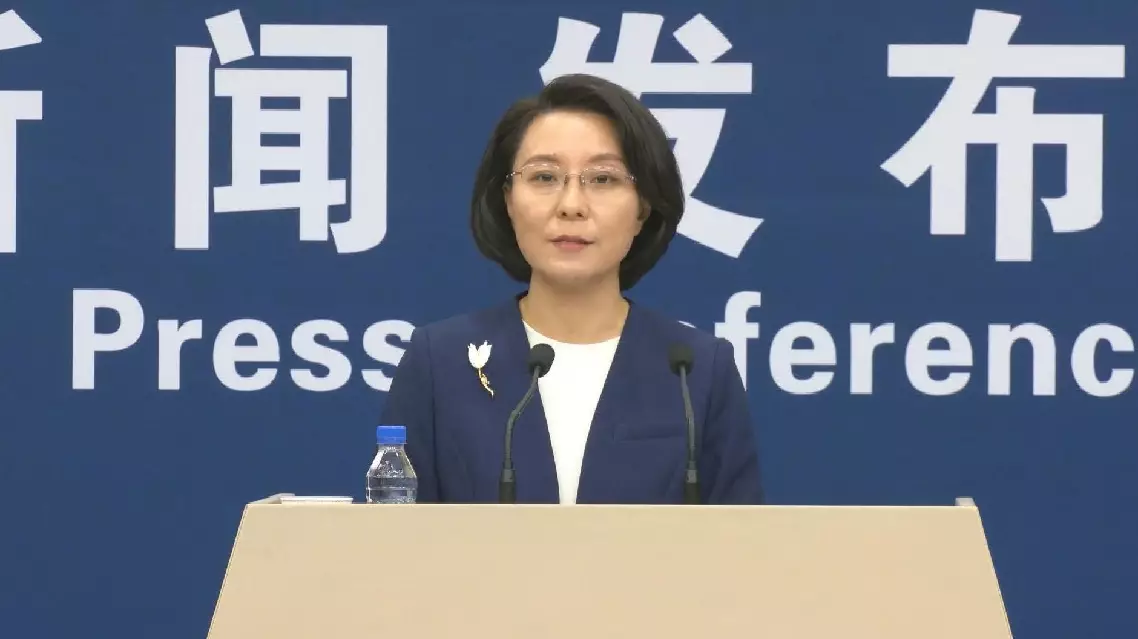
Li Chao, the NDRC spokeswoman, said at a press conference in Beijing that the new law is of great significane to China's private economy.
"The Private Economy Promotion Law of China officially comes into effect today. This is a landmark event in the construction of the socialist market economy and has milestone significance in the development of China's private economy," she said.
The NDRC, together with relevant departments, has systematically planned 53 policy measures in seven areas regarding the development of the private sector, which have been issued and implemented. In the future, the NDRC will continue to work on and issue more relevant policies to effectively resolve issues of concern to private enterprises, Li said.
"We will make good use of policies such as the new local government special bonds, strengthen punishment for breach of trust, and speed up the settlement of overdue accounts owed to private enterprises; We will promote special law enforcement actions involving enterprises, and resolutely prevent illegal cross-region law enforcement and profit-seeking law enforcement; We will implement a long-term regulatory mechanism for charges related to enterprises, and improve the transparency of the charges; We will also continuously optimize the policy environment for private enterprises to participate in major national projects and programs, build up security capacity in key areas, and participate in the large-scale renewal of equipment and the trade-in of consumer goods," Li said.
China's first law on promoting private economy takes effect
India, home to one of the world's youngest populations, is witnessing a growing number of students heading to China in search of quality education and stronger career prospects.
Fields such as artificial intelligence, robotics and engineering are seeing a notable rise in enrollments.
Naresh Patra, a researcher in astrophysics at the Chinese University of Hong Kong, chose to study in China for what he describes as the excellent value for the potential boost to his career.
"First thing, the education system is very good and expenses are too low. And second point [is that] you will get good exposure about machine learning and AI, and third point you will get jobs immediately after passing from these universities," said Naresh Patra, a student from India.
There has been a noticeable surge in inquiries from Indian students for courses in engineering and artificial intelligence. To attract more international applicants, Chinese universities have ramped up investment in world-class infrastructure, including advanced laboratories, while expanding scholarship offerings across a wide range of disciplines.
Akshay Bhambri is among those who secured such a scholarship, supporting his research in traditional medicine. He describes his academic experience in China as highly professional and well-structured.
"In different departments, there are enough resources to do that, and even in libraries, whatever you need is provided immediately to you. So this kind of environment for a researcher, for a student, be it undergrad or PhD student, is very helpful when they want to do some kind of research or some kind of understanding to get what they want immediately, so that they can excel in their work," said the researcher.
Cross-border studies are also foundational to forming academic partnerships between China and India, but experts say that even greater outreach and engagement are needed.
"It will be more possible if there is a higher level, not just the people-to-people level, but (if) we see the authorities from both sides interact, and university-to-university interactions, in that case, there would be a lot of confidence building," said Nishith Shah, principal of India China Academy.

More Indian students choose Chinese universities for quality education