China is committed to expanding its investment in Africa by further promoting corporate cooperation in various fields, according to a commerce official.
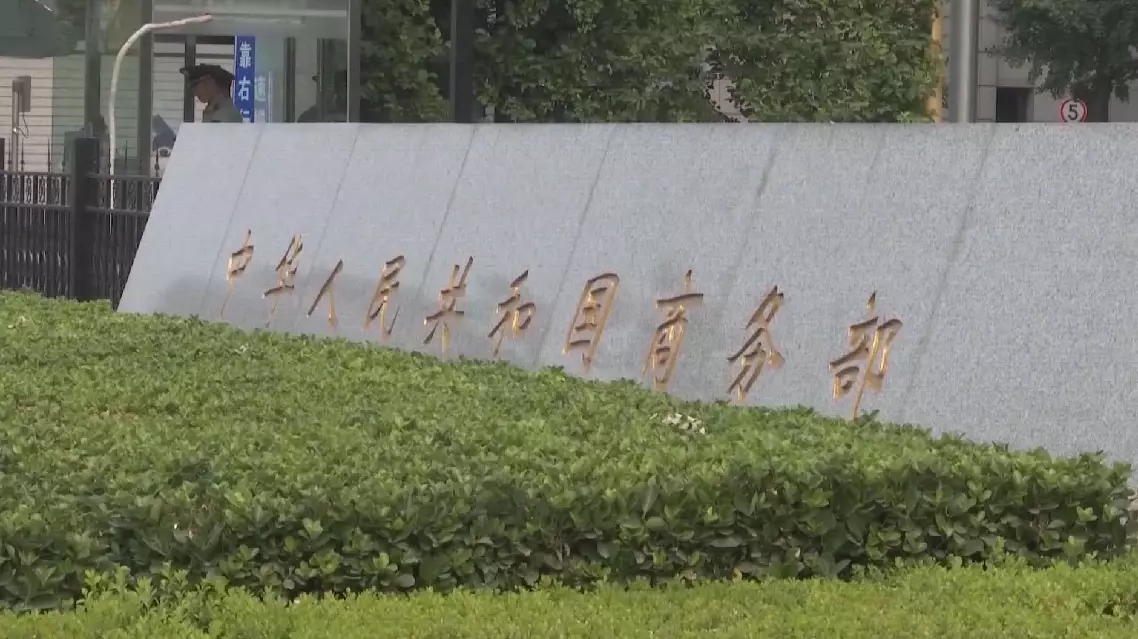
At a press conference on Wednesday in Beijing, Shen Xiang, director of the West Asia and Africa Department under the Ministry of Commerce, briefed the press on the current landscape of Chinese investment in Africa.
"African countries have seen steady economic development in recent years, with the overall business environment continuing to improve and the willingness of Chinese firms to invest in the continent significantly growing. Our data reveals that over the past five years, annual average direct investments from Chinese companies in Africa have consistently exceeded 3 billion U.S. dollars, with investment projects spanning a wide range of sectors. In addition, the entities involved in China's investments in Africa have become increasingly varied," he said.
Shen also noted that the ministry will further enhance the investment by fostering cooperation, especially among small and medium-sized enterprises (SMEs).
"The Ministry of Commerce will encourage Chinese companies to coordinate the construction of various industrial parks, logistics facilities, power and energy projects tailored to the resource endowments and industrial development plans of African countries, and promote the integrated development of investment and trade. It will continue to motivate enterprises from both sides to seize the opportunity of China's expanded opening up and achieve greater investment cooperation," said Shen.
"The ministry will also actively facilitate partnerships between SMEs between China and African countries, organize SMEs matching activities, support young entrepreneurs and women entrepreneurs from both regions to carry out innovation and entrepreneurship cooperation, so as to create broader avenues for cooperation among SMEs," he said.
China to expand investment in Africa by promoting corporate cooperation in various fields: official

The Guangdong–Hong Kong–Macao Greater Bay Area (GBA) is emerging as a key engine for China's fast-growing low-altitude economy by leveraging its dense industrial networks, efficient logistics systems, and rapid innovation capacity.
From logistics and manufacturing to urban services, the region is building an integrated industrial chain that allows low-altitude industries to scale up at unprecedented speed, thus turning drone-based applications from isolated trials into large-scale, commercial operations.
China's 15th Five-Year Plan, covering 2026 to 2030, calls for the cultivation of new pillar industries and the accelerated development of strategic emerging industrial clusters, including the low-altitude economy.
At a drone operations center in Bao'an District, Shenzhen City in south China's Guangdong Province, a dozen logistics drones take off and land within minutes. Urgently needed production parts, documents, and small parcels are dispatched from here to cities in the province including Dongguan, Zhongshan, and Zhuhai.
Behind these high-flying aircraft lies what observers describe as an "invisible industrial chain", built on speed and efficiency.
"Look at this aircraft. About 90 percent of its components come from nearby areas. Relying on Shenzhen's strong logistics capabilities and its complete supply chain, these parts can be delivered to our factory within half an hour for assembly, processing, and production," said Li Kunhuang, person-in-charge of Shenzhen GODO Innovation Technology Co., Ltd.
Once a new product is unveiled, testing and calibration begin immediately at the drone testing field. As soon as the process is completed, the new models can be put into real-world operation, realizing almost “zero delay” from research and development to application.
Supported by a robust industrial chain, low-altitude routes in Shenzhen are effectively connecting the urban landscape. From its Bao'an District to Songshan Lake in Dongguan City, production components can be delivered within one hour. Supplies are transported between Zhuhai City's Xiangzhou Port to Dong'ao Island in just 25 minutes. And light industrial goods can travel round-trip within a single day between Guzhen Town in Zhongshan City and Xinhui District in Jiangmen City.
More low-altitude application scenarios are expected to be implemented in the near future.
In Qianhai District, Shenzhen is accelerating the construction of a pilot demonstration zone of low-altitude integrated three-dimensional transportation hub.
"We have built the country's first low-altitude integrated three-dimensional transportation hub, and are gradually developing a pilot flight zone that integrates multiple scenarios such as inspection, logistics, and cultural tourism. This will provide technical support for the next step of commercializing cross-border logistics and emergency rescue services across the Guangdong–Hong Kong–Macao Greater Bay Area," said Wu Xuemin, head of the Shenzhen Qianhai Low-Altitude Integrated Three-Dimensional Transportation Hub Pilot Demonstration Zone.
Integrated supply chains propel Greater Bay Area's low-altitude economy growth