China's intensified push to energize its consumer market has offered a significant shot in the arm for foreign firms looking to expand in the world's second-largest economy.
China has rolled out a wave of stimulus measures since March 2024, including consumer goods trade-in and large-scale equipment upgrade programs, aiming to unlock the potential of consumer spending and accelerate an economic structural shift toward domestic demand amid an uncertain external environment.
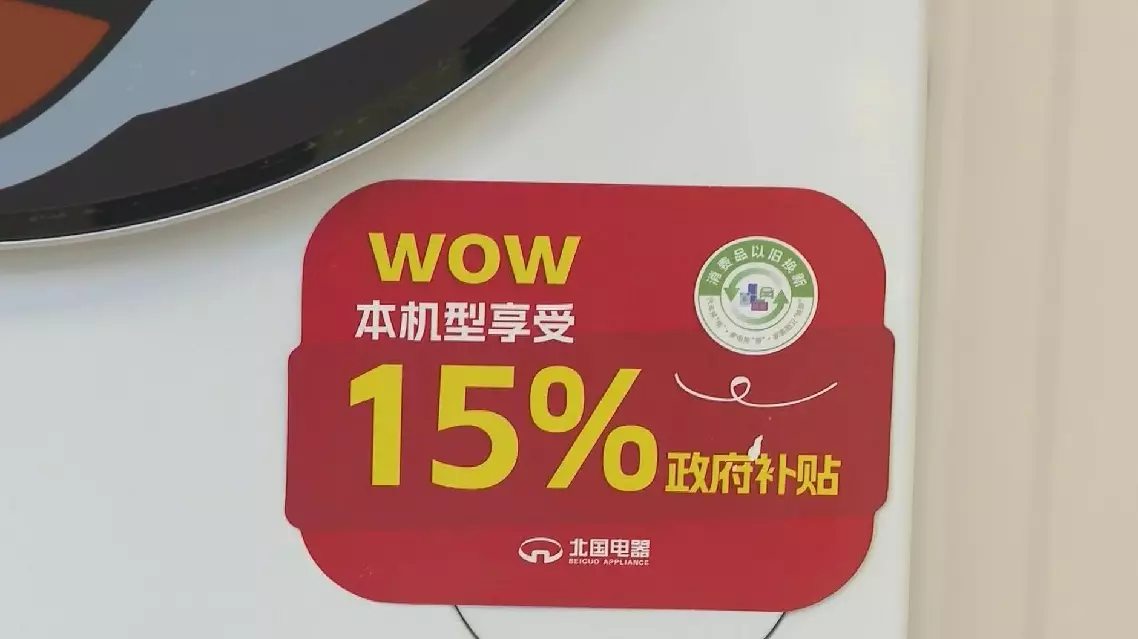
The government revamped these programs earlier this year and doubled down on its subsidy scheme, resulting in a significant uptick in sales of automobiles, home appliances and electronics.
As millions of Chinese consumers trade in their equipment for the latest models ranging from electric vehicles to household appliances, the rising consumer spending has benefited Chinese and foreign brands alike.
China's Ministry of Commerce said on May 12 that the total number of applications for auto trade-in subsidies in the country exceeded 10 million as of May 11. Of the total, applications made in 2025 amounted to 3.23 million, with consumers scrapping nearly 1.04 million cars and purchasing 2.19 million new vehicles with auto trade-in subsidies. New energy vehicles (NEVs) accounted for more than 53 percent of all auto trade-ins since the beginning of the year.
Thanks to the economic stimulus efforts, the Chinese auto market maintained robust growth in the first four months of 2025, with sales rising 10.8 percent to 10.06 million units, according to China Association of Automobile Manufacturers.
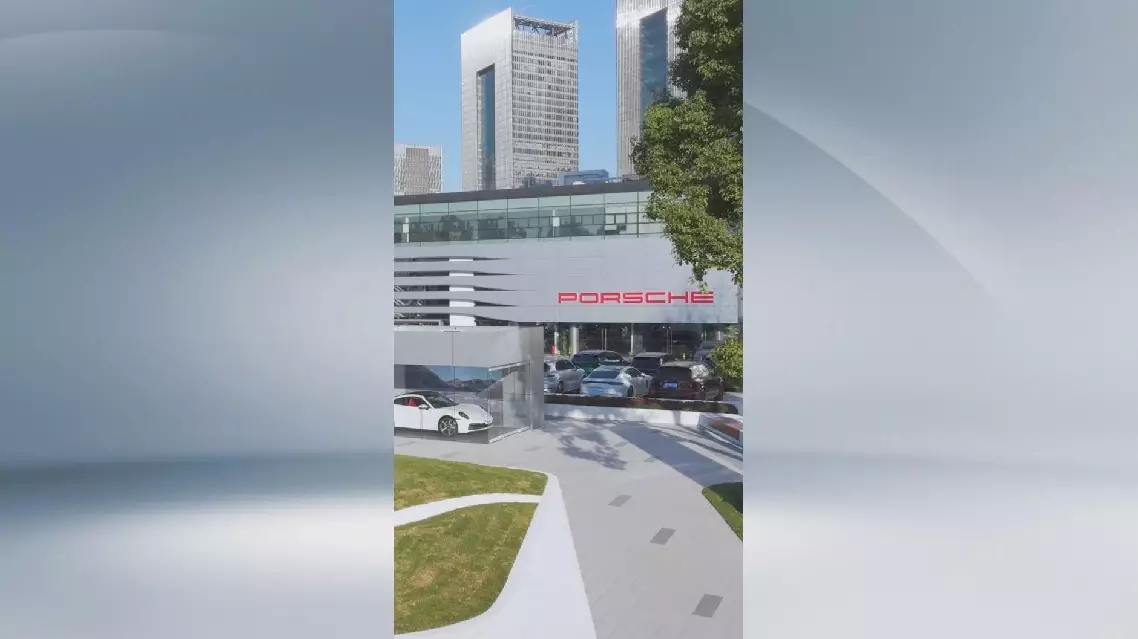
Porsche and Tesla are among the foreign auto brands that have been benefiting from the pro-consumption measures, despite varying subsidies in different regions across the country.
"The Chinese government's policies on consumer goods trade-in and large-scale equipment upgrades have created a sound environment for the automotive market, and Porsche has fully seized the opportunity. Our diversified product matrix, which includes fuel, pure electric and hybrid models, is highly compatible with the differentiated subsidy policies in application in various regions," said Jojo Tang, vice president of Public Relations and Press at Porsche (China) Motors. Ltd., in an interview with China Media Group (CMG).
"Beijing has kept rolling out trade-in subsidies since September 1 last year. As a matter of fact, we have clearly felt that more customers are trading in their old cars for our new models. During the third and fourth quarters of last year, about half of our cars were sold under the trade-in program. And after the municipal government's announcement on NEV passenger car license quotas, we still expect to see our sales under the trade-in program to exceed 40 percent," said an employee at a Tesla showroom in Beijing.
Apart from the increasing sales in the auto sector, other big-ticket consumer goods like home appliances and furniture have also witnessed a consumer spending boom, with Suning.com, a major retailer in China, reporting a surge in the sales of home appliance brands from manufacturers involving various ownership structures since last September.
"Since the entry into effect of the state subsidy policies last year, the sales in our store has increased significantly, with a year-on-year growth rate of 29 percent, which is quite high. In terms of brands, the domestic brands have been going neck and neck with some joint ventures and foreign brands. For instance, the sales of Siemens, Panasonic and Samsung products have grown notably by 41 percent, 35 percent and 30 percent respectively from January to May," said Shang Hongyu, manager of a Suning store in Beijing.
According to Lyu Yue, executive dean of the Academy of Global Innovation and Governance at Beijing's University of International Business and Economics (UIBE), part of the reason that the stimulus measures are paying off is that Chinese and foreign firms have been treated as equal market players.
"On the one hand, the combination of state subsidies and preferential policies offered by enterprises has effectively boosted consumption upgrading and helped foreign brands accelerate their growth in some key areas. On the other hand, the policies have made clarified that domestic and foreign enterprises are treated as equal players, which ensures that foreign investors can participate in the formulation of subsidy application standards and other key policy-related areas, just like their Chinese counterparts. This has not only enhanced the confidence of foreign investors in participating in China's high-quality economic development, but also encouraged them to step up investment in China," Lyu said.
In December 2024, the German Chamber of Commerce in China released its 2024/2025 Business Confidence Survey, revealing that a staggering 92 percent of member companies are keen to continue operations in China and a half of them intend to expand their presence here in the coming two years.
Tang, from Porsche (China) Motors. Ltd., said that Porsche Ventures, in partnership with China International Capital Corporation (CICC), has launched its first Venture Capital fund in China and completed its filing with the Asset Management Association of China. Through this fund, Porsche Ventures aims to engage more flexibly with the growth of Chinese startups and actively drive technological advancement in the automotive industry.
"Porsche has been continuously deepening its presence in the Chinese market by taking advantage of favorable policies. The CICC Porsche Fund, jointly established by Porsche Ventures and CICC, completed its first round of investment here in March this year, focusing on the field of intelligent driving technologies. We will move our research and development center to a new location in Shanghai in the second half of this year," she said.
China's consumer spending stimulus efforts offer shot in arm for foreign firms