Local authorities in several parts of east and central China are mobilizing all resources for emergency flood control and rescue operations as recent heavy rains have battered provinces such as Jiangxi, Anhui, Hunan, and Hubei.
On Thursday, heavy rainfall occurred in many areas of east China's Jiangxi Province, prompting the province to activate Level-IV emergency response measures.
Many places have managed pre-releases from several reservoirs to make room for expected inflows.
In east China's Anhui Province, Hefei, Lu'an, Wuhu, Xuancheng, Tongling, Chizhou, Anqing, and Huangshan experienced heavy rainfall, with some areas facing severe downpours.
So far, the provincial flood control and drought relief headquarters have activated the Level IV emergency response for flood control in these eight cities.
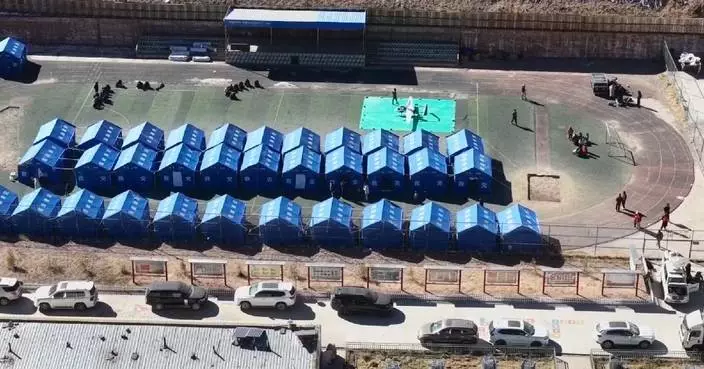
Heavy rainfall battered parts of central China's Hunan Province starting the wee hours of Thursday, causing waterlogging and prompting the evacuation of local residents.
Torrential downpours hit Zhangjiajie and Changde cities in Hunan, and extremely heavy rainfall was reported in parts of Cili County of Zhangjiajie and Taoyuan County of Changde, which led to waterlogging.
Heavy rainfall in Shejiaping Town, Taoyuan County, led to waterlogging by early morning on Thursday. Local authorities organized the evacuation of residents in at-risk zones.
As of 5:00 pm on Thursday, over 5,400 people have been transferred, and over 3,500 disaster-affected people have been relocated in Taoyuan County.
On Thursday, in response to heavy rainfall, railway authorities implemented temporary suspensions for nine trains passing through Longshan County in Xiangxi Tujia and Miao Autonomous Prefecture.
After the trains were suspended, Longshan North Station promptly broadcasted the information about the train suspension and delay through station announcements and electronic display screens.
In addition, the station opened additional counters and arranged for staff to guide passengers in processing refunds or ticket changes, aiming to minimize passenger delays to the greatest extent.
"Although my trip was delayed, the service at the station was very thoughtful. Staff here has provided patient service, which makes us passengers feel much more at ease," said Liu Rui, a passenger.
Torrential rains pounded many places in central China's Hubei Province on Thursday. The downpour triggered floods across the provincial capital Wuhan, submerging major roads during the busy afternoon.
"We are implementing the two-shift system, with each shift lasting nearly eight hours, to carry out drainage work," said Chen Zongfu, head of the drainage team at Wuhan's Qiaokou District Water Affairs and Lakes Bureau.
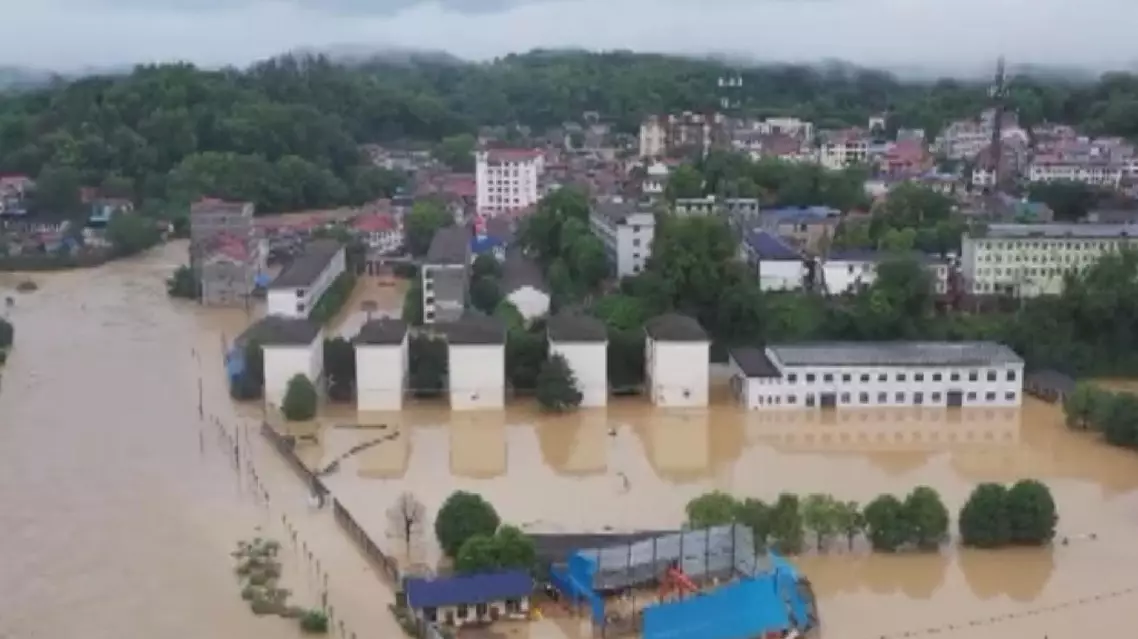
Relief work underway as heavy rain hits several regions across China
Amidst overlapping global challenges, international experts at the 2026 Global Governance Forum in north China's Hebei Province emphasized that rebuilding confidence and cooperation in global governance requires enhanced dialogue, the establishment of common rules in emerging fields, and a fairer, more inclusive international system that amplifies the voice of the Global South.
Held from October 23 to 25 in Xiong'an, China's "city of the future" built on the North China Plain, the forum brought together nearly 400 representatives from over 90 countries. Spanning five major sectors and 22 thematic seminars, the event provided a platform for diverse stakeholders in politics, economy, technology, culture, and think tanks to jointly address governance challenges and promote inclusive, multi-stakeholder global governance reform.
"In this conference, I met some American representatives, a remarkable businessman. I asked him, 'what are you doing here?' And he said, 'I wanted to discuss Global Governance Initiative.' I said, 'Listen, I don't believe because whatever China proposes, the U.S. will object. And he said no. And he mentioned specific subject -- AI. He said, 'I want to make my humble contribution into establishing (of) global governance in AI.' So among Americans, this idea is also receiving some understanding. More dialogue is required and I would underline the weight of this forum," said Djoomart Otorbaev, former prime minister of Kyrgyzstan.
In today's world, where deficits in peace, development, security, and governance are intertwined, rebuilding confidence and cooperation is the most scarce international public good. In response, China has proactively set the agenda to address pressing concerns, such as advancing the reform of the UN-centered governance system, cooperating on new frontiers like cyberspace, outer space, and AI, and bridging civilizational divides amidst geopolitical rivalry.
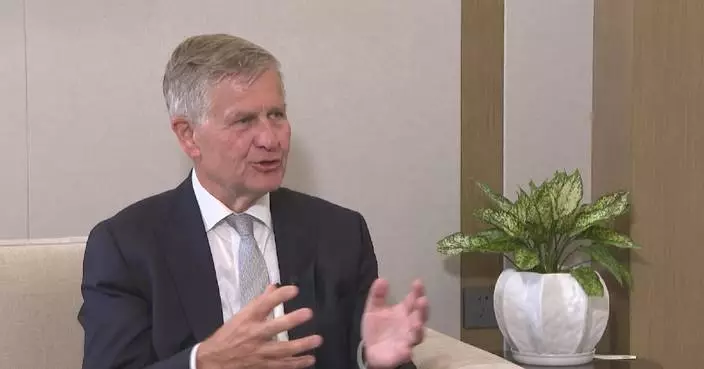
"And there were some specific initiatives which we also have discussed, which is to set the global governance for the outer space, for the deep seas, for some areas of the planet like the Antarctica, where there is various needs for more common rules. One area the world is looking for is artificial intelligence and we need to regulate globally and efficient intelligence to avoid the worst. So if we work together, we can get the benefits and make sure that we make it much more difficult to do the harm," said Erik Solheim, chairman of the EU-Asia Centre and former UN under-secretary-general and former executive director of the UN Environment Programme.
"The world has become a global village, but this global village is now fighting. There's a problem going on in the Middle East, there's a problem going on in Africa, but China is trying to promote a conclusive thing so that the world can be peaceful. Because of this Global Governance Initiative, China has been able to tell the world (that) how to work together," said Khalid Taimur Akram, executive director of the Pakistan Research Center for a Community with a Shared Future.
Since its proposal over a year ago, the Global Governance Initiative has garnered support and responses from over 160 countries and international organizations.
During the forum, China announced pragmatic measures to further implement the initiative, reaffirming its firm support for multilateralism and the core status of the United Nations, while emphasizing the need to enhance the representation and voice of the Global South in international affairs to translate the initiative from a Chinese proposal into broader international practice.
"It's that combination of defense of the games that arise from the existence of the international system, but improving it, updating it, performing it, making it fairer, particularly to the great mass of developing countries, which is why the Chinese proposals meet a lot of support, particularly from the Global South, but also from fair minded people in other countries," said Keith Bennett, vice chairman of UK 48 Group Club.
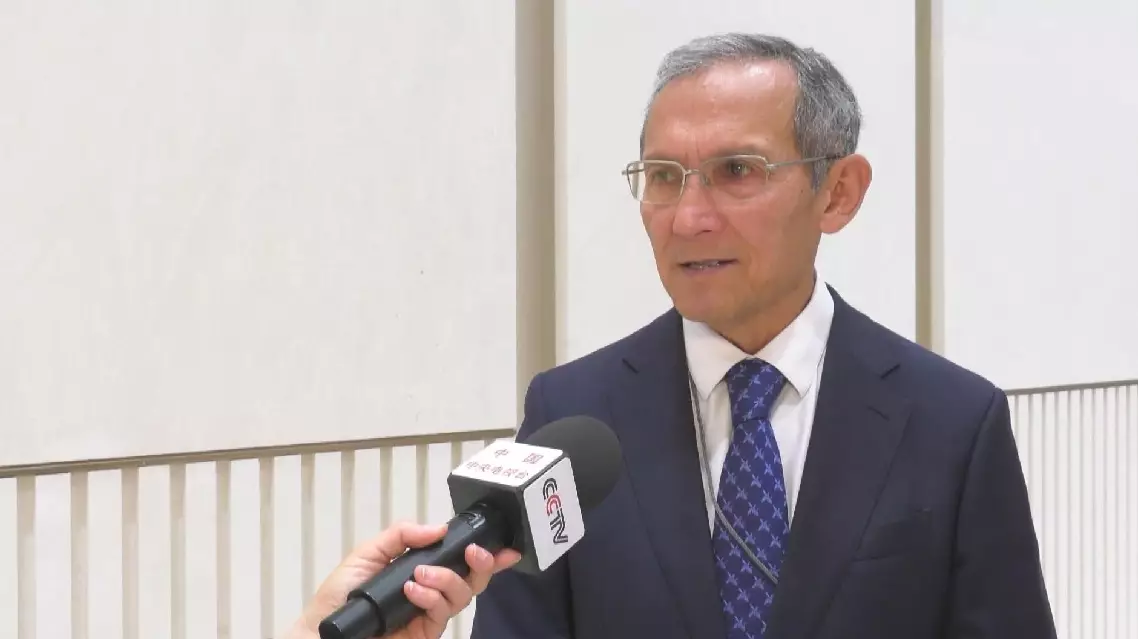
Participants of Global Governance Forum hail China's contribution to fairer international order