A fleet comprising various types of warships of the Chinese People's Liberation Army (PLA) navy has completed a composite naval exercise in the Yellow Sea to reinforce their combat capabilities.
In the designated waters, Destroyer Lhasa, Frigate Yantai and other vessels formed a mobile fleet to conduct the training.
On Destroyer Lhasa, the fleet's command directed naval surface, air, submarine and other forces to carry out front-line autonomous coordinated training and back-to-back confrontation training according to the battlefield situation.
Shortly after the training started, radar operators quickly locked on targets on the water surface based on information collected by airborne early warning (AEW) aircraft, and the targets were later successfully destroyed.
Such a three-dimensional reconnaissance network allows the combat fleet to have a wider view about the situation and fewer blind spots.
"We communicate with AEW aircraft in the air through data link to monitor the battlefield situation. This is also a means to enhance battlefield situation awareness. The greatest help it gives to us is that it can provide us with beyond-visual-range targets from both sea and air," said Wang Mingwei from Destroyer Lhasa.
In the war room on Destroyer Lhasa, aviation officers and soldiers quickly discovered multiple sea and air targets under the guidance of ship-borne helicopters, providing data support for the fleet's strikes.
Unlike previous drills, the current training involved more and more versatile command personnel from different departments, ship types, and military services on key positions. Meanwhile, there are also many young command personnel and key operators from other vessels, as well as officers from different military services, who are on board in exchange programs.
"In future far-sea operations, the surface fleet, as an important part of the joint operations system, is an important support for realizing long-term and all-time presence of combat forces, and is also a key node in the sea-air communication across the information and firepower systems. In the routine combat readiness training, efforts have been made to continuously improve the combat forces' front-line autonomous coordination capabilities, so as to enable them to achieve efficient integration and unified operation of the various combat platforms during wartime," said Sun Yao from a destroyer detachment of naval forces of the PLA Northern Theater Command.
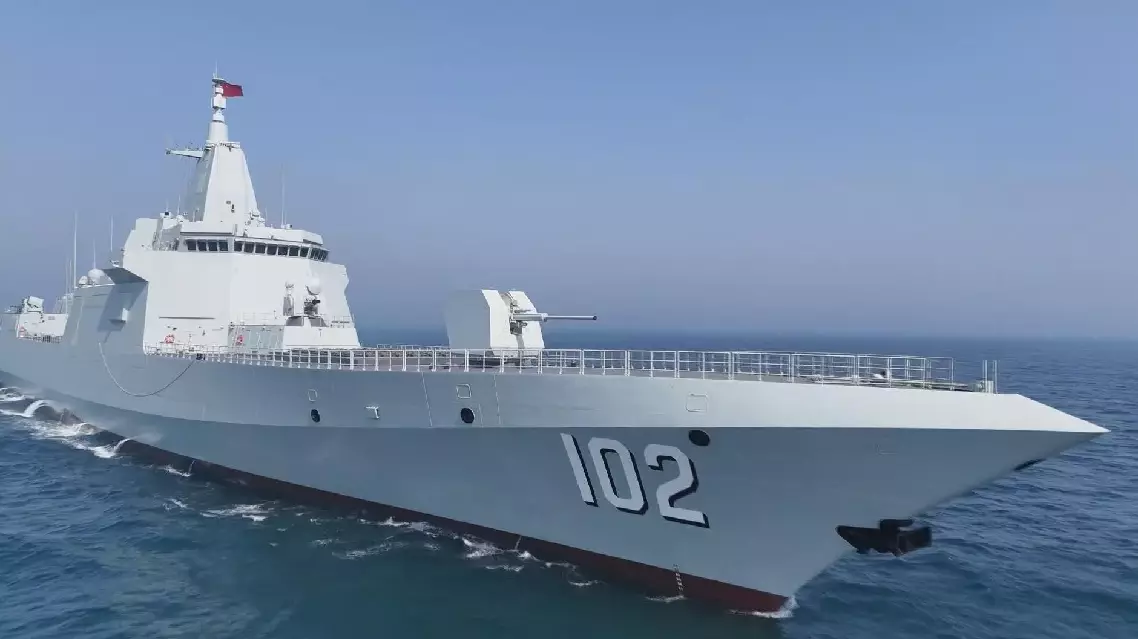
Chinese naval fleet completes composite naval exercise in Yellow Sea