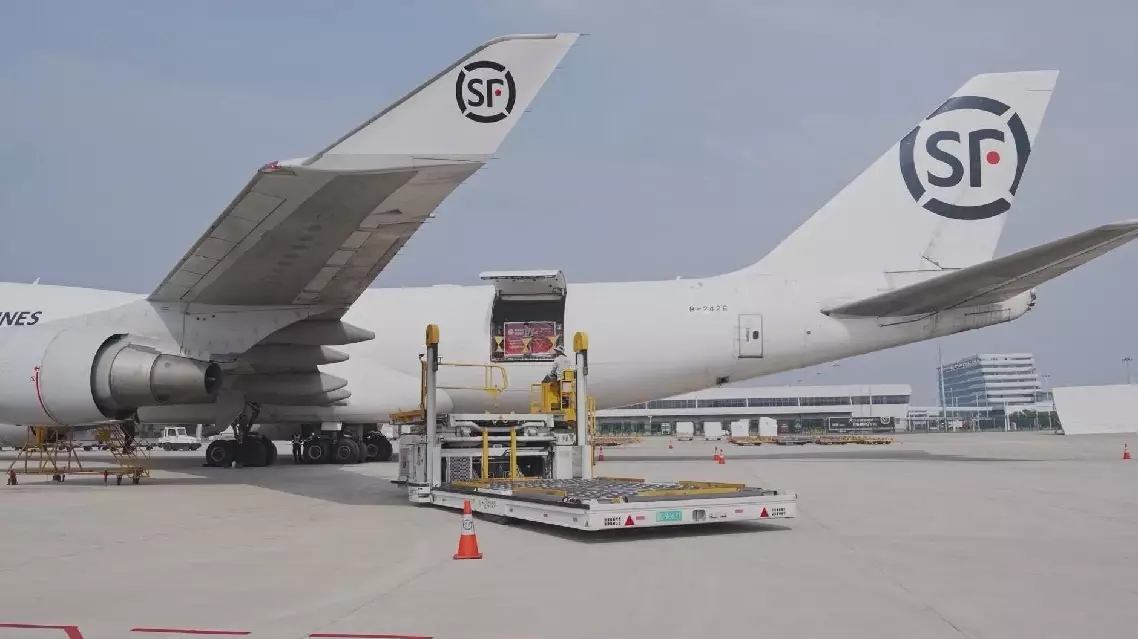
The Ezhou Huahu Airport in central China's Hubei Province, China's first cargo-focused airport, launched its 100th cargo route on Sunday, linking China, the U.S. and Canada.
A cargo aircraft operated by SF Express landed at the airport on Sunday afternoon, after flying from New York in the United States via Halifax, Canada. This newly opened route is the airport's first Canadian route.
"China and the U.S already have established freight exchanges. Leveraging the fifth freedom rights, we can now fly from the U.S. to Canada, and bring Canadian fresh and aquatic products back to China," said He Fei, Deputy General Manager of the Hub Development Department under Hubei International Logistics Airport Co.
The main outbound cargoes on this route include garments, electronic products, and electromechanical equipment, while inbound shipments primarily consist of machinery, health products, and fresh seafood.
The route is expected to provide more than 100 tons of weekly air capacity for Canadian seafood exports to China.
This year, Huahu Airport has established forward cargo stations in provinces such as Jiangsu and Guangdong. It will soon open overseas warehouses in locations including Hong Kong and Milan, Italy. These efforts aim to integrate air logistics with cross-border e-commerce.
China's first cargo-focused airport launches 100th route, connecting US, Canada
Russia said Sunday that its forces had hit Ukrainian military facilities, while Ukraine said on the same day that it shot down or neutralized 152 Russian drones and launched an attack on a Russian oil terminal.
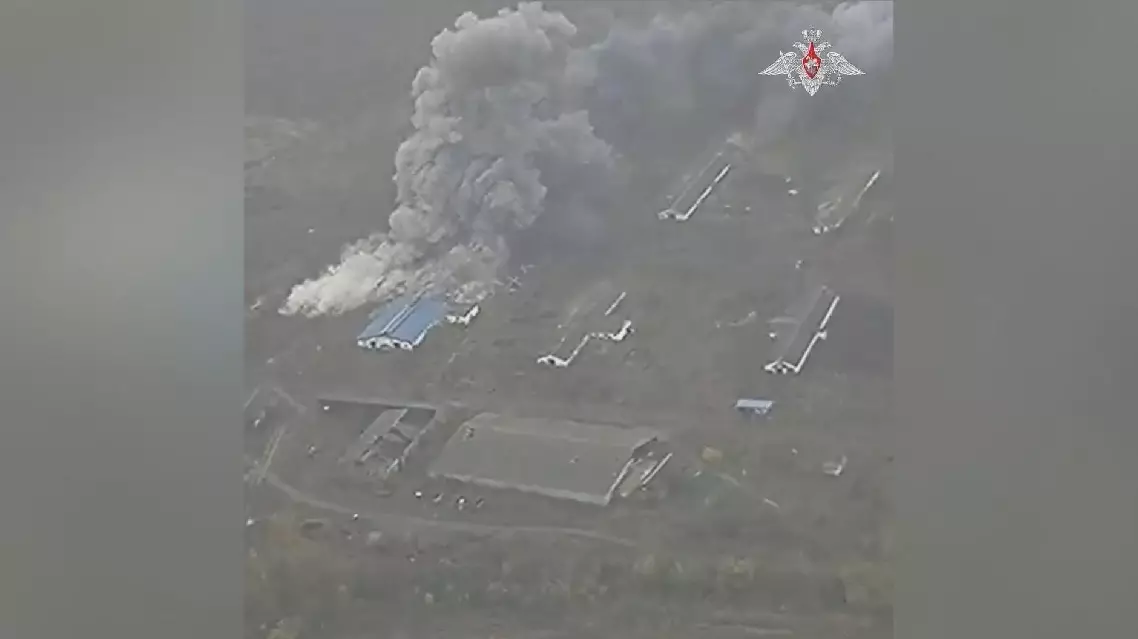
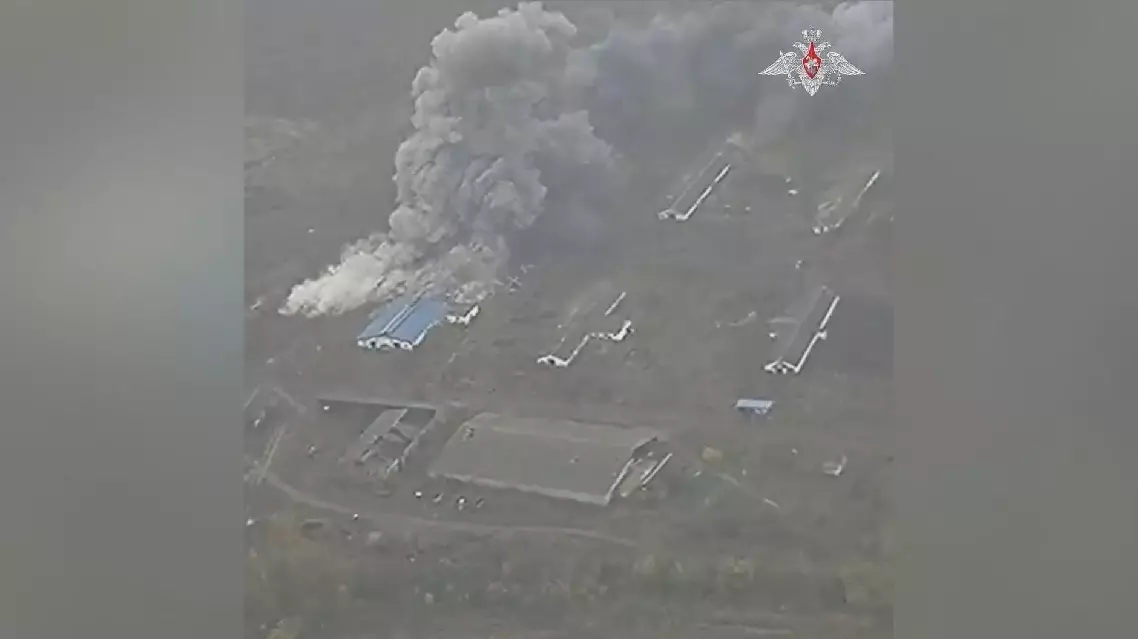
In a daily report, the Russian Defense Ministry said that over the past 24 hours, the Russian forces struck Ukrainian transport infrastructure, depots for military-technical supplies, and facilities for drone assembly, storage and launch.
The ministry also said that the Russian forces conducted a precision strike on a large dry-cargo ship and destroyed an enemy uncrewed vessel in the Black Sea.
Meanwhile, St. Petersburg Governor Alexander Beglov said the city had been hit by a large-scale drone attack, leaving one person dead and five others injured.
The Ukrainian Air Force said it had shot down or neutralized 152 Russian drones between 18:00 Saturday and 08:00 Sunday. Ukrainian defense firm Fire Point also reported that Ukrainian forces had used drones to strike an oil terminal, an oil depot and a data center in St. Petersburg. Fires broke out at the oil depot and the terminal, while the data center sustained severe damage.
Meanwhile, Ukrainian President Volodymyr Zelenskyy said Russian forces had attacked electrical substations in several regions, including Vinnytsia and Zhytomyr, on Saturday night.
Zelenskyy also said he held a phone call with U.S. special envoys Steve Witkoff and Jared Kushner to discuss the outcomes of a meeting between Ukrainian and U.S. representatives held on Oct. 9 in Florida, as well as next steps.
He said the two sides had also discussed the possible provision of Patriot air defense systems to Ukraine. Zelenskyy added that the Russia-Ukraine conflict must end, emphasizing that the U.S. position is crucial to the process.
Russia reports strikes on Ukrainian facilities, Ukraine says it hit Russian oil terminal
Russia reports strikes on Ukrainian facilities, Ukraine says it hit Russian oil terminal