The world's highest ultra-high voltage direct current (UHVDC) transmission project, from the upper reaches of Jinsha River to central China's Hubei Province, had its final line installation completed on Tuesday, achieving full-line connectivity, according to the State Grid Corporation of China.
Around 14:00 Tuesday, in Yajiang County, Garze Tibetan Autonomous Prefecture, southwest China's Sichuan Province, the last two transmission conductors of the project were installed successfully, marking that the entire project was fully connected.
"The most challenging section of the project was the one in western Sichuan, which traverses the western Sichuan plateau and Hengduan Mountains, with the highest tower position at nearly 4,800 meters above sea level. Completion of the line installation today means we have successfully tackled the final 'tough nut.' Next, we will accelerate testing and debugging of the converter stations and lines to make the final push for the project's full completion and operation," said Liu Bo, project manager of the western Sichuan section of the project.
The project will connect hydropower and new energy from the upper reaches of Jinsha River to the ultra-high voltage alternating current backbone grid in central China.
The line spans 1,901 kilometers across Xizang Autonomous Region, Sichuan, Chongqing Municipality, and Hubei.
Once completed, it will become China's first large-capacity, water-solar hybrid clean energy transmission corridor, capable of delivering 40 billion kilowatt-hours of electricity annually.
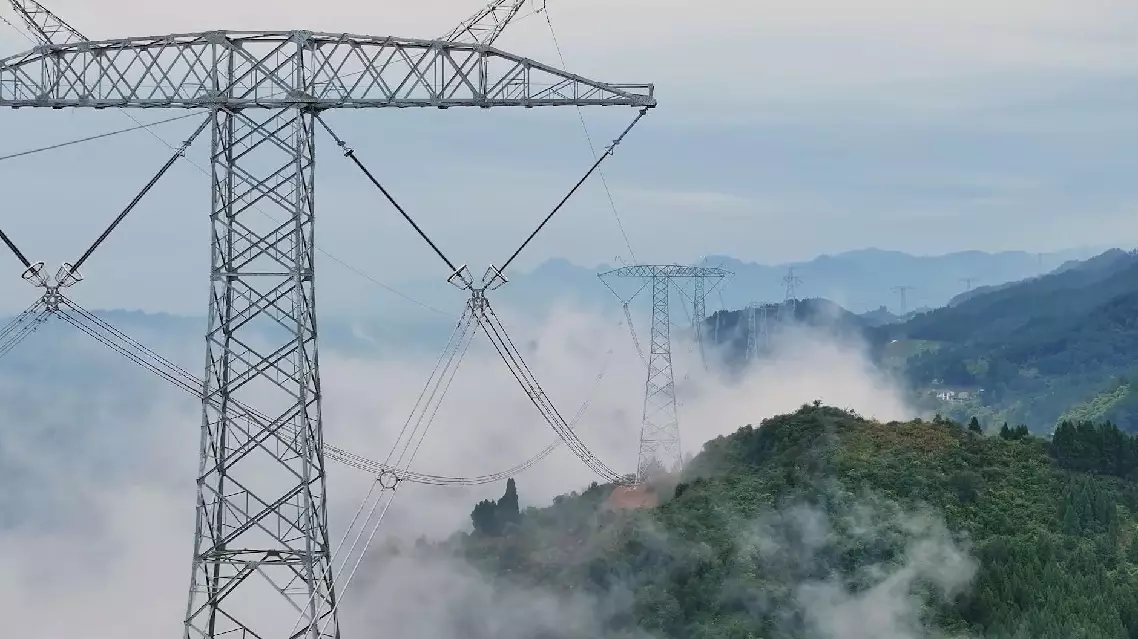
World's highest UHVDC transmission project completes final line installation
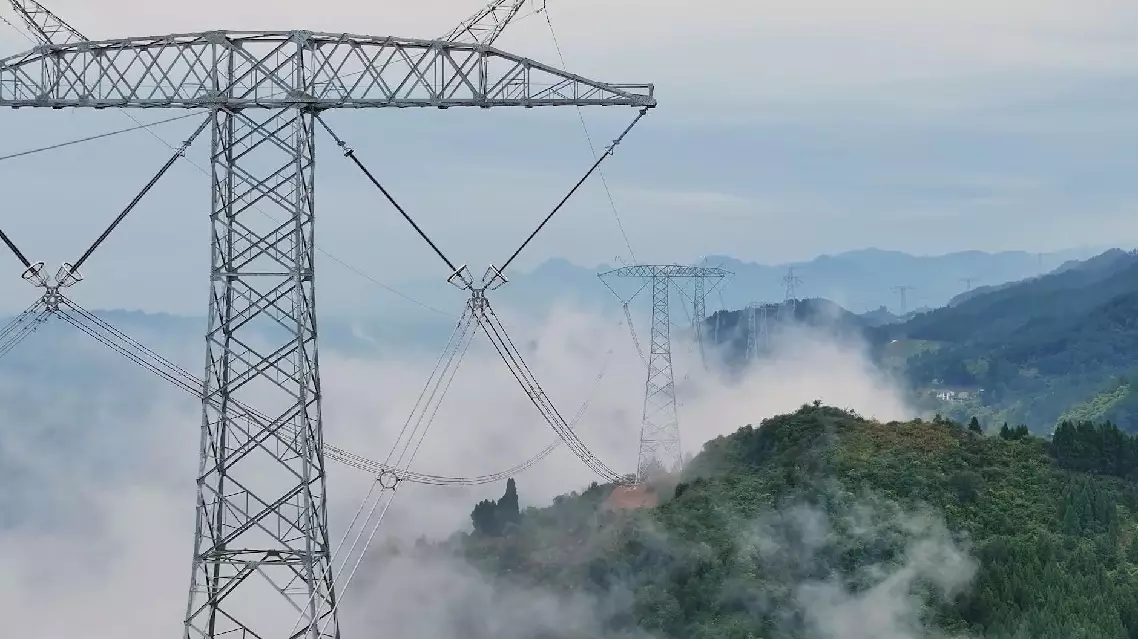
World's highest UHVDC transmission project completes final line installation
Scientists in Peru and Chile are racing to reverse the sharp decline of Humboldt Penguins, a warm-climate species uniquely adapted to the Pacific coast, as climate change and avian influenza threaten its survival.
Peru and Chile are home to the Humboldt penguin, named after the cold water current which flows from Antarctica up the Pacific coast of both countries. It is one of the very few penguin species in the world that lives in a warm climate. Scientists call them a sentinel species -- thermometers of the overall health of the ecosystem.
The penguins nest in Punta San Juan, a small national reserve in southern Peru. They are one species among many marine predators that rest and reproduce here in huge numbers. Biologist Susana Cardenas leads a team that is monitoring and researching these animals and birds. What the researchers have seen in recent years is a dramatic population decline in all species, but particularly penguins, and they are trying to find out why.
"In the last few years, we've seen a decline in the Humboldt penguin population. So, we can go back to 2022 in Punta San Juan, there were about 2,500 Penguins -- that was the size of our colony. And then, well, we had avian influenza that has hit wildlife really hard in Peru and in different places of the world," said Cardenas.
But the impacts didn't stop there for the penguins, which are classed as having vulnerable conservation status, Cardenas explained.
"After that, unfortunately, an El Nino in March of 2023 started and the marine conditions changed and the food availability was not the same. And the penguins, they were getting ready for their breeding season and that's when the marine conditions changed and they did not come back to breed," she said.
In Punta San Juan, penguin numbers dropped from 2,500 to 400 just as Peru's population plummeted from 15,600 to 5,000 all across the birds' range in Peru and Chile, according to Cardenas. That's why continuous data collection is key to maintain the decades of research.
Interns like Sandra Alcantara keep a daily count of the number of nesting penguins and chicks.
"I come here at 6 a.m. to conduct a penguin census. I count all the penguins in a specific age group: adults, juveniles, fledglings, and chicks. Right now, we're in the breeding season, so most of them are adults. So far, I've only seen two juveniles. As the weeks go by, I'll be able to see chicks and then, later on, fledglings," said Alcantara.
The penguins naturally make burrows in the guano, sea bird droppings which build up over decades. Field coordinator Kevin Farfan checks to see if there are any birds in the burrows.
"We are now observing in real time a gradual increase in the number of adult individuals resulting from successful reproduction -- a rise that is slow but steady -- and that gives us great cause for celebration," he said.
These animal populations, while apparently abundant in Punta San Juan, are also highly sensitive to change. Without the tireless dedication of these scientists and volunteers, Peru and the world could lose one of its iconic birds.
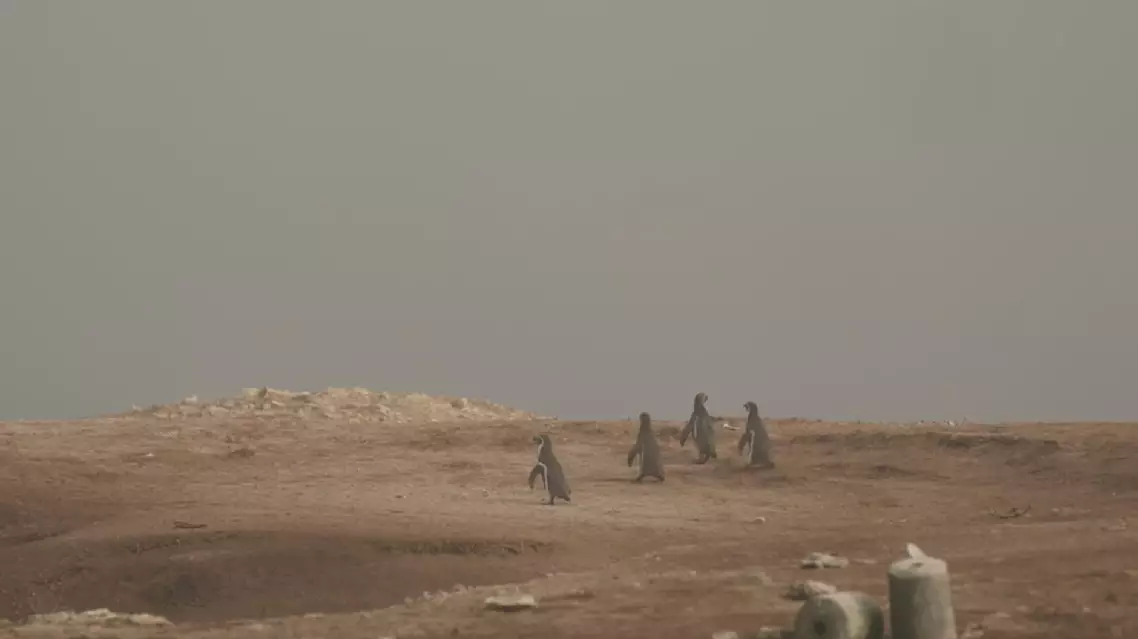
Researchers work to reverse population decline of Humboldt penguins