China's Tianwen-2 spacecraft, launched Thursday on a decade-long deep space mission, will first investigate asteroid 2016 HO3, an enigmatic celestial body that has long been Earth's constant cosmic companion, preserving secrets about the solar system's origins.
Known as a quasi-satellite of Earth, asteroid 2016 HO3 orbits the Sun and appears to circle around Earth as well. Its traces were first captured by the Pan-STARRS survey telescope in Hawaii, the United States in 2016.
"Current data suggests this asteroid measures only about 100 meters in diameter. What makes it extraordinary is that we don't yet know its composition or origin. Some hypothesize it could be lunar ejecta, while others believe it might contain primordial material from Earth's formation. We'll only obtain definitive answers after completing our exploration," said Li Chunlai, chief commander of the Tianwen-2 mission's ground application system.
The relatively stable orbit of 2016 HO3 and its proximity to Earth make it an ideal target for sample collection and return - key factors in its selection, Li noted.
Such asteroids serve as "cosmic fossils," preserving vital information about the solar system's early material composition, formation processes and evolutionary history.
According to Li, Tianwen-2's mission regarding the asteroid has three primary scientific objectives. "This is an entirely unexplored asteroid, a complete unknown to science. First, we aim to precisely measure its orbital parameters, rotation, and axial tilt, as well as to understand its orbital evolution. These are our fundamental goals. Second, we want to determine its physical characteristics and composition, essentially answering what this asteroid truly is. Third, and most crucially, we plan to retrieve samples for detailed laboratory analysis back on Earth," said the chief commander.
The mission represents humanity's first attempt to study this particular cosmic companion up close, with the potential to revolutionize mankind's understanding of the early solar system.
After retrieving samples by 2027, Tianwen-2 will proceed to comet 311P near Jupiter, another solar system "fossil" that defies classification by exhibiting both asteroid and comet characteristics.
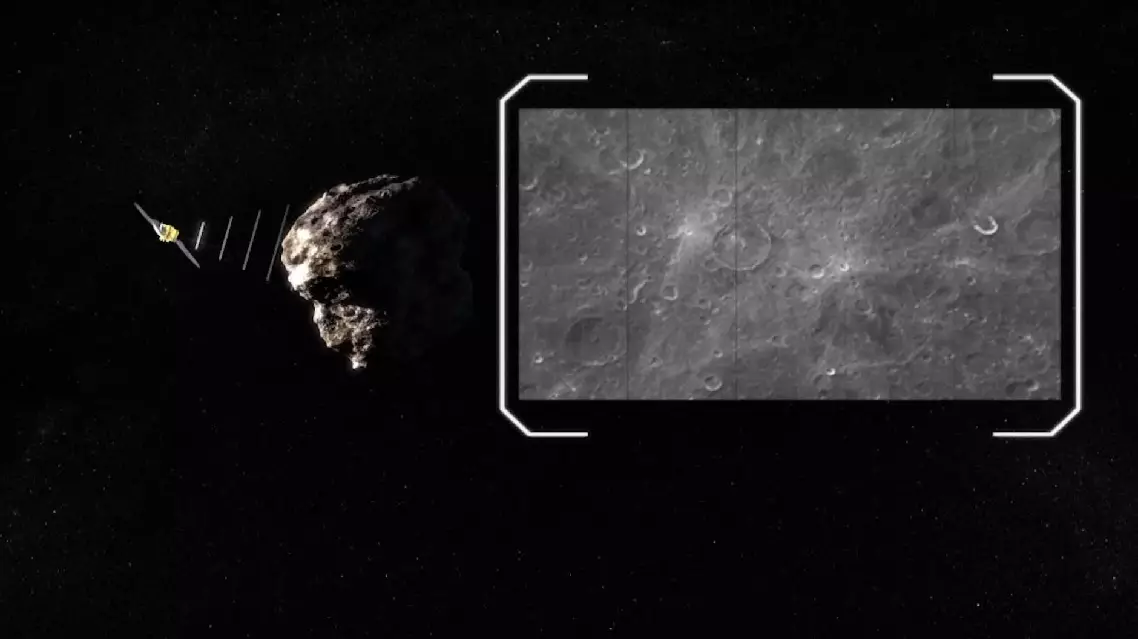
China's Tianwen-2 mission to seek answers from mysterious "quasi-moon" asteroid