CARLSBAD, Calif.--(BUSINESS WIRE)--Jun 2, 2025--
MaxLinear, Inc. (Nasdaq: MXL) and Comtrend announced today the availability of ITU-T standards-based powerline data modules for EV Charging Stations (EVSE) backend communication, including data centers and smart parking extensions.
This press release features multimedia. View the full release here: https://www.businesswire.com/news/home/20250602505130/en/
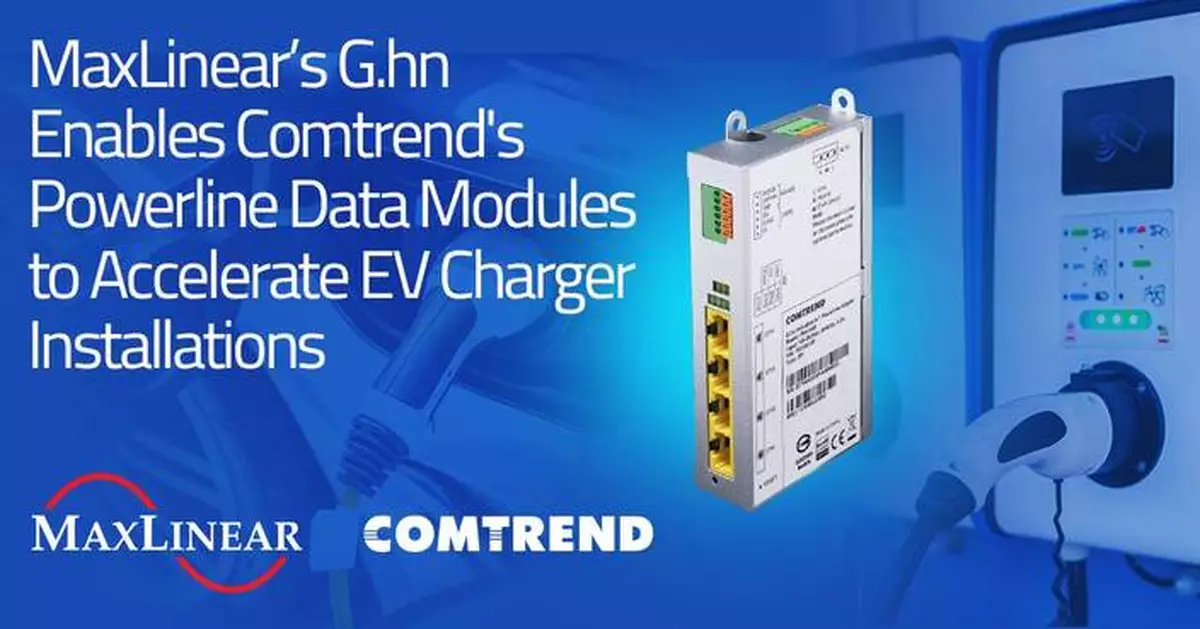
Using MaxLinear G.hn technology (data-over-powerline), Comtrend’s innovative powerline data module series collects and transfers data from power meters in EV charging infrastructure (EVSE) and IoT devices without the need for new cable installations. Comtrend leverages existing electrical powerlines for data communication, providing a scalable and hassle-free solution. This approach is particularly effective in underground concrete environments, where charging stations are frequently installed and other technologies lack reliability.
Comtrend PM 1540 key benefits include:
- No new wiring required – uses existing electrical wires for data transmission.
- Lower latency, higher speeds, and greater stability than traditional methods.
- Real-time connectivity.
- Significant cost savings vs. LAN, Wi-Fi, or 4G solutions.
- Simplified installation — reduced complexity, time, and no need for additional infrastructure.
- Supports an electric wire domain of up to 250 nodes for large-scale deployments.
- Strong signal transmission reaching up to 700 meters with up to 16 levels of signal repetition.
For additional information on the Comtrend PM 1540:
“The electric vehicle industry has grown at an unprecedented rate in recent years. We are thrilled to partner with Comtrend to accelerate the installation of EV charging stations, addressing the industry’s needs and meeting the rapidly increasing demand,” said Vikas Choudhary, Vice President of Connectivity and Storage Business at MaxLinear. Our G.hn product portfolio addresses a wide range of applications, including industrial IoT and Smart Grids, to proactively support the digital transformation of the industry.”
“Comtrend’s Powerline Data Modules, powered by MaxLinear’s cutting-edge G.hn technology, provide high-speed, secure, and reliable wired communication between EV charging stations and the smart grid,” said Vaclav Slehofer, Managing Director and Vice President of Comtrend Europe. “By partnering with MaxLinear, we’re bringing to market a cost-effective, easy-to-deploy and future-ready solution that ensures robust data connectivity for the evolving landscape of smart EV charging infrastructure.”
Why MaxLinear G.hn for EV Charging?
The versatility of the G.hn technology standard provides ultra-fast and reliable network connectivity for a wide range of markets and applications. G.hn works over any wiring infrastructure – coax, telephone wire, powerline, or Power-over-Fiber (POF). G.hn achieves very low latency while enforcing comprehensive Quality of Service (QoS) and delivering Gigabit speeds under any packet size. MaxLinear’s G.hn baseband processors and analog front-end chipsets are fully ITU compliant and deliver physical data rates up to 2Gbps, the fastest G.hn performance in the industry. Deploying MaxLinear G.hn for EV charging stations enables seamless interoperability, efficiency, and low-cost deployments.
Visit https://www.maxlinear.com/g-hn for an overview of MaxLinear’s G.hn solutions.
Why Comtrend for EV Charging?
Comtrend EVSE solutions provide enhanced interoperability, integrating with various EV charging brands and smart grid systems, ensuring compatibility across different platforms and technologies. Comtrend’s products are available now. For a full overview of Comtrend G.hn solutions for EV charging and other industrial IoT solutions, click here for more information.
About MaxLinear, Inc.
MaxLinear, Inc. (Nasdaq: MXL) is a leading provider of radio frequency (RF), analog, digital, and mixed-signal integrated circuits for access and connectivity, wired and wireless infrastructure, and industrial and multimarket applications. MaxLinear is headquartered in Carlsbad, California. For more information, please visit https://www.maxlinear.com/.
About Comtrend
Comtrend has over 30 years of experience delivering high-quality broadband networking solutions to Service Providers. Comtrend offers a comprehensive lineup of solutions ranging from gateways to networking devices that provide clever coverage to innovative use cases or difficult-to-reach areas. Contact us today to learn more at https://www.comtrend.com/.
Comtrend is a Member of the HomeGrid Forum.
Cautionary Note About Forward-Looking Statements
This press release contains forward-looking statements within the meaning of Section 27A of the Securities Act of 1933, as amended, and Section 21E of the Securities Exchange Act of 1934, as amended. Forward-looking statements include, among others, statements concerning or implying future financial performance, statements relating to MaxLinear’s G.hn technology and the functionality, performance and benefits of such technology, statements about the potential market opportunity and rate of growth for MaxLinear’s G.hn technology, statements relating to the partnership between MaxLinear and Comtrend, statements by our Vice President of Connectivity and Storage business and statements by the Managing Director and Vice President of Comtrend Europe. These forward-looking statements involve known and unknown risks, uncertainties, and other factors that may cause actual results to be materially different from any future results expressed or implied by the forward-looking statements and our future financial performance and operating results forecasts generally. Forward-looking statements are based on management’s current, preliminary expectations and are subject to various risks and uncertainties. In particular, our future operating results are substantially dependent on our assumptions about market trends and conditions. Additional risks and uncertainties affecting our business, future operating results and financial condition include, without limitation; risks relating to the development, testing, and commercial introduction of new products and product functionalities; risks relating to our relationship with Comtrend; risks relating to our terminated merger with Silicon Motion and related arbitration and class action complaint and the risks related to potential payment of damages; the effect of intense and increasing competition; increased tariffs, export controls or imposition of other trade barriers; impacts of global economic conditions; the cyclical nature of the semiconductor industry; a significant variance in our operating results and impact on volatility in our stock price, and our ability to sustain our current level of revenue, which has previously declined, and/or manage future growth effectively, and the impact of excess inventory in the channel on our customers’ expected demand for certain of our products and on our revenue; escalating trade wars, military conflicts and other geopolitical and economic tensions among the countries in which we conduct business; our ability to obtain or retain government authorization to export certain of our products or technology; risks related to the loss of, or a significant reduction in orders from major customers; costs of legal proceedings or potential violations of regulations; information technology failures; a decrease in the average selling prices of our products; failure to penetrate new applications and markets; development delays and consolidation trends in our industry; inability to make substantial research and development investments; delays or expenses caused by undetected defects or bugs in our products; substantial quarterly and annual fluctuations in our revenue and operating results; failure to timely develop and introduce new or enhanced products; order and shipment uncertainties; failure to accurately predict our future revenue and appropriately budget expenses; lengthy and expensive customer qualification processes; customer product plan cancellations; failure to maintain compliance with government regulations; failure to attract and retain qualified personnel; any adverse impact of rising interest rates on us, our customers, and our distributors and related demand; risks related to compliance with privacy, data protection and cybersecurity laws and regulations; risks related to conforming our products to industry standards; risks related to business acquisitions and investments; claims of intellectual property infringement; our ability to protect our intellectual property; risks related to security vulnerabilities of our products; use of open source software in our products; and failure to manage our relationships with, or negative impacts from, third parties.
In addition to these risks and uncertainties, investors should review the risks and uncertainties contained in our filings with the Securities and Exchange Commission, including our Current Reports on Form 8-K, as well as the information to be set forth under the caption "Risk Factors" in MaxLinear's Quarterly Report on Form 10-Q for the quarter ended March 31, 2025. All forward-looking statements are based on the estimates, projections and assumptions of management as of the date of this press release, and MaxLinear is under no obligation (and expressly disclaims any such obligation) to update or revise any forward-looking statements whether as a result of new information, future events, or otherwise.
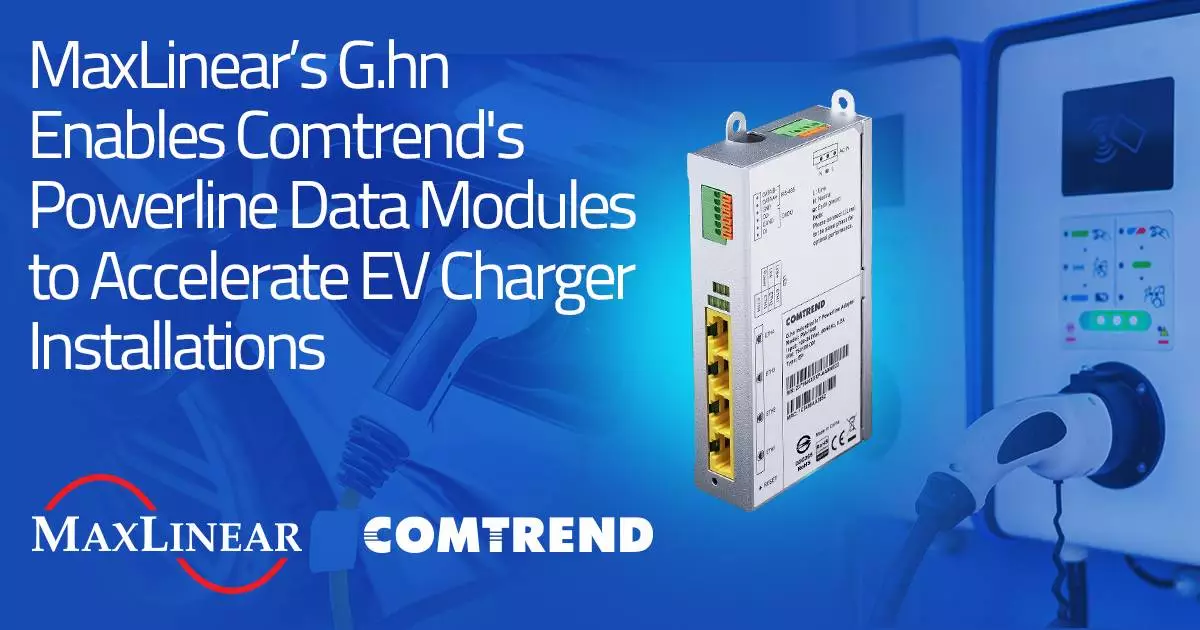
MaxLinear's G.hn enables Comtrend's powerline data modules to accelerate EV Charger installations.