BUDAPEST, Hungary (AP) — Hungary and Ukraine will begin high-level consultations on the rights of Ukraine's ethnic Hungarian minority, the countries' foreign ministers said on Monday, an early sign that strained relations between Budapest and Kyiv could improve under Hungary's new government.
Bilateral ties between the neighboring countries had eroded for years under the pro-Russian government of former Hungarian Prime Minister Viktor Orbán, which refused to provide Ukraine with money or weapons to assist in its defense against Russia's full-scale invasion.
Orbán, who was voted out of office in a landslide election in April, justified many of his government's anti-Ukraine policies with what he said was the restriction of language and education rights for the roughly 100,000 ethnic Hungarians that live in the Ukrainian region of Zakarpattia.
Aimed at combating Russian influence but ultimately affecting other minority languages, Ukraine passed a law in 2017 that made Ukrainian the required language of study past the fifth grade, angering Romanian, Bulgarian and Hungarian minorities.
But in a post on X Monday, Hungary's new Foreign Minister Anita Orbán wrote that “expert-level consultations aimed at resolving the rights of the Hungarian minority” will begin as soon as this week.
The talks will form “an important foundation for the prompt and reassuring settlement of minority rights issues,” wrote Orbán, who is not related to the former prime minister.
“I trust that the dialogue will be constructive and productive, and that the negotiations will soon bring tangible progress for the Hungarian community,” she continued.
The step was an early sign of a possible mending of the bilateral relations that had dropped to historic lows under Orbán. His nationalist-populist government had blocked crucial European Union funding for Ukraine, held up sanctions against Moscow and threatened to impede the war-ravaged country’s efforts toward eventually joining the bloc.
In the lead-up to the April election, Orbán’s government ran an aggressive anti-Ukraine campaign, casting the neighboring country as an existential threat to Hungary that threatened to tank its economy and drag it into the war.
But with the election of the center-right Tisza party and its leader, Prime Minister Péter Magyar, hopes emerged that Hungary's new government would pursue a more constructive approach.
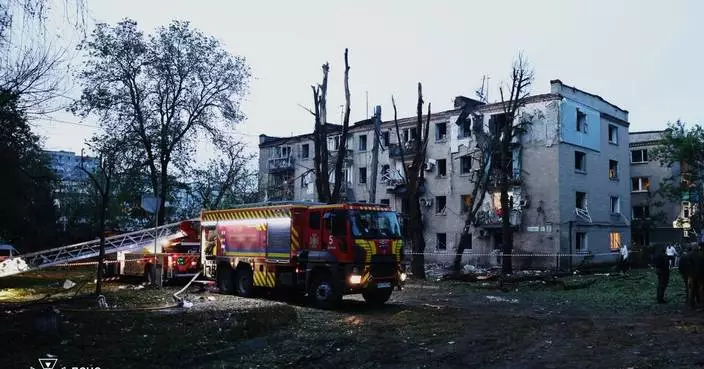
In a stark example of the about-face in relations with Moscow ushered in by Magyar's election, Hungary's new foreign minister last week summoned the Russian ambassador over a massive drone strike in Zakarpattia — a move nearly unthinkable during Orbán's 16-year tenure.
Ukrainian President Volodymyr Zelenskyy called the summons in Budapest an “important message” and thanked the new government for its response.
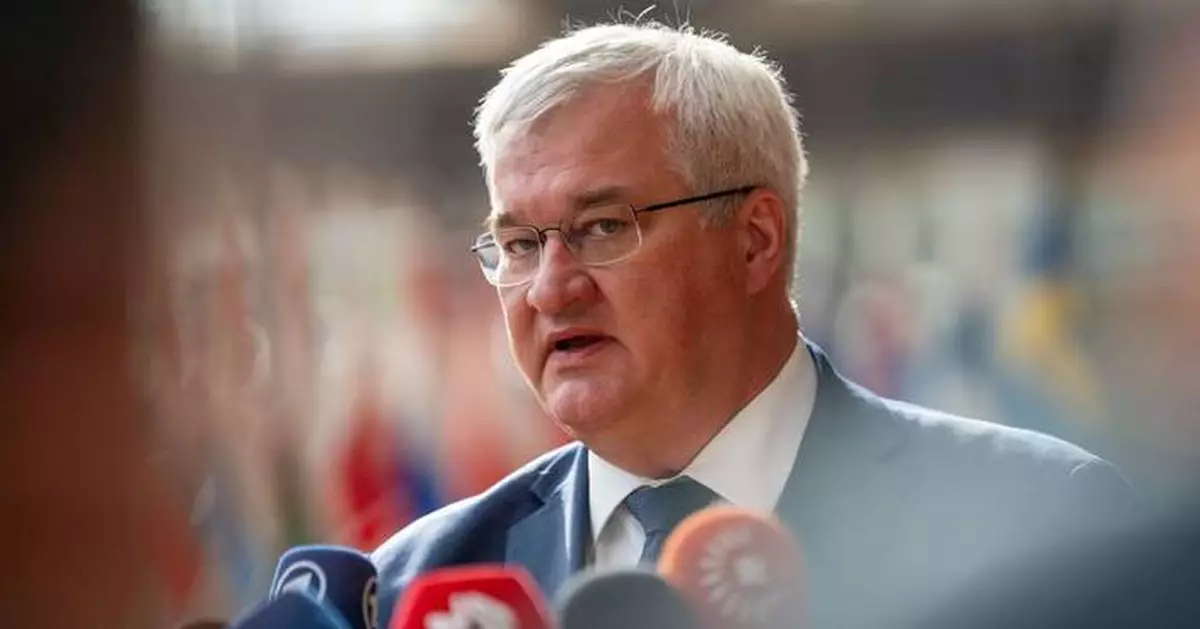
On Monday, Ukrainian Foreign Minister Andrii Sybiha wrote on X that his government is “ready to open a new, mutually beneficial chapter in Ukrainian-Hungarian relations without delay,” with the aim of “restoring trust and good-neighborly relations between our countries.”
Sybiha wrote that during a phone call with Anita Orbán, he had thanked her for “the Hungarian government’s principled and swift reaction to the latest Russian strikes against Ukraine.”
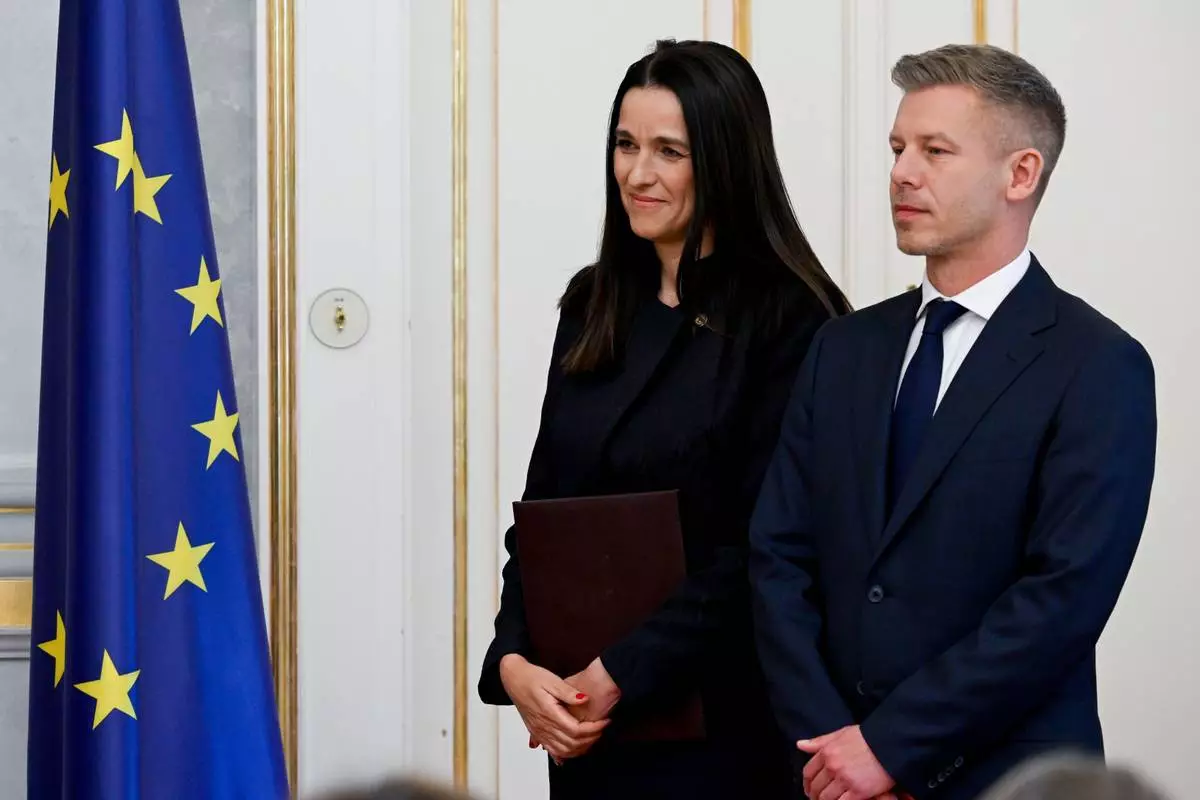
Prime Minister Peter Magyar, right, and Foreign Minister Anita Orban during the appointment ceremony of ministers of the Tisza government at the presidential Alexander Palace in Budapest, Hungary, Tuesday, May 12, 2026. (Szilard Koszticsak/MTI via AP)
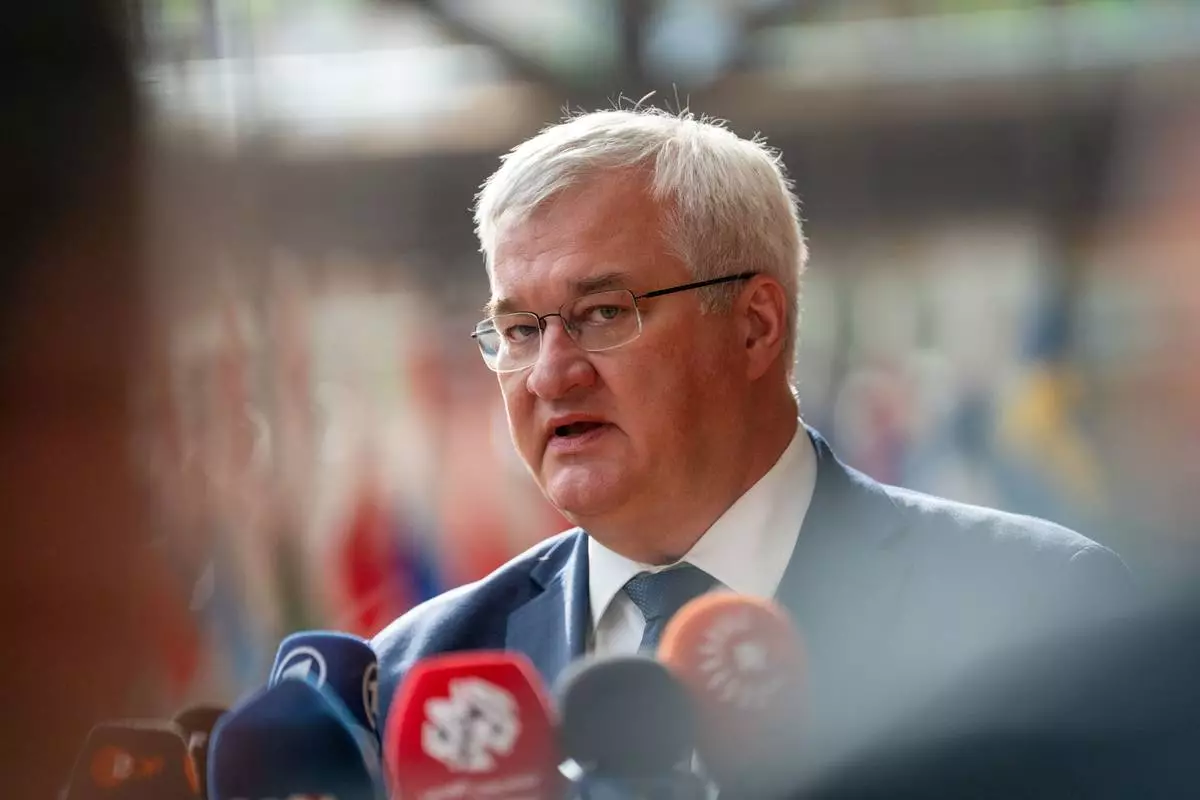
Ukraine's Foreign Minister Andrii Sybiha speaks with the media as she arrives for a meeting of EU foreign ministers at the European Council building in Brussels, Monday, May 11, 2026. (AP Photo/Marius Burgelman)