China's communications industry has made steady progress in the first four months of this year, with 5G mobile phone subscriptions rising to 1.081 billion, data from the Ministry of Industry and Information Technology (MIIT) showed on Tuesday.
From January to April, the mobile Internet access traffic has maintained rapid growth, and the construction of new information infrastructure such as 5G, gigabit optical networks, and the Internet of Things has been steadily advancing, according to the MIIT.
The number of fixed broadband access users increased steadily, and the number of gigabit users continued to expand. The total number of fixed Internet broadband access users of the China Mobile, China Telecom and China Unicom reached 680 million.
The scale of mobile phone users has increased steadily, with 5G mobile phone users reaching 1.081 billion, accounting for nearly 60 percent of the total number of mobile phone users, according to the MIIT.
The number of mobile Internet of Things users has grown rapidly, with more than 2.737 billion people using the mobile Internet of Things terminals developed by the three basic telecommunications companies. The construction of 5G base stations across China is progressing steadily, and the network infrastructure support capabilities are being enhanced simultaneously in the first four months of the year, according to the MIIT.

China’s 5G mobile subscribers surpass 1.08 million
Chinese Foreign Minister Wang Yi said on Thursday that both the United States and Iran have the willingness to resume negotiations, and the international community should encourage both sides to return to the negotiating table and seek effective ways for a political settlement.
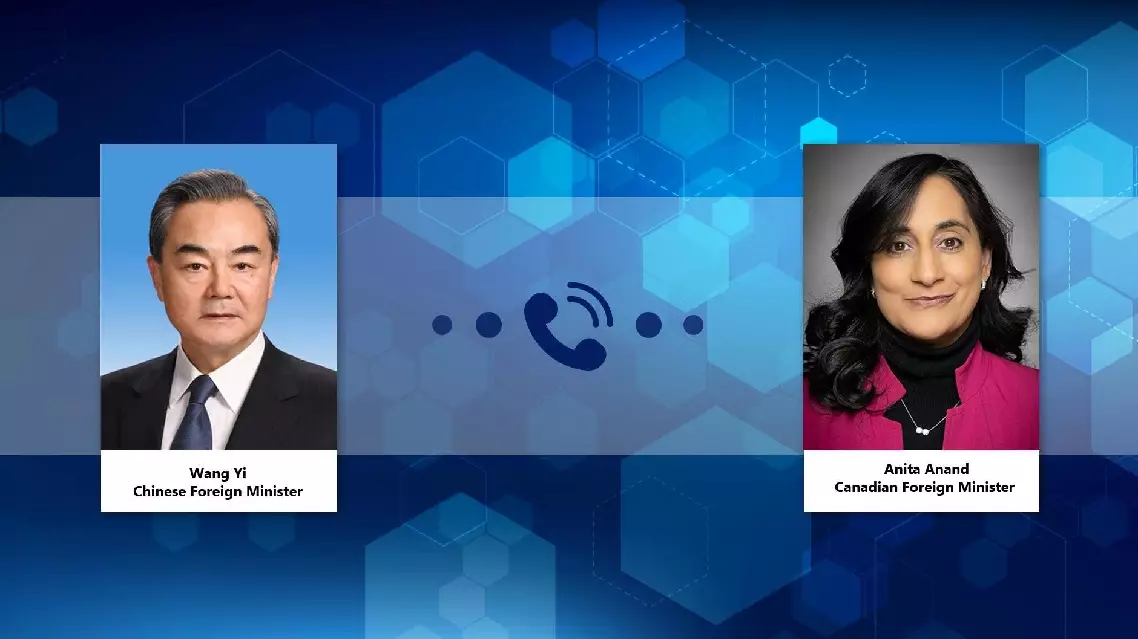
China and Canada can jointly play a constructive role in this regard, said Wang, also a member of the Political Bureau of the Communist Party of China Central Committee, in a phone conversation with Canadian Foreign Minister Anita Anand at the latter's request.
Anand briefed Wang on Canada's position regarding the situation in the Middle East, noting that Canada is committed to protecting civilians in the conflict, promoting de-escalation of the situation, preventing the spillover of the conflict, and reducing its impact on the global economy as well as industrial and supply chains.
The Iranian nuclear issue bears on the international nuclear non-proliferation regime, and ensuring the safe passage through the Strait of Hormuz is in the common interests of all parties, Anand said.
Canada stands ready to work with China to push for a ceasefire and promote regional peace and stability, she added.
Wang elaborated on China's principled position, saying that the Iranian nuclear issue should be resolved through dialogue and should not be a reason for the use of force.
The abuse of force will only lead to grave repercussions, and the spillover of the war will threaten regional security and stability, he said.
The two sides also exchanged views on China-Canada relations and agreed that they should implement the outcomes of Prime Minister Mark Carney's visit to China with a positive and pragmatic attitude, resume dialogues at various levels, expand mutually beneficial cooperation, and push for the stable and healthy development of the China-Canada new strategic partnership.
U.S., Iran should be encouraged to return to negotiating table for political settlement: Chinese FM